
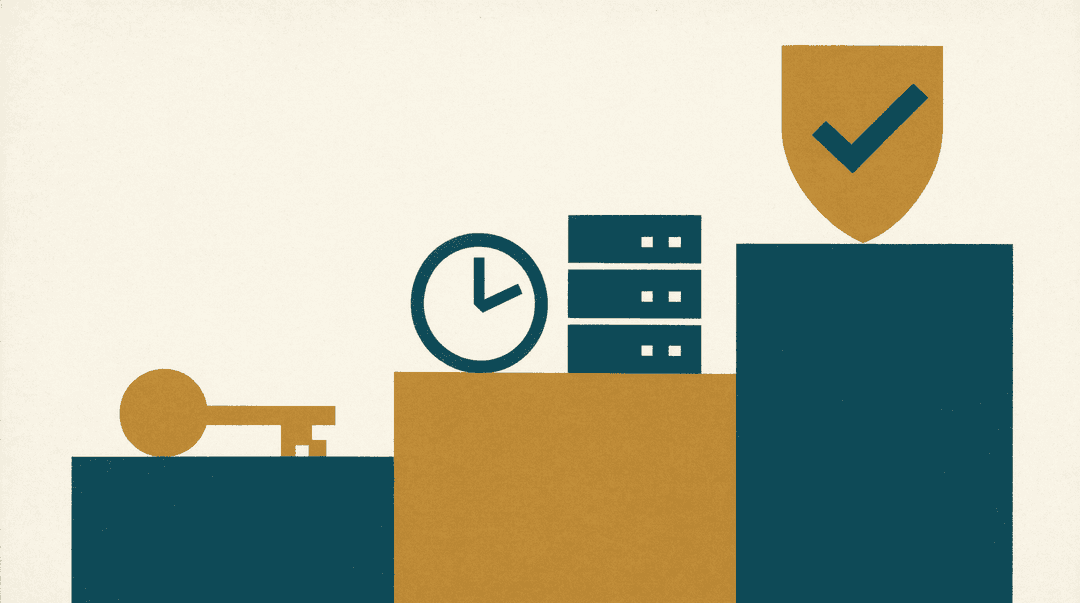
Most enterprises running large language models in production can tell you the price per million tokens. Far fewer can tell you what happens contractually when the model goes down. The answer depends on one variable that gets less attention than capability or price: where you bought the API.
We read the availability terms for OpenAI, Anthropic, and the three hyperscalers that resell frontier models. The guarantees range from a real, credit-backed contract to nothing at all.
Tier one: no guarantee
The default way to buy a frontier model is a pay-as-you-go API key. On that path, neither OpenAI nor Anthropic offers a contractual uptime commitment.
Anthropic's Commercial Terms of Service are blunt. Services and outputs are provided "AS IS" and "AS AVAILABLE" without warranty of any kind, and Anthropic "does not warrant, and disclaims that, the services or outputs are accurate, complete or error-free or that their use will be uninterrupted." There are no service credits on the standard API. What you get is a status page.
OpenAI's position is in its own help center, in an article that has run for years: "We will be publishing SLAs and are working hard to get there." For the standard API, there is nothing to enforce. The company's answer to reliability questions is its status page and, for enterprise contracts, terms negotiated in an order form.
The practical consequence: if your product is built on Claude or GPT via a direct developer API key, your uptime guarantee is the vendor's goodwill.
Tier two: reliability you buy by the unit
Direct from the vendors, uptime becomes a purchasable product.
OpenAI's Scale Tier is the clearest example. You pre-purchase throughput units (tens of thousands of tokens per minute per model, per day, minimum 30-day terms) and get a 99.9% uptime SLA plus a latency SLA alongside it. The published table commits, for example, to at least 99% of requests generating above 50 tokens per second on the flagship model, and above 100 tokens per second on a mini tier. Reserved capacity is the mechanism: the SLA rides on compute you bought, not on shared infrastructure.
Anthropic has experimented with the same idea, selling reserved priority capacity at higher rates, but its published availability commitments for enterprise remain negotiated per-customer rather than posted on a pricing page. If you want an Anthropic uptime number in writing, you get it through a sales contract, not self-serve.
Tier three: the hyperscaler contracts
The most mature guarantees come from buying the same models through cloud providers, who inherit the discipline of two decades of infrastructure SLAs.
Amazon Bedrock guarantees at least 99.9% monthly uptime per region, calculated from five-minute availability intervals, with a credit ladder: 10% of your monthly Bedrock charges if uptime falls between 99.0% and 99.9%, 25% below 99.0%, and 100% below 95.0%.
Azure OpenAI commits to 99.9% monthly uptime with credits of 10% and 25%, and adds a separate 99% latency SLA on provisioned throughput deployments.
Google's Gemini SLA is the most technically interesting. It pairs a monthly uptime percentage with the first real latency commitment in the market: under a Provisioned Throughput contract, Google promises that the median generation speed of Gemini 2.5 Pro stays above 60 tokens per second, Flash above 80, and Flash-Lite above 110, measured in five-minute intervals. Miss those and you get 10%, 25%, or 50% of the monthly bill back.
The fine print is the product
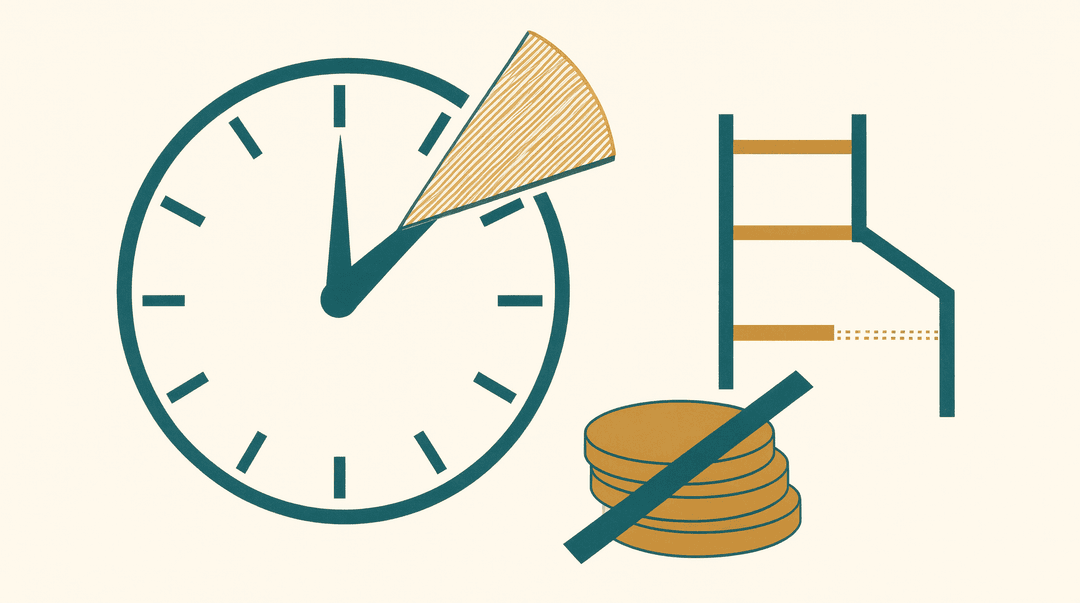
Every one of these SLAs comes with terms that shrink the headline number.
Downtime is narrower than you think. Google only counts a "Downtime Period" when the server-side 5XX error rate exceeds 5% for five or more consecutive minutes. Intermittent failures shorter than five minutes do not count at all. On Azure's 30-day month, the 99.9% commitment means the first 43.2 minutes of downtime pay nothing. That is the title of this post.
Throttling is usually excluded. AWS, Google, and Azure all exclude errors caused by quotas, rate limits, and customer-side factors from uptime calculations. In an agentic workload, where 429 rate-limit errors at peak are the common failure mode, the SLA may never see the outage your users feel.
Quality is not covered, anywhere. An SLA asks whether the endpoint answered, not whether the answer was fast, correct, or even from the model you expected. Microsoft's own guidance on reading SLAs says it directly: definitions matter as much as percentages, and "when the definition of downtime is narrow, the effective coverage is narrower than the percentage suggests."
The latency SLA has a bouncer. Google's p50 commitment only applies to streaming requests that generate more than 75 output tokens and succeed, on the global endpoint, for three specific model versions, excluding contexts above 200,000 tokens. Short outputs, batch calls, and long-context traffic are invisible to it.
Credits are the sole remedy, and you have to ask. Google states the credit is the customer's "sole and exclusive remedy" and caps total credits at 50% of the covered month's bill. You must file within 30 days and, critically, provide your own logs showing the downtime or latency-breach intervals. Redress Compliance, which audits cloud SLA claims, estimates between 60% and 80% of eligible credits are never claimed because the process is manual and nobody owns it. A service credit is a billing adjustment, not compensation for your outage.
What to actually do about it
A reasonable posture, given the contracts as they exist:
- Treat the standard developer APIs as best-effort infrastructure. If the model is on your critical path, buy reliability where it is actually for sale: a hyperscaler SLA, a reserved-capacity tier, or negotiated enterprise terms.
- Measure your own five-minute windows and keep the logs. Every credit regime requires customer-supplied evidence, and the claim window closes in about a month.
- Budget for credits, not damages. Worst realistic case on a bad month is a partial bill refund, which will be trivial next to the revenue an outage costs you.
- Redundancy is the only real SLA. Cross-provider failover is what hyperscalers themselves recommend, and it is the one mitigation that covers the failures no contract counts: slow answers, throttling, and quality regressions.
The uncomfortable summary: the LLM market sells you capability by the token and reliability by the exception clause. Before an outage decides your contract's meaning, find out whose definition of downtime you are living under.
Sources
- Anthropic Commercial Terms of Service: https://www.anthropic.com/legal/commercial-terms
- OpenAI Help Center, "Is there an SLA for latency guarantees?": https://help.openai.com/en/articles/5008641-is-there-an-sla-for-latency-guarantees-on-the-various-engines
- OpenAI Scale Tier: https://openai.com/api-scale-tier
- Amazon Bedrock SLA: https://aws.amazon.com/bedrock/sla
- Gemini Online Inference API SLA (Google Cloud): https://cloud.google.com/vertex-ai/generative-ai/sla
- Vertex AI Platform SLA (Google Cloud): https://cloud.google.com/vertex-ai/sla
- Microsoft Learn, "How to Read a Service-Level Agreement": https://learn.microsoft.com/en-us/azure/reliability/concept-service-level-agreements
- Redress Compliance, "Azure OpenAI SLA 2026": https://redresscompliance.com/azure-openai-sla-and-support
- Redress Compliance, "Google Cloud SLA Uptime: Credits, Carve-Outs, Terms": https://redresscompliance.com/google-cloud-sla-uptime-contract-terms
