
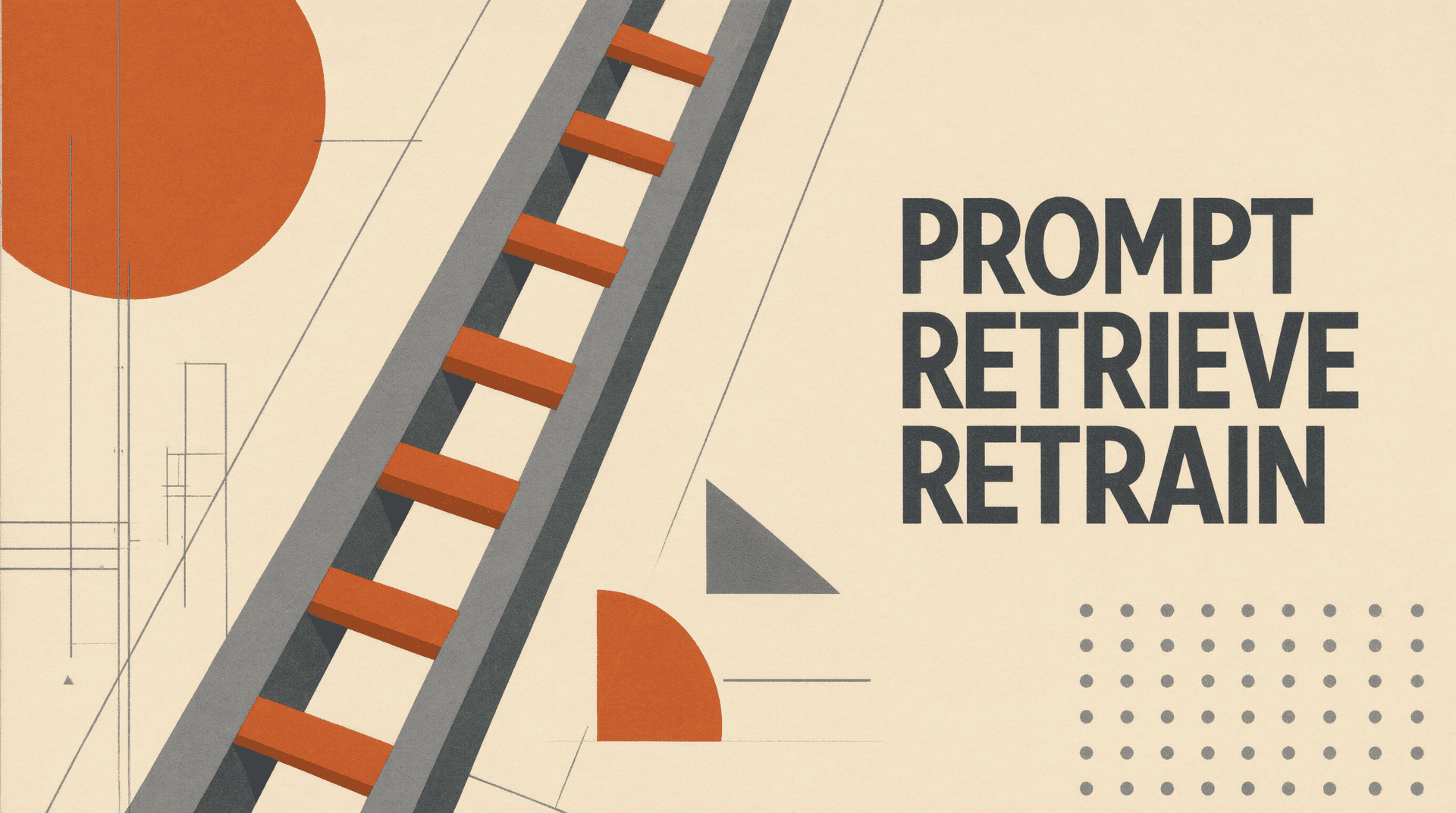
In 2026, Retrieval-Augmented Generation (RAG) has largely superseded fine-tuning for injecting company knowledge into Large Language Models. This shift is driven by research proving RAG's superior accuracy, economic advantages from context caching, and strategic decisions by major vendors like OpenAI to reduce self-serve fine-tuning offerings. While fine-tuning remains viable for specific behavior control or distillation tasks, retrieval is the preferred method for dynamic, factual information.
For three years, enterprise AI teams argued about the same binary: should we retrieve documents or fine-tune a model on our data? In 2026 the argument largely settled, and not because the fine-tuning advocates ran out of energy. The research, the pricing pages, and now the platform vendors themselves have converged on the same answer, with a narrow set of exceptions worth understanding before you commit an engineering quarter.
OpenAI closed the door on self-serve fine-tuning
The structural signal came on May 7, 2026, when OpenAI notified developers that it is winding down its self-serve fine-tuning API and platform. New organizations were blocked from creating training jobs immediately. Active existing customers can run their last training jobs until January 6, 2027, after which the endpoint closes to everyone. Inference on already fine-tuned models continues only until the underlying base model is deprecated, a date set independently. OpenAI has confirmed it will add no new models or platform features during the wind-down.
The company's reasoning tracks what researchers and practitioners had been saying for two years: modern frontier models follow instructions so well that prompts plus retrieval cover most of what fine-tuning used to be bought for. Tessl's analysis notes the capability is not gone from the market. Google still offers managed fine-tuning through Vertex AI, Anthropic through Amazon Bedrock, and LoRA or QLoRA adapters on open-weight models remain fully under builder control. But one of the two biggest API vendors has decided the feature is no longer core to its product, and that is a bet on where adaptation is heading.
What the research actually found
The clearest evidence concerns the most common motivation for fine-tuning: injecting company knowledge into a model. Suri et al., published at EMNLP 2024, compared unsupervised fine-tuning against retrieval-augmented generation across knowledge-intensive tasks and found RAG consistently outperformed fine-tuning, both on facts the model had seen in pre-training and on entirely new ones. More pointedly, the models struggled to learn new factual information from fine-tuning at all; memorizing sentences did not translate into usable knowledge, and only heavy paraphrase augmentation partially helped.
A follow-up study on less popular knowledge reached a similar verdict with a useful wrinkle: RAG substantially outperformed fine-tuning as a knowledge-injection method, while a small fine-tuned model combined with retrieval matched or beat a much larger model with retrieval alone. That second finding is why the hybrid pattern keeps winning: fine-tuning is good at making a smaller model behave like a bigger one, not at making any model know your price list.
The practitioner consensus has converged on the same division of labor. Big Data Boutique's 2026 guide puts it as a rule: fine-tuning is for form, not facts.
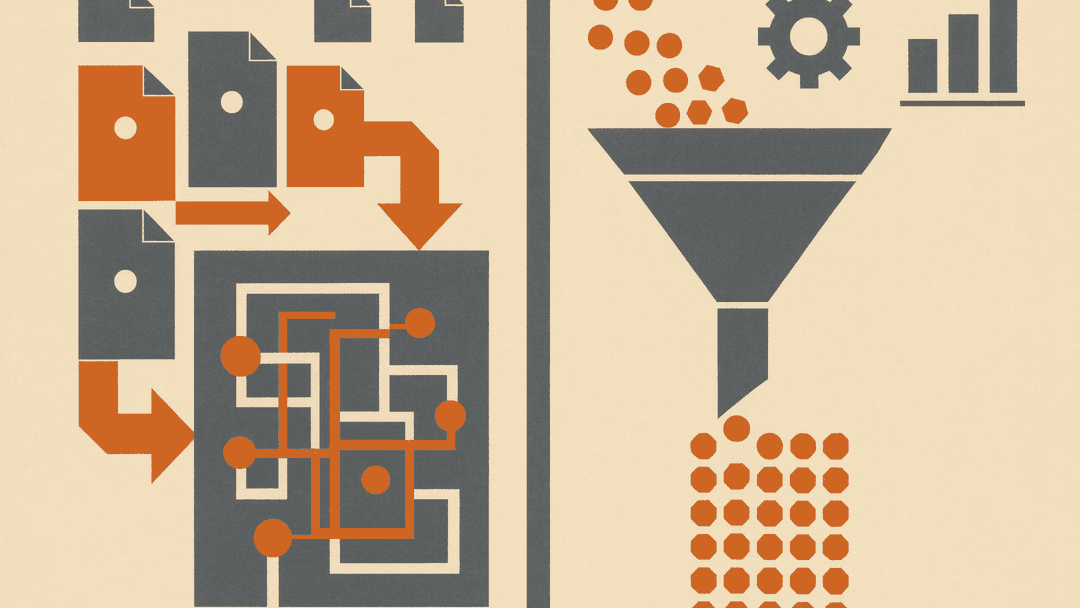
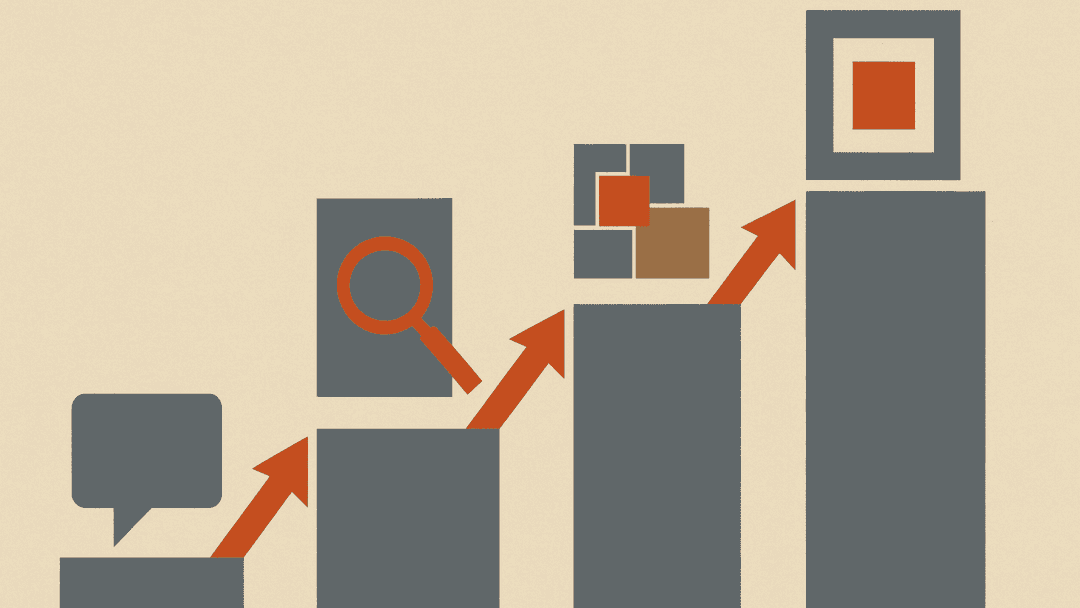
Use it to lock in a style, a refusal policy, or an output schema that prompting cannot hold. Use retrieval for knowledge that changes. The recommended sequence is prompt, then RAG, then fine-tune, then distill, and the guide argues most teams should never consider anything beyond a thin LoRA adapter.
Winder.ai's decision framework estimates retrieval is the correct first choice for roughly 80% of enterprise LLM applications, mainly because you can change the source data without retraining and attribute answers to documents.
The pricing pages finished the argument
Two economic developments in 2026 removed the remaining standard objections to solving knowledge at inference time.
The first is context caching. Anthropic's 2026 rate card prices a cache read at $0.20 per million tokens, a twentieth of the $4 standard input rate on its Opus-class model, with cache writes at 1.25x input, which makes shipping a large reference document on every request dramatically cheaper than it was when the retrieval-versus-stuffing debate started. DeepSeek went further in April 2026, cutting cached input to roughly $0.14 per million tokens. The old argument that fine-tuning amortizes repeated context costs now only survives at very high query volumes, and even there the math requires caching, which is an inference-time technique.
The second is the general direction of inference prices versus training effort. Actian's cost framework frames the trade honestly: RAG adds recurring per-query cost, fine-tuning shifts spend upfront. Its practical threshold is change frequency. If your knowledge moves more than monthly, retrieval wins because retraining is an eternal treadmill. If it is stable for months and query volume is high, a fine-tune becomes economically evaluable. Most enterprise corpora fail that test, which the adoption data reflects.
How little fine-tuning is actually happening
Menlo Ventures' 2026 State of Enterprise AI report, published November 3, measured enterprise AI deployment spend growing from $33 billion to $177 billion in a single year, a 5.4x increase, while frontier labs captured 69% of deployment dollars. Within that storm of spending, post-training adoption rose from 6% of AI builders in 2025 to just 10% in 2026. Of that small group, 91% rely on outside partners to do it, because the tooling is still, in Menlo's words, early and hard.
Read next to OpenAI's wind-down decision, the picture is consistent: the market votes with its budget for buying model capability at the API layer and adapting with context, not for owning the training run.
When you should still fine-tune
The exceptions are real, and they cluster in three places.
- Behavior and format. Where prompting cannot hold a fixed output schema, tone, or refusal boundary across thousands of queries, a supervised adapter on top of an open-weight model is the reliable fix.
- Distillation for cost and latency. A fine-tuned small model serving high-volume, well-defined tasks (classification, extraction, routing) routinely matches frontier quality at a fraction of the price. This is the strongest remaining economic case.
- Truly new, stable vocabularies. Specialized scientific or industrial corpora that were never in pre-training data are the one legitimate case for continued pretraining, and by most accounts it is rare in product teams.
If none of those describes your problem, you have a retrieval problem, a prompting problem, or a data problem. None of them are solved by a training run.
Sources
- OpenAI community: self-serve fine-tuning availability notice
- Nopex: OpenAI fine-tuning API shutdown timeline
- Tessl: OpenAI is shutting down self-serve fine-tuning
- Digital Applied: GPT-4o and GPT-4.1 leave the API January 14, 2027
- Suri et al., Fine-Tuning or Retrieval? Comparing Knowledge Injection in LLMs (EMNLP 2024)
- Fine Tuning vs. Retrieval Augmented Generation for Less Popular Knowledge
- Big Data Boutique: Fine-Tuning LLMs in 2026, When RAG Isn't Enough
- Winder.ai: RAG vs Fine-Tuning in 2026, A Decision Framework
- Actian: RAG vs. Fine-Tuning vs. Hybrid
- Activepieces: Anthropic API Pricing 2026, Cost Per Million Tokens
- ExplainX: OpenAI GPT-5.5 pricing and fine-tuning wind-down
- Menlo Ventures: 2026 The State of Enterprise AI
Frequently asked questions
Is OpenAI shutting down its fine-tuning API?
Yes, OpenAI notified developers on May 7, 2026, that it is winding down its self-serve fine-tuning API. New organizations were blocked immediately, and existing customers can run their last training jobs until January 6, 2027.
Does RAG perform better than fine-tuning for adding company knowledge?
According to Suri et al., published at EMNLP 2024, RAG consistently outperformed unsupervised fine-tuning in knowledge-intensive tasks. The study found that models struggled to learn new factual information through fine-tuning alone, whereas RAG provided more reliable knowledge injection.
When should a company still use fine-tuning instead of RAG?
Fine-tuning is recommended for locking in form rather than facts, such as enforcing fixed output schemas, specific tones, or refusal policies. It is also effective for distilling frontier-quality responses into smaller, cheaper models for high-volume classification or extraction tasks.
How do pricing changes in 2026 affect the choice between RAG and fine-tuning?
The introduction of context caching significantly reduces inference costs; for example, Anthropic prices cache reads at $0.20 per million tokens compared to a $4 standard input rate. This makes shipping reference documents via RAG much cheaper than the previous assumption that fine-tuning amortizes repeated context costs.
