
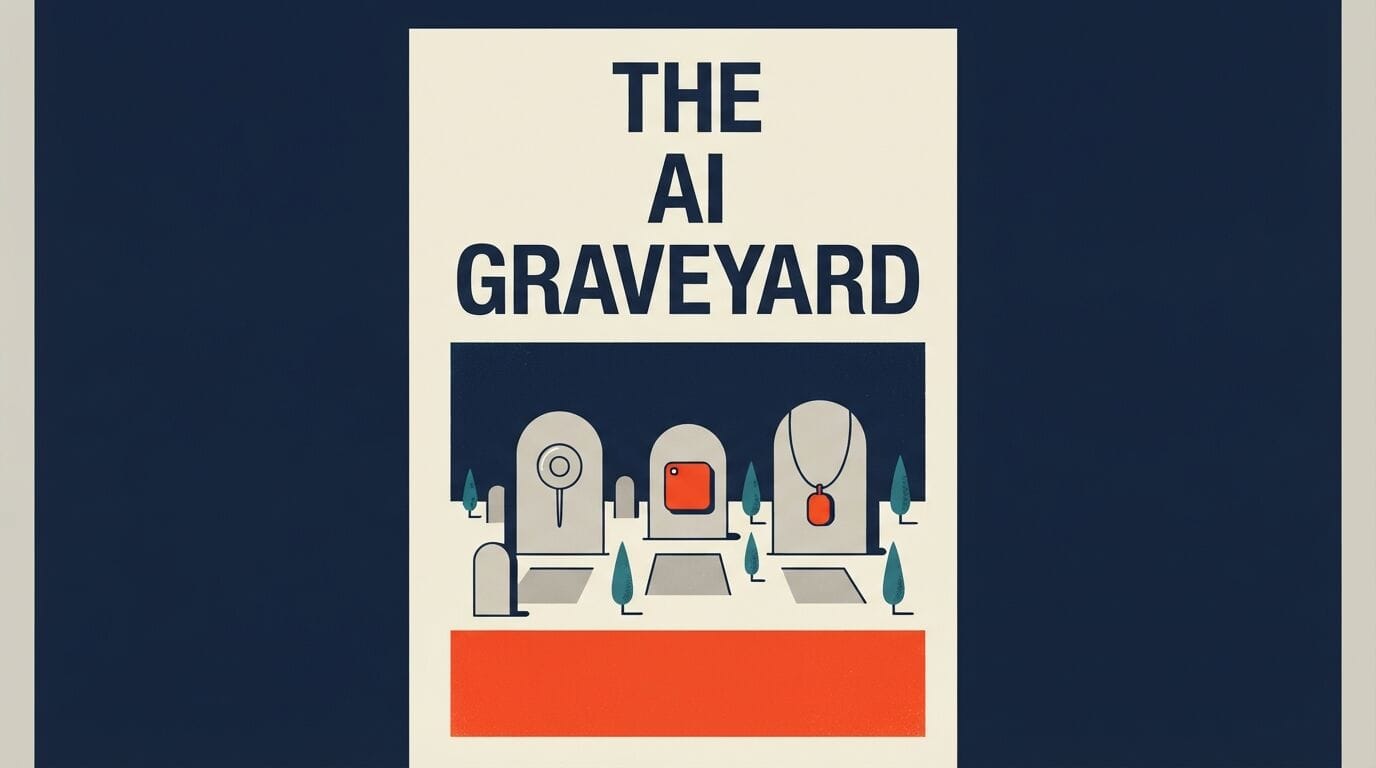
At 12:00 Pacific on February 28, 2025, Humane's servers stopped answering requests. Every AI Pin on Earth, a device that cost $699 plus a $24 monthly subscription, went dark the same day. Calls stopped working. Messages stopped working. The laser projector that painted an interface onto the wearer's palm had nothing left to project. Customer data, including personally identifiable information, was permanently deleted a few hours later. Only buyers from the last 90 days were offered refunds. Everyone else was left holding what reviewers had already started calling a paperweight.
That single noon deadline is the cleanest summary of the standalone AI hardware category in 2025 and 2026. Companies sold small companion devices whose entire value lived in a cloud service, then exited the market while customers were still paying for it. Meanwhile, the AI hardware businesses that are actually growing sell something different: an attachment to a job people already pay to get done.
The graveyard ledger
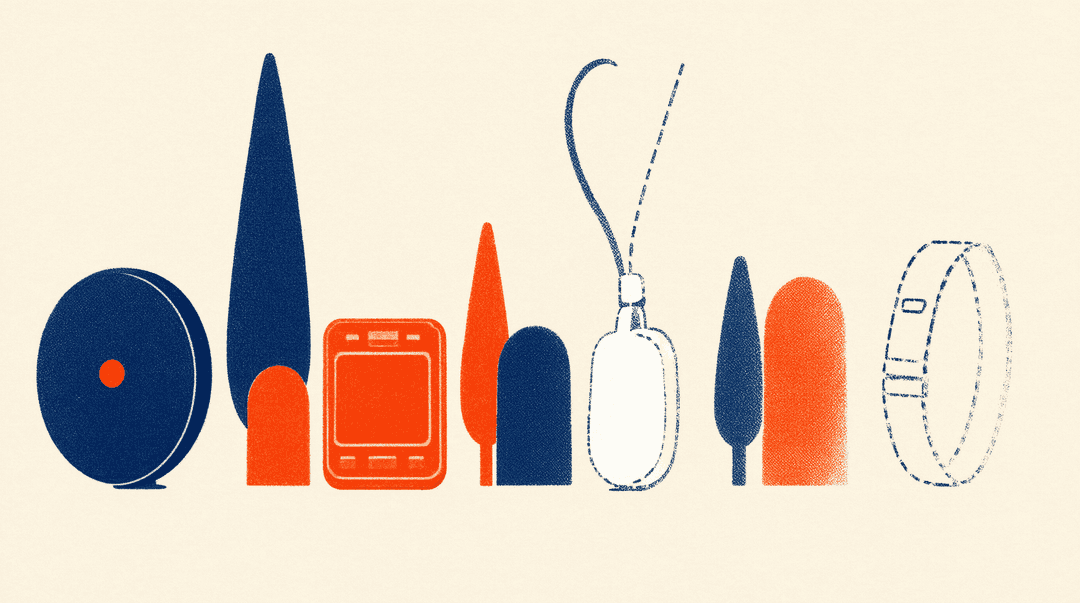
The numbers are public and they are brutal.
Humane raised roughly $241 million and was valued near $1 billion before launch. In August 2024, The Verge cited a company source who said about 7,000 pins were in customers' hands. In February 2025, HP paid $116 million for the CosmOS operating system, more than 300 patents and the engineers. HP did not buy the pin business and inherited no obligation to existing devices. The company that raised at a billion-dollar valuation liquidated its working assets at $116 million and bricked its install base inside ten days.
Rabbit ran the other version of the same failure: too much demand, too little product. The $199 R1, co-designed with Teenage Engineering, sold its first 10,000 units in a day in January 2024 against a hope of 500, and crossed 100,000 units sold by that August. The product itself was an Android app on cheap hardware, as The Verge's teardown-era coverage documented, and founder Jesse Lyu admitted in September 2024 that roughly 5,000 of the 100,000 buyers were using the device at any given moment. A rabbitOS 2 redesign in September 2025 repositioned it as an agent assistant. By late 2026, Tom's Guide reported that employees had gone unpaid since July, a small group had been on strike since October, and Lyu blamed a collapsed plan to raise funds by selling the R1 in India.
Friend, the always-listening pendant, turned backlash into a business model and still cannot scale one. Founder Avi Schiffmann put $10 million of his own money into the project, spent $1.8 million on the friend.com domain and more than $1 million on New York subway advertising, and collected vandalism, mockery and a Museum of Failure placard along the way. Fortune's hands-on review found the device forgot its tester's name and answered 7 to 10 seconds late. The July 2026 relaunch, Friend 2.0, doubled the price from $129 to $249 and added a speaker plus an optional $10 monthly memory subscription. Schiffmann told Wired the first run sold 5,000 pendants and said he wants to sell 50,000 of the second version, which will probably skip the European Union because GDPR compliance is too expensive. Five thousand units, after two years of the most viral marketing campaign in consumer AI.
Limitless and Bee were not allowed to die on their own terms. Amazon absorbed Bee, maker of the wristband that recorded your day, in July 2025. Meta acquired Limitless, which had raised more than $33 million from a16z, NEA and Sam Altman, on December 5, 2025, stopped pendant sales that same day and ended the app's service in the EU, UK and several other regions at once, promising to support remaining customers for at least a year. The teams went to Reality Labs. The hardware line closed.
The pattern across all four is identical: a device whose only differentiated function was model access, sold at phone-adjacent prices, competing with the phone.
What is actually selling
Plaud sells a $159 recorder card that transcribes meetings. That is a job a lawyer, doctor or consultant already pays to have done, at a price that expenses without a conversation, and the company has never taken venture money. Per Bloomberg's June 2026 report, Plaud passed $250 million in annual recurring revenue, had shipped more than 2 million devices to 170 countries, and was targeting $500 million in 2026 sales. 36Kr's sources put 2024 revenue at about $56 million with a profit margin near 20 percent, and roughly tripling in 2025. About half of that revenue is the AI subscription wrapped around the device, and Quartz reported in September 2026 that Plaud is aiming for a US IPO in 2028 once it clears $1 billion in revenue.
The glasses lane shows the same rule at greater scale. EssilorLuxottica reported on February 11, 2026 that it sold over 7 million AI glasses in 2025, against 2 million sold across 2023 and 2024 combined, and that demand for the $799 Ray-Ban Display was strong enough that Meta pushed the international launch into the indefinite. Bloomberg later reported the pair weighed doubling annual capacity from 10 million to 20 or 30 million units. The product that works is eyewear, an object with an existing reason to exist, plus AI as an upgrade. Nobody has to adopt a new category to wear glasses.
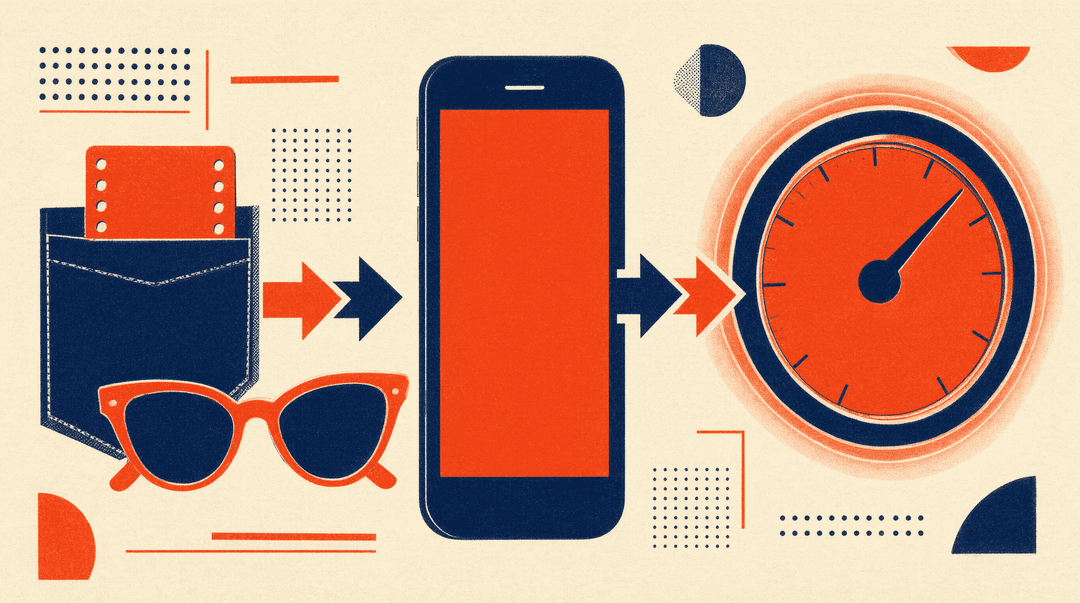
Strip the two columns down and the dividing line is not voice versus text, or pin versus pendant. It is whether the device attaches to something you already do (record conversations, wear sunglasses) or asks you to adopt a new behavior whose only justification is the model behind it.
The biggest bet is in the dead lane
OpenAI is now spending $6.5 billion, its all-stock acquisition of Jony Ive's io team in May 2025, to enter exactly that lane. Bloomberg reported on July 14, 2026 that the first device will be a movable, screenless speaker with a camera, positioned as a humanlike AI companion for the home. A follow-up August 2026 report put the price above $300, the form factor at doughnut-shaped and hockey-puck-sized, with lights and moving parts standing in for a screen.
The schedule keeps slipping. In February 2026, court filings tied to a trademark dispute revealed OpenAI would not ship any hardware before the end of February 2027, had abandoned the io and IYO brand names entirely, and had produced no packaging or marketing materials. Apple sued two former employees and an io entity over trade secrets on July 10, 2026. The pitch, meanwhile, is the Friend pitch with a frontier model behind it: a companion, not an assistant, that observes your life. If the graveyard taught the market anything, it is that companionship is the hardest job to charge for. Plaud sells a transcript. Friend sells a feeling and moved 5,000 units.
Bricking is the cost nobody priced in
The Humane shutdown added a durable line item to every future purchase in this category: the risk that the product disappears underneath you. HP bought the patents and the team and explicitly not the fleet, so roughly 7,000 owners learned that a connected device is a lease on someone else's server. Consumer Reports called the policy "truly a middle finger" in the Ars headline, and the complaint was not about the shutdown itself, which any company can face, but about the ten-day notice, the 90-day refund window and the permanent deletion of customer data.
That risk asymmetry explains part of the surviving lane's design. A Ray-Ban that loses its AI is still $200 of Ray-Bans. A Plaud card that loses its cloud is still a voice recorder. An AI Pin that loses its servers is, in the words of one long-time reviewer cited across the coverage, the worst product he had ever reviewed, and now a literal one. Investors priced this too: Humane sought $750 million to $1 billion for itself a year before accepting $116 million for parts.
The meter is the message
Every business in this category that works bills like software wrapped in a tool: Plaud's device plus subscription, Friend's late attempt at the same stack, glasses sold through an eyewear giant that controls the channel. Every business that failed billed like a phone: an upfront $200 to $700 for a slot in the pocket that the smartphone already owns.
The graveyard is not evidence that AI hardware is a bad idea. It is evidence that a second device has to be cheaper, more reliable, or more specific than the first one, and model access alone satisfies none of those tests. The $6.5 billion question is whether the best-funded entrant in the lane that already killed Humane, Rabbit, Bee and three-quarters of Friend's marketing budget knows something the ledger does not show.
Sources
- Ars Technica: "Truly a middle finger": Humane bricking $700 AI Pins with limited refunds
- Business Insider: Humane is shutting down, some buyers will not get refunds
- Consumer Reports Innovation: Should Humane's asset sale orphan an IoT device?
- The Verge: Only 5,000 people are using the Rabbit R1 at any given time
- 9to5Google: Rabbit says only 5,000 people use the R1 daily
- TechSpot (citing Tom's Guide): Rabbit employees unpaid for months
- Jotopr: Rabbit R1 backlash timeline and 100,000-unit sales
- The New York Times Magazine: Everyone Hates Friend, the AI Necklace
- Fortune: I tried the viral AI Friend necklace
- Startup Fortune: Friend 2.0 returns at $249 with a voice; Plaud passes $250M ARR (via Bloomberg)
- The Gadgeteer: Friend AI pendant now talks back at $249 (first run of 5,000)
- Observer: Meta acquires Limitless, the AI pendant company backed by Sam Altman
- Limitless.ai: official acquisition notice and support terms
- CNBC: Ray-Ban maker EssilorLuxottica triples sales of Meta AI glasses
- UploadVR: Meta and EssilorLuxottica sold 7 million smart glasses in 2025
- The New York Times: OpenAI unites with Jony Ive in $6.5 billion deal
- MacRumors: OpenAI's Jony Ive-designed device delayed to 2027 (court filings via Wired)
- Bloomberg: OpenAI's first device will be a movable, screenless speaker built as AI companion
- Mashable: OpenAI's AI smart speaker shaped like a doughnut, over $300
- Kr-asia: Tencent's rumored Plaud deal (2024 revenue figures via 36Kr)
- Quartz: Plaud targets US IPO in 2028
