
In late 2026, primary non-Nvidia options include AMD’s Instinct MI400 series (like the MI455X), Google’s TPU7 Ironwood, AWS Trainium3, and OpenAI’s custom Jalapeño inference chip. While Nvidia remains the market leader due to software ecosystems, these alternatives offer viable hardware choices for specific training and inference workloads. Key decision factors should prioritize memory bandwidth over peak FLOPS and consider interconnect scalability rather than just individual chip performance metrics.
For most of the past three years, the answer to "what chip should we buy for AI" was: whatever Nvidia can sell you. That answer is still correct for most teams. But the shelf next to it looks different in late 2026 than it did a year ago. AMD is shipping rack-scale systems against gigawatt-sized contracts. Google and Amazon now sell their own accelerators, and at least Google published a rate card. The largest AI lab designs its own inference chip. Here is what the non-Nvidia shelf actually holds today, and what to read on the spec sheets.
The merchant GPU shelf
Nvidia's shipping workhorse remains Blackwell Ultra. Its Vera Rubin NVL144 rack, 72 GPU packages carrying 144 compute dies, entered full production in June 2026 with partner availability in the second half of the year. One notable cancellation: Rubin CPX, the 30-petaflop GDDR7 card for long-context prefill that Nvidia showcased in September 2025 with end-of-2026 availability, dropped off the roadmap at GTC 2026. Nvidia's sharpest defensive move is not a chip but a port. Its NVLink Fusion program lets third-party silicon attach to Nvidia rack fabrics, and AWS has said Trainium4 will support it.
The only merchant GPU alternative is AMD's Instinct MI400 series, announced at Advancing AI on July 24, 2026. The flagship MI455X carries 432 GB of HBM4 across 12 stacks at up to 23.3 TB/s and lists 40 PFLOPS of peak OCP MXFP4. The Helios rack packs 72 of them for 31 TB of HBM4, 2.9 exaFLOPS of FP4, 260 TB/s of UALink scale-up bandwidth and 43 TB/s of Ultra Ethernet scale-out. Production ramp is scheduled for the second half of 2026, so treat rack-level claims as forward-looking.
The demand signal is ahead of the shipping status. OpenAI signed a 6 GW agreement with AMD in October 2025, with the first 1 GW of MI450 deployments set to begin in H2 2026, and AMD issued warrants for up to 160 million shares that vest as deployment milestones are met. Subsidized demand is still demand, but a vendor paying its customer to buy its hardware is a detail buyers should register.
The hyperscaler ASICs got a rate card
Google's seventh-generation TPU, Ironwood, is the most fully specced card on this shelf. Per chip: 192 GB of HBM3E at 7.37 TB/s and 4,614 TFLOPS of FP8, up from 918 TFLOPS on Trillium, scaling to 9,216 chips and 42.5 FP8 exaFLOPS per superpod. Google calls it its first inference-first TPU. It has no FP4 hardware, and SemiAnalysis notes it reached general availability roughly a year behind Blackwell, closing most of the per-chip gap but not the timing one.
The bigger change is commercial. After months of publishing no number, Google Cloud listed TPU7x at $12.00 per chip-hour in Iowa and $13.20 in London in October 2026, about even with reported B200 on-demand rates of $11.28. The custom-silicon discount narrative is now a question of who you have to call to get capacity, because TPUs rent from exactly one cloud.
Amazon's Trainium3 went generally available at re:Invent in December 2025 on a 3 nm process, with 144 GB of HBM3e per chip and up to 144 chips per UltraServer, for 362 MXFP8 petaFLOPS and 706 TB/s of aggregate memory bandwidth per UltraServer. The deployment scale is not hypothetical: Project Rainier runs on nearly half a million Trainium2 chips, and Anthropic says Claude now trains and serves on over one million of them. AWS names OpenAI, Databricks and Uber among Trainium customers.
Anthropic is itself the proof of concept for multi-silicon: over a million Trainium2 chips at Amazon, up to one million TPUs from Google in a deal worth tens of billions with well over a gigawatt online in 2026, plus Nvidia GPUs on top.
The labs build their own
OpenAI's 10 GW collaboration with Broadcom, announced October 13, 2025, produced its first chip on June 24, 2026: Jalapeño, an LLM-optimized inference accelerator built from design to production in nine months and slated for initial deployment by end of 2026. OpenAI claims early testing shows performance per watt "substantially better" than current state of the art. Unverified efficiency claims are claims. Still, the largest frontier consumer now buys Nvidia, buys AMD, and builds its own simultaneously, and that is the clearest statement about the merchant market's pricing power.
The specialists stayed niche
Groq and Cerebras still sell non-GPU inference directly as token APIs. On OpenAI's open-weight gpt-oss-120B, Groq charges $0.15 input / $0.60 output per million tokens at published speeds near 500 tokens per second, while Cerebras charges $0.35 / $0.75 at claimed speeds around 3,000 tokens per second. The catalogs remain thin: neither serves DeepSeek-class or multimodal lineups broadly, and neither offers self-serve fine-tuning. That keeps them at second-source status rather than shelf status.
How to read the spec cards
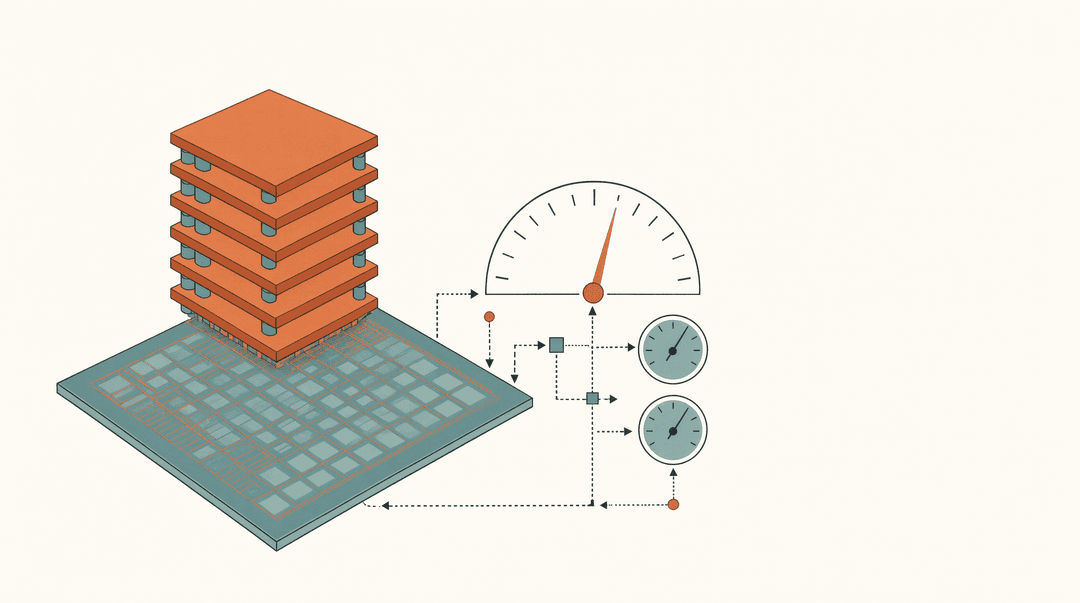
Four rules, in order of how often vendors hope you ignore them.
- Peak FLOPS is marketing, especially FP4 numbers. Most production serving revenue still comes from BF16 and FP8 paths, and Ironwood shows you can skip FP4 entirely and lead on memory.
- Memory capacity and bandwidth decide serving economics. Decode is bandwidth-bound; that is why the MI455X pitch leads with 432 GB, why Cerebras's speed comes from on-chip SRAM, and why the useful Nvidia comparison is 288 GB HBM4 per Rubin package, not exaflops per rack.
- Announced is not shipping. Helios, Vera Rubin and Jalapeño all sit in an "H2 2026" window that closes only in 2027. Contracts with equity warrants attached deserve extra skepticism about ramp schedules.
- The interconnect is the product. Scale-up bandwidth and maximum world size set how much of a frontier model fits in one coherent domain. Ironwood's 9,216-chip pod is an order of magnitude beyond the 72-GPU NVLink or UALink racks, and that is the number Google, AMD and Nvidia all argue about selectively.
Bottom line
Nvidia is still the default, still the only vendor with software ecosystems, rack supply and list-price demand all pointing up. What changed in 2026 is that the default became a choice rather than a constraint. The two biggest labs spread training and serving across three or more silicon stacks, hyperscalers publish rate cards for their own chips, and a second merchant GPU line exists in contract form. When Anthropic runs Claude on Trainium, TPU and Nvidia hardware at the same time, "Nvidia or nothing" stops being an engineering limitation and becomes a procurement decision. Buy accordingly.
Sources
- Phoronix: AMD previews Instinct MI400 and Helios
- AMD: Instinct MI400 series product page
- ServeTheHome: AMD MI400 at Hot Chips 2026
- AMD IR: AMD and OpenAI 6 GW partnership
- Wccftech: AMD-OpenAI warrant terms
- Google Cloud blog: Ironwood, the first TPU for the age of inference
- Google Cloud docs: TPU7x (Ironwood) specifications
- SemiAnalysis: TPUv7, the 900lb gorilla in the room
- Shattered: Ironwood pricing vs Nvidia
- AWS: Trainium product page
- About Amazon: Project Rainier
- Anthropic: Expanding use of Google Cloud TPUs
- CNBC: Google-Anthropic cloud deal
- OpenAI: Broadcom 10 GW collaboration
- OpenAI: Jalapeño inference chip
- Spheron: Groq LPU vs Cerebras WSE
- BenchLM: Cerebras speed comparison
- VRLA Tech: Nvidia GPU roadmap 2026-2030
- Inside Deep Tech: Rubin CPX guide
- Wetheflywheel: AWS Trainium in 2026
Frequently asked questions
What is the current price for Google Cloud TPU7 Ironwood?
Google Cloud listed TPU7x at $12.00 per chip-hour in Iowa and $13.20 in London as of October 2026.
What specifications define the AMD Instinct MI455X?
The flagship MI455X carries 432 GB of HBM4 across 12 stacks at up to 23.3 TB/s and lists 40 PFLOPS of peak OCP MXFP4.
When is OpenAI's Jalapeño chip expected to deploy?
OpenAI claims initial deployment for its Jalapeño inference accelerator is slated for the end of 2026.
Does Amazon's Trainium3 support large-scale server configurations?
Yes, AWS Trainium3 supports up to 144 chips per UltraServer for massive aggregate memory bandwidth and compute capabilities.
