
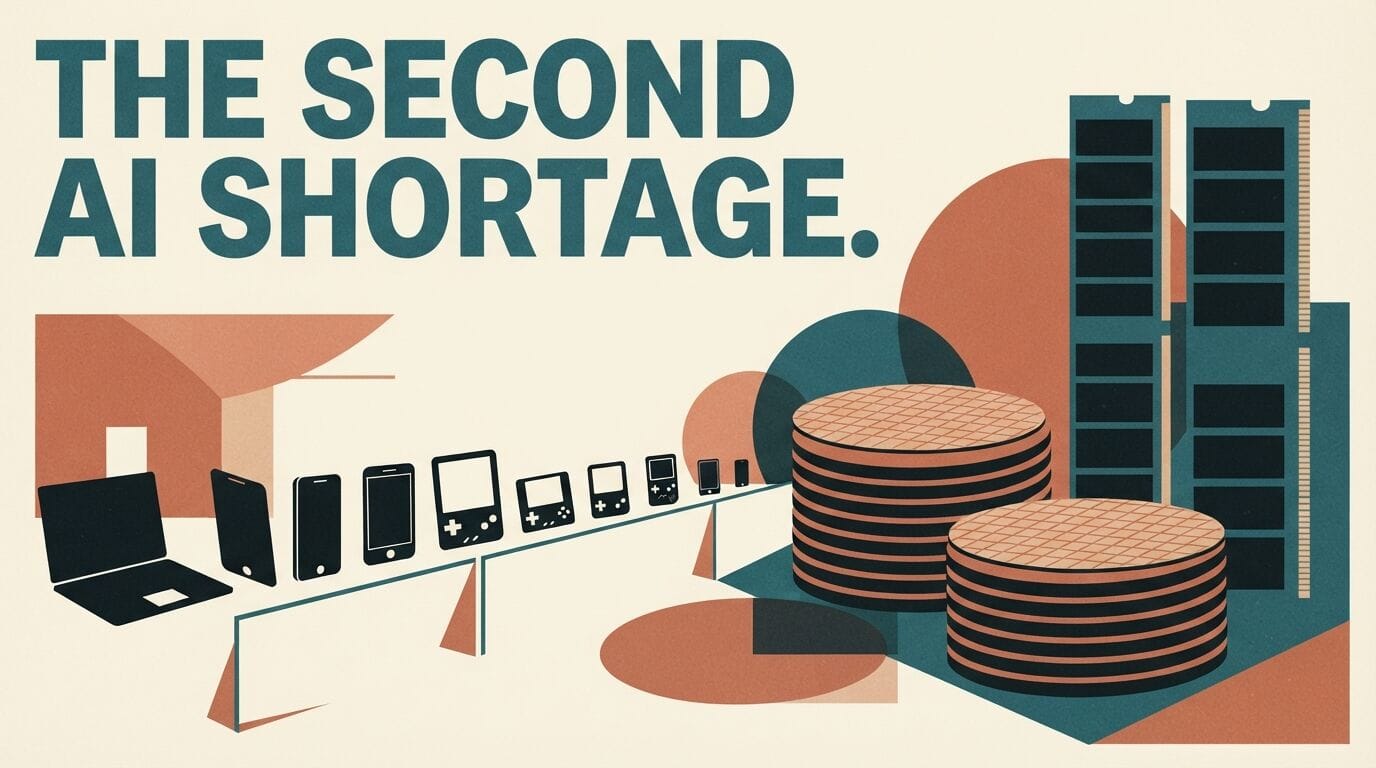
The cheapest 32GB DDR5 memory kit Tom's Hardware tracks ever went for 72 dollars. In late 2026 the same specification starts around 350 dollars, and the low end has printed above 400. A year ago, a 32GB DDR5 kit cost 100 to 200 dollars and you bought two.
This is the second raw-material shortage of the AI buildout. The first was electricity, and it produced a year of data center curtailment stories. This one is memory, and it lands closer to consumer wallets, because every laptop, phone, game console and unglamorous corporate server runs on DRAM that now competes for wafers with the accelerators training frontier models.
The numbers are unusually well documented, so it is worth laying out what has happened, why the mechanics are different from a normal memory cycle, and what the supply picture says about when this ends.
The price ladder, quarter by quarter
Contract prices (the rates large buyers actually pay, renegotiated each quarter) tell the clearest story:
- Q1 2026. TrendForce revised its conventional DRAM contract price forecast for the quarter to a 90-95% increase quarter over quarter, up from a 55-60% estimate published weeks earlier. PC DRAM was projected to rise more than 100% in a single quarter, the steepest on record for that benchmark.
- Q3 2026. Server DRAM contract prices added another 13-18%, even after long-term agreements locked in by US cloud providers capped increases for the biggest customers.
- Q4 2026. TrendForce's current forecast is a further 10-15% for conventional DRAM and 15-20% for NAND flash. Enterprise SSDs are the one category where the firm expects price growth to accelerate.
- Spot market. TrendForce's module price table from early November lists a 16GB DDR5 desktop module at about 243 dollars, roughly where a whole 32GB kit traded in 2025. A 32GB server-grade RDIMM module shows a session average near 2,025 dollars.
The consumer side tracked along. In Europe, Tom's Hardware's retail chart put an average 32GB DDR5 kit at 95-100 euros through early autumn 2025 and at a peak of 430-470 euros by early February 2026. DDR4 offered no escape: 32GB DDR4 kits that cost 60-90 dollars in October 2025 were quoted at 150-180 dollars by January 2026, because suppliers are cutting output of older generations, not redirecting it.
Gartner put the macro number on it in February: a roughly 130% rise in combined DRAM and SSD prices by the end of 2026, enough, in the firm's forecast, to knock 10.4% off global PC shipments and 8.4% off smartphone shipments this year.
The wafer arithmetic
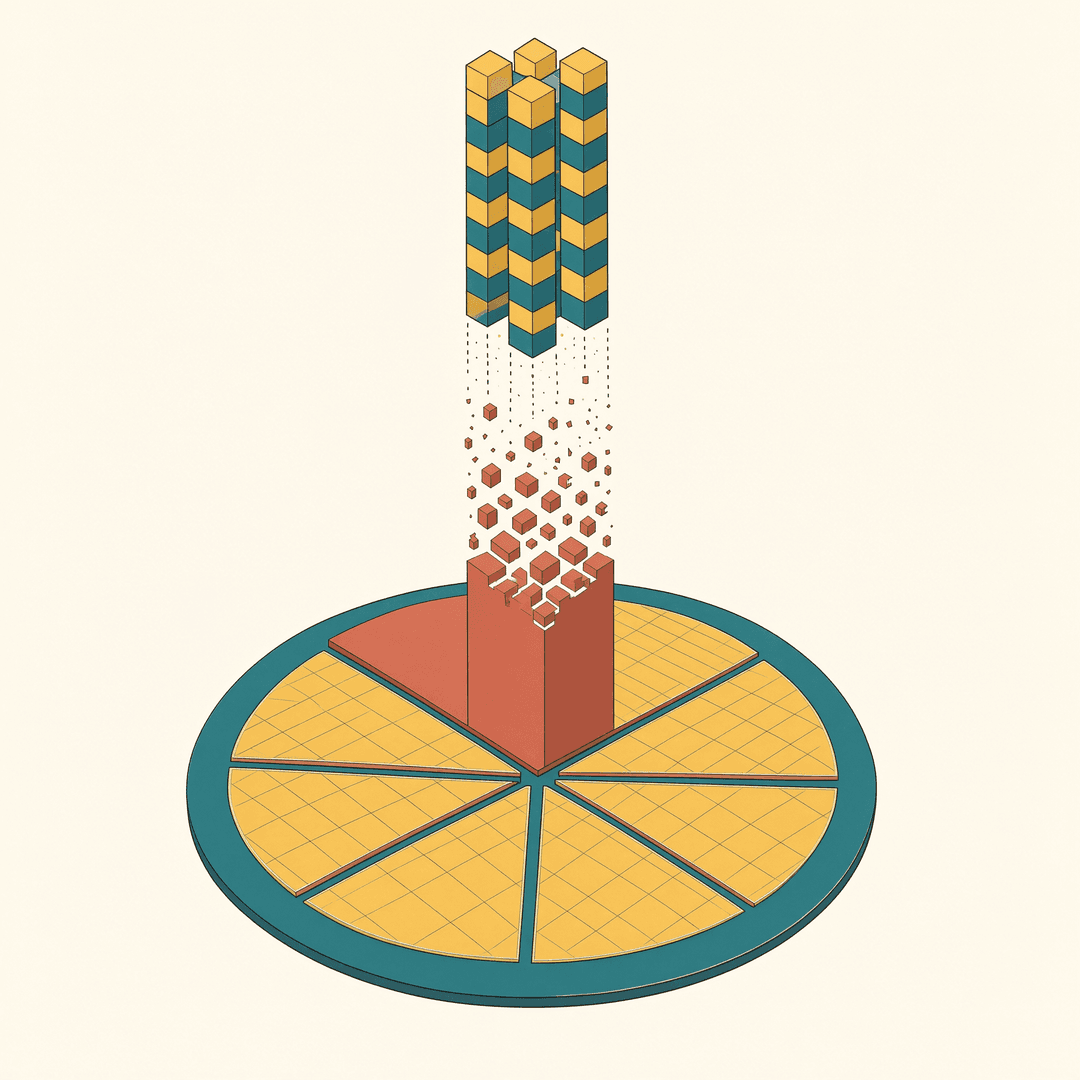
The driver is not that AI needs a lot of memory bits. It is that the memory AI needs is ruinously inefficient to produce.
High-bandwidth memory (HBM) is a stack of DRAM dies sitting next to the GPU. Producing it consumes roughly three to four times the wafer capacity of conventional DRAM per gigabyte delivered, once you count the lower yields of stacking and the advanced packaging involved. TrendForce's supply model has HBM taking about 18% of the top three suppliers' DRAM wafer input at the end of 2025, 22% in 2026 and 30% in 2027. Over the same period, HBM accounts for only 8%, 9% and 13% of total DRAM bit supply. That gap is the shortage in one sentence: a fifth of the world's DRAM wafers is currently producing a thirteenth of its bits.
There is a twist that complicates the simple "AI ate the RAM" version. In Q1 2026, per-wafer revenue from HBM was overtaken by that of plain DDR5 64GB RDIMMs, the memory that goes into general-purpose servers, according to TrendForce's pricing analysis. HBM is sold on annual contracts that lag the spot market, while server DRAM reprices quarterly. Which means the AI buildout is now squeezing two products at once: accelerator memory, and the conventional server memory that agentic AI workloads need in large RDIMM quantities to run the CPUs, databases and orchestration layers around the GPUs. TrendForce's Q4 note attributes fresh server DRAM demand precisely to cloud providers restocking general-purpose capacity for agentic workloads.
Who has supply
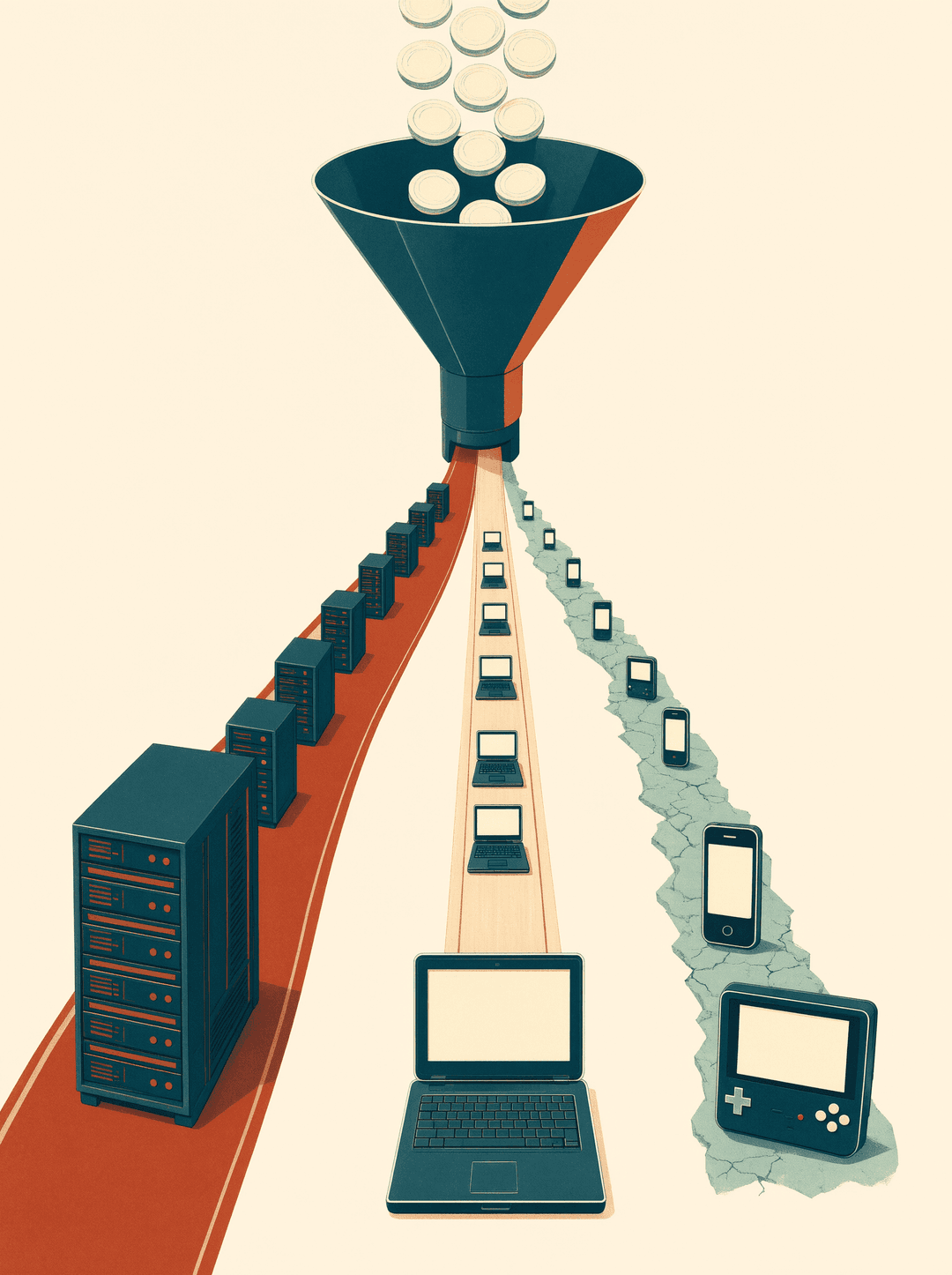
The three suppliers, Samsung, SK Hynix and Micron, run what the market never had in previous cycles: pricing discipline plus contracted backlog.
- SK Hynix CEO Kwak Noh-jung told analysts after Q3 earnings that DRAM and HBM capacity for the three years through 2029 is effectively sold out once long-term agreements and orders in negotiation are counted. Group chairman Chey Tae-won went further at Nvidia's GTC: the industry's wafer supply trails demand by more than 20%, and the shortage will take four to five years to work off.
- Micron's HBM capacity is booked out through 2027, and analysts at Bank of America pushed their memory super-cycle forecast to the end of 2027, with a scenario running to 2030.
- HBM pricing is resetting upward regardless: TrendForce's September survey projects a blended HBM ASP increase of 121% year over year for 2027, with contract negotiations for the HBM4 generation already underway.
Buyers with long-term agreements are largely insulated. Buyers without them, which includes most of the consumer electronics industry, are paying the market-clearing price or going without.
Who pays the difference
The best single indicator is Apple. On its fiscal Q4 earnings call, executives described memory price increases as "unprecedented" (CEO John Ternus) and, before that, as "a hundred-year flood on the memory pricing" (Tim Cook on the July call). Apple nearly doubled inventory to 11.09 billion dollars to buffer the shock, raised Mac and iPad prices in June, and its purchase obligations for manufacturing jumped by 33 billion dollars in a single quarter, to roughly 90 billion. That is the shortage transmitted to the most powerful supply chain buyer on earth, who negotiated his way to the front of the queue and still called it a flood.
Below Apple in the pecking order, the adaptations get uglier. TrendForce reports that smartphone makers are increasingly sourcing "reballed" memory, chips desoldered from used devices, cleaned, with new solder balls attached, and re-soldered onto new boards. Its November forecast has reballed chips at 7-9% of smartphone memory penetration in 2027. PC makers are trimming storage capacities in mainstream models to hold bill-of-materials cost, cutting their own memory procurement plans for 2027 as finished-goods inventories pile up at higher cost, and retailers have had to warn buyers about bots sweeping scarce kits.
When does it end
The supply response is decided, and slow. Capacity additions require new fab space, tooling and qualification, which Chey's four-to-five-year timeline reflects; greenfield DRAM fabs from Samsung and SK Hynix in Korea and Micron in the US will not move the global balance materially before 2027-2028. The near-term question is demand.
Three signs to watch, all visible now:
- Contract price velocity. TrendForce expects server DRAM contract prices to keep rising through H2 2027 but at a moderating pace. Moderation is not deflation; the ladder only becomes a ceiling when it stops climbing.
- Retail correction. European retail prices came off the February peak before mid-year, showing that street prices had outrun even the shortage. Retail falling while contracts rise is the normal first stage of an unwind.
- Inventory behavior. Some PC OEMs are already cutting 2027 memory procurement plans. If 2027 supply agreements signed at today's premiums start getting renegotiated or walked away from, the cycle turns fast. Memory cycles have historically ended not when supply arrived but when demand blinked, and the 2022-23 downturn left Micron and SK Hynix with billions in losses precisely because they kept producing into a demand collapse.
The structural argument for "this time is different" is that LTAs, HBM's annual pricing and the three-player oligopoly remove the panic-sell dynamics of earlier cycles. The structural argument against is that a 130% input-cost shock is a demand-destroying price, and Gartner's shipment forecasts are already the first evidence of demand doing exactly that. If smartphone and PC volumes keep eroding while hyperscaler backlogs stay locked, the consumer side will get its memory back at the cost of not wanting to buy as many devices.
For now the arithmetic holds. A fifth of DRAM wafer capacity is making 8-9% of the bits. Your laptop is at the back of that queue, and the price on the sticker is what that position costs.
Sources
- TrendForce, "Memory Price Outlook for 1Q26 Sharply Upgraded" (via TechPowerUp): https://www.techpowerup.com/345894/memory-price-outlook-for-1q26-sharply-upgraded-qoq-increases-of-all-product-categories-to-hit-record-highs
- TrendForce, "Long-Term Agreements Cap Price Increases; Server DRAM Contract Prices Expected to Rise 13-18% QoQ in 3Q26": https://www.trendforce.com/presscenter/news/20260709-13140.html
- TrendForce, "AI Server Demand Sustains Memory Contract Price Increases in 4Q26": https://www.trendforce.com/presscenter/news/20260930-13258.html
- TrendForce, "Tight DRAM Supply Gives Suppliers Greater Pricing Power in HBM, with HBM Contract Prices Expected to Surge Multiples Higher in 2027": https://www.trendforce.com/presscenter/news/20260602-13074.html
- TrendForce, "HBM Supply Constraints Persist, 2027 Price Outlook Revised Upward": https://www.trendforce.com/presscenter/news/20260929-13255.html
- TrendForce DRAM spot price tables (November 2, 2026): https://www.trendforce.com/price/dram/dram_spot
- TrendForce, "Persistently High DRAM Prices Drive Adoption of Reballed Memory": https://www.trendforce.com/presscenter/news/20261106-13297.html
- TrendForce, "Mounting Finished-Goods Inventories Prompt Some PC OEMs to Adjust Memory Procurement Plans for 2027": https://www.trendforce.com/presscenter/news/20261111-13303.html
- Tom's Hardware, RAM price tracking 2026: https://www.tomshardware.com/pc-components/ram/ram-price-index-2026-lowest-price-on-ddr5-and-ddr4-memory-of-all-capacities
- Tom's Hardware, "Retail DDR5 memory prices slowly drop in Europe": https://www.tomshardware.com/pc-components/dram/retail-ddr5-memory-prices-slowly-drop-in-europe
- Tom's Hardware, "SK Group chairman says memory chip shortage will last until 2030": https://www.tomshardware.com/pc-components/dram/sk-group-chairman-says-memory-chip-shortage-will-last-until-2030
- Tom's Hardware, "Apple faces unprecedented memory cost increases, manufacturing bill climbs by $33 billion": https://www.tomshardware.com/pc-components/dram/apple-faces-unprecedented-memory-cost-increases-as-ram-prices-continue-to-surge-manufacturing-bill-climbs-by-usd33-billion-rising-component-expenses-threaten-margins-through-the-holiday-quarter-and-into-2027
- Tom's Hardware, "Apple fighting 'a hundred-year flood' on memory pricing": https://www.tomshardware.com/tech-industry/apple-nearly-doubled-its-inventory-to-11-09-billion-as-memory-costs-ate-its-gross-margin
- Yahoo Finance, "SK Hynix Says Memory Is Sold Out Through 2029. Micron Is a Winner, Too": https://finance.yahoo.com/markets/stocks/articles/sk-hynix-says-memory-sold-151006258.html
- IG, "Memory chip supercycle 2026: what is driving the DRAM, HBM rally": https://www.ig.com/en/news-and-trade-ideas/memory-chip-stocks-rally-2026-260708
