
JERA, Japan's largest power generator, is negotiating with Anthropic, Meta and other US technology companies about building data centers directly next to its power plants around Tokyo, its chief executive told Nikkei in an interview published this week. The talks are about "behind the meter" setups: facilities that draw electricity from an operating plant on site instead of waiting for a grid connection. JERA has already said it plans to build a data center at its Chiba Thermal Power Station, and the Anthropic and Meta conversations would extend that model to named frontier-AI tenants.
No deal has been signed with either company, and neither Anthropic nor Meta has publicly confirmed the discussions. JERA's Chiba project itself began as a non-binding memorandum of understanding. The signal is still worth reading: a utility that produces roughly one third of Japan's electricity is pitching US AI labs on co-located power, and the labs' capital plans increasingly run through exactly that kind of arrangement.
The Chiba template
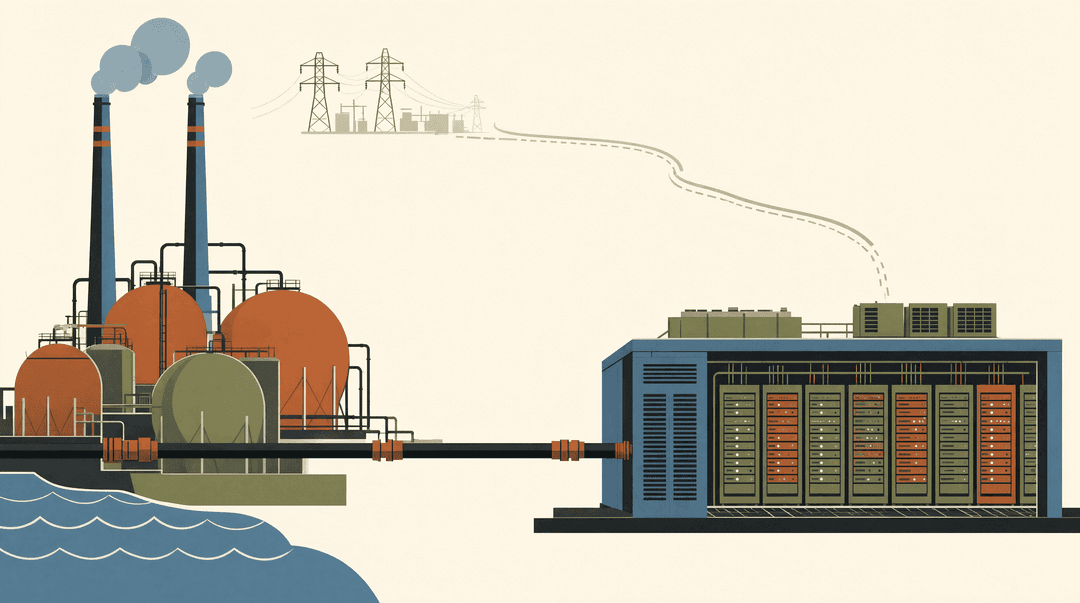
The pitch has a working blueprint. On October 1, JERA, Dell Technologies and the London-based infrastructure developer RHAELM signed an MoU to build a standardized model for national-scale AI infrastructure in Japan, with Apollo Global Management planned as strategic investment and financing partner for RHAELM.
The first project, at JERA's Chiba Thermal Power Station east of Tokyo, is specified at up to 400 MW of power capacity and total capital deployment of more than US$15 billion (2.3 trillion yen) across land, power infrastructure, facility construction and AI compute. Operations are targeted to begin around 2028. The Chiba station is an LNG-fired complex with a total maximum output of 4.38 GW, according to Data Center Dynamics. JERA's own release calls the site the largest single-site AI infrastructure deployment in Japan and one of the largest in Asia, and says a behind-the-meter hookup from the operating plant can deliver capacity "years ahead of a conventional grid-connected development schedule."
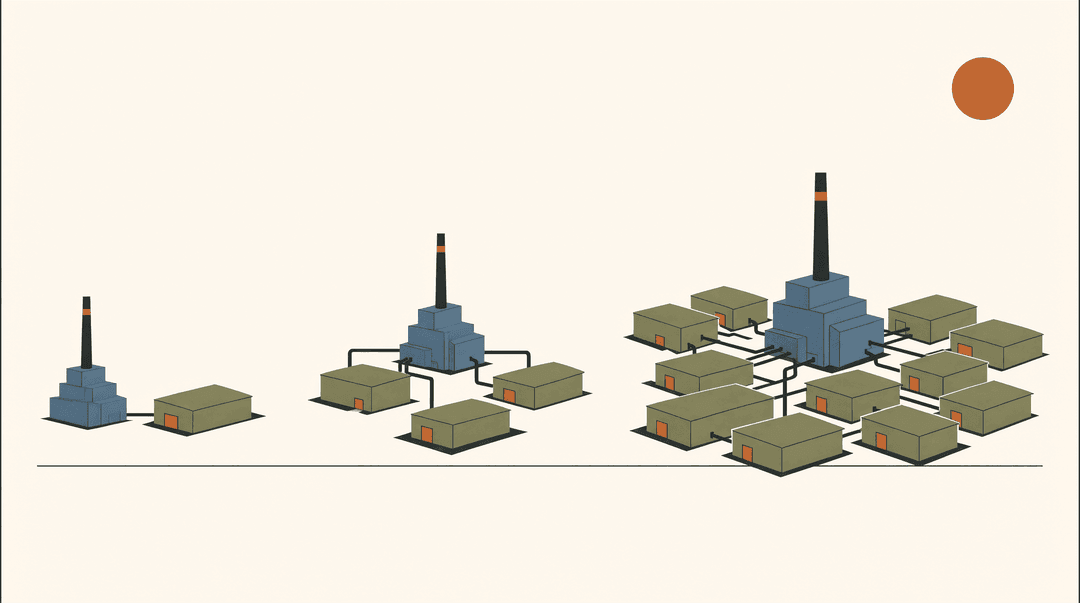
The partners intend to repeat the model at other JERA sites, with the stated ambition of multi-gigawatt AI capacity across Japan in the 2030s. Global CEO Yukio Kani says JERA already supplies nearly all the power consumed in the Tokyo metropolitan area, and has separately warned that data center demand in the country could eventually approach 10 gigawatts.
Why the meter is the point
Grid queues are the bottleneck for AI buildouts everywhere, and Japan is a hard case: land is scarce, the fuel is imported, and connection wait times in the Tokyo area run long enough that developers now treat on-site generation as the fast lane. Behind the meter, a data center taps the plant directly, bypassing most of the interconnection process. That is the same logic driving US hyperscalers. Cleanview, which has tracked the trend from permit filings, identified around 82 GW of behind-the-meter data center power projects and found that 92% of them were announced after the start of 2025, with OpenAI and Anthropic alone holding leases for more than 10 GW of behind-the-meter supply.
Japan is offering the model a national framing. The buildout is aligned with the government's "Watt-Bit Collaboration" policy, which coordinates electricity and telecommunications infrastructure, and its GX Strategic Area program for data center clusters. Prime Minister Sanae Takaichi has pledged to bolster the domestic AI supply chain following an announced 102 trillion yen AI-and-semiconductor investment plan, according to AI4Japan. The competition is already visible in Osaka: Reuters reported in October that NTT Data Group is in final talks to build Anthropic's first dedicated Japanese data center there, with up to 500 MW of intake capacity, construction costs of as much as 1 trillion yen, and partial operation possible as early as 2028.
One caveat sits alongside the enthusiasm. Washington has been hostile to US firms moving AI capacity abroad: President Trump said in November that companies building data centers overseas could face a ban or a "tremendous tax." Anthropic and Meta have so far built their overseas compute quietly, and a Japanese campus hosting their training or inference load would be the most visible test of that tolerance yet.
What to watch
Three checkpoints. First, whether the JERA-Anthropic and JERA-Meta talks produce a signed agreement, and what the tenants actually get: colocation, dedicated capacity or an equity stake. Second, whether Apollo and RHAELM close financing on Chiba at the announced scale, since the October document is an MoU, not a funded project. Third, whether a second site materializes. Kani has framed Japan as a candidate for Asia's largest AI hub precisely because demand is spilling out of China; the template only works if Chiba proves that a gas-fired plant and a server hall can be built as one project.
For now, the durable fact is smaller than the headline: Japan's biggest electricity producer has decided the fastest route to AI capacity runs around the grid, and it is shopping that idea to the two companies with the most voracious compute appetites in the world.
Sources
- Japan's JERA aims to build Anthropic, Meta data centers near power plants - Nikkei Asia
- JERA, Dell Technologies and RHAELM Sign MoU to Accelerate National-Scale AI Infrastructure Development in Japan - JERA press release
- Jera, Dell Technologies, and Rhaelm team up for behind-the-meter AI infrastructure in Japan - Data Center Dynamics
- NTT Data in final talks to build Anthropic's first data centre in Japan - Reuters via The Star
- Apollo Backs $15 Billion Chiba AI Campus With Jera and Dell - AI4Japan
- Bypassing the Grid: How Data Center Developers Are Building Their Own Power Plants - Cleanview
- Trump threatens a "tremendous tax" on offshore data centers - llms.blog
