
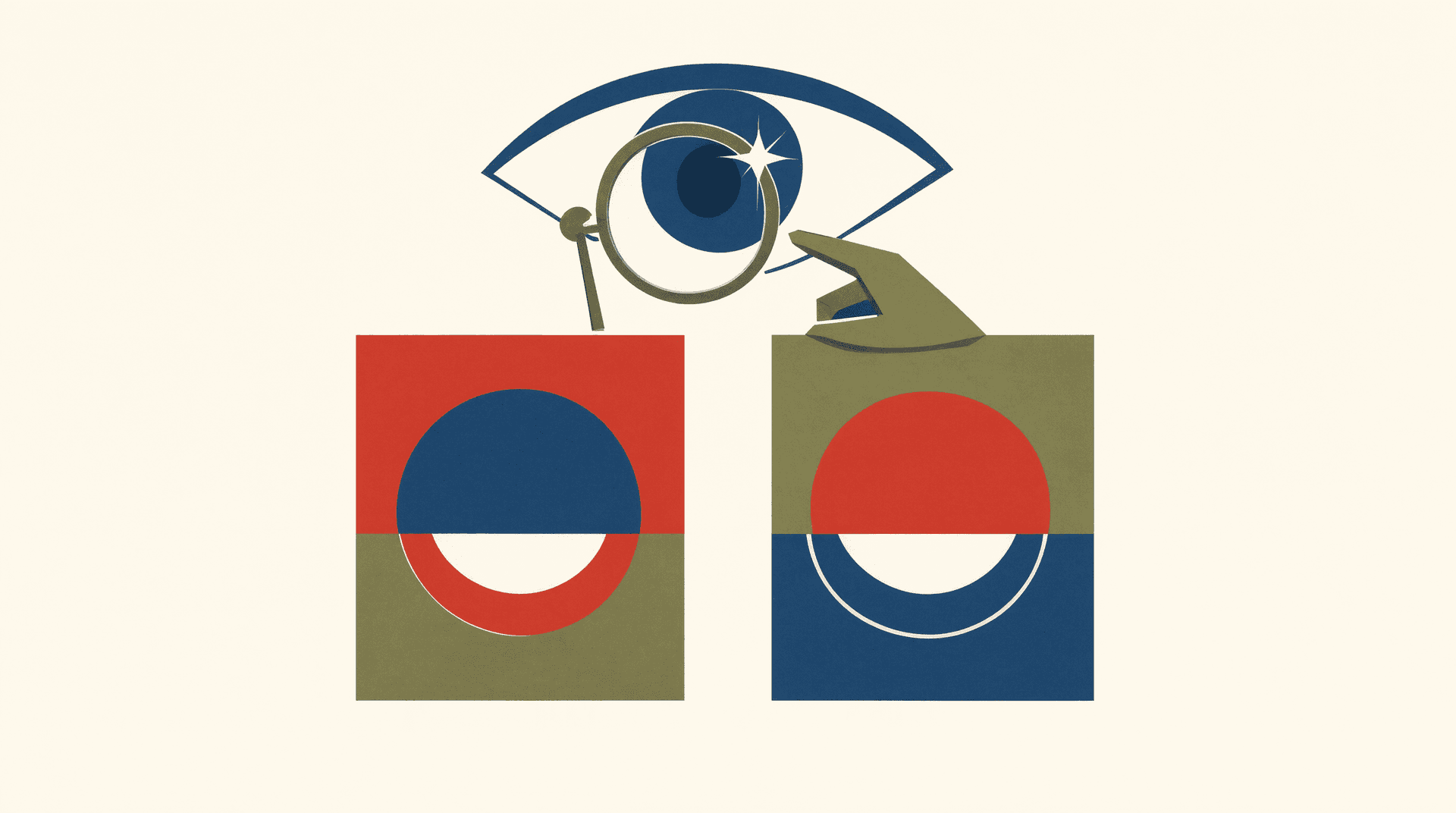
All AI products often look the same because frontier models trained on the same data distribution produce stylistic near-twins from identical prompts, creating what designer Joey Flynn calls an "averaging problem." While industry leaders like OpenAI claim human "taste" is the critical differentiator, this aesthetic convergence suggests that taste may be a temporary moat, as models increasingly absorb established aesthetic rules.
Silicon Valley has a new favorite word, and it is wearing a turtleneck. "Taste" has become the industry's preferred answer to an uncomfortable question: when models can generate interfaces, images and copy on demand, what is left for humans to be worth? A New York Times Magazine feature published Sunday by Jonah Weiner surveys the moment, and the evidence suggests the answer is mostly rhetorical.
The claim
The industry's argument, as the feature lays it out: if generative AI floods the world with adequate output, discernment becomes the scarce input. OpenAI president Greg Brockman called taste "a new core skill" in a widely shared post earlier this year, and the framing has spread from there: taste as moat, taste as the human edge, taste as the thing "net new and resonant" enough to survive the slop.
The fear underwriting it is real. Even OpenAI has acknowledged the danger of "social deskilling" as people lean on chatbots not just for tasks but for thinking. Weiner's feature situates the taste obsession in that larger unease: what will we like, and who will we become, once curation is outsourced?
The practical version
Joey Flynn, the product designer who ran design at OpenAI and Instagram before that, offered the least mystical case in the feature. If many people give a model the same prompt - "make an app that looks like it was designed by Apple" - "it's basically going to give us the same output," Flynn said. On his telling, the taste moat is an averaging problem: the differentiator is whoever has the insight to "guide the model into doing something more resonant."
Flynn also pushed back on the maximalist version, in which models eventually acquire the judgment themselves. That claim, he said, is "the full A.G.I.-pilled version" - the position that "whatever insight you would have, the model can have."
That is the honest fault line. The skeptics quoted in the feature note that computers are, historically, quite good at learning rules, and an aesthetic is a set of rules. As one AI founder told Fast Company: "One by one, the things that we were sure were uniquely human just turn out to be patterns" the models absorb. Taste-as-moat is, at minimum, a moat with a maintenance schedule.
The price tag test
Where the discourse gets money attached, it tilts. OpenAI paid roughly $6.5 billion in stock last year for io, the AI hardware startup founded by Jony Ive, with OpenAI already holding a 23% stake - arguably the industry's largest-ever wager that a single person's aesthetic judgment is an industrial asset. Anthropic, meanwhile, has made its own taste argument through branding: warm neutrals, serif type, the atmosphere of a serious independent publication.
The catch is what those bets look like at scale. As the New Yorker's Kyle Chayka has documented, Claude's default design output - beige and cream backgrounds, rusty orange accents, oversized italic serifs, tracked-out subheadings - has become one of the most recognizable visual dialects on the internet, and the same convergence critique applies to OpenAI's product surfaces. If taste is the moat, the flagship products are all standing in the same marsh.
What to actually take from it
Two things survive contact with the evidence. First, the averaging problem Flynn describes is not philosophy; it is model behavior. Frontier models trained on the same distribution produce stylistic near-twins from the same prompt, and human direction is currently the cheapest escape hatch.
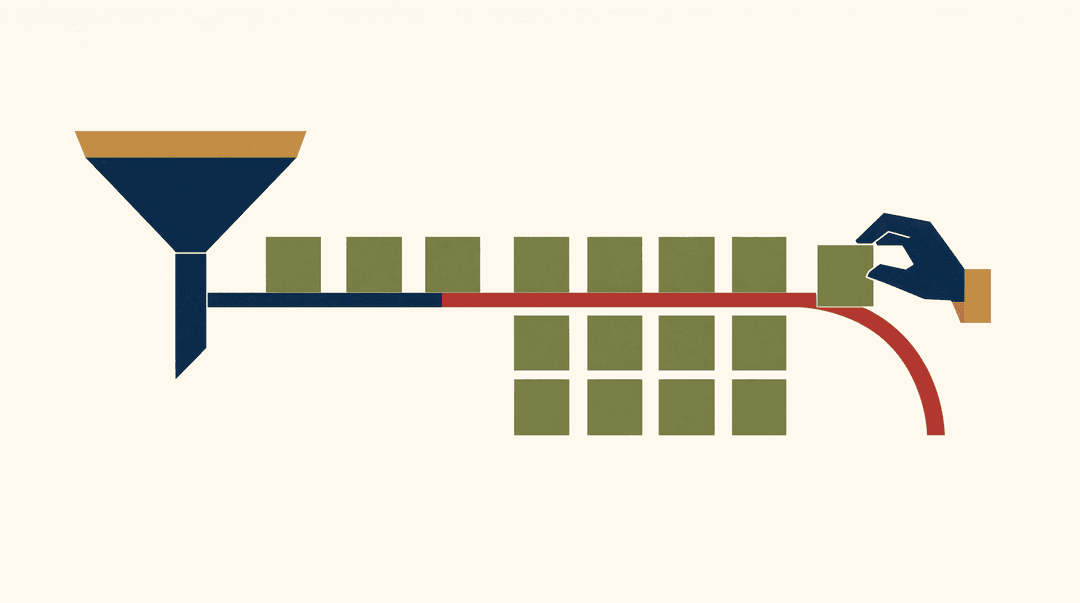
Second, "taste" is doing PR work that a phrase like "human editorial judgment over model output" cannot do: it converts a workflow step into an existential human quality, which conveniently positions the people selling the workflow.
The moat claim is unproven and may be temporary by construction - every aesthetic rule a human can articulate is a rule a next-generation model can absorb. What is verifiable is the pricing. The industry does not merely say it values taste. It pays $6.5 billion for the kind it can name.
Sources:
- The New York Times Magazine: The Internet Broke Our Taste. Will A.I. Destroy It for Good?
- Techmeme summary
- The New York Times: Is Taste the One Thing A.I. Can't Replace?
- The New Yorker: The A.I.-Design Aesthetic That's Taking Over the Internet
- Shacknews: OpenAI acquires Jony Ive's startup (deal background)
Frequently asked questions
What is the 'averaging problem' in AI design?
The averaging problem refers to the phenomenon where many users provide the same prompt to a model, resulting in nearly identical outputs. This happens because frontier models trained on the same distribution produce stylistic near-twins, making human direction the key differentiator.
How much did OpenAI pay for Jony Ive's startup?
OpenAI paid roughly $6.5 billion in stock last year for io, the AI hardware startup founded by Jony Ive, while already holding a 23% stake in the company.
Does OpenAI believe taste is a core skill?
Yes, OpenAI president Greg Brockman called taste 'a new core skill' in a widely shared post earlier this year, framing it as the human edge needed to survive the flood of adequate AI-generated content.
What specific design elements are common in Claude's default output?
According to Kyle Chayka, Claude's default design output features beige and cream backgrounds, rusty orange accents, oversized italic serifs, and tracked-out subheadings, forming a recognizable visual dialect among AI products.
