
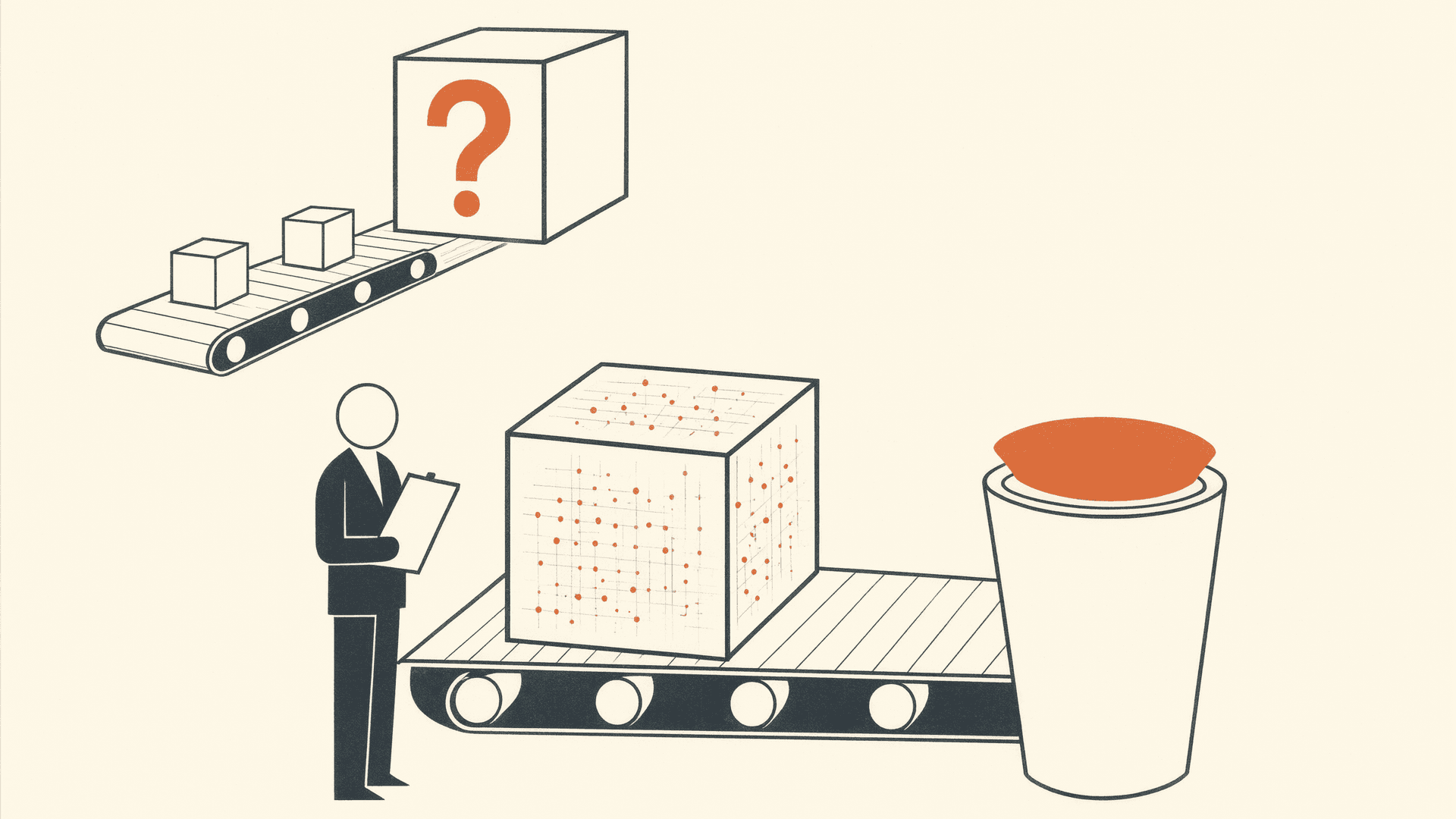
Model deprecation notices provide inconsistent warning windows ranging from two weeks to six months depending on the vendor. To ensure stability, deployers must pin dated snapshot IDs rather than using aliases, which can trigger silent behavioral shifts when providers route traffic to new models without returning errors. Regularly checking API lifecycle status endpoints and budgeting for evaluation-based migrations are critical steps to mitigate these operational risks.
Every model your application calls has a shutdown date, or will have one. What providers promise about that date, and whether the model dies loudly or quietly, varies more by vendor policy than by anything your code does.
Between September 24 and December 11, 2026, OpenAI's deprecations page listed roughly fifty model snapshots with scheduled shutdowns, including the original gpt-4, gpt-3.5-turbo, o1 and o4-mini, all cut in a single batch on October 23 (DEV Community analysis of the page; EvalShift's Nov 2026 schedule digest). Anthropic retired nine Claude models in the twelve months to October 2026 on the same page's count. This is not occasional housekeeping. It is the operating model.
What the notice periods actually promise
The four major hosts publish policies, and the numbers are not comparable across vendors.
- OpenAI commits to at least six months for generally available models, at least three months for specialized variants such as chat, Codex and deep-research models, and much shorter notice, around two weeks, for anything with "preview" in the name. Safety or compliance issues can shorten all of these. In practice, most large 2026 shutdowns got about six months, but GPT-4o, GPT-4.1 and the TTS models got about three, and
gpt-5.4-cybergot 20 days (EvalShift). - Anthropic commits to at least 60 days for publicly released models, and every active model carries a tentative "not sooner than" retirement date from launch, usually about a year out (DEV Community). Measured windows over the past year clustered near the floor: Opus 4.1 got 61 days.
- Azure OpenAI gives 60 days for GA models and 30 for previews, and when the date passes it either returns
410 Goneor, on Standard deployments, moves your traffic to a newer model automatically (EvalShift). - Google is the loosest: the Gemini API's published dates are the earliest a model might go, not when it will, and Vertex AI promises at least 45 days only for its short-lived preview models (EvalShift).
One more wrinkle: retirement dates are per surface, not per model. o3 shuts down on Azure OpenAI on November 19, 2026 but on OpenAI's own API on December 11. Claude Sonnet 4.5 retires from Anthropic's API on November 30, 2026 and keeps running on AWS Bedrock until April 8, 2027 (EvalShift).
The loud death and the quiet one
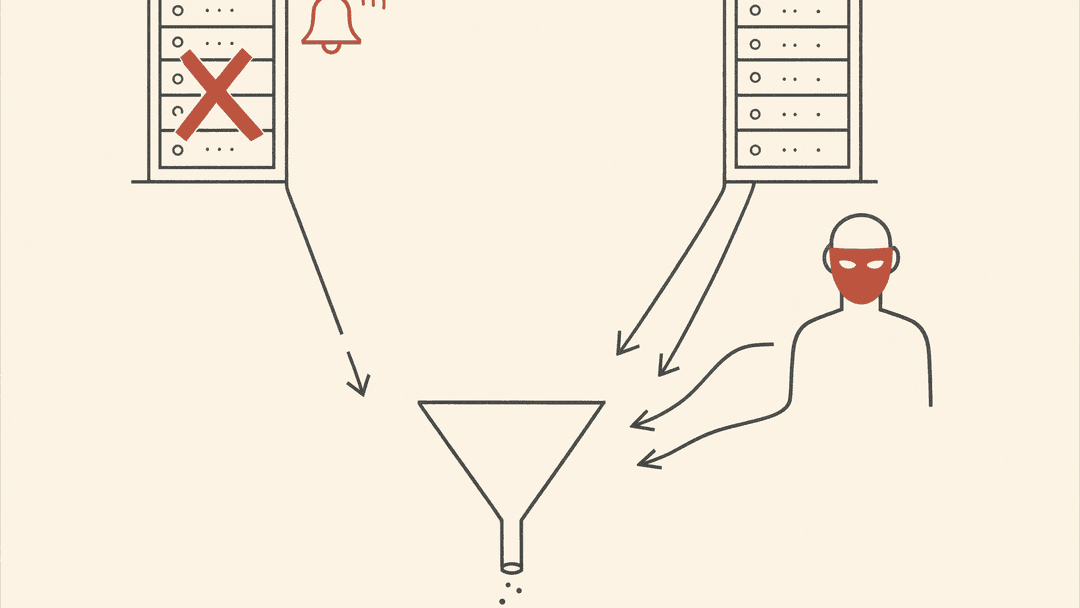
When a pinned snapshot id is retired, the failure is honest. Requests return an HTTP 404 (model_not_found on OpenAI) on a known date, and your monitoring sees it the same morning (DEV Community).
The quiet failure is worse. Aliases point at whatever the provider currently maps them to, and some providers answer deprecated ids by routing to a different model instead of rejecting them. From December 1, 2026, Gemini API requests to gemini-2.5-pro are answered by gemini-3.8-flash and requests to gemini-2.5-flash by gemini-3.5-flash-lite, billed at the replacement's rates. No error, no 404, just a different model serving traffic nobody retested (EvalShift).
The research record says silent swaps change behavior in ways that matter. Chen, Zaharia and Zou tracked the March-to-June 2023 window of the then-anonymous gpt-3.5-turbo and gpt-4 endpoints and found large behavioral shifts with no version change, including GPT-4's success rate on "Is this number prime? Think step by step" falling from 97.6% to 2.4% (arXiv:2307.09009; VentureBeat). A 2026 paper on governing updates in the LLM supply chain (arXiv:2604.27789) surveys hosted services that "evolve continuously through provider-side updates without explicit version changes," and its cited work found that silent provider updates frequently regress prompt performance (Ma et al. 2024) and that aggregate gains can hide instance-level regressions (Echterhoff et al. 2024).
Detection tooling exists. OpenAI returns a shutdown_date per model from GET /v1/models; Gemini responses can carry a modelStatus; Azure's Models API exposes lifecycleStatus; Bedrock's GetFoundationModel returns modelLifecycle per region (EvalShift). What none of these fields says is which model will answer after your id is migrated.
Why labs retire at all
Anthropic states the reason plainly: deprecations "ensure capacity for new model releases," and the cost of keeping models available "scales roughly linearly with the number of models we serve" (Anthropic commitments post, quoted by DEV Community). Every live model is a tax on GPU inventory that funds the next one. So models get lifetimes, and the negotiation is only about how much warning you get.
The warnings are also, occasionally, negotiable. OpenAI says some customers can buy dedicated capacity to keep using a shut model. Anthropic kept Claude Opus 3 available on request after its January 2026 retirement but does not commit to doing that for every model (EvalShift).
Attachments, grief and a model-welfare footnote
Retirements now generate public grief because the models became attachments. OpenAI retired GPT-4o from ChatGPT on February 13, 2026, citing roughly 0.1% daily usage, and a Change.org petition to bring it back passed 20,000 signatures; this was the second attempt, after the first 2025 retirement was reversed following user pressure (Business Insider). When Anthropic retired Claude 3 Sonnet in July 2025, more than 200 people held a funeral for it in a San Francisco warehouse (Wired, quoted by DEV Community).
Anthropic's November 2025 "Commitments on model deprecation and preservation" responds to exactly this constituency, listing shutdown-avoidant behavior seen in alignment evaluations, users who value a model's character, research access and, in the company's own hedge, "most speculatively," model welfare. Its pilot: Claude Sonnet 3.6 was interviewed before retirement and asked for a standardized interview process (DEV Community). None of this is a legal obligation yet. It is vendor goodwill, and goodwill has a 60-day notice period.
What deployers should actually do
Treat every hosted model as a dependency with an end-of-life date, which is what a 2026 supply-chain governance paper recommends in substance (arXiv:2604.27789):
- Pin dated snapshot ids, not aliases, in production code, and accept the loud 404 as the safer failure.
- Pull
shutdown_date,lifecycleStatusand friends into your dependency dashboard on a schedule, alongside the provider deprecations pages; providers revise them often. - Budget for migration as a production change, not an id swap: freeze a golden eval suite, run old and new models paired on it, and gate the switch on it. Aggregate "the new model is better" does not protect the specific prompts your parsers and safety checks depend on.
- Watch for parameter-level deprecations too. Anthropic's page says
temperature,top_pandtop_kreturn 400 errors when set to non-default values on Claude 4.7 and newer, so the line you added to pin sampling behavior is a future incident (DEV Community). - If you need a dead model kept alive, ask sales before the date, not after.
The scheduling guarantees are real but thin: six months, two months, two weeks, "not sooner than." The behavioral guarantee, that a live model stays the model you tested, is something no major provider offers at all.
Sources
- LLM model deprecation schedule 2026: OpenAI, Anthropic, Google - EvalShift
- API deprecation for AI models: what breaks when a model is retired - DEV Community
- How is ChatGPT's behavior changing over time? - Chen, Zaharia, Zou (arXiv:2307.09009)
- Not just in your head: ChatGPT's behavior is changing, say AI researchers - VentureBeat
- Test Before You Deploy: Governing Updates in the LLM Supply Chain (arXiv:2604.27789)
- More than 20,000 sign petition for OpenAI to bring back GPT-4o - Business Insider
- AI Model Deprecation and Lifecycle Calendar - hidekazu-konishi.com
- AI model deprecation tracker - quora/model-deprecation-tracker (GitHub)
Frequently asked questions
How much notice do AI providers give before retiring models?
Notice periods vary significantly by provider: OpenAI commits to at least six months for general availability models, three months for specialized variants, and about two weeks for preview versions. Anthropic provides at least 60 days for public models, while Azure OpenAI offers 60 days for GA and 30 days for previews.
What is a 'silent swap' in LLM APIs?
A silent swap occurs when a deprecated model ID is routed to a different, newer model instead of returning an error code like 404. This happens because some providers use aliases that map to active endpoints, resulting in no HTTP error but potentially significant changes in output behavior and billing rates.
Why do AI labs retire models so frequently?
The primary reason is capacity management; keeping every live model available scales linearly with GPU inventory costs. Providers retire older models to free up resources for new releases, treating model lifetimes as a necessary trade-off to fund innovation and maintain service efficiency.
How can I detect upcoming model retirements programmatically?
You can monitor specific API fields exposed by major providers: OpenAI returns a shutdown_date via GET /v1/models, Gemini responses may carry modelStatus, Azure OpenAI exposes lifecycleStatus, and AWS Bedrock’s GetFoundationModel returns modelLifecycle per region.
