
Four Meters, One Salesman: What AI Sales Agents Actually Charge For
The AI sales agent market sells the same thing under four incompatible meters. Salesforce bills per action. HubSpot and Salesforce both also bill per resolved answer. 11x sells a monthly rate card that works like a payroll line. Apollo sells seats with a credit pool stapled on. None of these measure the same unit, and the unit decides the bill far more than the quality of the agent does.
This is the sales lane of a pattern that already ran through customer support, site reliability, and security operations: vendors discover that "per seat" undersells an agent and "per token" scares buyers, so they invent a middle unit. The middle units are where the money is hidden.
Salesforce: ten cents an action, with three escape hatches
Agentforce has the most elaborate menu. The default model is Flex Credits: $500 per 100,000 credits, with a standard agent action costing 20 credits and a voice action 30 credits, which makes the published unit price $0.10 per action and $0.15 per voice action (Salesforce pricing page, May 2025 announcement). One Agentforce User License costs $5 per user per month and does not include usage; the usage is still billed in Flex Credits.
Around that meter Salesforce has stacked three alternatives. The original $2 per conversation remains, but the pricing page now labels it for existing Agentforce Conversations customers only, which per third-party pricing trackers means new deals start on credits (Agentforce pricing guide, checked October 2026). A Help Agent product charges $2 per resolution, announced in June 2026 with the price effective from July (coSupport pricing breakdown). And a $125 per user per month add-on ($150 for industry clouds) buys effectively unmetered use by employees, which is the old SaaS model wearing a trench coat (same breakdown).
The arithmetic between meters is simple and easy to miss. At $0.10 per action, Flex Credits and the legacy $2 conversation price cross at 20 actions per conversation (cost model guide). A chatbot that touches three records per session costs about 30 cents on credits and used to cost $2 under conversations. A deep agent that chains a search, a draft, an update and a follow-up is cheaper under a flat conversation fee. Which Salesforce meter you are on decides whether your agent's competence is your friend or your bill.
HubSpot: a credit card for your CRM, with expiry dates
HubSpot unified its AI pricing into one pool, HubSpot Credits, at $0.01 per credit, sold in capacity packs of 1,000 for $10 or pay-as-you-go in increments of 10 (HubSpot credits page). Subscriptions include a monthly allotment set by your highest tier, roughly 500 credits on Starter, 3,000 on Professional, 5,000 on Enterprise, and the credits reset monthly without rolling over (Marketing Hub pricing, credits budgeting guide).
The rate card is where the story is. A resolved Customer Agent conversation costs 50 credits, which is $0.50. Until April 14, 2026 the same product billed 100 credits per conversation, resolved or not, and the switch halved the price per outcome while moving the meter from activity to result (Agent Hub guide). A Prospecting Agent lead recommendation costs 100 credits, $1.00. A data agent answer costs 10 credits per record prompt, an AI workflow action 10 credits, and the content agent 1,000 credits per finished piece (rate card summary, HubSpot credits page). Every agent in the account shares one pool, and all AI agents began consuming credits on July 23, 2026 (credits guide).
Two fine-print items do real damage to a budget. First, "resolved" is the vendor's definition: a conversation counts as resolved when the agent answers and no human takes over within 72 hours (cost calculator with sources). Second, the included pools are small relative to the rates. Professional's 3,000 monthly credits buy about 60 agent resolutions or 30 prospecting recommendations, so any team with real volume is buying packs on top of an $800 per month Professional subscription that also carries a one-time $3,000 onboarding fee (HubSpot pricing blog).
11x and Artisan: the payroll frame, priced per prospect
The AI SDR vendors skip meters almost entirely and sell labor. 11x publishes a starting price for Alice, its outbound agent: the Growth plan runs "from $3,750/mo, billed annually" for up to 5 end users and 2,000 new prospects per month, with Pro (5,000 prospects) and Enterprise custom-quoted. Julian, the inbound agent, starts at $2,417 per month for chat and $5,333 for voice, metered by calls and chats per month (11x pricing overview). The unit is the prospect, not the message: 11x states it charges per lead whether the sequence runs three touchpoints or thirty (Alice pricing page).
There is a live inconsistency worth knowing about. The 11x product page's card and FAQ say $3,000 a month ($36,000 per year) while the pricing card and the company's own docs still say $3,750 ($45,000), a 25 percent gap between two places on the same site (pricing tracker's teardown). Actual contracts run higher than the floor: the procurement data firm Vendr puts a median 11x deal around $65,100 a year (11x vs Artisan comparison).
Artisan went the other direction. It used to publish plans at $250 and $600 a month, then moved to quote-only pricing in mid-2026 after reporting typical deals in the $1,500 to $5,000 per month range (buyer's comparison). Vendr's median for Artisan sits near $30,000 a year (comparison). Artisan sells usage-based credits with no platform fee and claims autonomous outbound generates pipeline at about one-fifth the cost of a human BDR, which is a vendor number, not an audited one (Artisan pricing blog).
The transparent end of the AI SDR lane looks like normal SaaS. AiSDR publishes three tiers at $250, $900 and $2,500 a month, metered by message volume with unlimited users, on quarterly billing (pricing comparison, category review). Apollo runs the hybrid: per-seat plans from a free tier into the tens of dollars per user per month, plus a team-wide credit pool for contact data and AI-researched records, where credits expire every billing cycle and add-on credit purchases renew automatically until switched off (Apollo pricing page).
What 2,000 prospects a month costs, four ways
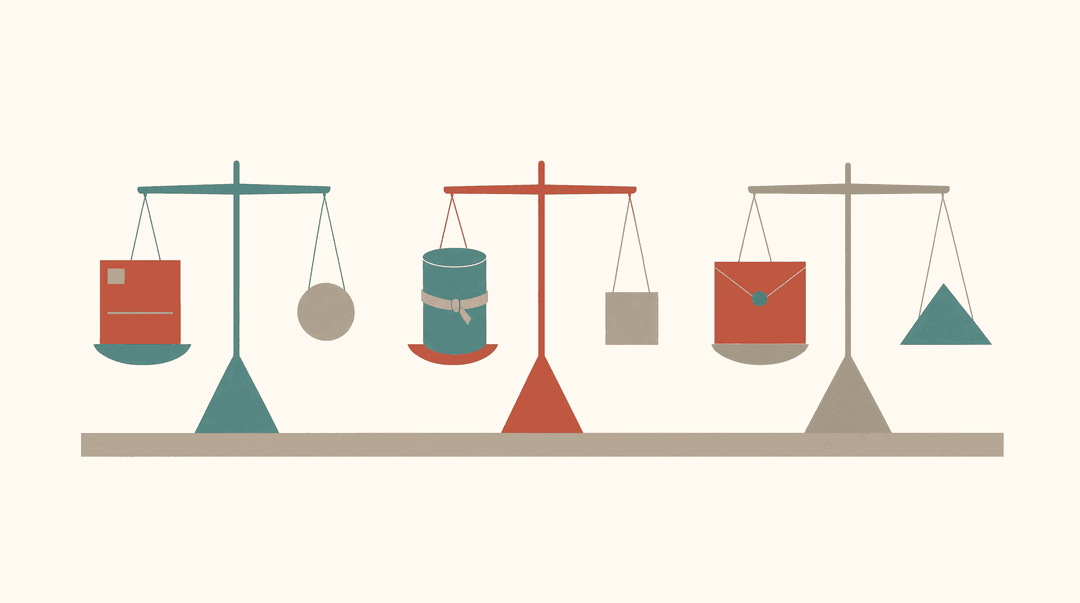
Hold the volume constant and the meters diverge by more than an order of magnitude.
- 11x Alice Growth: $45,000 a year published floor ($36,000 if you believe the FAQ) for 2,000 new prospects a month, about $1.88 per prospect at the card price (docs, teardown).
- HubSpot Prospecting Agent: 100 credits per recommendation, $1.00 each, so $2,000 a month in credits, on top of a Professional subscription at $800 or more (rate card, pricing).
- Agentforce Flex Credits: a sales agent that takes six actions per prospect costs $0.60, about $12,000 a year at 2,000 prospects a month, before seats ($5 per user) and before the CRM license underneath (pricing page).
- AiSDR Scale: $2,500 a month flat at the top published tier, roughly $30,000 a year, regardless of how many touchpoints the agent spends (tiers).
None of these numbers include data costs, human review time, or the deliverability tooling that reviewers consistently flag as the weak point of autonomous outbound (11x review). The subscription or credit spend is the visible part of the bill, not the whole of it.
What to check before signing
Three questions sort out any quote in this category.
- What is the unit, and who defines it? "Action," "recommendation," "prospect," and "resolution" are all vendor-defined. Ask what a retry, a multi-step chain, or a human takeover does to the count.
- What happens to unused capacity? HubSpot and Apollo credits expire monthly without rollover (HubSpot, Apollo). Salesforce Flex Credits pool but force you to forecast actions. Annual prepay converts your forecast error into revenue.
- Is the price a floor or a median? Every published "starting at" in this lane sits below what procurement data shows deals actually cost, by roughly 40 percent at 11x's median (Vendr via Revspire).
The direction of travel is legible. Salesforce launched a $2 per resolution product in 2026. HubSpot switched from per-conversation to per-resolution and halved the unit price in the same move. 11x abandoned pure quote-only pricing and published a per-prospect floor. Everyone is converging on "pay when the job is done" language, while quietly keeping meters on everything that fails. As the support lane learned first, the outcome price only flatters you if you read the definition of an outcome. In sales, the vendor writes that definition, charges you per word of it, and in at least one case cannot get two pages of its own website to agree on the number.
Sources
- Salesforce Agentforce pricing page: https://www.salesforce.com/agentforce/pricing
- Salesforce Flex Credits announcement (May 2025): https://www.salesforce.com/news/press-releases/2025/05/15/agentforce-flexible-pricing-news
- Agentforce credits cost model guide: https://www.jitendrazaa.com/blog/salesforce/salesforce-agentforce-credits-cost-model-complete-guide-2026
- Agentforce pricing tracker (conversations retirement, Help Agent): https://cosupport.ai/articles/salesforce-agentforce-pricing and https://www.getmacha.com/blog/agentforce-complete-guide
- HubSpot Credits page and rate card: https://www.hubspot.com/products/artificial-intelligence/credits
- HubSpot Agent Hub / Customer Agent pricing guide: https://www.getmacha.com/blog/hubspot-breeze-ai-agent-complete-guide and https://www.fastslowmotion.com/how-much-does-agent-hub-cost-hubspot-credits
- HubSpot credits budgeting guide: https://www.simplemachinesmarketing.com/blog/hubspot-credits-in-2026-how-to-track-cap-and-budget-them
- HubSpot Marketing Hub pricing: https://www.hubspot.com/pricing/marketing and https://blog.hubspot.com/marketing/hubspot-marketing-hub-pricing
- 11x pricing docs and product page: https://docs.11x.ai/help-center/overview/11x-pricing-overview and https://www.11x.ai/products/alice/pricing
- 11x pricing teardown (page/FAQ discrepancy, Vendr median): https://revexa.io/en/blog/11x-pricing
- Artisan vs 11x comparisons: https://www.joinvalley.co/blog/artisan-vs-11x and https://www.revspire.io/compare/11x-vs-artisan
- Artisan AI SDR cost blog: https://www.artisan.co/blog/how-much-does-an-ai-sdr-cost-pricing-compared-to-human-sdrs
- AiSDR / AI SDR pricing comparisons: https://www.heysid.com/resources/ai-sdr-pricing-compared-best-ai-sdr-by-cost and https://www.mkdirhq.com/blog/aisdr-vs-artisan-vs-11x
- Apollo pricing page: https://www.apollo.io/pricing
