
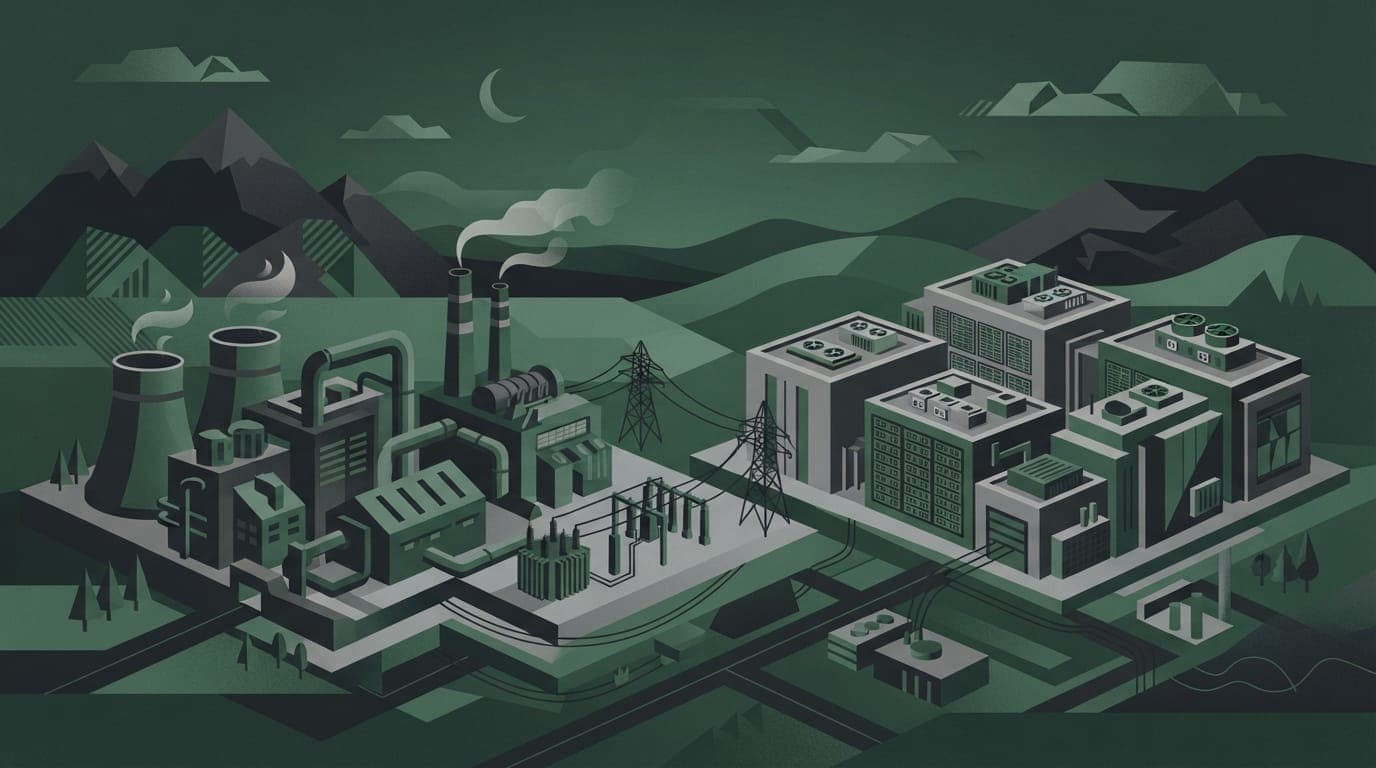
The US Environmental Protection Agency issued guidance on July 27 stating that power generation facilities operating separately from the public grid are not subject to the Clean Air Act's Acid Rain Program. The interpretation applies to so-called "islanded" power plants that supply electricity exclusively to data centers.
The ruling removes a significant federal permitting barrier for data center developers who build on-site power generation rather than drawing from the grid. EPA Assistant Administrator Aaron Szabo wrote in a July 16 letter that the Acid Rain Program, which has driven dramatic reductions in smog and soot pollution since 1990, does not apply to facilities with no connection to the broader electricity grid.
What changed
The Acid Rain Program requires power plants connected to the grid to obtain permits and comply with emissions caps under Title IV of the Clean Air Act. The EPA's new interpretation narrows the definition of covered facilities to those supplying electricity to the public grid. Islanded generators serving only data centers fall outside that definition.
The agency said the guidance gives developers greater flexibility in where and how quickly they can build new data centers, which are driving a surge in US electricity demand. The interpretation supports President Trump's Ratepayer Protection Pledge, which requires participating companies to build, procure, or pay for all energy needed to power their facilities rather than passing costs to residential customers.
Why it matters for AI
Data center electricity consumption has become a central constraint on AI infrastructure expansion. Hyperscale operators including Microsoft, Google, and Amazon have signaled that grid capacity and transmission delays are among the biggest bottlenecks for new AI compute. On-site generation, particularly natural gas turbines, has emerged as a workaround, but developers have faced permitting uncertainty under federal air pollution rules.
The EPA's guidance removes that uncertainty for islanded configurations. It also aligns with broader administration efforts to accelerate AI infrastructure, including earlier EPA proposals to loosen air permitting rules for data center construction and a parallel rule change that would give states more control over public engagement in the permitting process.
Environmental concerns
Environmental groups have criticized the administration's broader approach to data center pollution. A ProPublica investigation in May reported that the Trump administration has allowed polluters to sidestep Clean Air Act requirements with informal email exemptions, tied to a declared national energy emergency over AI electricity demand. A WIRED report in July noted that communities across the US have used the permitting process to push back against data center development, and that the EPA's proposed rule changes could reduce public input on new air pollution permits.
The Acid Rain Program has been one of the most effective federal environmental regulations, contributing to a roughly 90 percent reduction in sulfur dioxide emissions from power plants since 1995. Exempting islanded facilities creates a new pathway for fossil-fuel generation that bypasses those controls.
Sources
EPA says power for data centers can sidestep pollution laws - Reuters, July 27, 2026: https://www.reuters.com/legal/litigation/epa-says-power-data-centers-can-sidestep-pollution-laws-2026-07-27
EPA Seeks to Loosen Air Permitting to Speed Up Data Centers - Bloomberg Law, May 11, 2026: https://news.bloomberglaw.com/environment-and-energy/epa-seeks-to-loosen-air-permit-rules-to-speed-up-ai-data-centers
Trump Let Polluters Sidestep Clean Air Act Rules With Just an Email - ProPublica, May 8, 2026: https://www.propublica.org/article/clean-air-act-exemptions-trump-emails
The Trump Administration Wants to Change Public Engagement Rules for Polluters - WIRED, July 23, 2026: https://www.wired.com/story/trump-administration-change-polluter-public-engagement-rules



