

AWS on Monday released Strands Decider v2, a family of five open-weight decision models built on Google's Gemma 4 and licensed under Apache 2.0, according to an announcement by the Strands Agents team and reporting by The New Stack. The weights are published on Hugging Face under the StrandsAgents organization, and the code, training recipe and evaluations are open on GitHub.
The release is a rapid second act. Strands Labs, the experimental arm behind AWS's open-source Strands Agents SDK, shipped the first Decider only seven weeks ago, a 2-billion-parameter model built on Alibaba's Qwen3.5. Version 2 covers five sizes from the outset: Gemma 4 E2B, E4B, 12B, a 26B-A4B mixture-of-experts variant and a 31B dense model.
What a decision model is
A Decider does not generate text. It takes a state (a support ticket, an agent trace), a question, and a fixed set of options, then returns a calibrated probability for each option in a single forward pass. The pitch is the rote choices inside agentic workflows: which tool to call, where to route a request, whether an answer is grounded or safe enough to ship. Each question can carry up to 255 developer-supplied options.
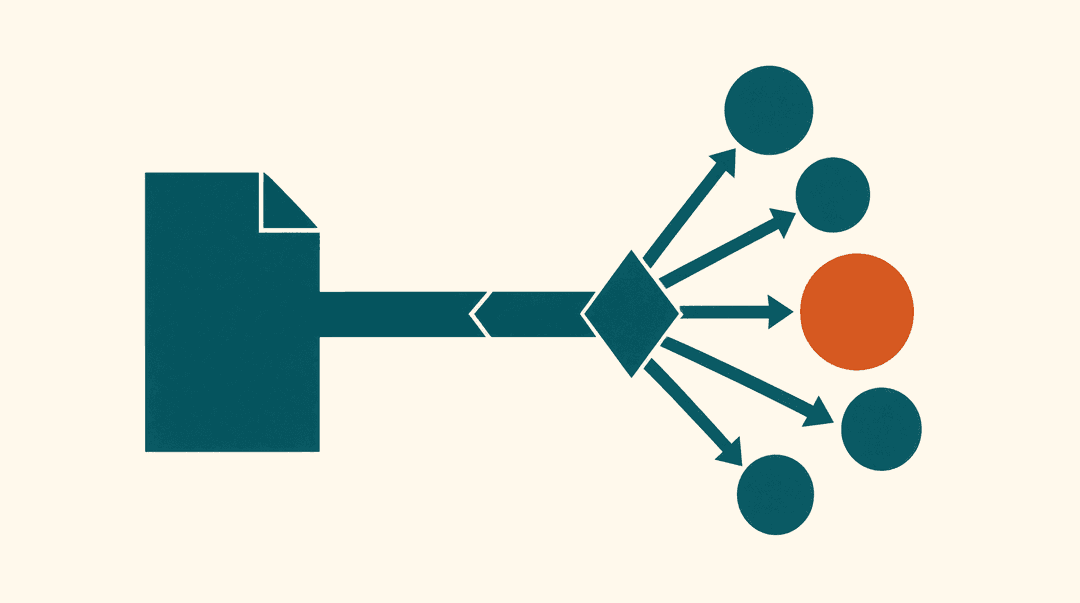
Two architecture changes drive the v2 gains, per the announcement. First, v2 drops the pointer head of v1 and scores option tokens directly, replacing most of the LM head with a 255-row readout layer trained with the model. Second, it swaps causal attention for prefix-bidirectional attention: the shared state is encoded once with tokens attending in both directions, and each question reuses that encoding, so asking 20 questions about one agent trace costs little more than asking one. A decision model never generates text, the team argues, so nothing in the read path needs left-to-right masking.
The training recipe grew from 136,000 examples to 17.48 million, with rank-64 LoRA, answer-only cross-entropy, weight averaging across three seeds and a calibration temperature fitted on held-out questions and baked into each checkpoint. Marc Brooker, an AWS vice president and Distinguished Engineer who started the project, told The New Stack he was "not entirely sure" why bidirectional attention helps: the team tested both approaches across diverse datasets and one outperformed the other.
The numbers, including the losses
AWS reports the 31B model averaging 82.1 across six public text benchmarks, up from 70.0 for the v1 26B-A4B model, and ahead of Google's Gemini Decision 1 at 79.4. On JevBench it scores 93.1 against Gemini's 92.2. Expected calibration error falls to 0.027 from 0.062, though Gemini Decision 1 remains slightly better at 0.025. The smaller models improve too: E4B jumps from a 62.7 average to 74.4. On image and video tasks, the 31B posts 90.1 on Mind2Web Multimodal and 70.2 on Video-MME.
The benchmark table is not clean. The New Stack notes the v2 31B trails Perplexity Decider v1.3 on PubMedQA and When2Call, and falls to vLLM Semantic Router's open d3-ultra on a New Yorker cartoon-caption test, losing on three of six benchmarks even as it wins the average. Brooker's read: "I think with V1 we were benchmark leading for about eight hours," and the leaderboards are getting "a little bit saturated," useful mostly for deciding whether a 4B model suffices for a workload.
The internal bill is the headline
The most concrete claim concerns Amazon's own ticketing system, one of the company's largest. Engineers there replaced Claude Sonnet 4.6 with the v1 E4B Decider for ticket labeling. AWS says average time per call fell from 4,215 milliseconds to 897 milliseconds and estimated list-price cost dropped from about $22,200 to about $500 per million tickets, a 98 percent cut, first reported by the Strands team. No accuracy figures were published for that deployment.
The economics point somewhere uncomfortable for AWS's own cloud. The company also says v2 cuts costs by routing requests between Claude Haiku 5.5 and Sonnet 5.5: Decider used as an untuned router solved 94 percent as many tasks as Sonnet alone at 44 percent of the cost. On LLMRouterBench, routing between DeepSeek V3 and Gemini 2.5 Pro reached 88 percent of Gemini's accuracy at 18 percent of its cost. Anthropic models are among the top sellers on Amazon Bedrock, and Decider is not on Bedrock yet. The New Stack flags the timing: re:Invent starts next week.

What it means
Decider is the clearest instance yet of a category bet: most steps in an agent are choices between known options, not open-ended generation, and choices can be made by small, cheap, calibrated models. The hybrid pattern AWS demos is straightforward. On AutoMix reading-comprehension benchmarks, sending the half of Llama-2-13B answers that v2 trusted least up to Llama-2-70B recovered 94 to 99 percent of the larger model's gain, versus 50 percent for a random half. Let the small model decide; escalate only when its confidence says so.
For operators, the practical draw is that everything runs where the agent runs: the repo documents deployment on local CUDA machines, Macs, CPUs, SageMaker real-time endpoints and AWS Lambda with a quantized arm64 build. Apache 2.0 weights on Gemma bases mean no API meter for the decision layer at all. The open question is calibration under distribution shift on real customer traffic, which Amazon has not published accuracy numbers for even in its own ticket queue.
