
The Deployment Middlemen: Who Actually Captures the Enterprise AI Budget
Two numbers describe the enterprise AI market in late 2026 better than any model benchmark.
Accenture has booked about $11.5 billion of cumulative "advanced AI" work since it started tracking the metric in 2023, across roughly 11,000 projects, and had recognized $4.8 billion of it as revenue by the first quarter of fiscal 2026. IBM says its generative AI book of business passed $12.5 billion when it reported fourth-quarter 2025 results in January 2026, up from $9.5 billion a quarter earlier and up from what the company described as low hundreds of millions in 2023. About four-fifths of that book is consulting work.
Neither company sells frontier models. They install other people's. That intermediary business, enterprise AI deployment services, grew so large in three years that the labs stopped being content with it. In May 2026 OpenAI launched the OpenAI Deployment Company, a majority-owned venture that opened with more than $4 billion in committed investment and bought a 150-person AI consulting firm, Tomoro, as its first staffing move. The war for the enterprise AI budget is now a war over who stands between the model and the workflow. This post reads the order books, the alliances and the meter changes, and what they mean for anyone signing an AI services contract.
The order book
Accenture, which defines advanced AI as generative, agentic and physical AI work and excludes classical analytics, reported that the category's revenue tripled to $2.7 billion in fiscal 2025 while bookings nearly doubled to $5.9 billion. Fiscal 2026 opened with $2.2 billion of advanced AI bookings and about $1.1 billion of category revenue in the first quarter. Total bookings for the year to August 2026 came to $84.5 billion, and consulting bookings grew 9 percent even as the managed services half of the firm overtook consulting in revenue for the first time since 2021.
IBM's disclosure has a faster slope. Generative AI now represents roughly a third of IBM Consulting's bookings and about a quarter of its $32 billion backlog, with a consulting generative AI annual recurring revenue figure of $3.6 billion, disclosed at the start of fiscal 2026. The company also told investors that consulting revenue grew only about 3 percent in the first quarter while software grew 11 percent, a spread that analysts read as clients buying AI assets more readily than AI implementation hours.
The strategy firms volunteer comparable shares. BCG reported 7 percent global revenue growth to $14.4 billion in 2025 and said AI and technology services now account for over 40 percent of revenue, up from about 20 percent the year before. Bain has said tech and AI-enabled work drove 30 percent of its business in 2024 and expects that to reach half.
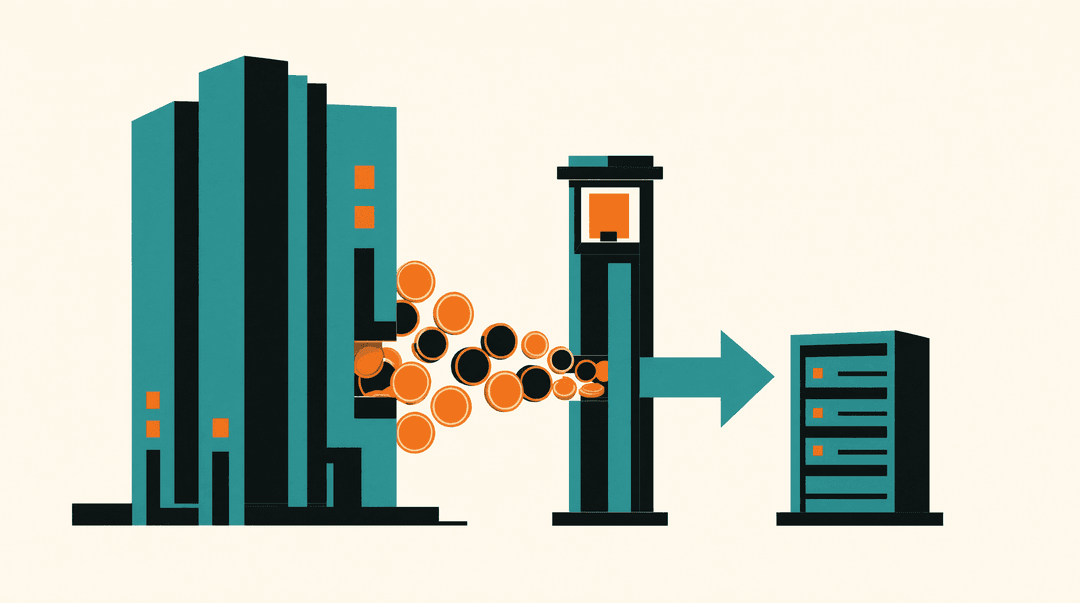
One caution runs through all of these figures. A booking is not a payment. A multi-year transformation contract signed in 2026 may convert to revenue slowly, partially, or, if Gartner's cancellation prediction holds, not at all. Accenture's own numbers make the point: $11.5 billion booked against $4.8 billion recognized.
The distribution war
The second story is which model family the middlemen standardized on, because consultants set defaults for clients that do not run their own evals.
Anthropic spent late 2025 and the first half of 2026 sweeping the audit-and-advisory channel. In October 2025 it announced what it called its largest enterprise deployment ever: Claude made available to more than 470,000 Deloitte people, with a Claude Center of Excellence and a certification program for 15,000 practitioners aimed at regulated industries. On May 14, 2026, PwC and Anthropic announced a major expansion: Claude Code and Cowork rollout to PwC's US teams on the way to a global workforce of hundreds of thousands, a joint Center of Excellence, 30,000 certified professionals, and a "Claude-native finance" business group built around the CFO office. Five days later KPMG announced it was rolling Claude out to 276,000 employees across 138 countries, embedding it in its Digital Gateway platform and making itself Anthropic's preferred consulting partner for private equity. That is three of the Big Four running on one model family inside eight months. EY took the Microsoft lane instead.
OpenAI answered with alliance and ownership. In February 2026 it signed field-collaboration agreements with McKinsey, BCG, Accenture and Capgemini under its Frontier Alliance program. In May it went further. The OpenAI Deployment Company is structured as a partnership with 19 investment firms, consultancies and systems integrators, led by TPG with Advent, Bain Capital and Brookfield as co-lead founding partners. The consulting investors include Bain & Company, Capgemini and McKinsey. The unit acquires deployment firms and embeds OpenAI-side engineers, whom the company calls Frontier Deployment Engineers, directly in client workflows. Note what that structure means: two of the biggest strategy shops now hold equity in a lab-owned staffing vehicle while also selling their own AI transformation practices.
Anthropic meanwhile claimed business-side adoption momentum; trade coverage in mid-2026 put Claude's enterprise adoption ahead of OpenAI's, around 34.4 percent to 32.3 percent in April, a figure circulating before the Big Four deals made the channel logic obvious. Model capability sells pilots. Distribution sells production.
The meter is breaking
The deployment boom arrives at the same time as the industry's unit of sale, the billable hour, comes under open assault from the tool being sold.
The productivity gap is documented well enough that the firms cannot ignore it. The Harvard Business School experiment with 758 BCG consultants found that consultants using GPT-4 on well-suited tasks finished about 25 percent faster and produced work rated roughly 32 percent better. If a deliverable that once took 400 hours takes 300, a firm billing hours has lost 25 percent of the engagement's price, not gained it.

The response has been repricing. BCG chief executive Christoph Schweizer told the Wall Street Journal in May 2026 that three-quarters of the firm's largest AI transformation projects now run on variable-fee arrangements tied to results. Business Insider reported in June that clients are routinely pushing fixed-fee and outcome-based structures across the industry, and that Accenture has moved toward outcome pricing in parts of its business. KPMG's global head of consulting, Svilena Tzekova, told CNBC in November that the intellectual property underpinning advisory work is becoming accessible to everyone, which raises client expectations, and the same report documented the firms redesigning graduate hiring because AI absorbs the junior research and analysis work that used to train them.
Demand-side data tempers the optimism. Gartner predicts more than 40 percent of agentic AI projects will be canceled by the end of 2027 on escalating costs, unclear business value or weak risk controls, and estimates only about 130 of the thousands of vendors claiming to be agentic actually are. Bain's CFO survey found roughly a quarter of companies under-delivering on AI initiatives. BCG's own Applied AI Index, published in September 2026, says 48.5 percent of companies now generate measurable value from AI, up from 5 percent substantial-value companies a year earlier, while noting AI spending has doubled to an average 3.3 percent of revenue with over 80 percent of it sitting outside the technology budget. Spending shows up in categories that consultants bill for, hiring, training, governance, workflow redesign. BCG's house line is that 10 percent of AI transformation value comes from the algorithm, 20 percent from the data and technology, and 70 percent from people and process. Whether that framing is true or a fee justification is the central question of the category.
What a buyer should take from the ledger
Three checks, none of them requiring trust in any party's press release.
Ask for conversion, not bookings. Cumulative bookings figures are order intake. Accenture disclosed $11.5 billion booked against $4.8 billion recognized; ask any firm what share of its AI bookings reached revenue and on what schedule.
Ask what certified means. A certification count, 30,000 at PwC, 15,000 at Deloitte, measures course completions, not delivered systems. The same firms publish client value numbers that are self-reported.
Read the pricing clause. An outcome-based fee is only useful if the outcome has a definition, a baseline and an auditor. Business Insider's reporting and practitioner commentary both point at the coming fights over attribution: when a cost reduction lands, whether the agent or the market or the client's own execution caused it. Contracts written before that argument happen are the ones that survive it.
The labs and the consultancies are converging on the same line item, and the disclosure so far says the middlemen still own it. Whether that survives their own meters is the next three years of this story.
Sources
- Quantumrun, "Accenture Statistics 2026: Revenue, Employees and Consulting Market Share" - https://www.quantumrun.com/consulting/accenture-statistics
- CIO Dive, "Accenture completes 'reinvention' as generative AI revenues roll in" - https://www.ciodive.com/news/accenture-generative-ai-revenue-skills-training-data-modernization/761161
- MarketScale, "Accenture managed services outearn consulting in FY2026" - https://www.marketscale.com/industries/business-services/accentures-managed-services-business-now-outearns-its-consulting-arm
- Fortune India, "Accenture Q4 earnings: Annual Gen AI booking touches $5.9 bn" - https://www.facebook.com/fortuneind/posts/1128219289415383
- CRN, "IBM Starts New Fiscal Year: 5 Channel Takeaways" - https://www.crn.com/news/ai/2026/ibm-starts-new-fiscal-year-5-channel-takeaways
- All Things AI, IBM profile (Q4 2025 gen AI book of business) - https://allthingsai.org/ai-industry/companies/ibm
- StrategyU, "McKinsey vs BCG vs Bain: how the three firms compare in 2026" (BCG and Bain AI revenue shares, citing City AM) - https://strategyu.co/mckinsey-bcg-bain-comparison
- CNBC, "Anthropic lands its biggest enterprise deployment ever with Deloitte" - https://www.cnbc.com/2025/10/06/anthropic-deloitte-enterprise-ai.html
- Anthropic, "Deloitte brings Claude to 470,000 people" - https://www.anthropic.com/news/deloitte-anthropic-partnership
- PwC, "PwC and Anthropic expand alliance for agentic AI" - https://www.pwc.com/us/en/about-us/newsroom/press-releases/anthropic-pwc-expand-alliance-agentic-enterprise.html
- KPMG, "KPMG and Anthropic" alliance page - https://kpmg.com/us/en/capabilities-services/alliances/anthropic.html
- Digital Applied, "PwC and Anthropic: 30,000 Professionals on Claude AI" (Big Four alliance timeline, EY-Microsoft lane) - https://www.digitalapplied.com/blog/pwc-anthropic-30000-professionals-claude
- BigGo Finance, "Anthropic Partners with PwC to Deepen Enterprise Push" (OpenAI February 2026 alliance agreements) - https://finance.biggo.com/news/L_lzPZ4BDXrLZJaAhW1Q
- OpenAI, "OpenAI launches the OpenAI Deployment Company" - https://openai.com/index/openai-launches-the-deployment-company
- Pulse2, "OpenAI Confirms Deployment Company Launch With More Than $4 Billion Backing, Acquires AI Consulting Firm Tomoro" - https://pulse2.com/openai-confirms-deployment-company-launch-with-more-than-4-billion-backing-acquires-ai-consulting-firm-tomoro
- Yahoo Finance / Reuters, "OpenAI launches $4 billion AI deployment company" - https://finance.yahoo.com/sectors/technology/articles/openai-launches-4-billion-ai-134916653.html
- Business Insider, "Clients Push Consultants to Adopt Outcome-Based Fees to Share in Risk" - https://www.businessinsider.com/consulting-industry-pricing-outcome-based-ai-risk-2026-6
- CNBC, "AI is coming for consulting's billable hours - and its graduate pipeline" - https://www.cnbc.com/2026/11/12/ai-consulting-billable-hours-graduate-hiring.html
- Consultancy UK, "What it takes to make outcome-based pricing work in consulting" (HBS 758-consultant study) - https://www.consultancy.uk/news/45467/what-it-takes-to-make-outcome-based-pricing-work-in-consulting
- Gartner, "Gartner Predicts Over 40% of Agentic AI Projects Will Be Canceled by End of 2027" - https://www.gartner.com/en/newsroom/press-releases/2025-06-25-gartner-predicts-over-40-percent-of-agentic-ai-projects-will-be-canceled-by-end-of-2027
- BCG press release, "AI Is Starting to Pay Off. Almost 50% of Companies Now Generate Value with It." (Applied AI Index 2026) - https://www.bcg.com/press/30september2026-ai-starting-to-pay-off-companies-generate-value
- Consulting.us, "Nearly half of companies now create value with AI: BCG report" - https://www.consulting.us/news/14058/nearly-half-of-companies-now-create-value-with-ai-bcg-report
- Bain & Company, "AI Will Shift $4.7 Trillion in Profits. What's Your Stake?" - https://www.bain.com/insights/ai-puts-4-7-trillion-at-stake
- Bain & Company, "New Innovation Is Required to Fund AI's $6 Trillion Buildout" (Technology Report 2026) - https://www.bain.com/insights/new-innovation-is-required-to-fund-ais-6-trillion-buildout-technology-report-2026
- BCG, "Our Approach to AI Transformation" (value split framing) - https://www.bcg.com/capabilities/artificial-intelligence
