
OpenAI has made its flagship GPT-5.6 model family available within Kiro, the spec-driven software development environment developed by Amazon Web Services. The release brings OpenAI's frontier reasoning and coding tiers, including Sol, Terra, and Luna, directly into AWS's agentic engineering platform.
According to joint evaluations conducted by AWS and OpenAI on Terminal-Bench 2.1, executing complex software engineering tasks with GPT-5.6 Terra inside Kiro reduced total token expenditures by roughly 82% compared to standard open-ended prompt execution.

Spec-Driven Scaffolding vs. Open-Ended Generation
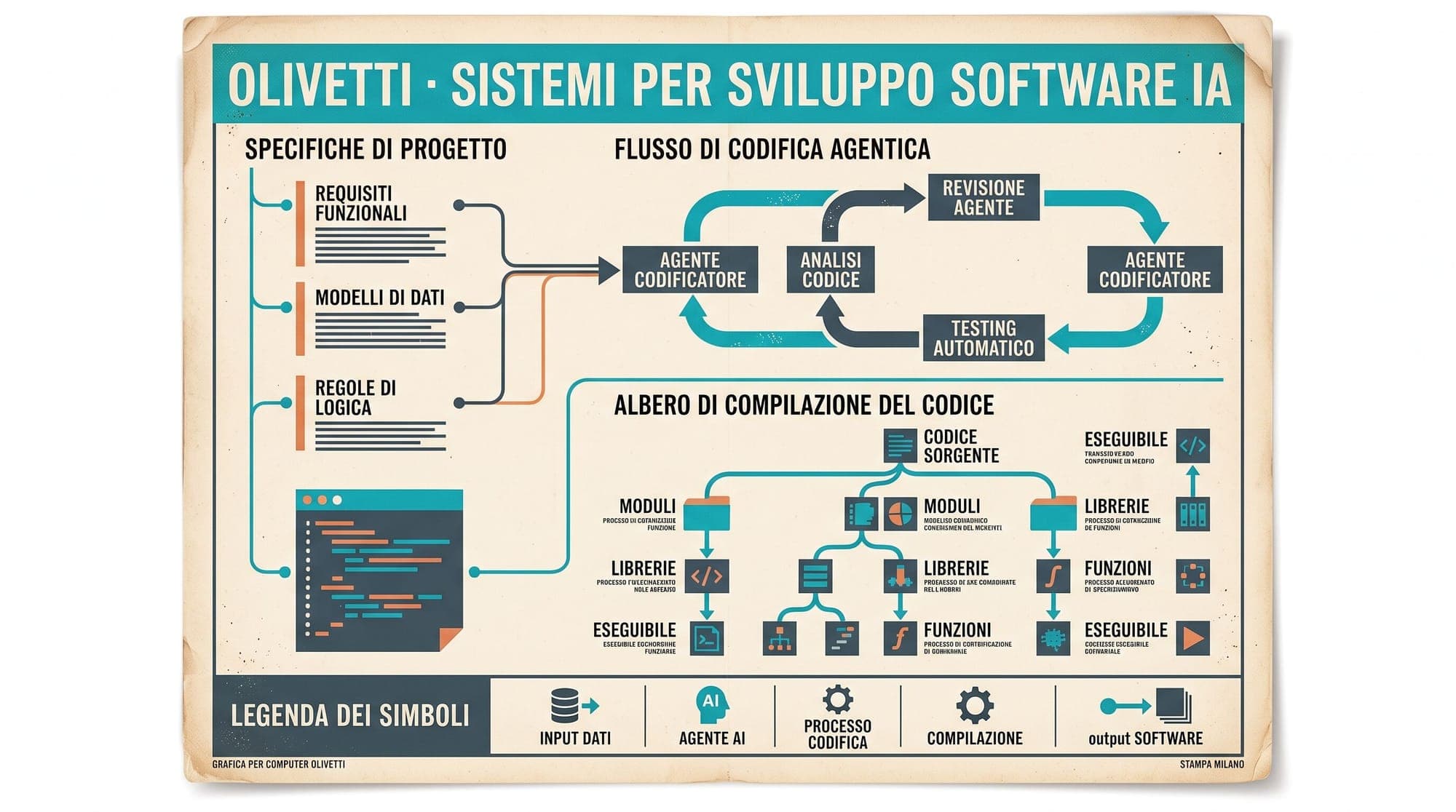
Kiro was built by AWS on the Code OSS foundation to address the unreliability and compounding error rates common in conversational "vibe coding" assistants. Instead of passing developer prompts directly to a code-generation model, Kiro enforces a structured software specification lifecycle:
- Requirements Decomposition: Natural language feature requests are first converted into structured user stories with verifiable acceptance criteria.
- Technical Architecture Design: The environment synthesizes data-flow diagrams, API interfaces, and system dependency trees before writing application code.
- Sequenced Task Execution: Coding tasks are executed step-by-step against strict property-based testing suites and linter hooks.
- Interactive Checkpoints: Developers inspect and approve architectural decisions at structured milestones before modifications are committed to the codebase.
By constraining the model's operating scope with upfront specifications and explicit architectural invariants, the agent avoids exploratory token waste, circular debugging loops, and invalid refactoring attempts.
Benchmarks and the 82% Cost Reduction Metric
The reported 82% cost reduction on Terminal-Bench 2.1 measures the cumulative token consumption required to successfully complete terminal-based programming benchmarks, rather than an increase in raw model benchmark scores.
Terminal-Bench 2.1 is an industry command-line evaluation harness designed to test an agent's ability to navigate terminal environments, debug software repositories, and execute complex tool chains. On baseline model evaluations released during OpenAI's July 2026 launch:
- GPT-5.6 Sol: 88.8% success rate
- GPT-5.6 Terra: 87.4% success rate
- GPT-5.5 (Previous Generation): 85.6% success rate
Because Kiro's scaffolding prevents models from generating repetitive failing patches, the number of context round-trips and output tokens needed to achieve pass criteria is significantly lower, yielding the reported cost reduction during autonomous agent runs.
Model Pricing Dynamics and the AWS-OpenAI Partnership
The integration arrives following a series of pricing reductions across the GPT-5.6 family:
- GPT-5.6 Luna: Discounted by 80% on July 30, 2026.
- GPT-5.6 Terra: Discounted by 20% on July 30, 2026 (originally priced at $2.50 per million input tokens and $15.00 per million output tokens).
- GPT-5.6 Sol: API and credit pricing reduced by over 20% on August 21, 2026 for a three-month promotional period.
The technical integration represents another operational milestone in the multi-tier partnership between Amazon and OpenAI. Following a preliminary $38 billion compute contract in late 2025, the two companies expanded their alliance in February 2026 with a $100 billion, eight-year agreement. That deal included a $50 billion investment from Amazon, OpenAI commitments to consume 2 gigawatts of AWS Trainium capacity, and AWS serving as the exclusive third-party distributor for OpenAI's Frontier enterprise tier.
Access to the GPT-5.6 family within Kiro is available immediately through the Kiro developer platform.



