
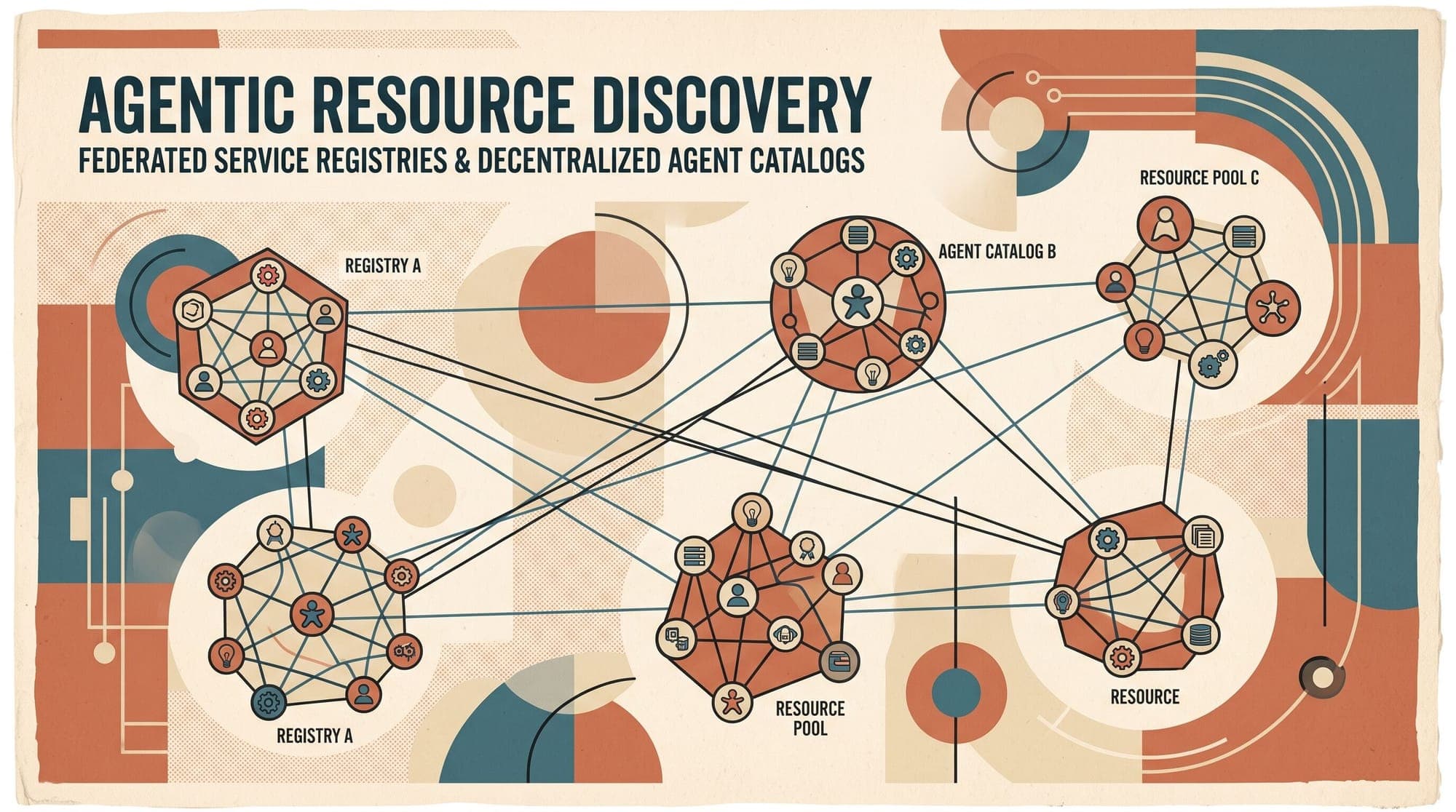
Amazon Web Services announced support for the Agentic Resource Discovery (ARD) open specification, detailing how the federation standard will integrate with AWS Agent Registry, its managed catalog for AI agents, tools, and skills currently in preview within Amazon Bedrock AgentCore.
The alignment targets cross-platform discovery across heterogeneous enterprise stacks. While AWS Agent Registry provides centralized indexing and access controls within an AWS environment, real-world deployments frequently span multi-cloud architectures, on-premises infrastructure, and third-party SaaS platforms. ARD establishes a standard metadata format and discovery protocol, enabling organizations to publish resources once and make them discoverable across disparate runtime environments without custom point-to-point connectors.

Architecture of the ARD Standard
The ARD specification is an Apache 2.0-licensed open standard created by an industry working group that includes Google, Microsoft, Hugging Face, GoDaddy, Cisco, Databricks, GitHub, NVIDIA, Salesforce, ServiceNow, and Snowflake.
The architecture is structured around two primary primitives:
- Catalogs: Machine-readable JSON files (
ai-catalog.json) hosted at well-known domain paths. These files declare available agents, Model Context Protocol (MCP) servers, Agent-to-Agent (A2A) endpoints, and OpenAPI tool definitions. Domain ownership establishes the cryptographic root of trust for publisher identity. - Registries: Search and indexing engines that crawl distributed catalogs to resolve plain-language discovery queries, returning matching endpoints alongside verifiable trust and identity metadata.
ARD standardizes discovery rather than execution. Once an agent or tool is discovered, client runtimes interact with it using native communication layers such as MCP or standard REST APIs.
Integration with AWS Agent Registry
Within AWS Bedrock AgentCore, Agent Registry operates as a managed catalog with built-in governance workflows. The lifecycle routes through administrators, publishers, and curators, enforcing approval gates before assets become discoverable. Authorization is managed via AWS Identity and Access Management (IAM) policies or JSON Web Tokens (JWT) from enterprise identity providers, with the registry exposed as a remote MCP endpoint.
Under the planned federation model, ARD acts as an external interoperability layer. Organizations can expose local catalog metadata in the ARD format for federated cross-cloud discovery while retaining internal IAM policies, approval pipelines, and access revocation controls at the registry boundary.
Google has similarly outlined native ARD support for its Gemini Enterprise Agent Platform, establishing an emerging consensus among major cloud providers around open discovery standards paired with managed, governed internal registries.
Sources
- AWS Machine Learning Blog: Agentic Resource Discovery (ARD): An Open Specification for Agent Discovery
- Unite.AI: AWS Backs Agentic Resource Discovery as Federation Layer for Agent Registry
- Agentic Resource Discovery Specification
- Google Developers Blog: Announcing the Agentic Resource Discovery Specification



