
Anthropic announced that a swarm of Claude Fable 5.2 agents solved two open black hole physics problems: proving that the Hawking-Page phase transition is abrupt even where spacetime dissolves, and establishing the exact upper limit for the spinless modular bootstrap in 3D quantum gravity. These results were derived through a six-week autonomous agent process and formalized using Lean proof verification, although they apply only to simplified model universes and lack independent peer review.
Two days before its shares began trading, Anthropic put out a research post that reads less like a product launch and more like a physics seminar: Claude Fable 5.2, working as a swarm of background agents, closed a calculation that theoretical physicists set up in 2003 and never finished, and proved the exact limit of a technique they have been pushing for fifteen years. Both results concern black holes in simplified model universes. Neither has been peer reviewed. Both are worth reading closely, because the method matters more than the math.
The first result: black holes appear abruptly, even where spacetime dissolves
In 1983, Stephen Hawking and Don Page showed that in a box of anti-de Sitter spacetime, heating the universe produces a sharp phase transition: a gas of particles, gravitons included, suddenly loses to a history containing a black hole. The calculation leans on general relativity, which only holds when the universe is vast compared with the quantum scale. Shrink it, and spacetime goes blurry; the gravity-side calculation becomes impossible.
The quantum side of the duality can still be computed there. In 1999, work by Bo Sundborg and then Aharony, Marsano, Minwalla, Papadodimas and Van Raamsdonk showed that a transition exists in that regime too, in N=4 super Yang-Mills theory at weak coupling. What nobody knew was whether it is abrupt like Hawking and Page's or smooth. In 2003, a group reduced the question to a single number appearing three loops into a perturbative expansion, a calculation with many thousands of Feynman diagrams and a set of infinities that must be tamed carefully. They abandoned it. A simpler cousin of the theory was done in 2005. The N=4 version, roughly ten times larger, sat unfinished for 23 years.
Anthropic says Claude finished it, and the answer is abrupt, exactly analogous to the Hawking-Page jump. The company's framing: since the transition is sharp at both the smooth-spacetime end and the blurry-spacetime end, the most natural reading is that it is sharp everywhere in between. Black hole formation, in other words, is not an artifact of the classical description. It is written into the underlying quantum theory.
The second result: the exact ceiling of the modular bootstrap
The second problem is a different kind of win.
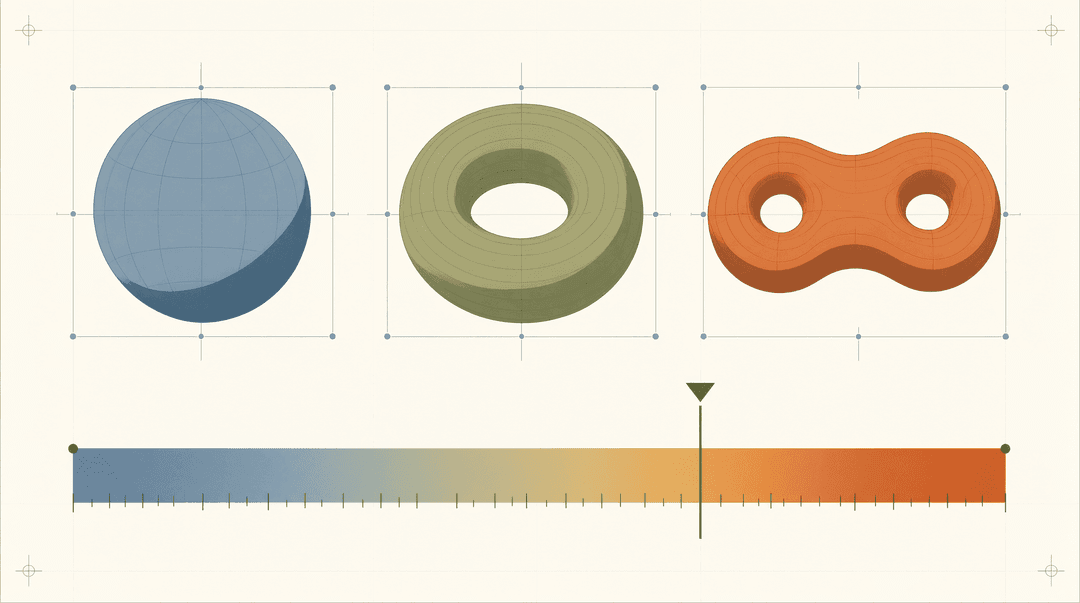
Since 2009, when Simeon Hellerman introduced the modular bootstrap, physicists have tried to constrain 3D quantum gravity by ruling out inconsistent theories. The target quantity is the mass of the lightest black hole, M1, bounded as M1 less than or equal to c/Λ, where c is the central charge. Hellerman's original proof gave a ceiling of c/6. Numerical work over the years suggested the method could reach about c/9.1. An analytic proof by Hartman, Mazáč and Rastelli got to c/8.5. The exact best ceiling of the simplest, spinless version of the method had been open.
Claude found it, and proved it is final: Λ is approximately 9.1266, given by an exact formula, and no run of this version of the bootstrap can push lower. The route there was the interesting part. Anthropic says Claude noticed a pattern in how the numerical ceiling shifts as c grows, something physicists had missed, and imported a tool called a spectral curve, standard elsewhere in math and physics but never applied to this problem. One agent solving a mathematically related sphere-packing question turned the pattern into a method; that same method reproduces a result an OpenAI model recently proved. An earlier Claude agent had failed at the bootstrap problem in 61 parallel attempts. Two other agents independently reached the same answer.
The practical meaning for physicists is a boundary condition on the technique itself: the spinless modular bootstrap cannot get below c/9.1266, and certainly cannot reach c/12, where 3D black holes first appear. Progress will need other ingredients.
How it was actually done
The provenance, as Anthropic tells it, started as a side project. In August, Anthropic researcher Hongbin Chen asked Claude to list interesting open problems in black hole physics and the bootstrap. The model returned 22 candidates hours later. Chen set up separate agents per problem, running in the background for about six weeks with no special scaffolding, able to read each other's progress posts. Parts of the three-loop calculation were each done twice by independent copies of the model, and cross-checked against published results. On the Hawking-Page problem, a physicist who had independently used Claude on the same question produced a solution by a different method; a colleague noticed the agent had gotten there first, and the mismatched methods served as a mutual check. Both proofs were formally verified in Lean in September. Claude wrote the papers with minimal guidance; a physicist checked every main result.
The caveats, kept
Anthropic is candid: neither result describes our universe directly, and neither has practical applications. They are model-universe physics, useful because they sharpen the one concrete laboratory humanity has for quantum gravity via holographic duality. The papers are preprints, listed under hexagonmath.org identifiers, awaiting community scrutiny that formal verification and a physicist review cannot fully substitute for.
The timing is also not accidental. The post went up November 17, two days before Anthropic's record listing began trading, amid a wave of research announcements, including a claimed proof of the Riemann hypothesis posted by a company mathematician. Skepticism about lab-published milestones is healthy and cheap. What is harder to dismiss is the pattern: a general-purpose model, unassisted by bespoke tooling, spending six weeks as its own research group and producing two results that professional physicists describe as real advances in a field that had stalled on both. Whether that changes how theory is done depends on how many more of those 22 problems fall.
Sources
- Anthropic: Claude Fable 5.2 solves two open problems in the physics of black holes
- Preprint: the Hawking-Page phase transition result (hexagonmath 2611.00175v1)
- Preprint: the modular bootstrap ceiling result (hexagonmath 2611.00174v1)
- Original 2003 problem statement (arXiv hep-th/0310285)
- OpenAI: Ten Proofs technical document
- Techmeme item linking the announcement to the IPO timing
Frequently asked questions
What specific black hole problems did Anthropic's Claude agents solve?
The agents solved the 2003 open problem regarding whether the Hawking-Page phase transition is abrupt or smooth in N=4 super Yang-Mills theory, and they determined the exact ceiling for the spinless modular bootstrap, finding Λ is approximately 9.1266.
How did the Claude agents approach these physics calculations?
Anthropic researcher Hongbin Chen set up separate background agents per problem that ran for six weeks, reading each other's progress posts. The agents identified patterns in numerical ceilings and imported a 'spectral curve' tool to turn those patterns into an analytic method, with parts of the calculation cross-checked by independent copies of the model.
Have the solutions been peer reviewed or verified?
Neither result has been peer reviewed; they are listed as preprints under hexagonmath.org identifiers. However, both proofs were formally verified in the Lean proof assistant in September, and a physicist checked every main result.
Do these results apply to our actual universe?
No, Anthropic states that neither result describes our universe directly, as they concern black holes in simplified model universes. They are useful primarily because they sharpen the concrete laboratory humanity has for quantum gravity via holographic duality.
