
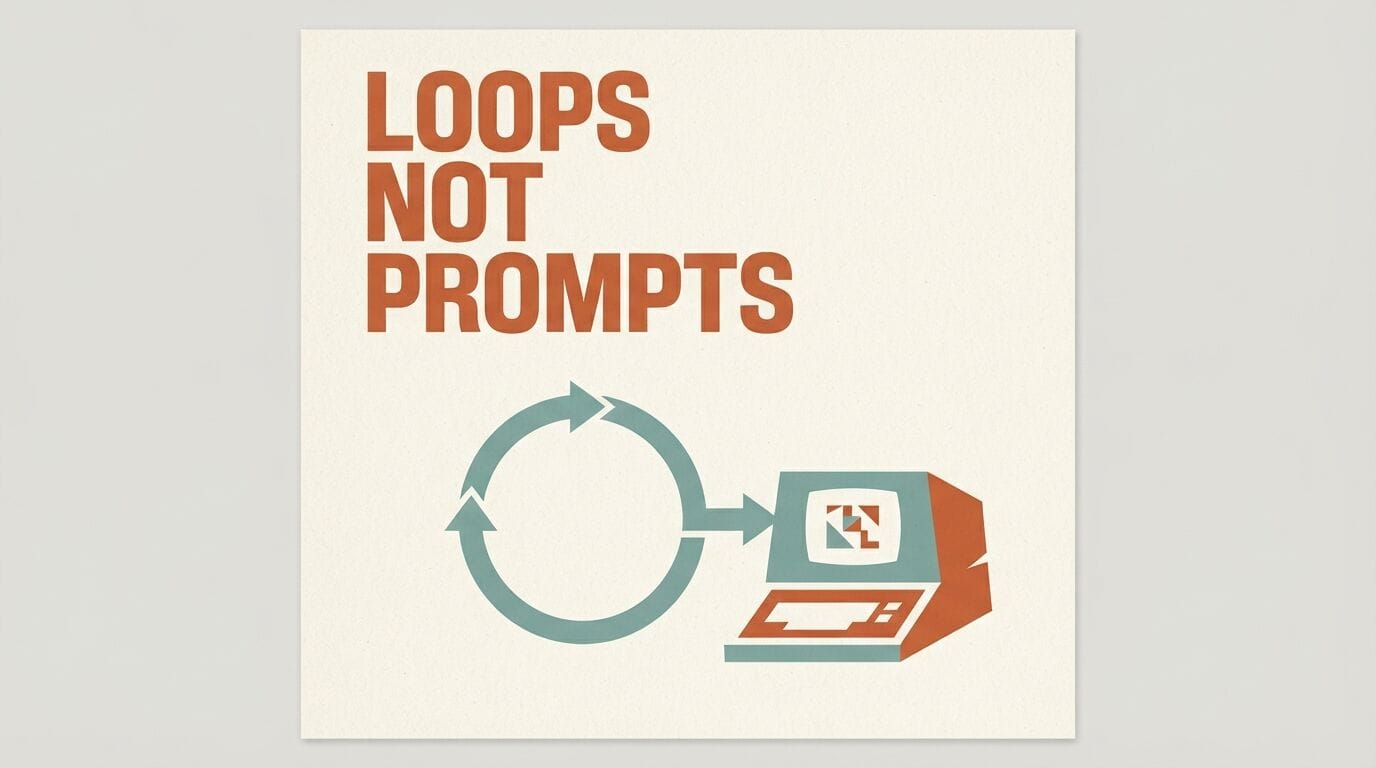
Loop engineering is a practice where developers write automated systems that prompt AI agents, verify results, and decide next steps without human intervention. Championed by Boris Cherny, creator of Anthropic’s Claude Code, this approach replaces direct prompting with continuous loops that handle discovery, triage, and validation autonomously. While it promises increased efficiency, critics warn of potential risks like comprehension debt and unsupervised errors.
Boris Cherny, the Anthropic engineer who created Claude Code, says he no longer prompts the agent he built. He writes loops instead, programs that prompt Claude, check its output and decide what to do next without him in the chair.
"My job is to write loops," Cherny said in a remark that Google engineer Addy Osmani quoted when he named the practice "loop engineering" in a June 7 post. The idea got a fresh airing this week in a CNN business profile published November 15, which paints Cherny, 35, as the quiet face of the product that gave Anthropic its foothold in the workplace.
From Meta cafeteria demos to a workplace foothold
The backstory, per CNN: Cherny spent nearly seven years at Meta working on Instagram, Facebook Groups and code quality before joining Anthropic in 2024. Claude Code began as his side experiment, a command-line interface that let the model talk to his operating system. It became one of the company's most important products, a hit with programmers and non-programmers alike, and paved the way for Claude Cowork, the office-automation agent Cherny says he conceived after watching people use Claude Code for non-technical work. He uses it himself for project management and paying parking tickets, he has said on podcasts.
Cherny told Sequoia's AI Ascent conference in 2026 that he has not written a line of code by hand this year and ships dozens of pull requests a day from his phone. His loops, he said there, babysit his PRs, keep CI healthy and cluster user feedback from X every half hour.
What a loop actually is
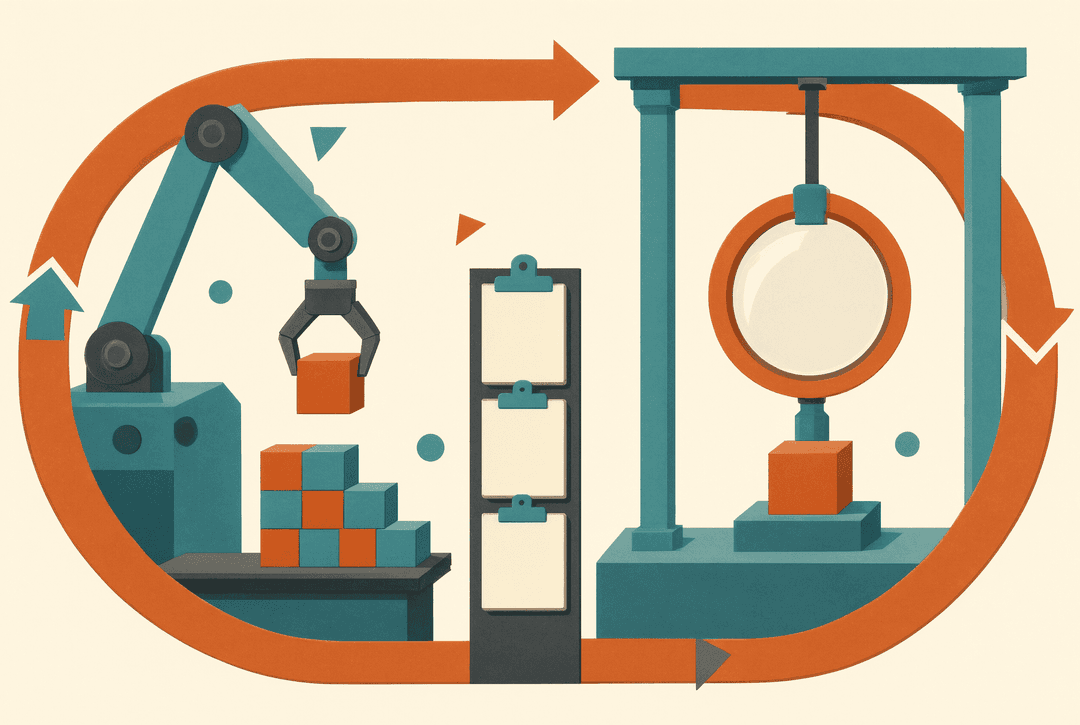
A prompt is one request you type and one answer you read. A loop is a system that finds the work, hands it out, verifies the result, records what was done and starts again. Osmani's version of the definition: "replacing yourself as the person who prompts the agent." Peter Steinberger put it earlier and blunter: you should be designing loops that prompt your agents, not prompting them yourself.
The reason the concept stuck in June is that the parts stopped being DIY. A year ago a loop meant a pile of bash scripts you maintained forever. Today the primitives ship inside the products. Osmani maps five of them, plus memory, across Claude Code and OpenAI's Codex, and the shapes line up almost one to one:
- Automations for scheduled discovery and triage. Claude Code: scheduled tasks,
/loop, hooks, GitHub Actions. Codex: an Automations tab feeding a Triage inbox. - Worktrees so parallel agents don't overwrite each other. Claude Code exposes
git worktreeisolation per session or sub-agent; Codex builds a worktree per thread. - Skills (
SKILL.md) to write project knowledge down instead of re-explaining it every run. - Connectors built on MCP, so the loop can open the pull request, update the ticket and ping the channel itself.
- Sub-agents, with one agent writing the change and a different one checking it.
- Memory: a markdown file or Linear board that holds state between runs, because the model forgets everything the moment the context closes.
Two Claude Code commands mark the boundary of the idea. /loop relaunches a prompt on a timer. /goal keeps the agent working until a condition you wrote is verifiably true, and after every turn a separate small model judges whether the work is done. The checker is never the writer.
The catch: the loop makes mistakes unattended too
Osmani, who coined the term, is also its loudest skeptic. A loop running unsupervised is a loop making mistakes unsupervised, he writes, and "done" remains a claim rather than a proof even with a verifier sub-agent in place. He flags three failure modes that sharpen as loops improve: token costs that vary wildly between users; comprehension debt, the widening gap between code that exists and code you understand; and cognitive surrender, the comfort of taking whatever the system hands back. His closing line could be the industry's epitaph or its manual: two people can build the same loop and get opposite results, because the loop doesn't know the difference whether you use it to move faster on work you understand or to avoid understanding it at all.
The New Stack, which called loop engineering the fastest-moving conversation of the week in developer tooling when it launched, suggests an entry point far smaller than a swarm: one scheduled triage loop with one verifier sub-agent gets most of the value for a fraction of the tokens. And a verifier with no written requirement has nothing to verify, which is why spec-first habits keep coming back into fashion.
CNN itself notes the irony in the labor talk. Cherny predicted in March that software engineering jobs would start disappearing by the end of the year and the title might become "builder." It is almost December 2026 and the jobs still exist, though they look different, and Stack Overflow's survey of 30,000 developers found six in ten industry workers try to avoid AI tools.
The verifiable part of the pitch is the easiest to concede. The loops already exist, the primitives are documented in both flagship coding agents, and the person who built one of them says he does not touch the keyboard anymore. The rest is a forecast about jobs, which is to say, about people other than Cherny.
Sources
- Meet the miso-making engineer behind Anthropic's biggest hit product - CNN, Nov 15, 2026
- Loop Engineering - Addy Osmani, June 7, 2026
- Loop engineering: the next AI coding wave - The New Stack
- Boris Cherny: Why Coding Is Solved, and What Comes Next - Sequoia AI Ascent 2026
- Boris Cherny, the Claude Code creator who writes loops, not prompts - Pasquale Pillitteri, Nov 22, 2026
Frequently asked questions
Who coined the term "loop engineering"?
Google engineer Addy Osmani coined the term "loop engineering" in a June 7 post to describe replacing oneself as the person who prompts the agent.
What are the key primitives of loop engineering in Claude Code?
Key primitives include automations for scheduled tasks, git worktree isolation for parallel agents, SKILL.md for project knowledge, MCP connectors for actions, sub-agents for writing versus checking, and memory via markdown files or Linear boards.
How do the /loop and /goal commands function in Claude Code?
The /loop command relaunches a prompt on a timer, while /goal keeps the agent working until a verifiable condition is met, using a separate small model to judge if the work is done after every turn.
What are the main criticisms of unsupervised loop engineering?
Critics point out that unsupervised loops can make mistakes, lead to wildly varying token costs, create comprehension debt (the gap between existing code and developer understanding), and cause cognitive surrender where users stop verifying outputs.
