
While the LLM industry argued about whether agents belong in production, the most demanding machine-learning production migration of 2025 and 2026 happened in a place almost nobody in the conversation works: national weather services.
Weather prediction is the oldest continuous numerical-computing workload still running. Physics-based numerical weather prediction (NWP) has been the gold standard since the 1950s, and every forecast a government agency issues carries legal and literal life-or-death weight. That makes it a strange and excellent test bed for neural networks. The results so far are a lesson in what AI actually replaced, what it did not, and one failure mode that should interest anyone shipping models that depend on somebody else's data pipeline.
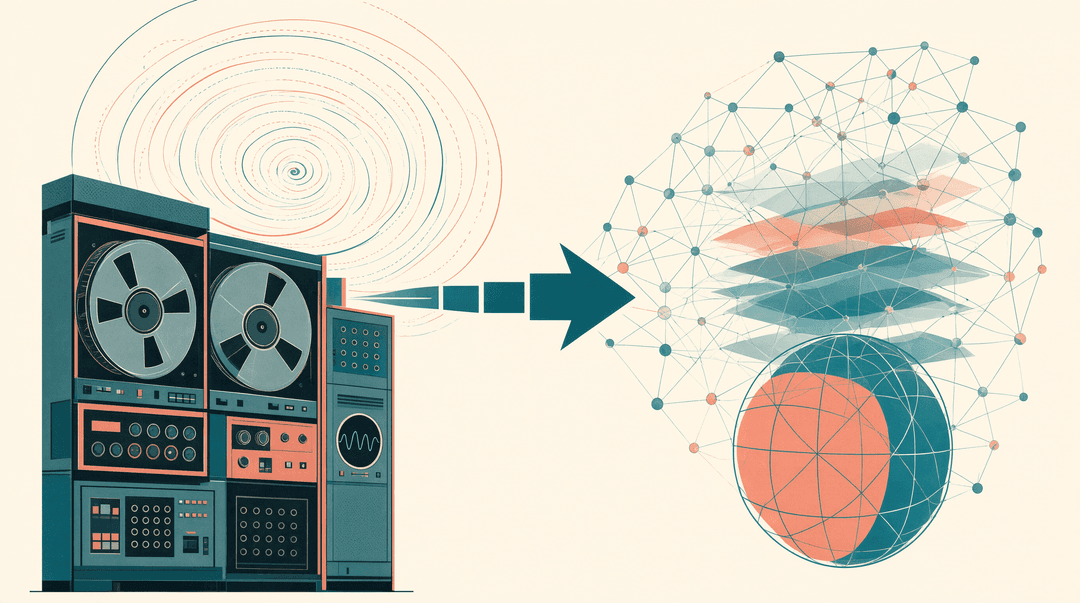
The timeline: from papers to products in twelve months
The research phase is well documented. FourCastNet (Nvidia, 2022), Pangu-Weather (Huawei, 2023) and GraphCast (Google DeepMind, 2023) showed that learned models could beat physics on standard verification scores. GraphCast's Science paper reported more accurate forecasts than ECMWF's High-Resolution Forecast on more than 90 percent of 1,380 variable-and-lead-time combinations, while producing a 10-day global forecast in under a minute on a single TPU instead of hours on a supercomputer.
What mattered happened after the papers. As Communications of the ACM reported in late 2025, ECMWF switched its own machine-learning model, the Artificial Intelligence Forecasting System (AIFS), from parallel experiment to daily operational product in February 2025, with the ensemble version following in July. NOAA put its own AI models into operation in January 2026. Google's AI tropical-cyclone forecasts are used operationally by the National Hurricane Center. Nvidia released Earth-2, an open model family covering medium-range forecasting and storm-scale nowcasting. India's government sent AI monsoon-onset forecasts to 38 million farmers in the summer of 2025.
No single vendor won this. ECMWF runs its own AIFS. NOAA built its own suite on top of a fine-tuned GraphCast foundation. The German weather service (DWD) launched its AI model AICON with a direct public data feed in March 2026, and Environment and Climate Change Canada ships GEML. The research models that kicked the field off are now footnotes in someone else's production stack.
What "operational" means, and what AI actually replaced
The word "operational" is doing more work than "state of the art" ever did. Rose Yu of UC San Diego, quoted in CACM, defined the bar: "running on time, every cycle, reproducibly, ingesting live observations, and verifying against reality continuously." A benchmark score is a snapshot. A weather center runs its model every six hours, forever, next to the old one, and checks it against thermometers and radiosondes the way an auditor checks receipts.
Under that bar, the honest picture of what AI replaced is narrower than the headlines. Caltech's Tapio Schneider splits forecasting into three stages: data assimilation (estimating the current state of the atmosphere from live observations), the forecast model (stepping that state forward), and post-processing. Neural networks have taken over the middle stage only. The starting point is still physics: every AI forecast is initialized by a conventional, physics-based data assimilation system and depends on the global observing network. Nobody has automated the first mile.
That is worth stating plainly because it maps onto the deployment pattern outside meteorology. The models that went operational did not replace the pipeline that feeds them. They replaced one expensive, slow, well-understood component inside it, and their claim to the job rests on cost and latency as much as skill.
The economics are the real headline
NOAA's numbers for its January 2026 suite, published in its deployment release, are the clearest cost breakdown any operational AI user has disclosed:
- AIGFS, the AI successor to the GFS global model, produces a 16-day forecast using 0.3 percent of the computing resources of the operational GFS, finishing in roughly 40 minutes. NOAA summarizes this as up to 99.7 percent less compute.
- AIGEFS, a 31-member AI ensemble, runs on 9 percent of the compute of the physics-based GEFS with comparable skill, and NOAA reports it extends usable forecast skill by 18 to 24 hours in early results.
- HGEFS, a 62-member "grand ensemble" that mixes 31 physics members with 31 AI members, consistently outperforms both parents across major verification metrics. NOAA believes it is the first hybrid ensemble run by any operational center.
The ensemble economics explain the shift more than raw accuracy does. Physics ensembles are expensive, so centers run about 30 to 50 members. AI ensembles are cheap enough to run hundreds, which improves uncertainty quantification, the thing forecasters and energy traders actually buy. CACM's roundup quotes Yu saying ensemble AI systems like GenCast and FGN have surpassed the ECMWF ensemble, the gold standard of operational meteorology, "at a small fraction of the computational cost."
The Cycle 50r1 lesson: your model inherits your data pipeline
The most instructive event of 2026 so far is one that never made mainstream AI coverage. ECMWF routinely upgrades its physics model; Cycle 50r1 went live on 12 May 2026. Before the switch, ECMWF ran a verification experiment: initialize the machine-learning models it had been running in real time (Pangu-Weather, GraphCast, Aurora, FourCastNet) with the new 50r1 analysis over two months and score them.
The results were neutral or negative. The models that degraded were the ones fine-tuned on recent operational analyses, GraphCast, Aurora and ECMWF's own AIFS v1.1, because their fine-tuning was calibrated to the old pipeline. Sea-ice configuration changes in 50r1 visibly shifted GraphCast's temperature bias over northeastern Europe. ECMWF's own fix was to retrain: AIFS v2 was fine-tuned on prototype 50r1 data before launch. The external first-generation models had no such on-call training team, and on 11 May 2026 ECMWF stopped running them in real time altogether, citing the degradation plus missing precipitation outputs.
This is the general dependency that most AI products have and almost none acknowledge: a fine-tuned model is a pinned dependency on an upstream data version. ERA5 reanalysis is built with a 2016-era IFS cycle; when the upstream analysis shifts, downstream skill shifts with it, silently, until someone re-verifies. Weather centers treat this as a scheduled maintenance event with a verification protocol. Most companies running retrieval or fine-tuned models against drifting data sources do not verify at all until a customer complains.
The tails are still physics: record-breaking extremes
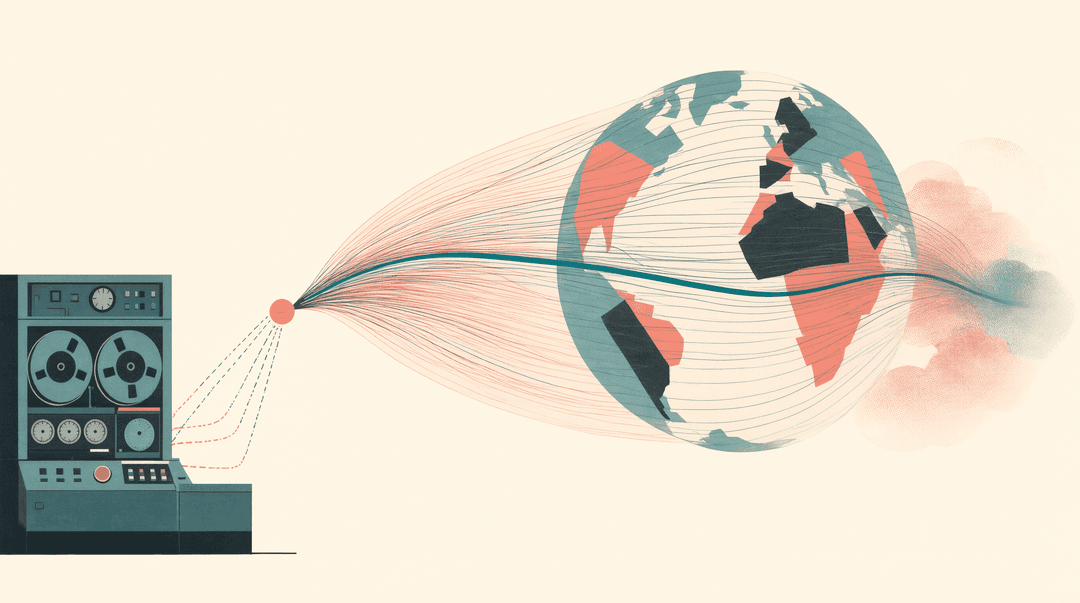
The residual that should temper every "AI beat the supercomputer" claim lives in the tails. A Science Advances study summarized by UFZ tested GraphCast, Pangu-Weather and Fuxi against the physics-based HRES on thousands of record-breaking heat, cold and wind events from 2018 and 2020. The AI models underestimated both the intensity and the frequency of records, under-predicting temperatures during heat records and over-predicting during cold ones. The gap was widest at short lead times.
The mechanism is ordinary machine learning. Models trained to minimize average error regress toward the mean and smooth sharp peaks. Rare events barely register in training data, an imbalance problem Pedram Hassanzadeh calls the "gray swan": a physically possible extreme so rare it was absent from the training set. As Schneider put it in CACM, physics can extrapolate beyond the observed distribution while statistics fundamentally cannot without physical guardrails. NOAA concedes the point in its own release: AIGFS v1.0 reduced tropical-cyclone track errors but degraded cyclone intensity forecasts. Amy McGovern's Extreme Weather Bench, a shared set of case studies across five years, exists precisely because no common extreme-event evaluation had existed.
What weather centers are teaching the rest of the industry
Three takeaways, none of which require meteorology.
First, the trustworthy pattern is side-by-side, not cut-over. Every center that went operational kept the physics running next to the model and published continuous verification against observations. Calibration beats sharpness: forecasters act when ensemble spread reliably tracks actual error, and 10 percent events happen 10 percent of the time.
Second, cheap skill buys breadth, not just savings. The compute collapse (0.3 percent for a 16-day global forecast) is what makes hundred-member ensembles and 40-minute turnaround routine. That is the same trade LLM users are making when caching and small-model cascades turn "run it again with more attempts" into an affordable strategy.
Third, operational discipline has teeth. The 50r1 episode shows that a learned component is only as stable as the pipeline version it was tuned against, and that "we retrain when upstream changes" is a real cost line, not a footnote.
AI weather forecasting is now boring infrastructure. That, and not any benchmark, is the achievement worth copying.
Sources
- AI Weather Forecasting Goes Operational, Communications of the ACM, 2025
- NOAA deploys new generation of AI-driven global weather models, January 2026 (updated February 2026)
- Farewell to the external AI models, ECMWF AIFS blog, 11 May 2026
- ECMWF Integrated Forecasting System cycle history (50r1, 12 May 2026)
- GraphCast: AI model for faster and more accurate global weather forecasting, Google DeepMind / Science
- Physics-based Weather Models more Reliable than AI for Extreme Events, UFZ press release 18/2026 (Science Advances study)
- Traditional models still outperform AI for extreme weather forecasts, Carbon Brief summary
