
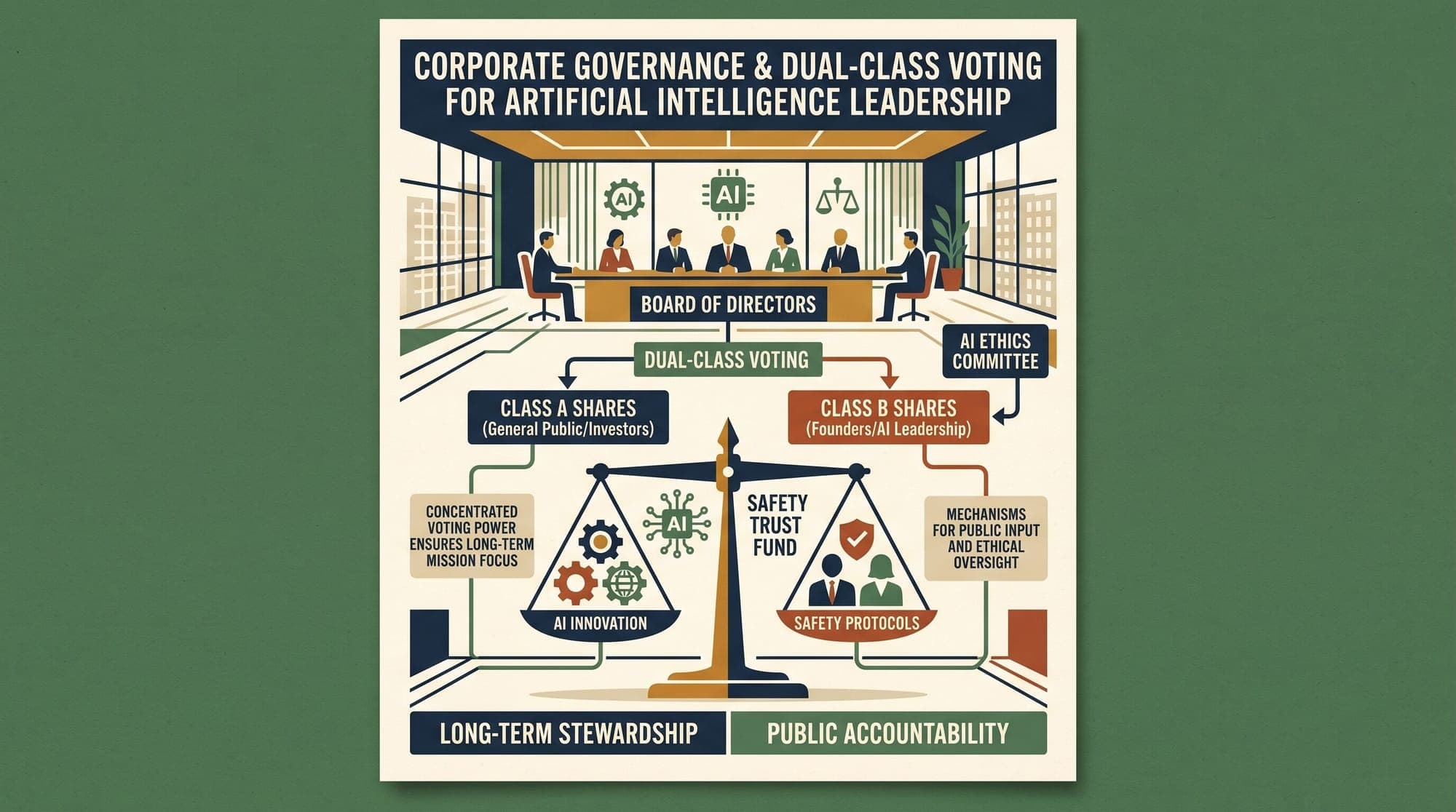
Anthropic is preparing to implement a dual-class share structure that grants super-voting equity to its co-founders ahead of a planned initial public offering, according to a report from The Information. The mechanism is designed to concentrate long-term operational voting control with executive leadership and insulate decision-making from external market and investor pressures.
The structure comes as the maker of the Claude model family scales enterprise commercialization, with annual revenue run rates reaching tens of billions of dollars alongside preparations for a public listing.

Dual-Class Architecture and Voting Weight
Under the reported framework, co-founders including Chief Executive Officer Dario Amodei and President Daniela Amodei will hold Class B common stock carrying multiple votes per share, while public investors and most external financial backers will hold standard single-vote Class A shares.
Dual-class equity structures have become a standard mechanism among major technology IPOs, including Alphabet and Meta, allowing founding executives to maintain strategic direction across multi-year product horizons without the risk of activist hostile takeovers or short-term quarterly redirection.
For Anthropic, the voting concentration serves a dual purpose:
- Operational Control: Preserves executive authority over frontier model development, compute capital allocation, and commercial deployment pacing.
- Shield Against External Influence: Prevents outside financial syndicates or hostile acquirers from forcing commercial pivots that compromise internal safety covenants.
Interaction with the Long-Term Benefit Trust
Anthropic operates as a Delaware Public Benefit Corporation (PBC), legally obligating its directors to balance shareholder financial interests with public safety considerations regarding artificial intelligence development.
The company's governance framework already includes the Long-Term Benefit Trust (LTBT), an independent five-member body of AI safety and policy experts holding no economic equity. The LTBT possesses specific corporate governance authority to elect and remove a designated portion of Anthropic's board of directors as specific safety milestones are reached.
The introduction of Class B super-voting shares establishes a distinct dual-tier governance system:
- Founders (Class B): Maintain direct operational, commercial, and executive control over the day-to-day business.
- The Long-Term Benefit Trust (Class T / Governance): Retains board-level oversight focused on safety protocols, catastrophic risk evaluation, and mission alignment.
- Public and Commercial Backers (Class A): Hold financial equity without the voting density required to force management changes.
Balancing Strategic Backers and Public Markets
Anthropic has raised substantial funding from tech giants including Amazon and Google alongside major institutional venture firms. However, these arrangements have historically excluded board seats or direct governance rights for corporate cloud providers.
As Anthropic formalizes its SEC registration filings, the combination of a Public Benefit Corporation charter, the Long-Term Benefit Trust, and founder super-voting shares will make it one of the most protected corporate governance structures to enter public equity markets.



