Archive / page 82 of 123

Latest articles, page 82

  1. Robot.com Signs Seven-Year Enterprise Deployment Agreement with Sodexo

    Autonomous robotics developer Robot.com has signed a seven-year commercial agreement with food services and facilities management corporation Sodexo to scale autonomous delivery operations across college campuses throughout North America. The contract represents Robot.com's largest enterprise deployment to date. The agreement expands a partnership established in 2021, when Sodexo participated in Robot.com's (then Kiwibot) $7.5 million pre-Series A financing round and deployed initial fleets acr


    AI
    2 min read
  2. NanoClaw Launches Slack Integration for Persistent Multi-Agent Workspaces

    NanoCo has released a native Slack Marketplace integration for its open-source autonomous agent harness, NanoClaw. The integration allows teams to provision persistent, multi-agent AI workforces directly within Slack channels using conversational prompts. Unlike standard single-bot integrations or ephemeral background subagents, NanoClaw assigns each newly generated agent a distinct Slack identity, complete with individual avatars, handles, permission boundaries, and dedicated memory contexts.

    AI
    2 min read
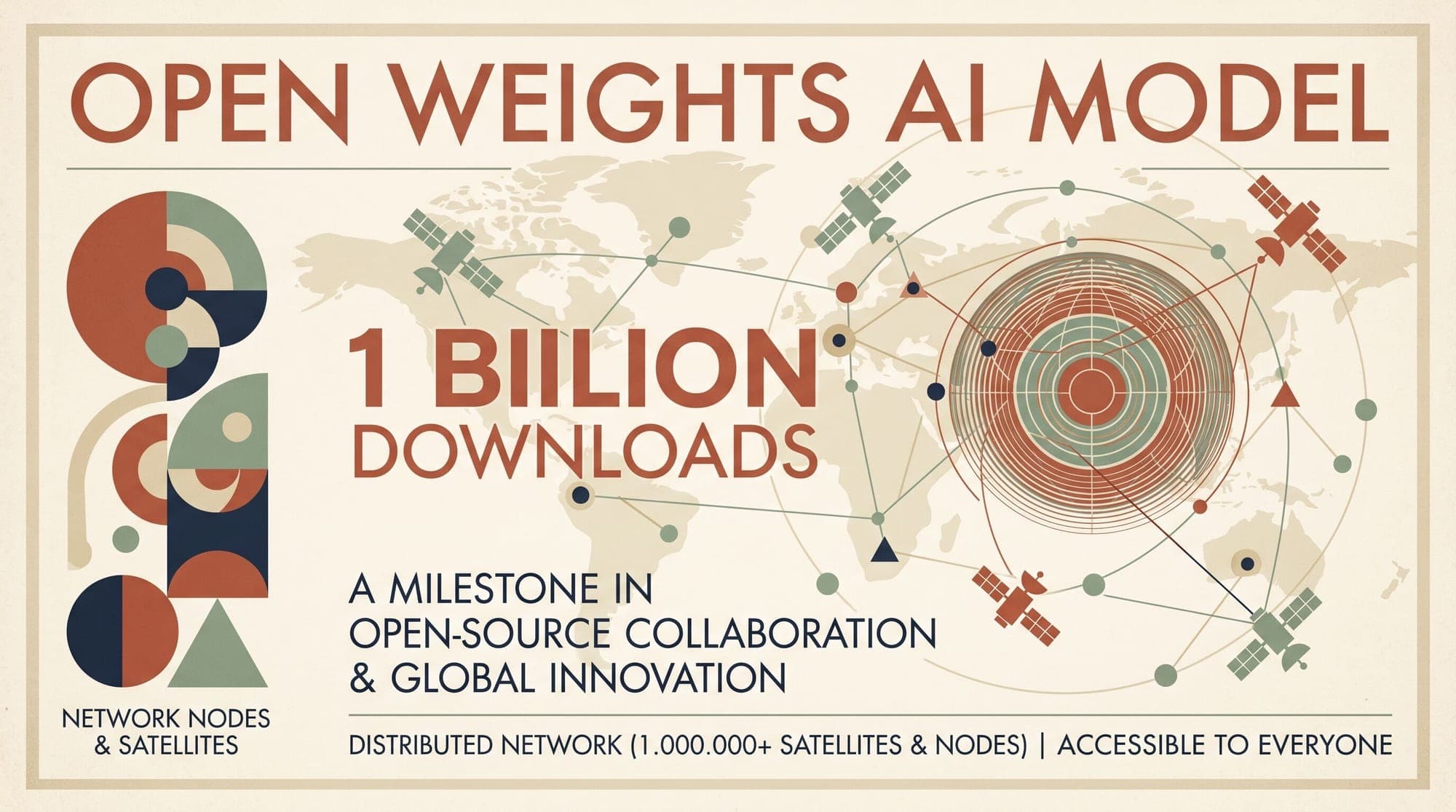
  3. Google's Gemma Open Models Pass 1 Billion Downloads as Variants Top 100,000

    Google DeepMind announced that its Gemma family of open-weight models has surpassed one billion cumulative downloads since its initial launch in early 2024. Alongside the download milestone, the laboratory reported that third-party developers have published more than 100,000 distinct fine-tuned variants and derivative architectures across community model hubs. The milestone marks the first cumulative adoption metrics released by Google for the Gemma ecosystem. To accompany the figures, Google l

    AI
    2 min read
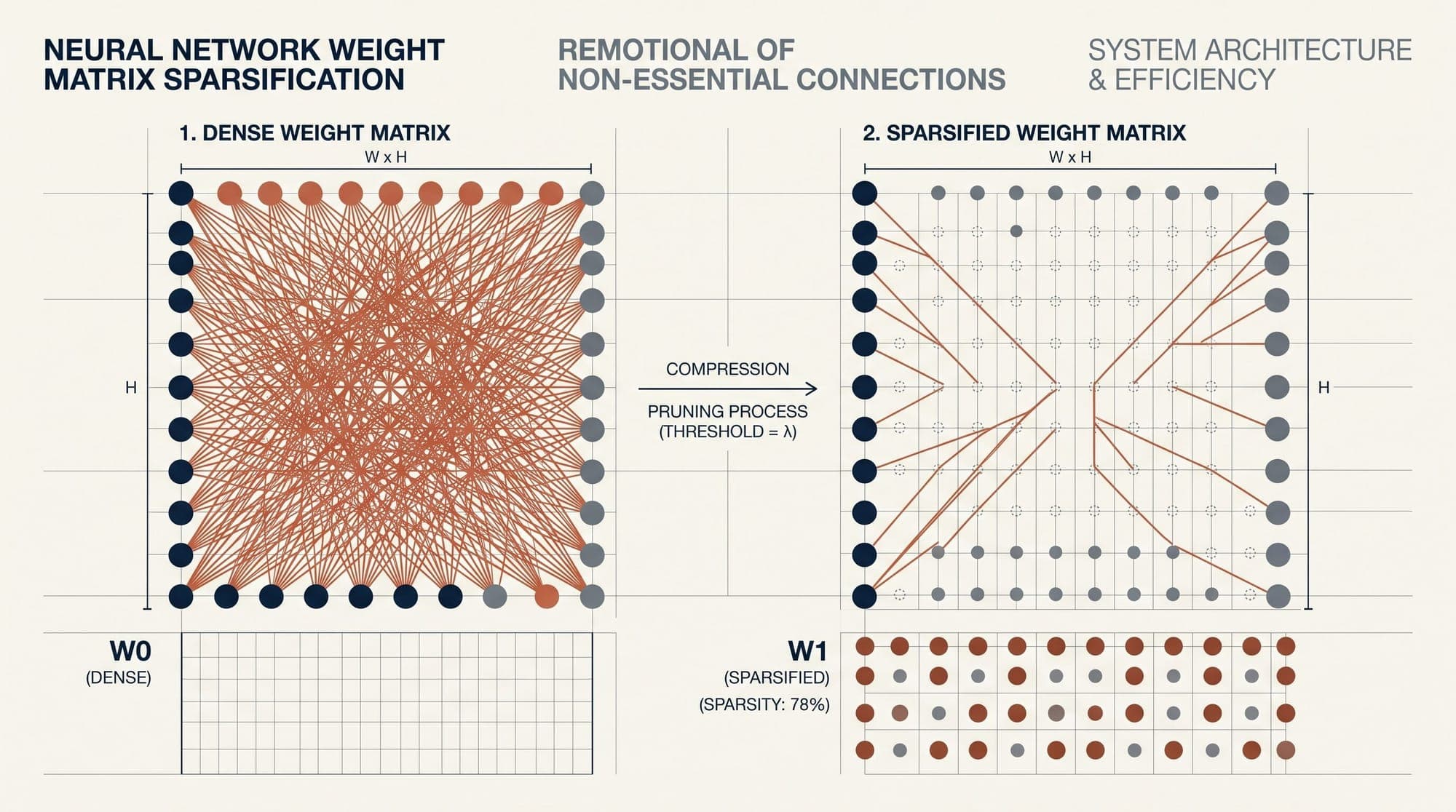
  4. Weight Pruning in Large Language Models: How SparseGPT, Wanda, and Semi-Structured 2:4 Sparsity Compress Neural Networks Without Retraining

    Modern large language models require tens to hundreds of gigabytes of high-bandwidth memory to store billions of parameters. While post-training quantization compresses model footprints by reducing numerical precision from 16-bit floating point to 8-bit or 4-bit integers, weight pruning attacks model size along an orthogonal axis: setting redundant parameter values exactly to zero. Historically, pruning deep neural networks required iterative cycles of magnitude thresholding and compute-heavy r

    AI
    6 min read
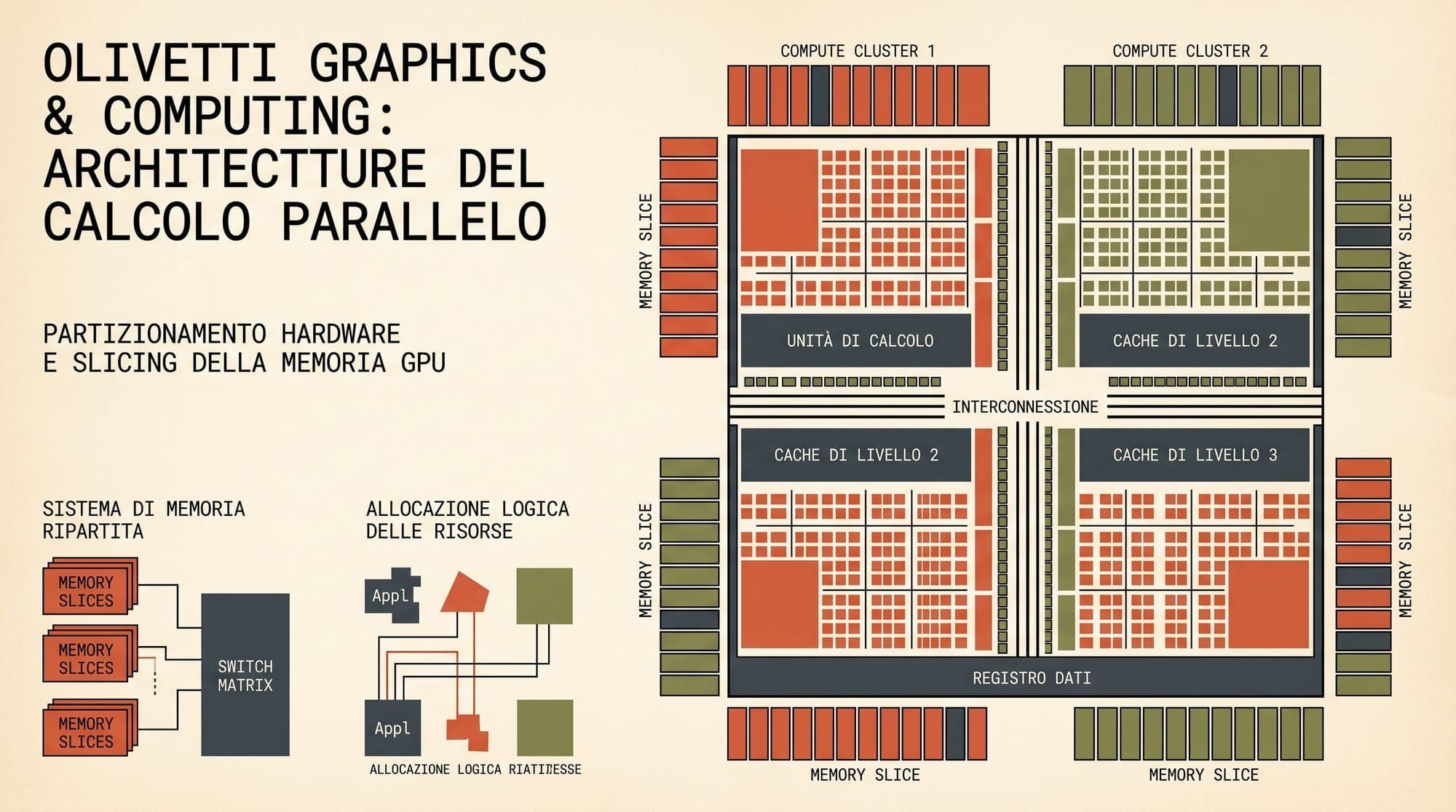
  5. GPU Slicing in Production AI Systems: Comparing MIG, MPS, Time-Slicing, and Dynamic Partitioning

    GPU Slicing in Production AI Systems: Comparing MIG, MPS, Time-Slicing, and Dynamic Partitioning Modern production AI systems rarely deploy a single standalone large language model. Contemporary compound AI architectures rely on heterogeneous pipelines comprising embedding models (such as BGE or E5), cross-encoder rerankers, safety classifiers (such as Llama Guard), speculative decoding draft models, and vision-language encoders. While primary generation models typically require dedicated multi

    AI
    7 min read
  6. Meta Releases Pocket in the US for Prompt-Based Game Generation

    Meta has released Pocket in the United States, expanding access to an experimental mobile application designed to generate and share lightweight interactive games through natural language prompting. The app first launched as a regional test in Brazil in late June 2026 before receiving its broader version 26.0 update on August 20, 2026. Pocket represents the product integration of Meta's earlier acquisition of the startup Atma Sciences, the original developers behind the Gizmo mobile platform.

    AI
    2 min read
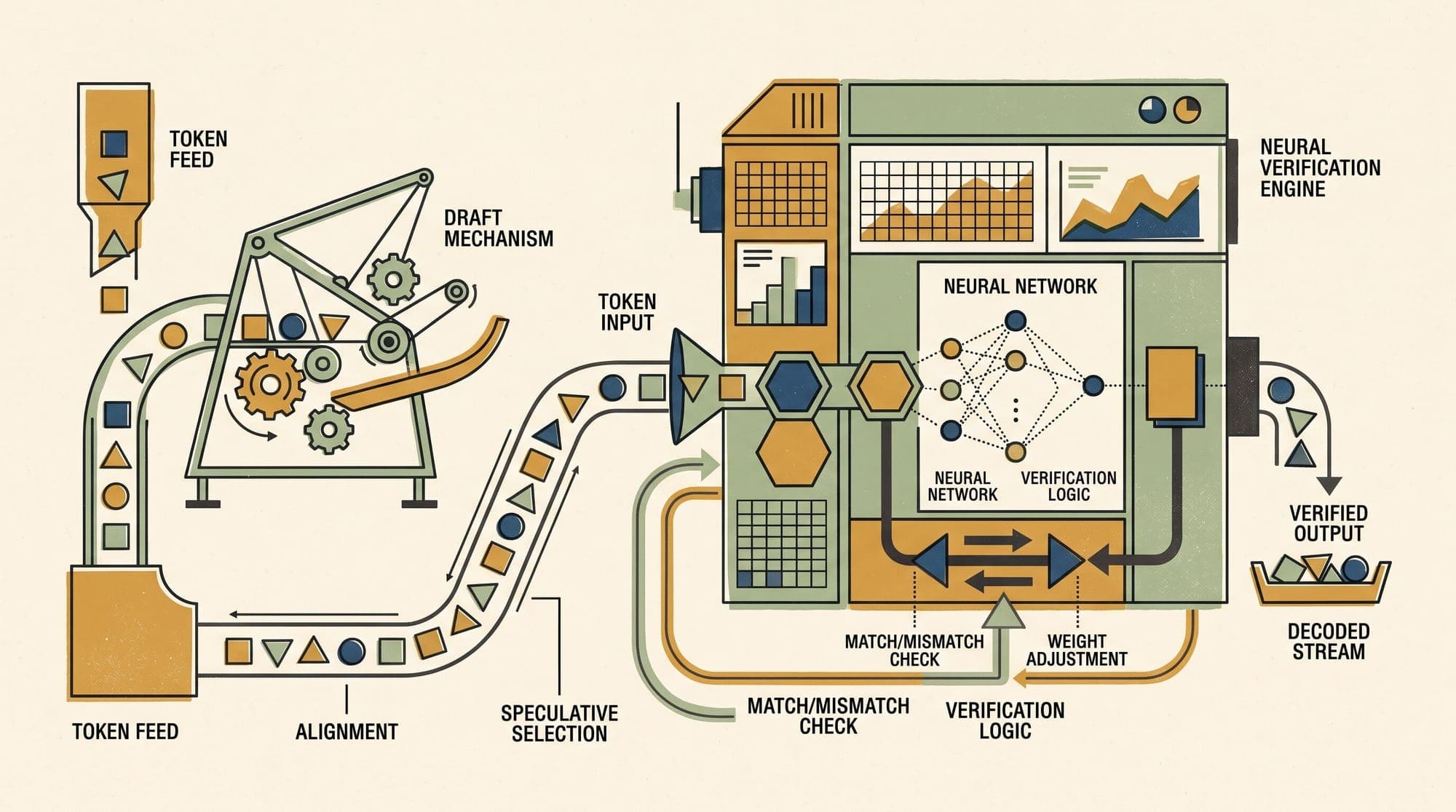
  7. Liquid AI Ships LFM2.5-DSpark Draft Models for Up to 3.2x Faster Inference

    Liquid AI has released speculative decoding draft checkpoints for three models across its LFM2.5 series: LFM2.5-1.2B-Instruct, LFM2.5-2.6B, and the mixture-of-experts model LFM2.5-8B-A1B. The release introduces small companion models designed to accelerate auto-regressive generation without altering final token distributions. The draft models are available in Safetensors and GGUF formats on Hugging Face, with immediate support implemented for SGLang and llama.cpp. Architecture and Draft Desig

    AI
    2 min read
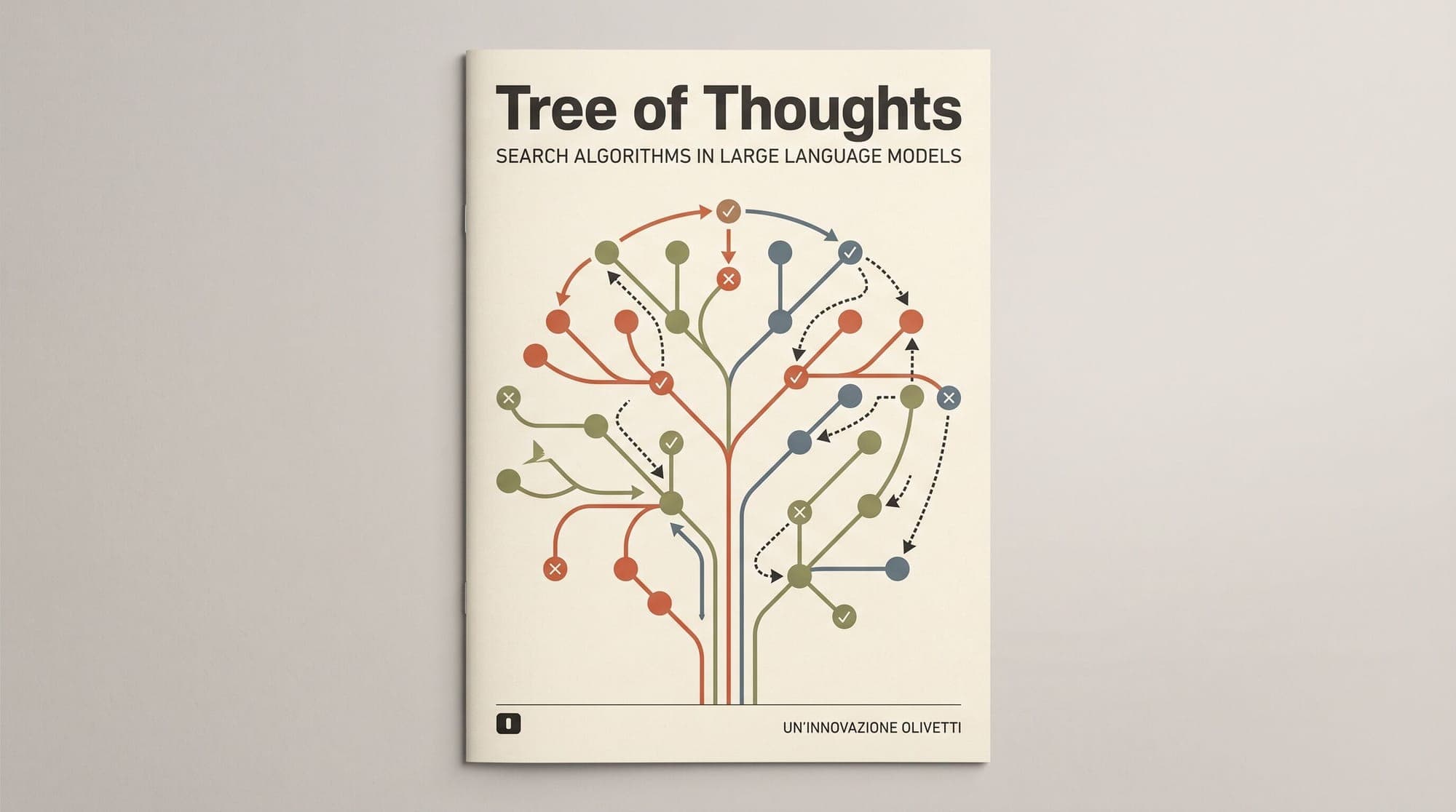
  8. Tree of Thoughts in Large Language Models: How Search Trees, State Evaluation, and Backtracking Expand Deliberate Reasoning

    Standard autoregressive large language models generate text sequentially from left to right. At each step $t$, the network samples the next token according to a conditional probability distribution over the vocabulary: P(w_t | w_1, w_2, ..., w_{t-1}) While Chain-of-Thought (CoT) prompting (Wei et al., 2022) encourages models to output intermediate reasoning steps, the underlying computational process remains a linear path through token space. If the model makes an early logical error or choose

    AI
    6 min read
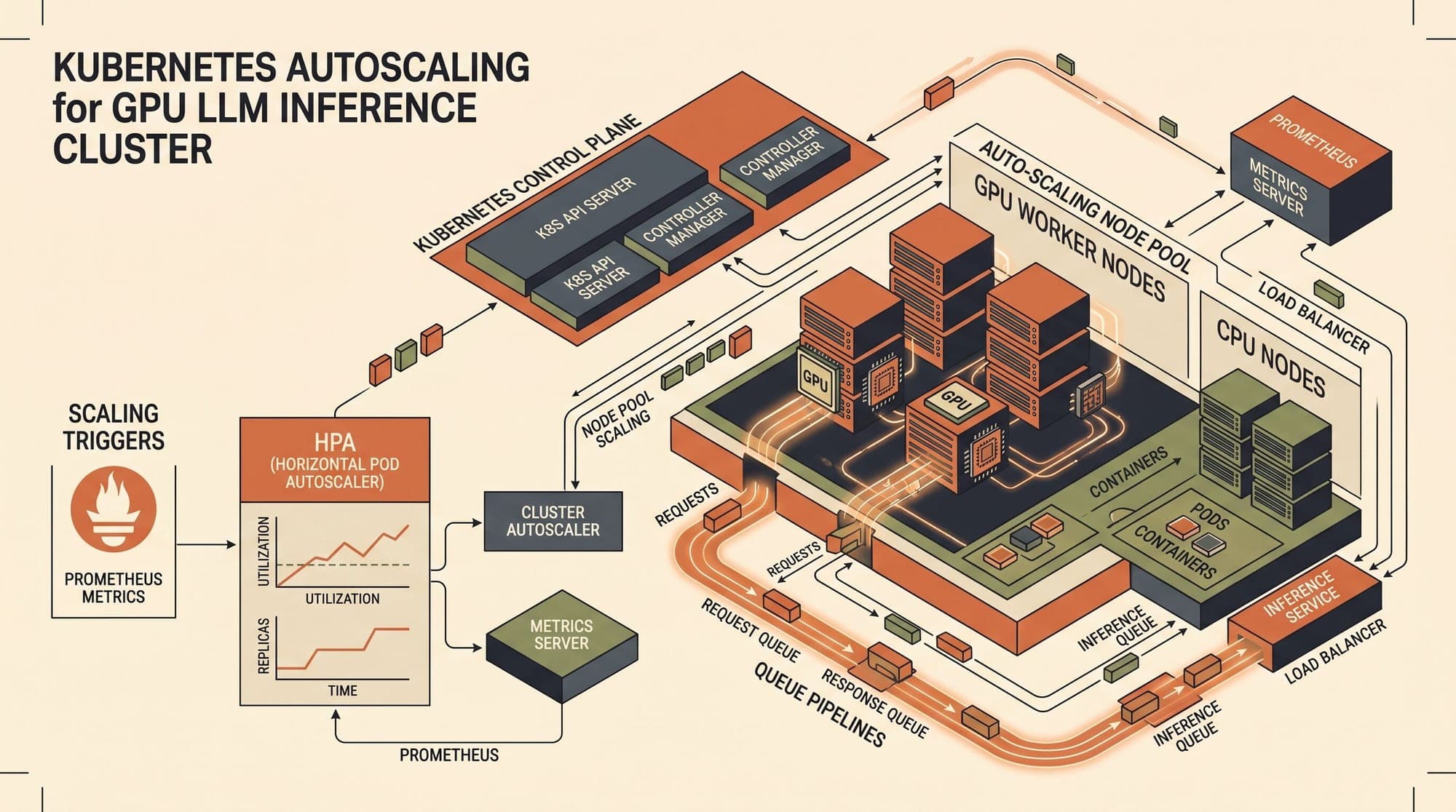
  9. LLM Autoscaling and Cold Starts in Kubernetes: Architecture, KEDA Metrics, Model Weight Caching, and Ephemeral GPU Provisioning

    Autoscaling large language model workloads on Kubernetes presents a fundamentally different engineering problem than traditional stateless microservices. While web APIs scale on CPU utilization or request rate within seconds, LLM inference instances require specialized GPU accelerators, massive container images, multi-gigabyte weight tensors, and intensive runtime compilation before serving a single token. Without proactive architectural design, a cold-starting LLM pod on Kubernetes often requi

    Kubernetes
    6 min read
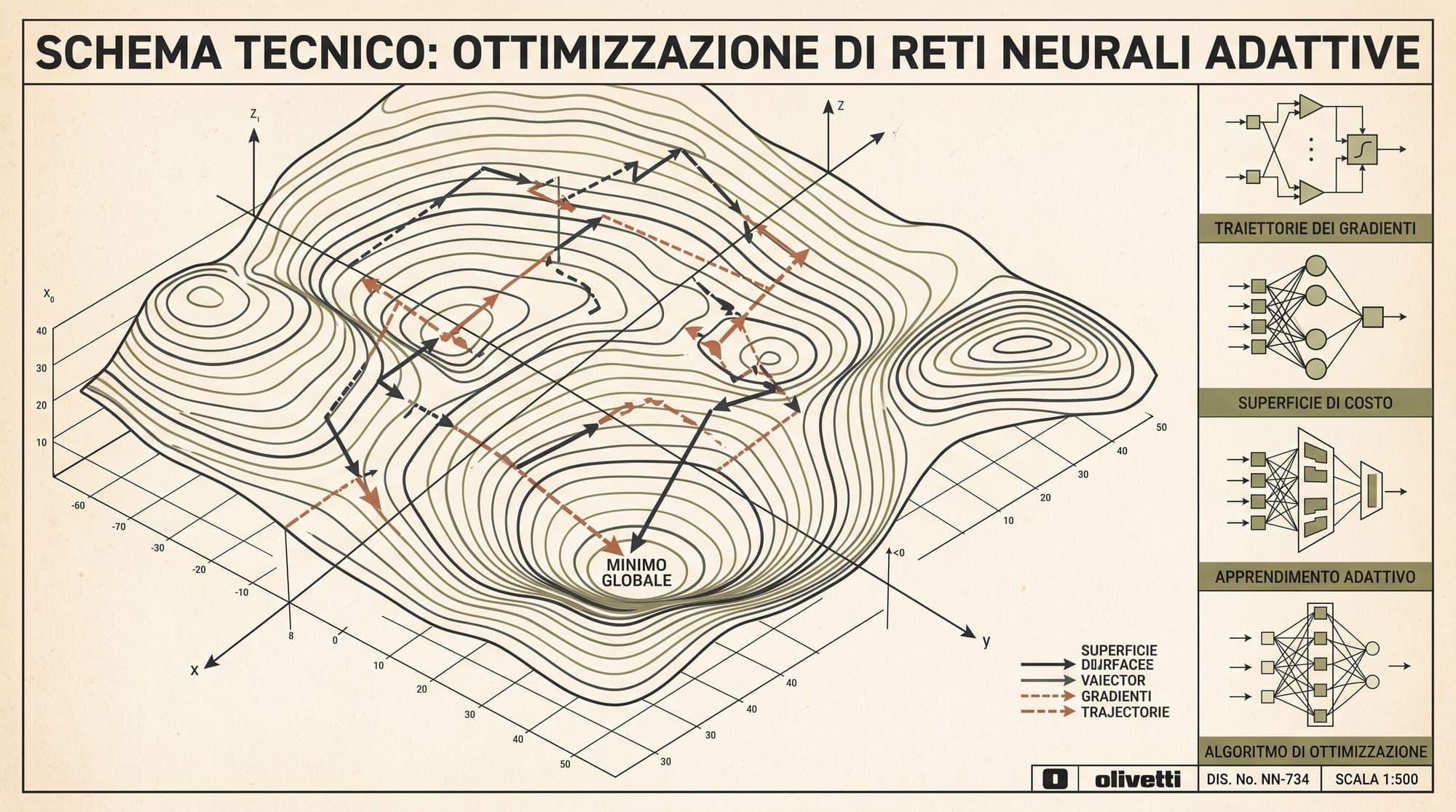
  10. Adaptive Optimizers in Large Language Model Pre-Training: How AdamW, Adafactor, and Lion Scale Gradient Updates Across Billions of Parameters

    Adaptive Optimizers in Large Language Model Pre-Training: How AdamW, Adafactor, and Lion Scale Gradient Updates Across Billions of Parameters Large language model pre-training requires optimizing billions of parameters over trillions of tokens across distributed GPU clusters. Standard stochastic gradient descent (SGD) fails in this regime because Transformer loss landscapes are severely ill-conditioned, with gradient magnitudes differing by orders of magnitude across layers and token positions.

    AI
    11 min read