Robot.com Signs Seven-Year Enterprise Deployment Agreement with Sodexo

Autonomous robotics developer Robot.com has signed a seven-year commercial agreement with food services and facilities management corporation Sodexo to scale autonomous delivery operations across college campuses throughout North America. The contract represents Robot.com's largest enterprise deployment to date. The agreement expands a partnership established in 2021, when Sodexo participated in Robot.com's (then Kiwibot) $7.5 million pre-Series A financing round and deployed initial fleets acr

2 min
Robot.com Signs Seven-Year Enterprise Deployment Agreement with Sodexo

Autonomous robotics developer Robot.com has signed a seven-year commercial agreement with food services and facilities management corporation Sodexo to scale autonomous delivery operations across college campuses throughout North America. The contract represents Robot.com's largest enterprise deployment to date.

The agreement expands a partnership established in 2021, when Sodexo participated in Robot.com's (then Kiwibot) $7.5 million pre-Series A financing round and deployed initial fleets across universities including Gonzaga, Loyola Marymount, and New Mexico State.

Robot.com Autonomous Delivery and Fleet Architecture

Fleet Specifications and Dual Monetization

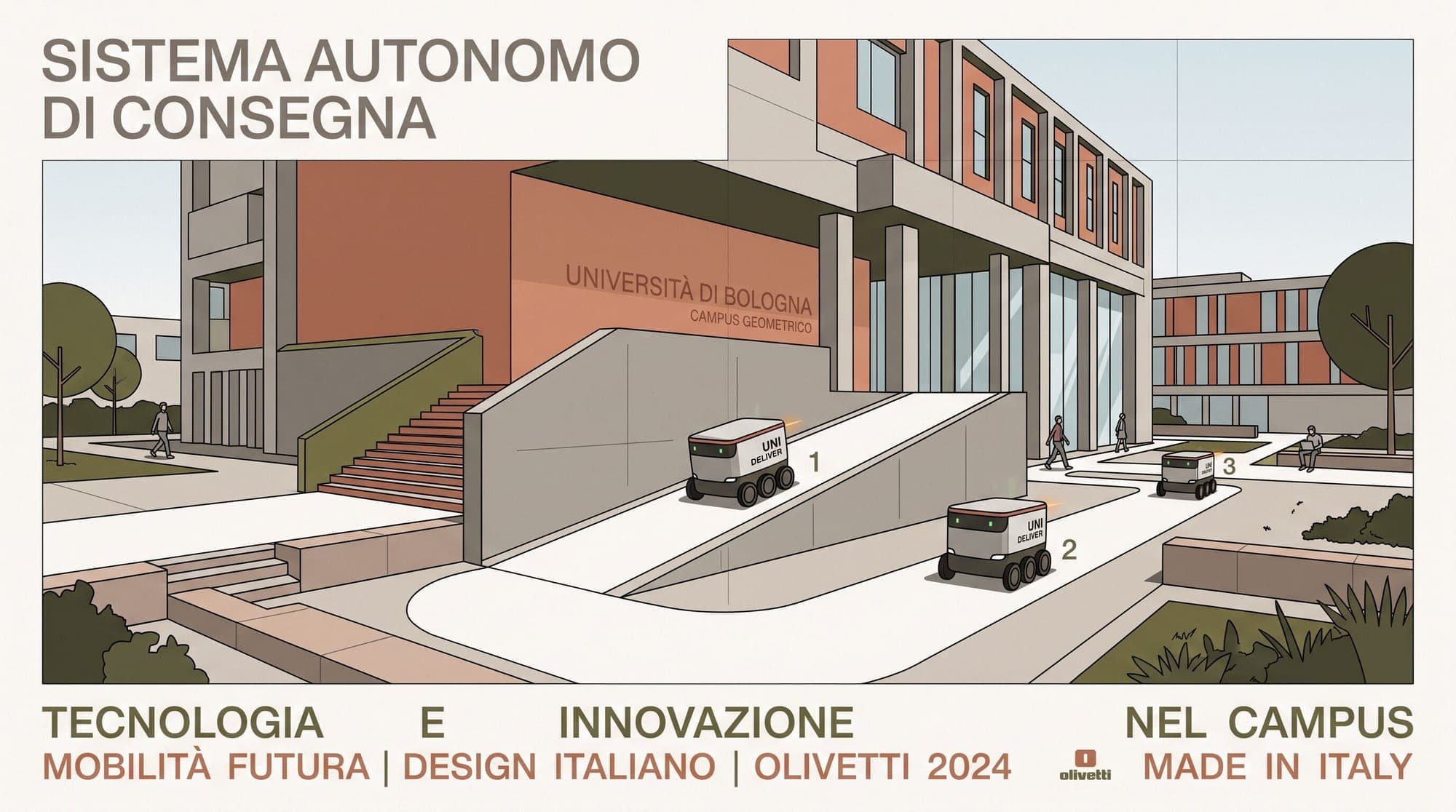
Under the multi-year contract, Sodexo will expand its operational footprint of Robot.com's sidewalk robotics:

  • Hardware and Autonomy: Primary delivery routes utilize the R-kiwi sidewalk platform, featuring Level 4 autonomous navigation, a 12-hour operational battery lifecycle, and a 19-liter secured cargo compartment for food and package transport.
  • Integrated Advertising Layer: The agreement formalizes the integration of Robot.com's R-ads network across the deployed campus fleet, allowing third-party advertisers to deliver programmatic digital out-of-home campaigns via external chassis screens while robots transit delivery routes.
  • Centralized Fleet Orchestration: Robot fleets are managed via Robot.com's REMI orchestration platform, which handles teleoperation fallback, route dispatching, and health telemetry.

Expansion into Quadruped Robotics

The seven-year framework also establishes a pathway for deploying next-generation robotic form factors:

  • Quadruped Delivery Integration: The companies plan to initiate commercial testing in 2027 with R-dog, a four-legged robotic platform developed in partnership with FieldAI.
  • Terrain Adaptability: Powered by FieldAI's multimodal foundation models, R-dog is engineered to navigate architectural barriers such as outdoor stairwells, steep gradients, and elevated curbs that restrict wheeled sidewalk delivery vehicles.

Robot.com currently operates more than 500 autonomous units across North America and the Middle East, with over 2.5 million verified task completions logged across its commercial fleet.


Sources

Written by

More to read

  • CI/CD for LLM Applications: Automated Regression Testing, Golden Datasets, and Pull Request Quality Gates

    Deploying generative AI applications into production environments requires a fundamental shift in software quality assurance. Traditional continuous integration (CI) workflows rely on deterministic assertions: given a fixed input, a function must return an exact expected output. Large language models (LLMs) break this paradigm because their outputs vary across runs, token probabilities drift with prompt alterations, and natural language responses cannot be validated with binary equality checks.

    1 min
  • NanoClaw Launches Slack Integration for Persistent Multi-Agent Workspaces

    NanoCo has released a native Slack Marketplace integration for its open-source autonomous agent harness, NanoClaw. The integration allows teams to provision persistent, multi-agent AI workforces directly within Slack channels using conversational prompts. Unlike standard single-bot integrations or ephemeral background subagents, NanoClaw assigns each newly generated agent a distinct Slack identity, complete with individual avatars, handles, permission boundaries, and dedicated memory contexts.

    1 min
  • Google's Gemma Open Models Pass 1 Billion Downloads as Variants Top 100,000

    Google DeepMind announced that its Gemma family of open-weight models has surpassed one billion cumulative downloads since its initial launch in early 2024. Alongside the download milestone, the laboratory reported that third-party developers have published more than 100,000 distinct fine-tuned variants and derivative architectures across community model hubs. The milestone marks the first cumulative adoption metrics released by Google for the Gemma ecosystem. To accompany the figures, Google l

    1 min

