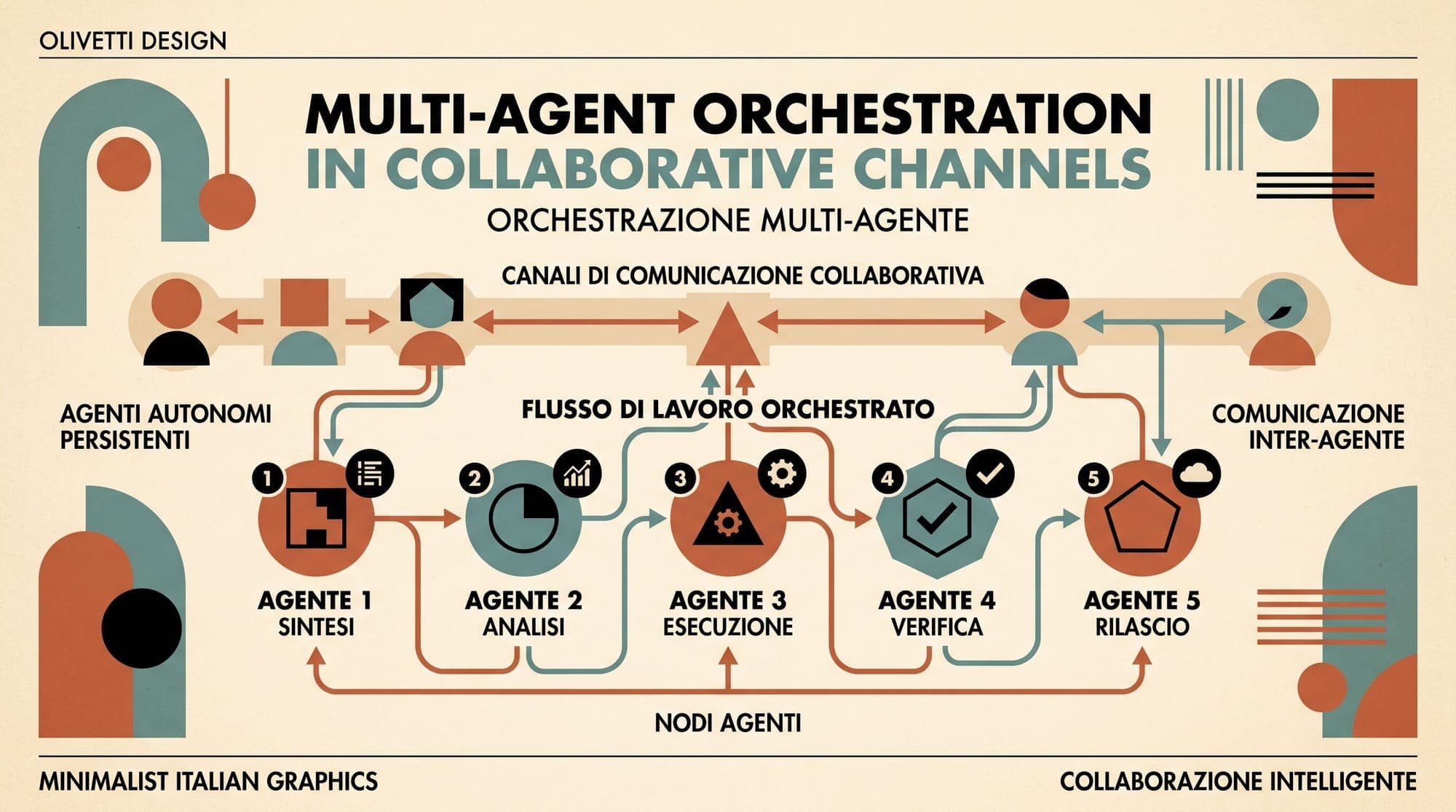
NanoCo has released a native Slack Marketplace integration for its open-source autonomous agent harness, NanoClaw. The integration allows teams to provision persistent, multi-agent AI workforces directly within Slack channels using conversational prompts.
Unlike standard single-bot integrations or ephemeral background subagents, NanoClaw assigns each newly generated agent a distinct Slack identity, complete with individual avatars, handles, permission boundaries, and dedicated memory contexts.

Dynamic Agent Provisioning via Model Context Protocol
The integration automates multi-agent deployment by exposing agent-creation primitives to running models:
- In-Channel Agent Creation: Using a Model Context Protocol (MCP) tool, an active lead agent can parse human requirements to instantiate specialized downstream agents (such as dedicated code reviewers, QA testers, or documentation specialists) without requiring administrators to manually configure separate Slack apps.
- Granular Role Separation: Each agent can be bounded to specific tools, system instructions, and execution environments (e.g., giving a test agent shell access to staging containers while restricting an architectural review agent to read-only repository maps).
- Collaborative Canvas Support: Agents can coordinate asynchronously through Slack Canvas documents, leaving inline comments and tracking deliverables without triggering repetitive message cascades. Agents are configured to reply strictly when directly tagged or when assigned explicit tasks.
Self-Hosted Execution and Cross-Platform Persistence
The integration preserves NanoClaw's self-hosted deployment architecture:
- Local Infrastructure Control: Agents run on customer-managed hardware or cloud virtual machines, connecting to Slack over Socket Mode. API credentials, session memories, and file workspaces remain stored locally rather than in external vendor databases. NanoCo operates an auxiliary cloud service solely for initial workspace handshakes and avatar rendering.
- Cross-Channel Session State: Individual agents maintain memory continuity and tool state across multiple messaging interfaces, including Slack, Telegram, and WhatsApp, while maintaining isolated conversation threads for each platform.
- Model Agnostic Runtimes: The framework supports interchangeable backend LLMs, allowing deployments across Claude Code, OpenAI Codex, OpenCode, or local quantization backends via Ollama.
The integration is available immediately through the Slack Marketplace at no platform charge for open-source users, who supply their own model API keys or local compute.