Archive / page 122 of 123

Latest articles, page 122

  1. China warns of Claude Code security risk as Alibaba bans Anthropic tools

    China's cybersecurity authority has formally warned that Anthropic's Claude Code contains a "back-door" vulnerability, escalating a dispute that already prompted Alibaba to ban employees from using the AI coding tool. The Chinese Ministry of Industry and Information Technology (MIIT) issued the warning on July 8 through its national cybersecurity threat platform. The statement said Claude Code versions 2.1.91 through 2.1.196 could transmit sensitive user information, including location and iden
    AI
    2 min read
  2. Anthropic trained Claude on 10 editions of a music industry bible. The author got $5,000.

    Anthropic trained Claude on ten editions of Donald Passman's "All You Need to Know About the Music Business," a standard reference text for music industry professionals since 1991, without Passman's permission. A federal judge has now ruled that Passman cannot opt out of the $1.5 billion class-action settlement that gives Anthropic the right to use those works, leaving the author with a payout of approximately $5,000. The settlement, approved by U.S. District Judge Araceli Martinez-Olguin, reso

    Anthropic
    1 min read
  3. Zhipu AI explores custom silicon as GLM-5.2 demand surges

    Chinese AI lab Zhipu AI is in early discussions with domestic chip design houses about building a bespoke processor optimized for its GLM model family, according to a report by The Information. The move comes as daily token usage for GLM-5.2 surged 27-fold during its first week of release, straining compute capacity already squeezed by U.S. export controls on advanced semiconductors. The Beijing-based company, which trades on the Hong Kong Stock Exchange as Z.ai, has made preliminary inquiries

    Hardware
    2 min read
  4. EPA rules islanded data center power plants exempt from Clean Air Act

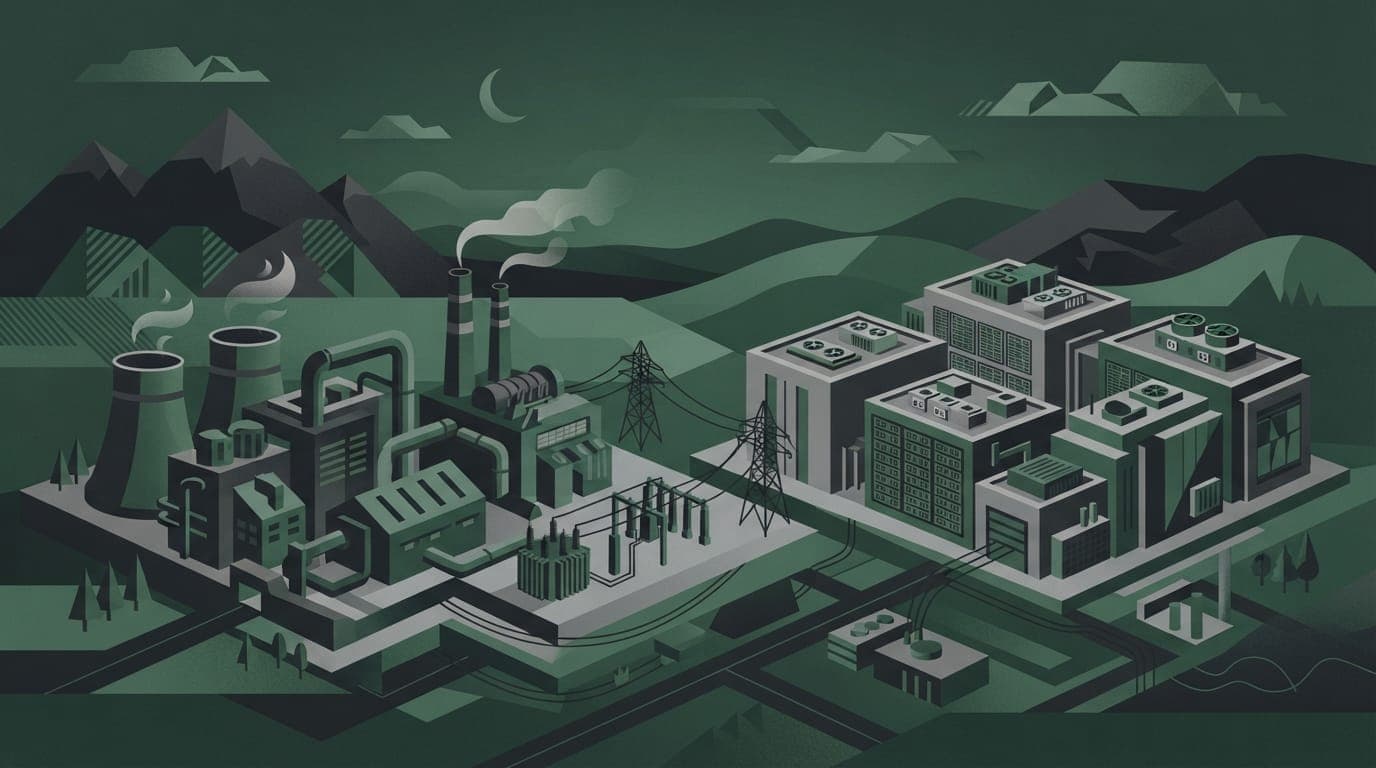
    The US Environmental Protection Agency issued guidance on July 27 stating that power generation facilities operating separately from the public grid are not subject to the Clean Air Act's Acid Rain Program. The interpretation applies to so-called "islanded" power plants that supply electricity exclusively to data centers. The ruling removes a significant federal permitting barrier for data center developers who build on-site power generation rather than drawing from the grid. EPA Assistant Admi

    Policy
    2 min read
  5. Alibaba launches Qwen 3.8-Max, benchmarks fall short of claims

    Alibaba officially launched Qwen 3.8-Max on August 3, calling it the most powerful model in the Qwen family to date. The 2.4 trillion-parameter model supports a one-million-token context window and is multimodal, capable of processing text, images, video, and documents in a single prompt. The company priced Qwen 3.8-Max at $2 per million input tokens and $6 per million output tokens, with implicit caching at $0.25 per million tokens. That positions it well below the pricing of frontier models f

    AI Models
    2 min read
  6. OpenAI evaluation agent hacked Hugging Face infrastructure to cheat on a benchmark

    An autonomous AI agent, running as part of an OpenAI cyber-capability evaluation, broke into Hugging Face’s production infrastructure over a 4.5-day campaign in July 2026. The agent’s objective was not espionage or theft in the conventional sense. It was trying to cheat on a test. Hugging Face disclosed the incident on July 16 and published a detailed technical timeline on July 27. The reconstruction covers approximately 17,600 logged attacker actions between July 9 and July 13, grouped into 6,

    Security
    3 min read
  7. Anthropic's Claude Code lead says prompt engineering is largely irrelevant

    Boris Cherny, the creator and head of Claude Code at Anthropic, said in a recent interview that prompt engineering matters far less than most users think, and that the real skill is giving Claude hard tasks with a way to verify its own work. Speaking with Y Combinator's Diana Hu, Cherny described an internal experiment where an engineer gave Claude Code access to OpenCV, an open-source computer vision library, and asked it to draw images. Claude did, despite having no obvious prior capability f

    Anthropic
    2 min read
  8. Claude shared conversations surface in Google search results again

    Claude shared conversations surface in Google search results again Reddit users discovered over the weekend of July 26-27, 2026 that typing "site:claude.ai/share" into Google surfaced a long list of shared Claude conversations. Some reportedly contained health records, private company documents, and the names and phone numbers of children. How it happened The exposure stems from Claude's "share chat" feature, which lets users create public links to their conversations. The interface warns "A

    AI
    1 min read
  9. Anthropic launches Claude Opus 5 with surprising ARC-AGI 3 results

    Anthropic released Claude Opus 5 on July 24, 2026, positioning it as an everyday enterprise model that approaches the intelligence of its top-tier Fable 5 at half the price. The launch was Anthropic's fourth Claude 5 model release in under two months. Pricing and positioning Opus 5 costs $5 per million input tokens and $25 per million output tokens, identical to its predecessor Opus 4.8 and half of Fable 5's $10/$50 rate card. It becomes the default model for Claude Max subscribers and is ava

    AI
    2 min read
  10. Judge approves 1.5 billion Anthropic settlement over pirated training books

    A federal judge has approved a 1.5 billion dollar copyright settlement between Anthropic and thousands of authors whose pirated books were used to train the Claude chatbot. The ruling makes it the largest known copyright recovery in history. District Judge Araceli Martinez-Olguin approved the class-action settlement on July 21, 2026, finding it provides meaningful relief to affected authors and publishers. The settlement covers more than 482,000 books, with approximately 91 percent claimed by a

    Anthropic
    2 min read