Subscribe
Topic

AI Models

News on notable AI model launches and how they stack up. Recent stories cover Moonshot's Kimi K3, Meta's Muse Code and Muse Spark 1.2, Nvidia's Nemotron 3.5 Lightning, Liquid AI's LFM2-VL-3B edge model and Alibaba's Qwen 3.8-Max.

Articles

1-6
  1. Thomson Reuters Deploys Thomson-1 Model Built on Open Weights to Cut Frontier Model Dependence

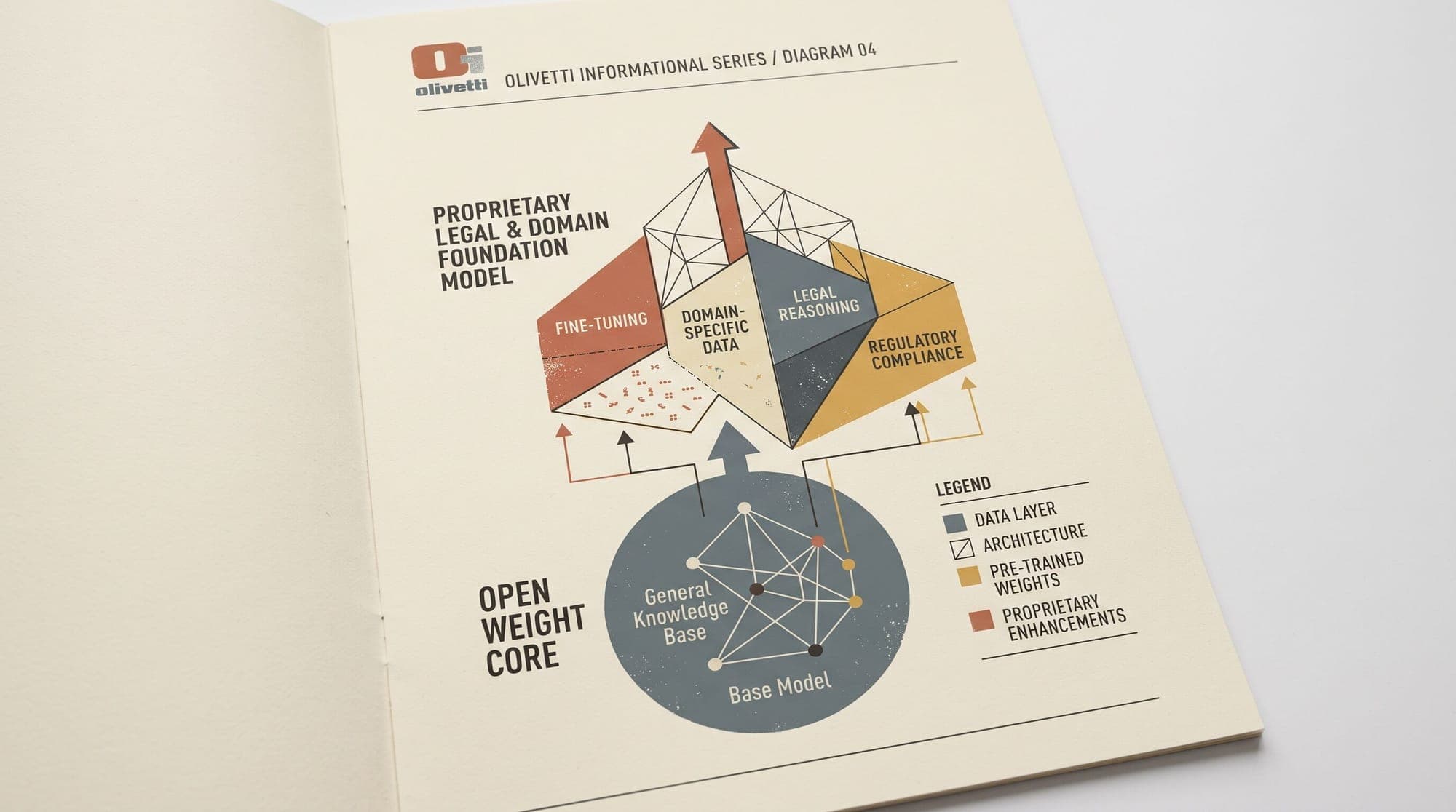
    Thomson Reuters has deployed Thomson-1, a proprietary artificial intelligence model engineered from an open-weight base architecture. The system is designed to execute high-volume legal and domain-specific analytical workflows, reducing the information conglomerate's direct computational dependence on third-party frontier models like Anthropic's Claude. According to financial reporting and recent corporate earnings disclosures, Thomson Reuters invested approximately $40 million into developing

    Thomson Reuters
    2 min read
  2. Liquid AI ships LFM2-VL-3B, a 3B vision model built for the edge

    Liquid AI has released LFM2-VL-3B, a 3 billion parameter vision-language model designed to run on edge hardware rather than in a data center. It is the largest model in the company’s LFM2-VL family, which previously topped out at 1.6B parameters, and is available now under the LFM Open License on Hugging Face and through Liquid AI’s LEAP platform. The model pairs Liquid AI’s densest text backbone, LFM2-2.6B, with a SigLIP2 400M NaFlex vision encoder. That combination lets it take in images at t

    AI Models
    2 min read
  3. Nvidia's Nemotron 3.5 Lightning bets on speed over size

    Nvidia has released Nemotron 3.5 Lightning, the first model in a new Nemotron 3.5 family, and it is playing a different game than most open-weight releases this year. Instead of chasing the highest intelligence score, Nvidia built a compact model that runs fast and cheap while still matching much larger rivals on standard benchmarks. A small model that keeps up Lightning carries 31.6 billion total parameters, but only 3.6 billion are active at any moment. It keeps the hybrid Mamba-Transformer

    Nvidia
    3 min read
  4. ByteDance Trains 10 Trillion-Parameter AI Model to Rival Anthropic's Mythos

    ByteDance is pretraining a large model with up to 10 trillion parameters, a scale the Financial Times reports could put it in the same class as Anthropic's most advanced systems. The model, still in early pretraining, would be more than three times the size of Moonshot AI's Kimi K3, currently the largest Chinese model at 2.8 trillion parameters. Three people familiar with the project told the FT the model is in pretraining, a phase that typically lasts three to six months before full training a

    ByteDance
    2 min read
  5. Meta Enters the AI Coding Wars with Muse Code and Muse Spark 1.2

    Meta has launched Muse Code, a terminal-based AI coding agent now in beta, alongside Muse Spark 1.2, a coding-focused update to its proprietary frontier model family. The two releases put Meta in direct competition with Anthropic's Claude Code, OpenAI's Codex, and the growing field of agentic coding tools that have become the default way many developers ship software. Muse Code is installable on macOS or Linux with a single curl command, though it requires a Meta account and billing details. Un

    Meta
    3 min read
  6. Alibaba launches Qwen 3.8-Max, benchmarks fall short of claims

    Alibaba officially launched Qwen 3.8-Max on August 3, calling it the most powerful model in the Qwen family to date. The 2.4 trillion-parameter model supports a one-million-token context window and is multimodal, capable of processing text, images, video, and documents in a single prompt. The company priced Qwen 3.8-Max at $2 per million input tokens and $6 per million output tokens, with implicit caching at $0.25 per million tokens. That positions it well below the pricing of frontier models f

    AI Models
    2 min read