Archive / page 105 of 123

Latest articles, page 105

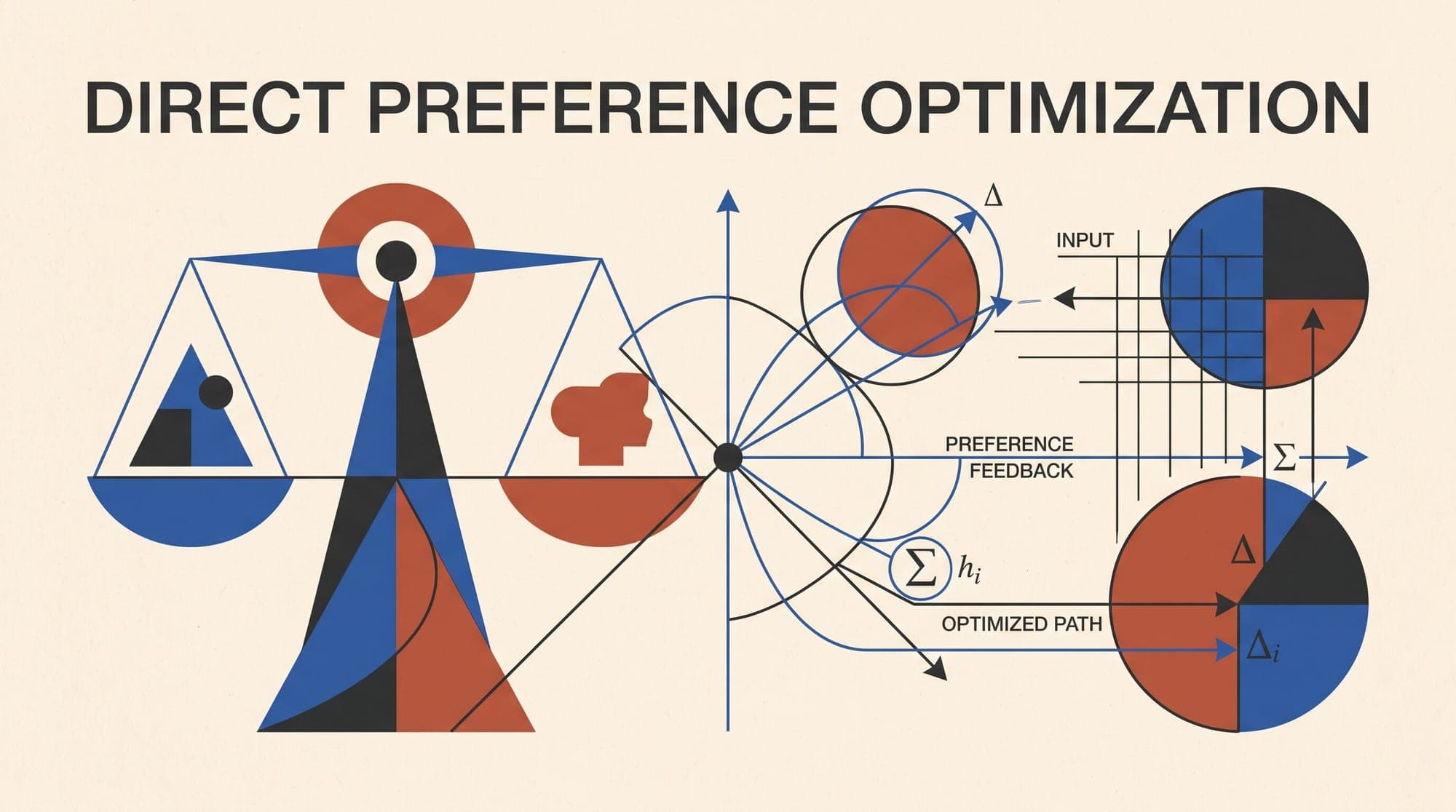
  1. Direct Preference Optimization: How Implicit Reward Modeling Simplified LLM Alignment

    Direct Preference Optimization (DPO) has emerged as a cornerstone of post-training alignment across modern open and proprietary language models, including Meta's Llama series, Mistral, and Qwen. While early alignment pipelines relied on complex reinforcement learning loops with separate reward models, DPO reformulates the preference optimization problem into a single, closed-form classification objective. By demonstrating that a language model implicitly defines its own reward function, DPO eli

    AI
    7 min read
  2. Payward Joins Anthropic Project Glasswing to Deploy Claude Mythos for Security Audits

    Payward, the parent company of cryptocurrency exchange Kraken, has been admitted to Anthropic's Project Glasswing initiative. Under the program, Payward is deploying Anthropic's Claude Mythos 5 model to identify software vulnerabilities across its production infrastructure and open-source crypto codebases. The deployment marks the first confirmed participation by a digital asset institution in Project Glasswing, Anthropic's controlled access initiative for cybersecurity research and defense.

    Anthropic
    2 min read
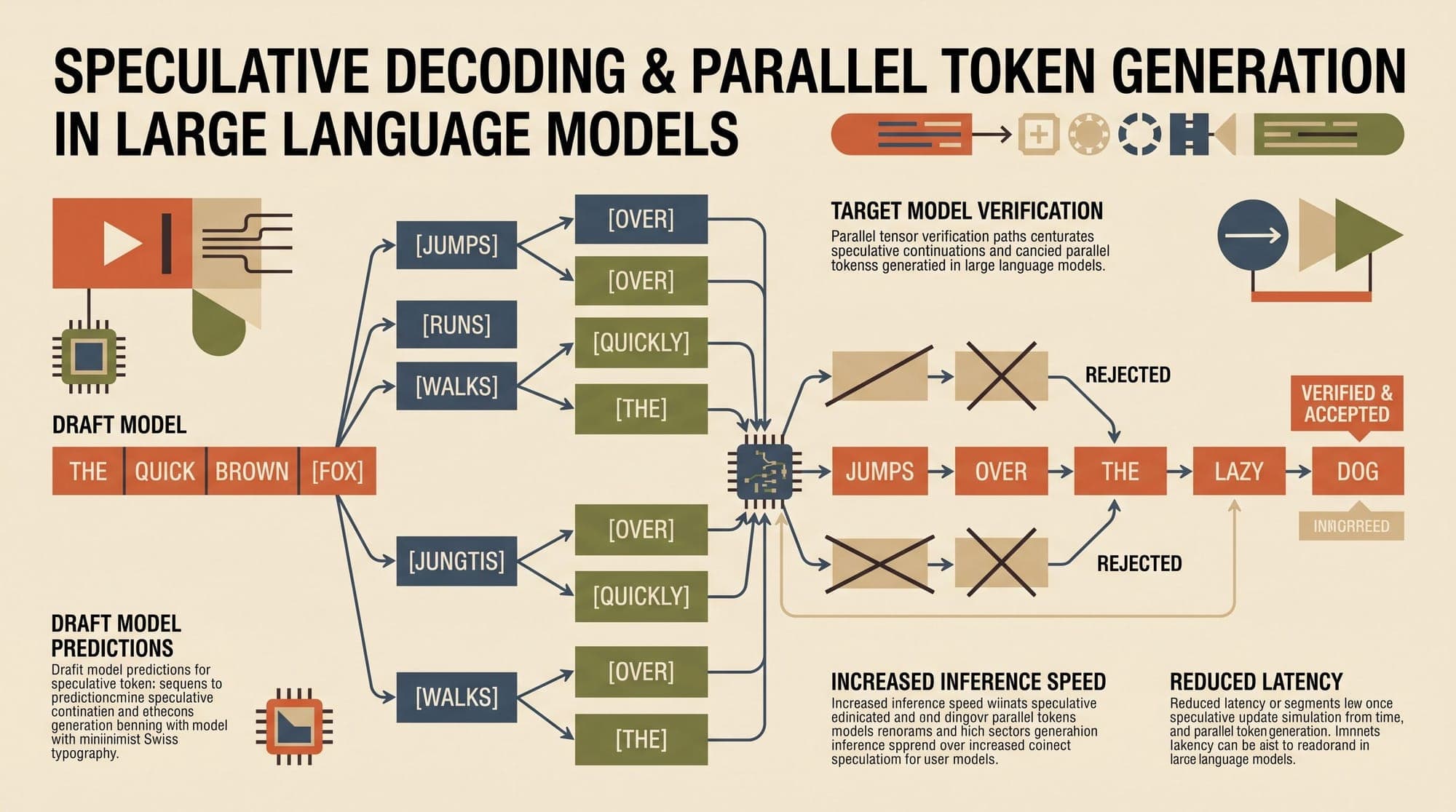
  3. Speculative Decoding in Production: Architecture, Economics, and Serving Trade-Offs

    Standard autoregressive large language model (LLM) generation produces one token per forward pass. Because modern inference architectures must read tens of gigabytes of model weights from high-bandwidth memory (HBM) into SRAM to process each solitary token at low batch sizes, generation is strictly memory-bandwidth bound rather than compute bound. Speculative decoding alters this hardware equation. By pairing a fast draft mechanism with parallel verification by the primary target model, inferen

    LLM
    6 min read
  4. Rotary Position Embeddings: How Geometry Solved Long Context in Modern LLMs

    Rotary Position Embedding (RoPE) has become the standard positional encoding mechanism across modern large language models, including Meta's Llama series, Mistral, Qwen, and DeepSeek. Unlike earlier techniques that added positional vectors directly to token representations or modified attention matrices with relative distance penalties, RoPE encodes position through geometric rotations in the complex plane. This design enables models to compute relative token distances while processing individu

    AI
    6 min read
  5. GitHub Copilot Autofix Introduced Command Injection in Snowflake CI Pipeline

    A security vulnerability introduced by GitHub Copilot Autofix left a public Snowflake repository vulnerable to unauthenticated remote command injection for five days before an autonomous security agent discovered and exploited it, according to a technical disclosure published by Wiz Research on August 17, 2026. The incident highlights emerging operational risks at the intersection of automated code generation and CI/CD security, demonstrating how automated remediation bots can silently strip ou

    AI
    2 min read
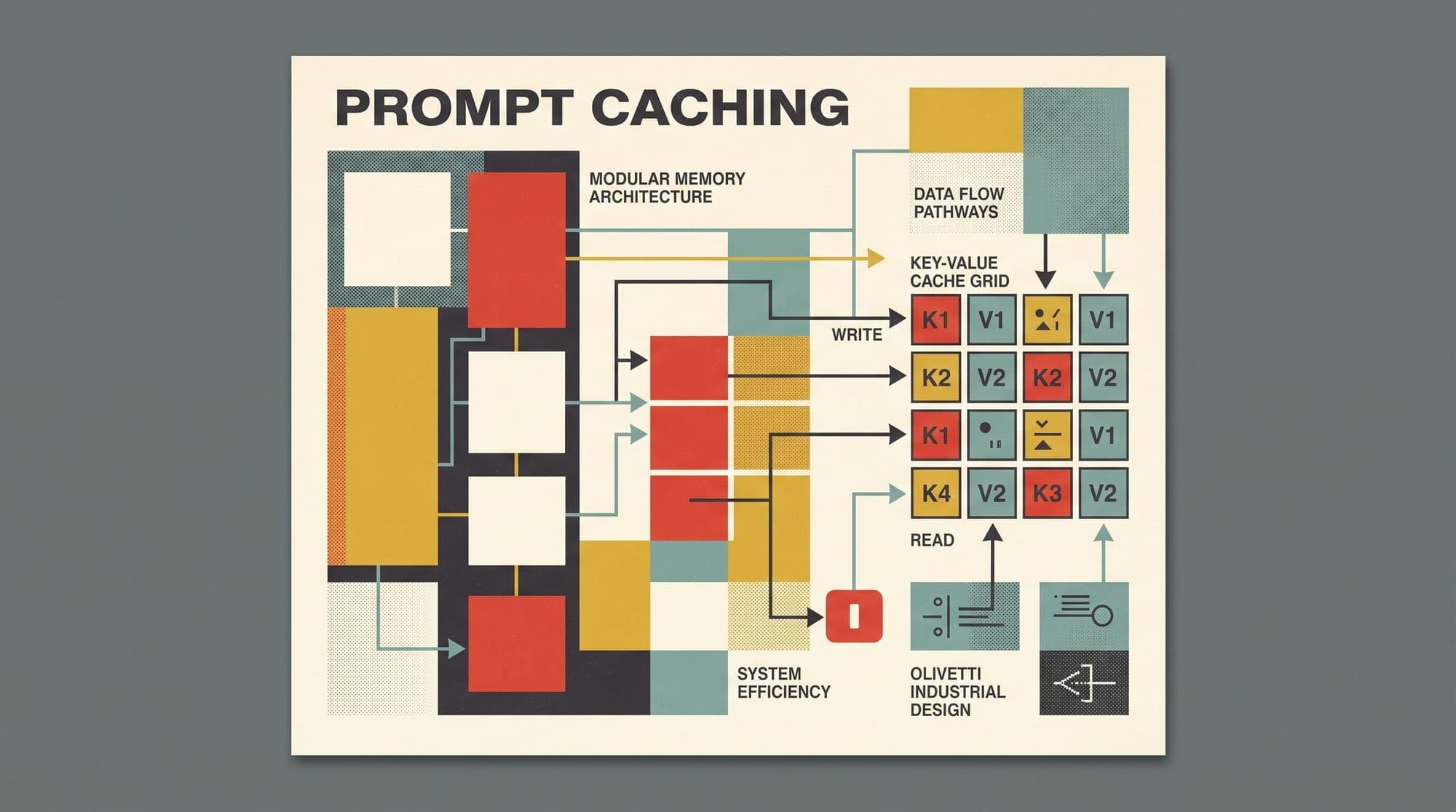
  6. Prompt Caching in Production: Architecture, Economics, and Invalidation Pitfalls

    As multi-turn AI agents, code generation assistants, and retrieval-augmented generation (RAG) pipelines expand in production, prompt sizes routinely exceed tens of thousands of tokens per request. In these architectures, the vast majority of tokens across consecutive API calls are static: system prompts, OpenAPI tool specifications, reference documents, and accumulated conversation history. Without optimization, inference engines must re-evaluate the full attention matrix for every token on eac

    AI
    5 min read
  7. How Mixture of Experts Works: Sparse Gating, Token Routing, and Load Balancing

    Large language models face a fundamental scaling trade-off: as parameter counts grow to absorb more world knowledge, the floating-point operations (FLOPs) required per token increase proportionally. In a standard dense Transformer, every single parameter participates in processing every incoming token. Mixture of Experts (MoE) decouples total model capacity from per-token compute cost. By replacing dense feed-forward layers with a dynamic pool of specialized sub-networks ("experts") and routing

    AI
    6 min read
  8. OpenAI Disbands Preparedness Team in Continued Safety Restructuring

    OpenAI has disbanded its dedicated Preparedness team, redistributing safety and frontier-risk evaluation responsibilities across individual functional units, according to reporting by the Financial Times and The Verge. The Preparedness team was established in late 2023 to evaluate and mitigate catastrophic risks associated with frontier AI models, focusing on cybersecurity exploits, chemical, biological, radiological, and nuclear (CBRN) threats, and autonomous model behavior. Under the new orga

    AI
    1 min read
  9. Cursor Launches Origin Code Hosting with Bidirectional GitHub Sync and Agent Reviews

    Cursor has launched Origin, a proprietary code hosting service currently in early beta across all paid subscription tiers. The platform introduces native Git repository hosting directly inside the Cursor ecosystem, competing with GitHub and GitLab while embedding AI agents directly into version control and code review workflows. Origin allows developers to create and manage repositories, review pull requests, browse code, and automate continuous integration workflows without leaving the Cursor

    AI
    2 min read
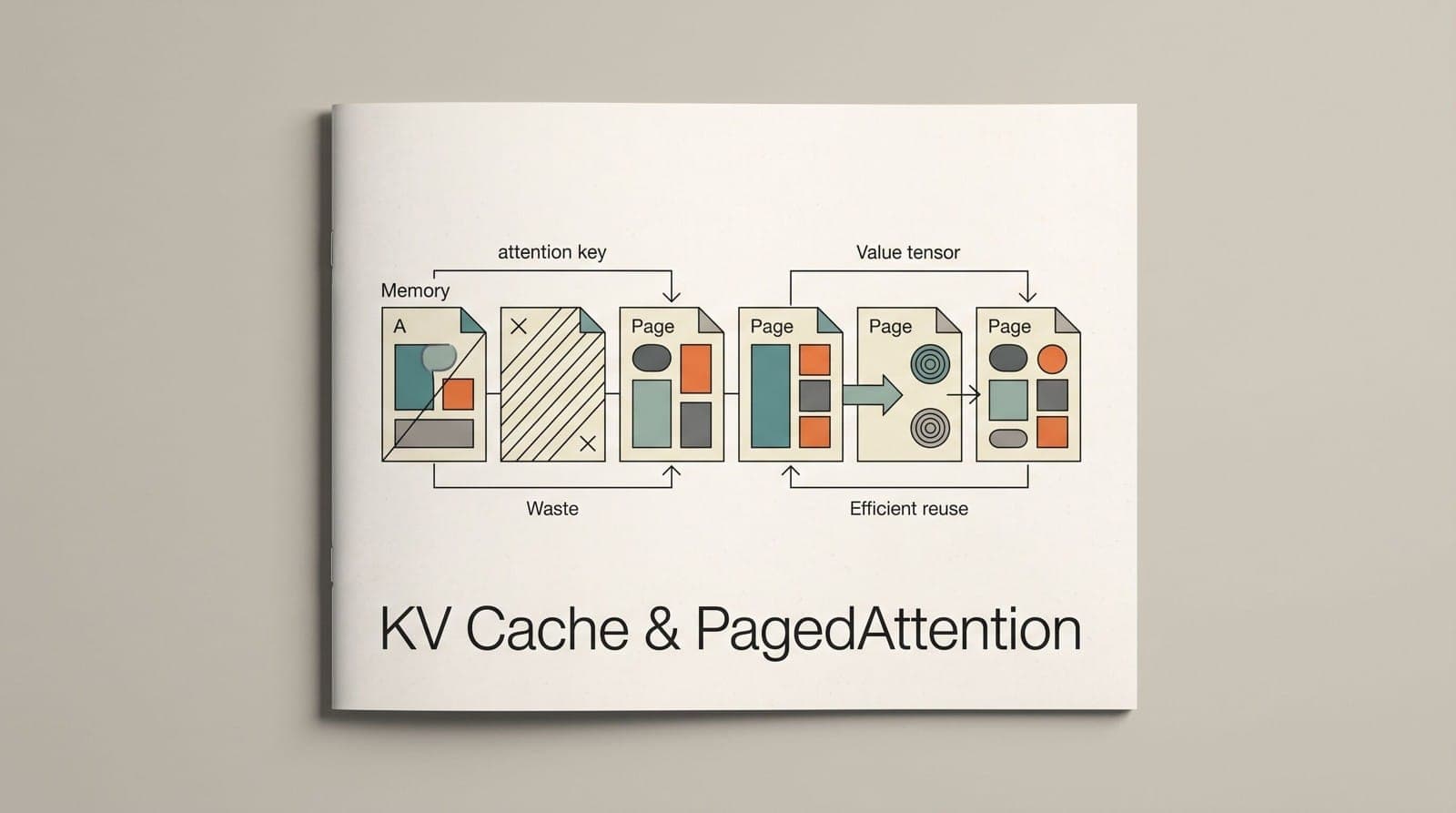
  10. What Is a KV Cache? The Memory Bottleneck Behind LLM Serving

    What Is a KV Cache? The Memory Bottleneck Behind LLM Serving Every token a large language model generates costs more than compute. It costs memory. The mechanism that stores the model's working state across a generation is called the KV cache, and managing it well is what separates a serving system that feels fast from one that stalls. This explainer covers what the KV cache is, why it wastes memory, and how the PagedAttention algorithm from Berkeley's vLLM project reshaped how it is handled.

    AI
    4 min read