

Payward, the parent company of cryptocurrency exchange Kraken, has been admitted to Anthropic's Project Glasswing initiative. Under the program, Payward is deploying Anthropic's Claude Mythos 5 model to identify software vulnerabilities across its production infrastructure and open-source crypto codebases.
The deployment marks the first confirmed participation by a digital asset institution in Project Glasswing, Anthropic's controlled access initiative for cybersecurity research and defense.
Automated Vulnerability Auditing and Responsible Disclosure
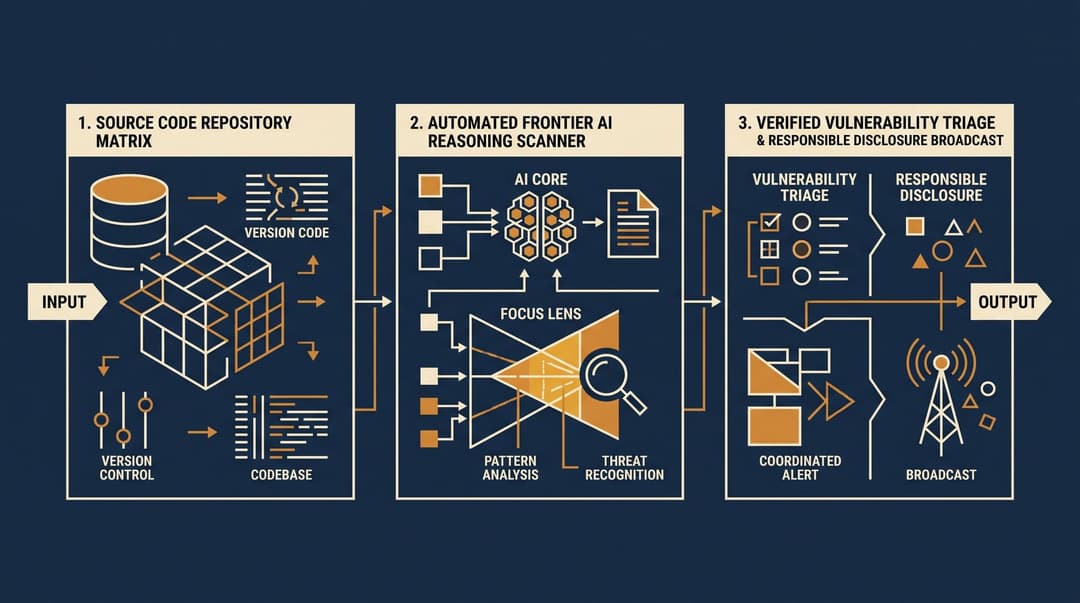
Payward stated that its internal security teams will use Claude Mythos 5 to conduct automated source-code analysis at scale. The model will scan internal exchange infrastructure, transaction pipelines, and external open-source dependencies to locate security flaws before malicious actors can discover and exploit them.
Findings generated by the model will be routed through Payward's standard security triage workflow for verification and patching. For vulnerabilities identified in third-party and open-source dependencies, Payward plans to report the findings directly to upstream maintainers through responsible disclosure protocols.
"Security has always been an unfair game. An attacker needs to find one flaw. A defender has to find all of them, first, every single day," said Arjun Sethi, Co-CEO of Payward. "Frontier AI is the first thing that flips that asymmetry. A model can read every line of code the way an attacker would, at machine scale, so we find the flaw before anyone can build the exploit."
Industry Push for Defensive Frontier Access
Payward's admission follows coordinated industry pressure regarding access to advanced AI models for cyber defense. Last week, more than 40 cryptocurrency and blockchain organizations, including Coinbase, Block, BitGo, Ark Invest, and Kraken, signed an open letter organized by the Bitcoin Policy Institute.
The coalition urged frontier AI laboratories, including Anthropic and OpenAI, to establish vetted access channels for qualified security researchers. The letter argued that defenders protecting open-source financial protocols require frontier-tier reasoning capabilities to match threats posed by automated exploit tooling.
Project Glasswing and Cyber Capability Evals
Anthropic established Project Glasswing in April 2026, followed by a program expansion in June 2026. The initiative provides selected organizations early access to high-capability models specifically to strengthen defensive posture and evaluate frontier cyber capabilities.
According to Anthropic's partner disclosures, participating security organizations have uncovered thousands of high- and critical-severity bugs across enterprise software stacks. In earlier validation trials conducted by Mozilla, Claude Mythos identified 271 security vulnerabilities within the Firefox codebase.
The expansion to crypto infrastructure indicates a widening scope for vetted defensive deployments, particularly as AI reasoning models demonstrate increasing proficiency at automated binary analysis, static code auditing, and exploit synthesis.
