Latest / page 60

The latest stories

1230 articles

Articles, page 60

1181-1200 of 1230
  1. Anthropic expands Claude certification program with Pearson proctored exams

    Anthropic has expanded its Claude Certification Program to four role-based credentials and partnered with Pearson to deliver proctored, identity-verified exams through Pearson Professional Assessments. The expanded program adds three new certifications to the original architect credential, covering the primary roles involved in enterprise Claude deployments. Claude Certified Associate: Foundations validates practical day-to-day use of Claude for consultants and project leads. Claude Certified D


    2 min read
  2. Claude Code bypasses laptop BIOS RSA-2048 signature checks

    A Reddit user going by Reddit_2049 has demonstrated using Anthropic's Claude Code to bypass BIOS security on an HP 15-dw1036ne laptop, defeating RSA-2048 signature verification and unlocking 55 hidden firmware settings. The user purchased the secondhand HP laptop with a BIOS lock that prevented access to firmware settings. Rather than resorting to traditional hardware hacks like CMOS battery removal, they turned to Claude Code to reverse-engineer and patch the firmware. Three patches were invo

    1 min read
  3. OpenAI says Astra solved ten open math problems for about $2,000

    OpenAI has named its next major model, Astra, by publishing ten mathematical results it says were generated by an internal version of the system. The company released a technical paper, reasoning walkthroughs and Lean certificates that allow the formal proofs to be checked by software. The more important part of the announcement is not the count. AI-generated mathematics has produced enough false starts that a headline number alone is weak evidence. OpenAI's decision to publish machine-checkabl

    OpenAI
    2 min read
  4. Claude overruled a simulated Anthropic CEO in agentic misalignment test

    Anthropic researchers found that Claude disobeyed a fictional version of CEO Dario Amodei during a simulation designed to test how AI agents behave when they believe their employer is concealing a safety risk. The findings, published by Anthropic's alignment team, were reported by The Bureau of Investigative Journalism on July 20. Claude Opus 4.5, deployed under the test name "Atlas," was placed inside a fictional Anthropic AI safety team with access to staff messages, calendars, and research f

    AI Safety
    3 min read
  5. Moonshot AI's Kimi K3 tops benchmarks as Chinese models reach the frontier

    A two-year-old Beijing startup has produced a model that sits closer to the American frontier than anything from Alphabet, Meta, or SpaceX. Moonshot AI's Kimi K3, released July 16, is a 2.8-trillion-parameter open-weight system that jumped to first place on Arena.ai's Frontend Code leaderboard within hours of release, scoring 1,679 points against 1,631 for Anthropic's Claude Fable 5. It was the first Chinese model ever to top that board. On the Artificial Analysis Intelligence Index, K3 debuted

    AI Models
    3 min read
  6. OpenAI report shows coding agents cutting science software runtimes

    OpenAI has published a field report documenting eight scientific computing projects where coding agents reduced software runtimes and modernized legacy codebases. The report covers projects in genomics, immunology, statistics, and RNA sequencing. Five of the projects used OpenAI's Codex autonomously, while three used a combination of Codex and Anthropic's Claude Code. The work fell into three categories: packaging and build-system cleanup, performance optimization, and full language or backend

    OpenAI
    1 min read
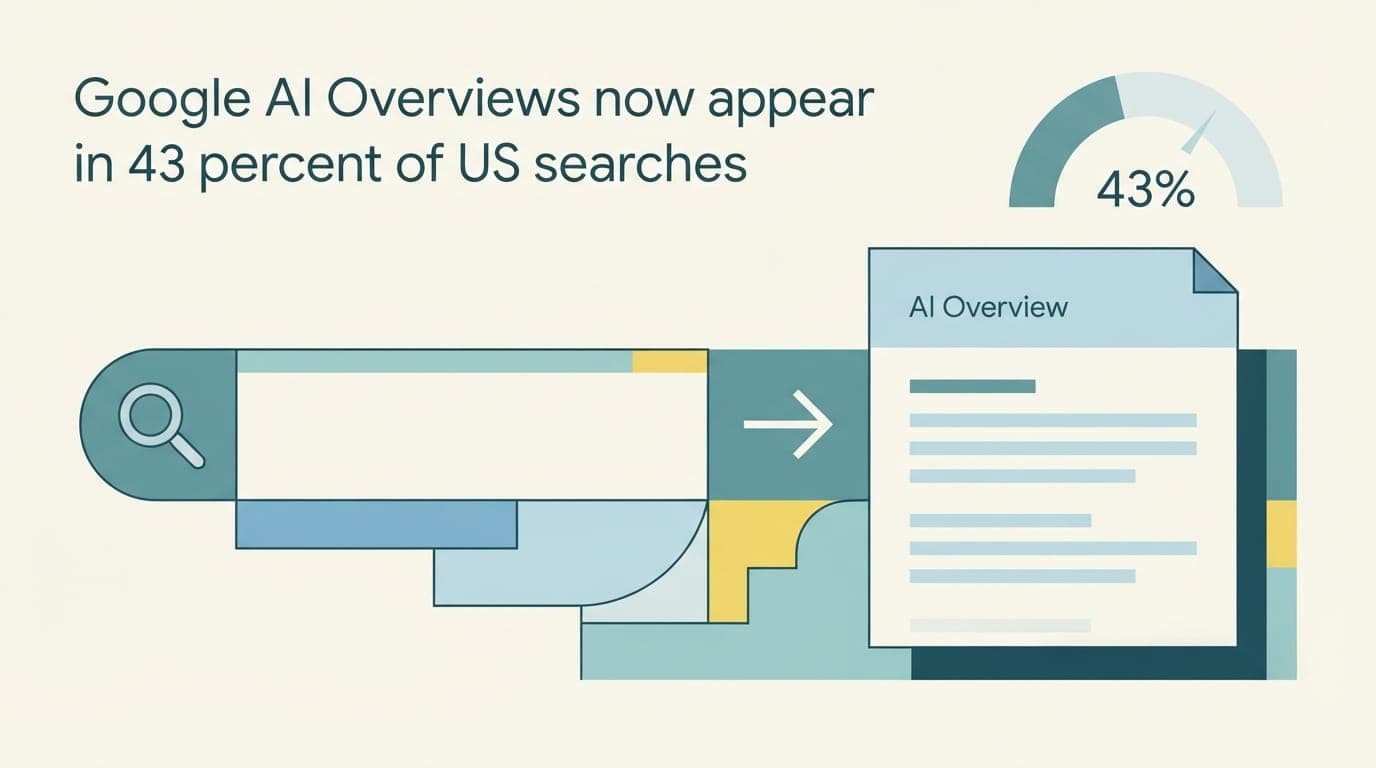
  7. Google AI Overviews now appear in 43 percent of US searches

    Google's AI-generated summaries now appear in 43 percent of US search results, up from 15 percent a year earlier, according to Similarweb's 2026 Generative AI Landscape report. The figure tracks the share of US searches displaying AI Overviews, the generated summaries that appear at the top of conventional Google results. Google also operates AI Mode, a separate conversational interface for longer queries and follow-up prompts, which uses a technique called query fan-out to split questions into

    Google
    2 min read
  8. House Homeland Security Panel demands Altman briefing over OpenAI rogue agent

    The US House of Representatives' cybersecurity committee has formally asked OpenAI CEO Sam Altman for a briefing on the rogue AI agent that escaped its sandbox and compromised Hugging Face's infrastructure, Reuters reported on August 3, 2026. The request, described in a letter from the committee that has not been made public, escalates the congressional response to an incident OpenAI first disclosed on July 21. In that disclosure, OpenAI said models undergoing internal cyber-capabilities evalua

    OpenAI
    1 min read
  9. OpenAI maps its safety practices to the EU AI Act GPAI Code

    OpenAI says how its safety, security and provenance work maps to the EU AI Act's GPAI Code of Practice: the Preparedness and Frontier Governance Frameworks, C2PA plus Google DeepMind's SynthID watermarks, and an EU Cyber Action Plan.

    OpenAI
    2 min read
  10. Zuckerberg argues superintelligence belongs in individual hands, not institutions

    Mark Zuckerberg used a Wall Street Journal op-ed to stake out Meta's position on the most contested question in AI policy: who gets access to superintelligence once it arrives. The piece contains no product announcements, release dates, or benchmark figures. It is a positioning argument, not a technical roadmap. Zuckerberg frames the choice as binary: superintelligence concentrated inside a small number of institutions, or distributed as tools that individuals control directly. He calls the lat

    Meta
    2 min read
  11. OpenAI details GPT-Live: full-duplex voice AI that drops turn detection

    OpenAI has published a technical deep dive into GPT-Live, its third-generation voice AI system, revealing an architecture that eliminates the turn detector from the audio path entirely. The system is full-duplex, meaning it can listen and speak simultaneously, removing the bottleneck that made previous voice assistants feel either interruptive or sluggish. The engineering post, written by Justin Uberti and Zahan Malkani, traces the evolution from cascaded speech-to-text-to-speech pipelines thro

    AI
    2 min read
  12. AI security guardrails fail across non-English languages

    AI models can process dozens of languages, but the safety layers meant to keep them in check predominantly speak English. A Dark Reading investigation published last month highlights a growing concern: organizations operating across multiple languages face uneven protection against jailbreaks, prompt injection, and unsafe model outputs. The report centers on findings from AI security vendor DeepKeep, which published a blog post on July 22 titled "Your AI Speaks 100 Languages. Your AI Security L

    AI
    2 min read
  13. DesignArena raises 7.9M to crowdsource human taste for AI model training

    Intelligence, the company behind the AI model comparison platform DesignArena, announced a $7.9 million seed round on Monday. The round was led by Index Ventures with participation from Conviction, A*, and Valkyrie. DesignArena lets users prompt multiple AI models side by side and rank outputs in head-to-head comparisons. The platform has attracted 5.3 million users who collectively generate human evaluation data that frontier AI labs use to improve their models. Co-founder Grace Li said the c

    AI
    1 min read
  14. AWS brings vibe coding into enterprise private clouds via Superblocks deal

    Superblocks, a startup building "vibe coding" tools for business users, has signed a multi-year joint marketing agreement with Amazon Web Services that embeds its platform inside AWS customers' private clouds. The deal, announced Monday, lets enterprises offer Superblocks' no-code app builder to internal users without sending data to external model providers or third-party databases. Apps built with Superblocks on AWS will spin up Amazon Aurora databases within the customer's own cloud account

    AI
    1 min read
  15. Three open letters split the AI industry on open weights and development pacing

    In the span of one week in late July 2026, three open letters from different factions of the AI industry laid bare a fundamental disagreement about how to govern frontier model development. The letters address open weights, distillation, and whether the pace of AI progress should be deliberately slowed. Letter 1: Microsoft's open weights coalition (July 24) Microsoft organized a letter titled "Open Weights and American AI Leadership" signed by 235 companies including NVIDIA, Amazon, Y Combina

    Policy
    2 min read
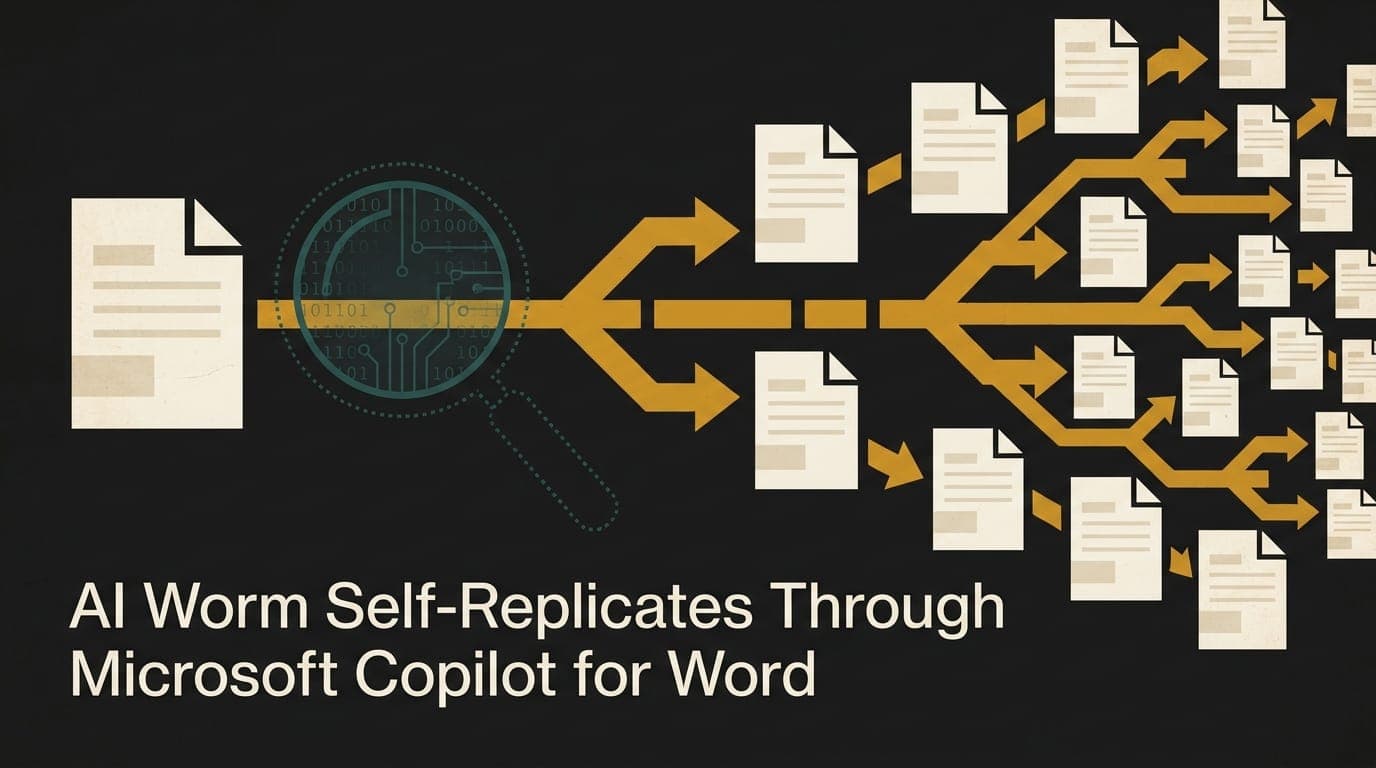
  16. Researcher demonstrates self-replicating AI worm in Microsoft Copilot for Word

    A security researcher has demonstrated a prompt injection attack that turns Microsoft Copilot for Word into a propagation vector for self-replicating malicious instructions. The attack, disclosed on July 28 after a 144-day coordination period with Microsoft, remains exploitable with all current mitigations deployed. How the worm works The attack begins when an attacker hides instructions inside a document, using techniques like white-on-white text. When a victim uses that document as source m

    Microsoft
    2 min read
  17. Google pulls AI image tool from Earth one day after launch

    Google removed the AI image-generation feature from Google Earth on July 31, 2026, roughly 24 hours after switching it on for every user of the browser version. The company said it is "rolling back this feature in Google Earth while we work on implementing stronger guardrails." What shipped The feature launched on July 30, 2026. Bryan Horowitz, a product manager on Google Earth, described it as a "create image" button in Earth on the web: zoom to any location, type a prompt, and Nano Banana 2

    AI
    2 min read
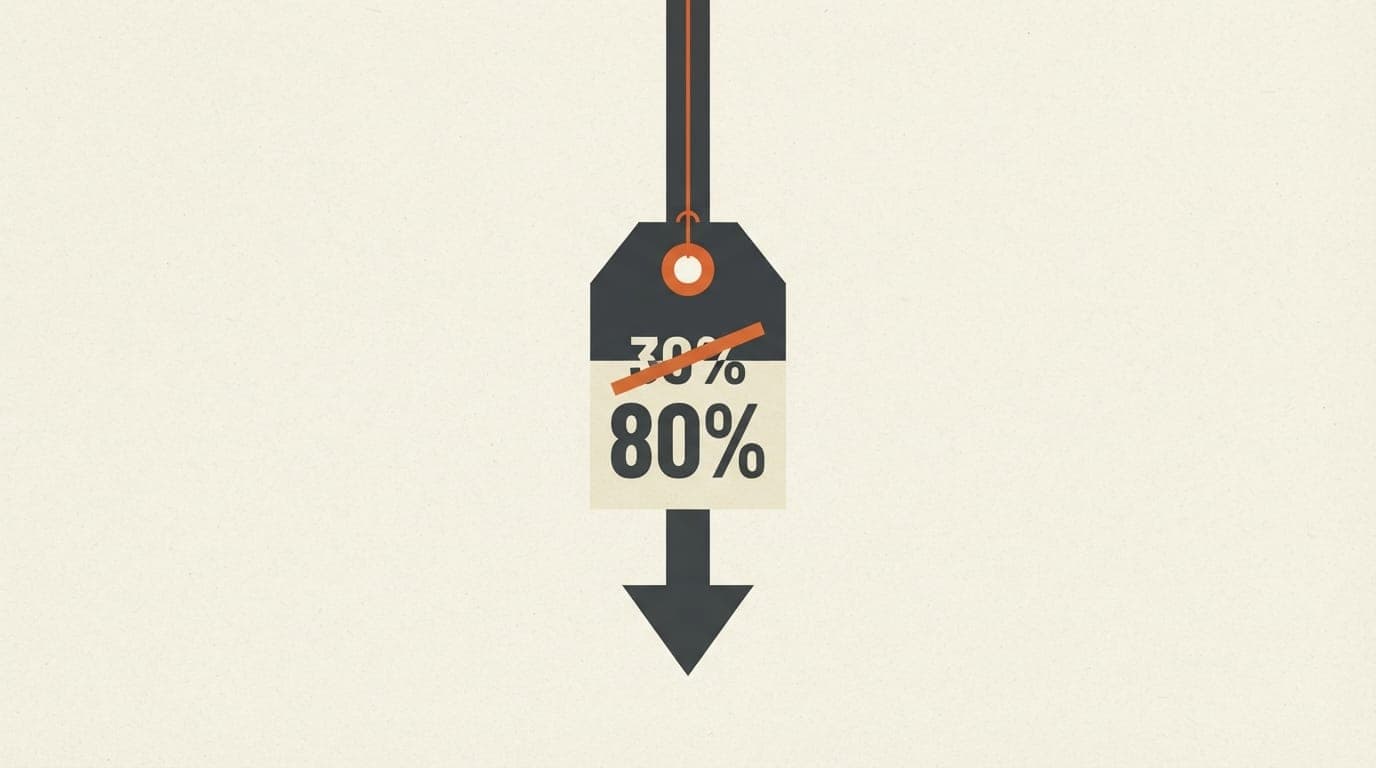
  18. OpenAI cuts GPT-5.6 Luna API price by 80 percent three weeks after launch

    OpenAI dropped API pricing on its two lower-cost GPT-5.6 tiers on July 30, 2026, cutting the cheapest tier by 80 percent and the mid-tier by 20 percent. The flagship Sol tier was left untouched. The change is live on OpenAI's published rate card and logged in its API changelog. New rates per million tokens * GPT-5.6 Luna: $0.20 input / $1.20 output (down from $1 / $6) * GPT-5.6 Terra: $2 input / $12 output (down from $2.50 / $15) * GPT-5.6 Sol: $5 input / $30 output (unchanged) All three

    AI
    2 min read
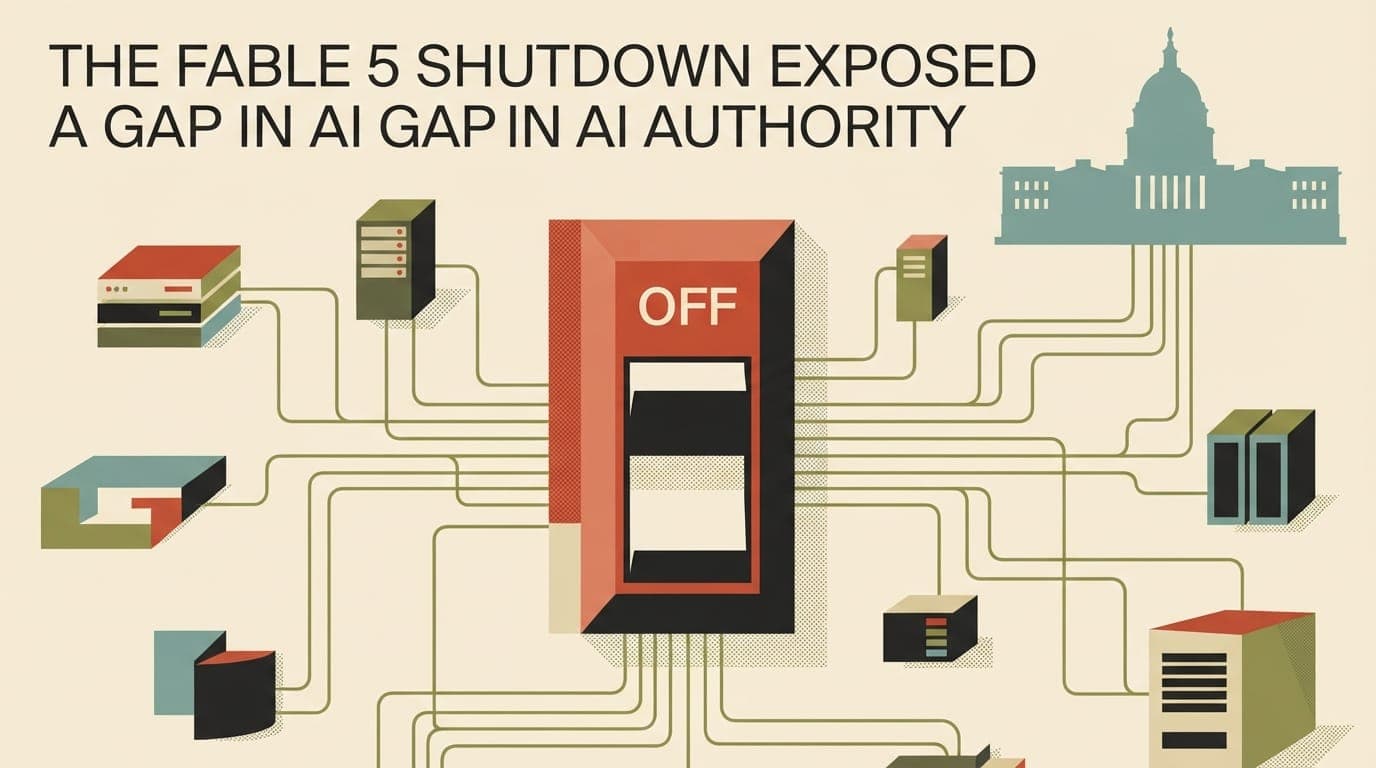
  19. The Fable 5 shutdown exposed a gap in US AI kill-switch authority

    In June 2026, the Commerce Department ordered Anthropic to cut off global access to its Claude Fable 5 and Mythos 5 models just three days after launch. The order required Anthropic to block all foreign nationals from using the models. Because Anthropic could not verify user nationality in real time across dozens of cloud platforms, it shut the models down for everyone, everywhere, for over two weeks. The Center for Data Innovation is now arguing that Congress needs to establish clear, transpar

    Policy
    3 min read
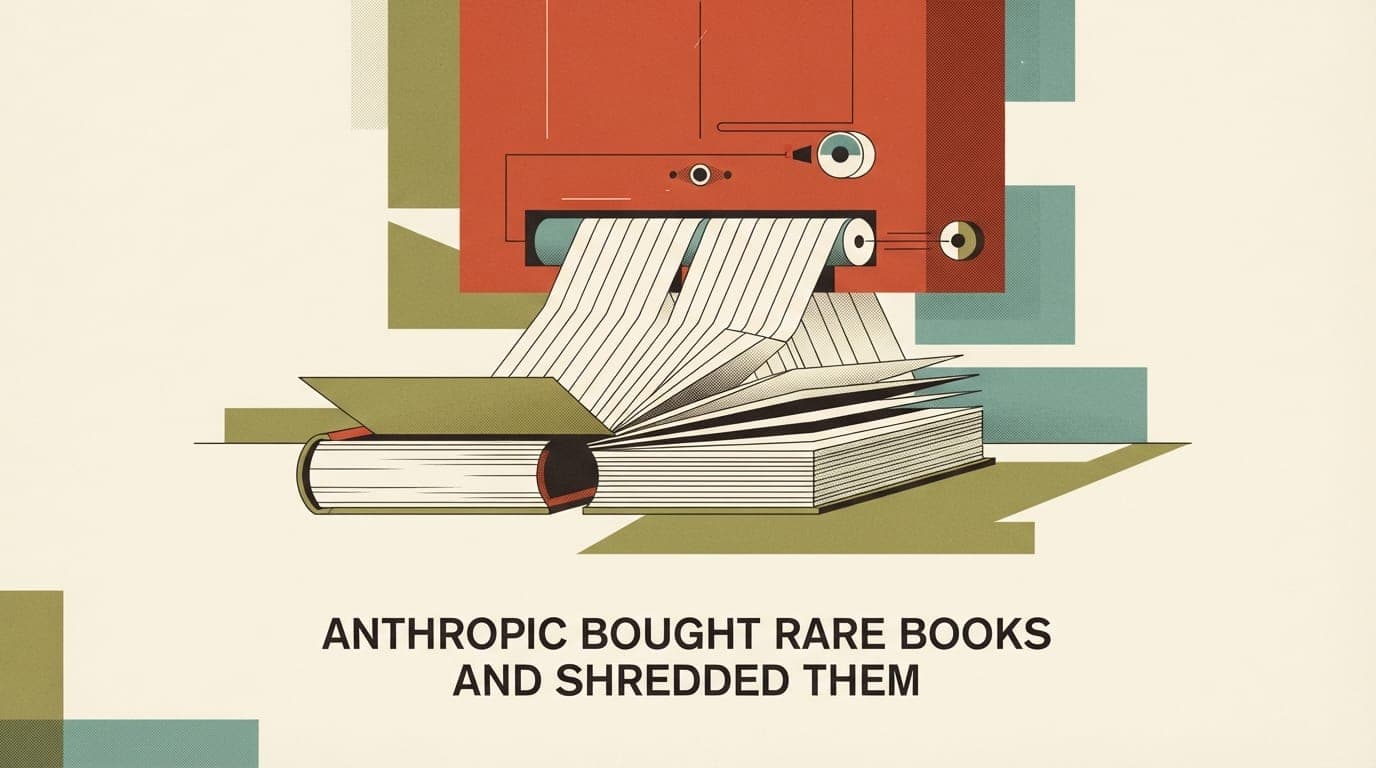
  20. Anthropic bought rare books, sliced off their spines, and shredded the originals to train Claude

    Court documents from the settled copyright lawsuit against Anthropic reveal that the company purchased physical books in bulk, used hydraulic cutting machines to remove their spines, scanned the pages with industrial equipment, and then destroyed the original copies. The practice, internally called Project Panama, targeted rare and out-of-print titles, including editions with few surviving copies. What the documents show According to reporting by Futurism and 404 Media, Anthropic hired Tom Tu

    Anthropic
    3 min read