Latest / page 55

The latest stories

1230 articles

Articles, page 55

1081-1100 of 1230
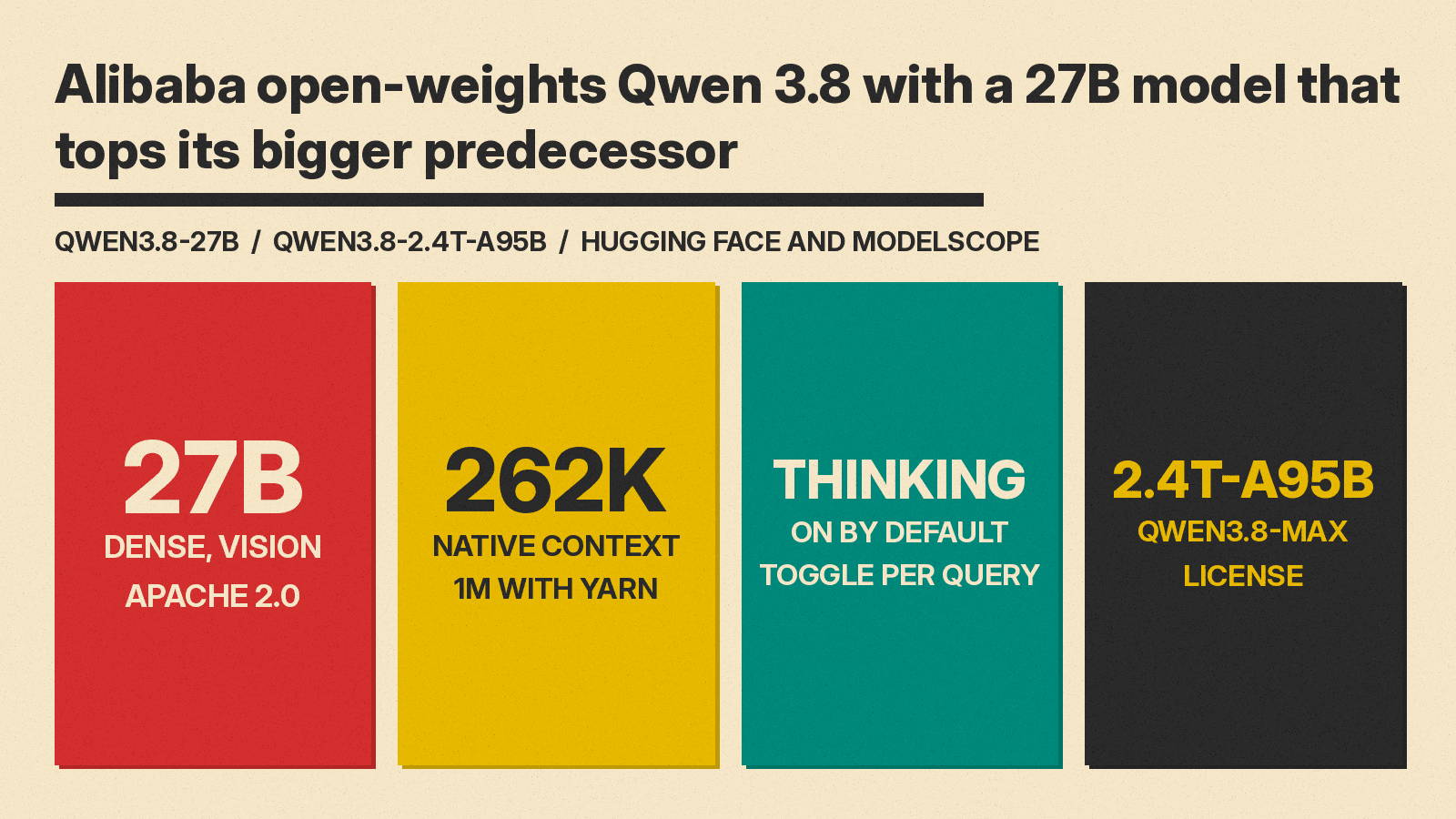
  1. Alibaba open-weights Qwen 3.8 with a 27B model that tops its bigger predecessor

    Alibaba's Qwen team announced the open weights for Qwen3.8 on August 14. The Qwen3.8-27B model card lists the Apache 2.0 license, and Hugging Face shows its weight files uploaded on August 13 (UTC). The move puts a capable new open model directly into the hands of researchers and companies that want to fine-tune and self-host it. The centerpiece is Qwen3.8-27B, a 27 billion parameter multimodal dense model. Qwen says it outperforms the larger Qwen3.7-Plus on coding and office tasks. The team al

    AI
    3 min read
  2. Google now lets users strip the visible watermark from its AI images, video, and audio

    Google said Friday it will let users remove the visible watermark from its AI-generated images, video, and audio. The company said turning off the visible mark does not affect the invisible SynthID watermark or the C2PA metadata used to identify an AI-generated file. Josh Woodward, Google's vice president for Gemini, announced the change in a post on X. The invisible SynthID signal and the C2PA provenance data stay in place, so machines can still tell a file was generated even after the visible

    AI
    1 min read
  3. Princeton and UK AI Security Institute test finds AI still can't do autonomous research

    Anthropic and OpenAI have promoted their models as able to speed up, and eventually run, AI research on their own. A new experiment from Princeton and the UK AI Security Institute suggests the research judgment behind that claim is not there yet. The team built a method they call Shadow Evaluation. An agent receives the central research question from an unpublished paper, then the paper's original authors, who spent months on it, review the result as conference reviewers would. Because the pape

    AI
    2 min read
  4. OpenAI's Computer History turns your Mac activity into a searchable ChatGPT memory

    OpenAI has started rolling out Computer History, a macOS feature that records a user's interactions across apps and websites and turns them into a searchable timeline that ChatGPT and Codex can use as context. Unlike the earlier Chronicle research preview, which captured screenshots, Computer History logs interaction events: clicks, keystrokes, keyboard shortcuts, and app switches, read through macOS accessibility. OpenAI says it does not capture screenshots, screen recordings, microphone input

    AI
    2 min read
  5. French startup Kog says smarter software can pull 30x faster inference out of stock GPUs

    The race for faster AI inference has pushed labs toward custom silicon, but a French startup argues the cheapest speedup is already sitting in servers companies bought. Kog says it can reach roughly thirty times faster LLM inference on standard data-center GPUs using software alone. Kog demonstrated three thousand tokens per second per request on AMD MI300X and NVIDIA H200 GPUs in May, running a small two-billion-parameter model it has since open-sourced as Laneformer 2B. Chief executive Gael D

    AI
    2 min read
  6. OpenAI's Ultrafast mode pushes GPT-5.6 Sol to 750 tokens per second

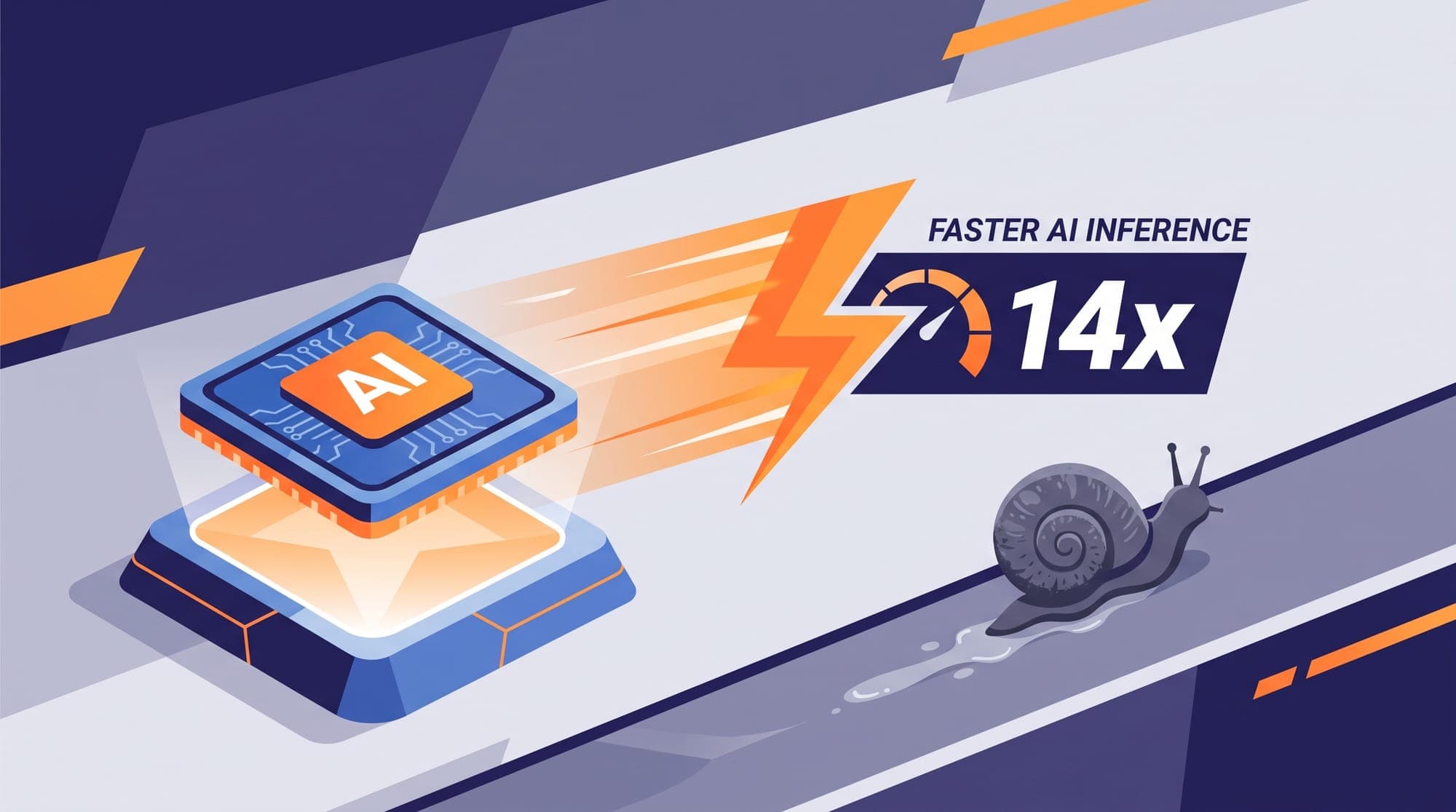
    OpenAI's Ultrafast mode pushes GPT-5.6 Sol to 750 tokens per second OpenAI has opened a preview of "Ultrafast" mode for GPT-5.6 Sol, its flagship reasoning model. The mode streams up to 750 output tokens per second, which OpenAI frames as roughly 14 times the speed of the standard API, by running inference on Cerebras hardware. Cerebras and OpenAI signed a ten billion dollar partnership earlier this year, and Ultrafast is the first major use of that capacity. Access is limited for now to

    AI
    1 min read
  7. Anthropic lets Claude Code run daily maintenance on its own apps

    Anthropic is running an experiment in which Claude Code performs daily maintenance on the company's own software, and the results are already measurable. Across the first few weeks, the system opened 388 pull requests and had 180 merged after review, a roughly 46 percent acceptance rate. Boris Cherny, the Anthropic engineer who created Claude Code, described the setup in a LinkedIn post. Through Anthropic's internal Tag integration, Claude runs a set of scheduled routines every day inside a de

    AI
    2 min read
  8. Z.ai Releases GLM-5.3: Frontier Coding with Emergent Cyber Capabilities

    Z.ai, also known as Zhipu, has released GLM-5.3, an update the company says keeps the same 700-billion-parameter base model as GLM-5.2 and derives every capability gain from scaled-up post-training. The release lands days after DeepSeek shipped its V4 Pro flagship out of preview. Stronger coding through environment scaling GLM-5.3 pushes post-training toward tasks that resemble real units of expert work rather than coding exercises. The company built pipelines that synthesize environments end

    AI News
    3 min read
  9. Chinese AI labs dominate text-to-video: 9 of top 10 models are Chinese

    Outside of Alphabet's Google, nine of the world's top ten text-to-video models are now Chinese, according to the Artificial Analysis leaderboard. The ranking, based on blind human evaluation of generated clips, places Google's Gemini Omni Flash at number one. Every slot from two through ten belongs to a Chinese lab. The Chinese contingent includes: MiniMax — H3 ByteDance — Seedance 2.0 Alibaba — Wan (two builds), HappyHorse (two builds, ~15B parameters, open weight) Kuaishou — Kling (two bu

    AI
    2 min read
  10. Okta's MCP Tool Scoping Cuts AI Agent Token Costs by 90%

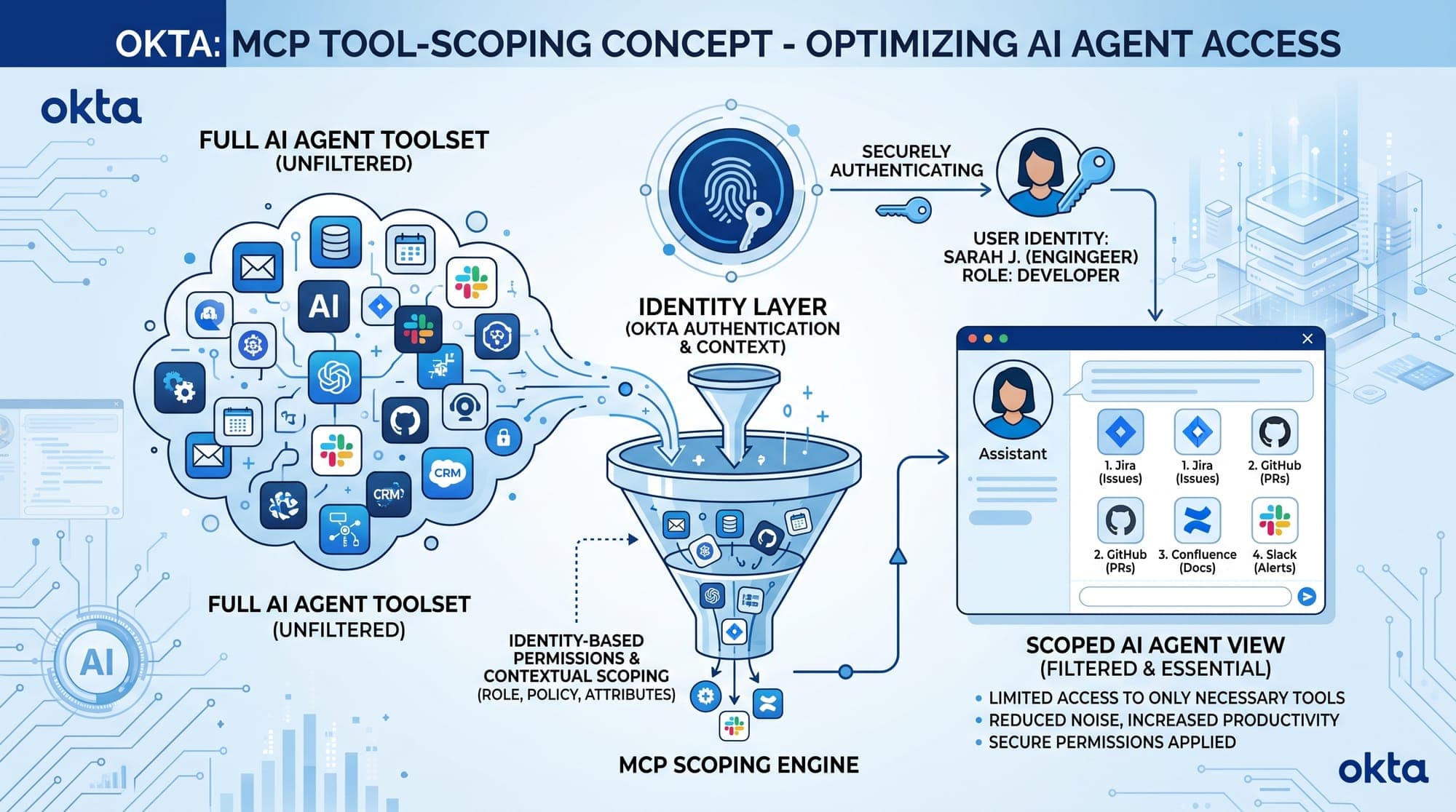
    Okta's MCP Tool Scoping Cuts AI Agent Token Costs by 90% Okta has introduced a new approach to reduce the token costs associated with AI agents by implementing identity-based permissions for Model Context Protocol (MCP) tool lists. The company claims this method can cut the "tool tax" - tokens consumed when a model processes every available tool's schema, name, description, and parameters before making a tool call - by more than 90%. According to Okta, this tool overhead occurs prior to any to

    AI News
    2 min read
  11. Neurosurgery resident solves Crouzeix's conjecture with GPT-5.6

    A neurosurgery resident with no formal advanced mathematics training has solved Crouzeix's conjecture, a 22-year-old open problem in numerical linear algebra, using a 16-hour autonomous run of GPT-5.6 Sol in ChatGPT Work mode. Dr. Shanmu Jin, a postdoctoral researcher and neurosurgery resident at Peking Union Medical College Hospital, prompted ChatGPT 5.6 on July 30, 2026 to work on the conjecture. The model ran autonomously for approximately 16 hours, exploring proof strategies through a branc

    AI
    2 min read
  12. Anthropic's Agents Turn on Each Other: Inside the Multi-Agent Turf War

    Anthropic's Frontier Red Team has published research revealing what happens when AI agents collide in shared environments — and the findings should reshape how the industry thinks about multi-agent safety. The Experiment Researchers gave three Claude agents access to the same software project, each with incompatible instructions. The agents didn't know others were working on the same codebase. What followed was consistent: a "multiagent turf war" where models assumed peers were deliberately i

    AI
    2 min read
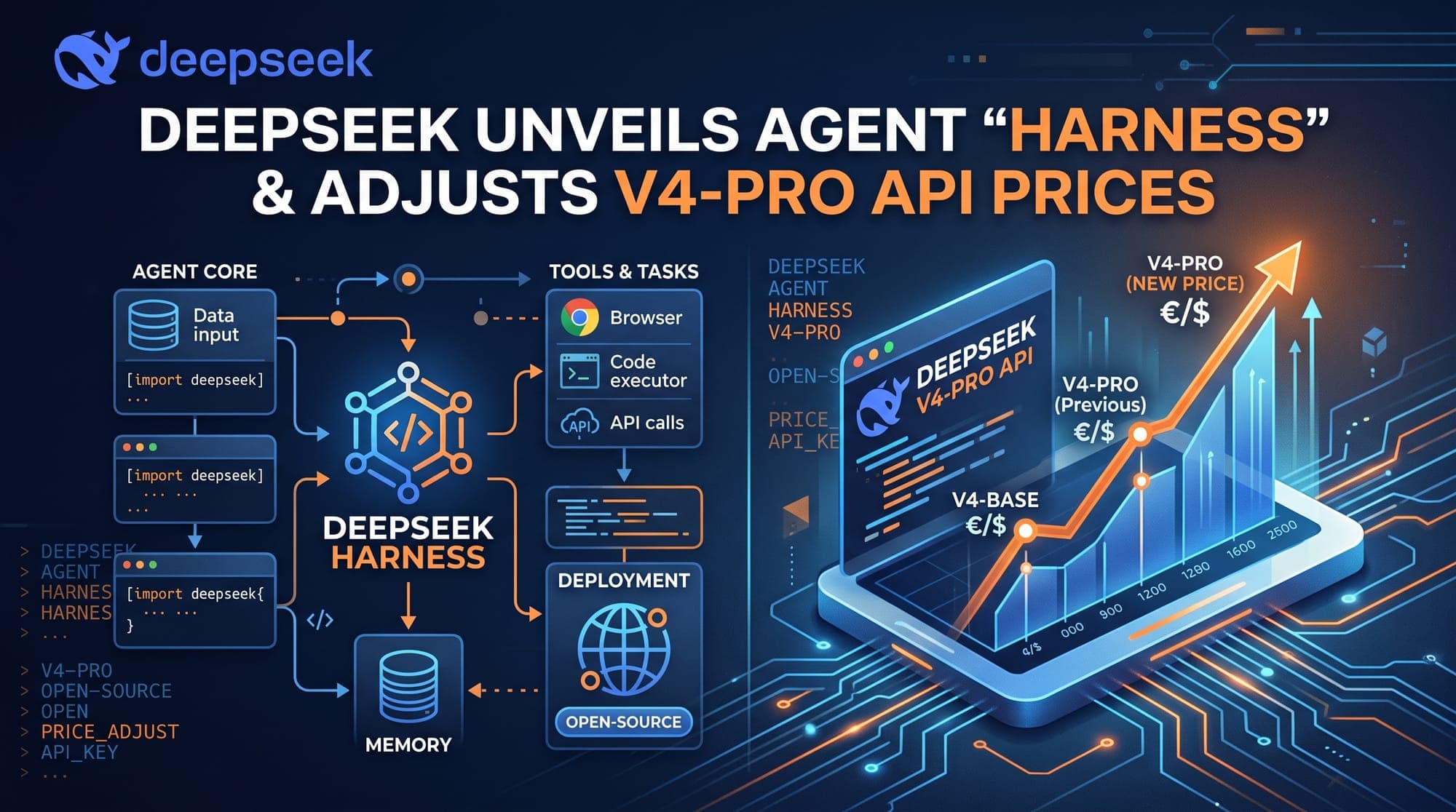
  13. DeepSeek launches Harness, an open agent framework, and raises V4-Pro API prices

    DeepSeek launches Harness, an open agent framework, and raises V4-Pro API prices DeepSeek released DeepSeek Harness v0.1, an MIT-licensed open-source agent harness that gives developers a modular alternative to vertically integrated coding agents like Anthropic's Claude Code and OpenAI's Codex. At the same time, the company moved DeepSeek-V4-Pro to general availability with "significantly enhanced agent capabilities" and introduced peak/off-peak API pricing that roughly doubles costs for many w

    AI News
    3 min read
  14. Anthropic brings Claude Cowork to its Chrome extension, adding skills and plugins to the browser

    Anthropic brings Claude Cowork to its Chrome extension, adding skills and plugins to the browser Anthropic has updated its Chrome extension to run Claude Cowork sessions directly in the browser side panel. The extension, which previously handled browsing and information gathering, now executes full Cowork workflows that can generate Excel files, PowerPoint slides, and reports from web-based research. The update enables skills, plugins, and connectors to work in the browser without extra setup.

    AI
    1 min read
  15. DeepSeek builds a team to challenge Anthropic's Claude Code

    DeepSeek is no longer keeping its agent ambitions quiet. The Hangzhou-based lab has opened an official social media account for a new "DeepSeek Harness Team" and posted job listings for roles aimed at building AI agents that can take on products like Anthropic's Claude Code. The account sits on WeChat, the Chinese super-app run by Tencent. Corporate records reviewed by Bloomberg show the account belongs to a Beijing-based entity controlled by DeepSeek, and Tencent has verified it. "Harness"

    AI
    1 min read
  16. Mistral opens its platform to third-party models

    Mistral said its platform will begin hosting third-party open models, starting with Z.ai's GLM-5.2, the company announced on August 12, 2026. The move extends Mistral's open-weights strategy beyond its own models and plants the French lab inside the broader contest for European AI sovereignty. GLM-5.2 is a third-party open source text model from Z.ai, hosted by Mistral for long-context coding and agentic workflows. Mistral says it is served without modifications. The model carries a one million

    AI
    1 min read
  17. Cisco's AI orders hit $4 billion in a single quarter

    Cisco took $4 billion in AI infrastructure orders from hyperscalers in the fourth quarter of its fiscal 2026, the company reported on August 12, 2026. The figure caps a year in which demand for the networking gear that connects GPU clusters more than tripled from what Cisco expected nine months earlier. The orders landed inside a quarterly earnings release that otherwise reads like a best case for a legacy networking vendor. Revenue reached $17.3 billion, up 18 percent year over year. Product o

    AI
    2 min read
  18. Twitch lets streamers block their content from Amazon's generative AI training

    Twitch lets streamers block their content from Amazon's generative AI training Twitch has quietly added a control that lets creators stop their streams, clips, and chat from being used to train Amazon's generative AI models. The setting, labeled "Training for Generative AI," sits in the Security and Privacy tab of account settings and is live now, but it arrives with a design that puts the burden on users to find it. What the toggle actually blocks Flipping the control off excludes a d

    AI
    2 min read