
Okta's MCP Tool Scoping Cuts AI Agent Token Costs by 90%
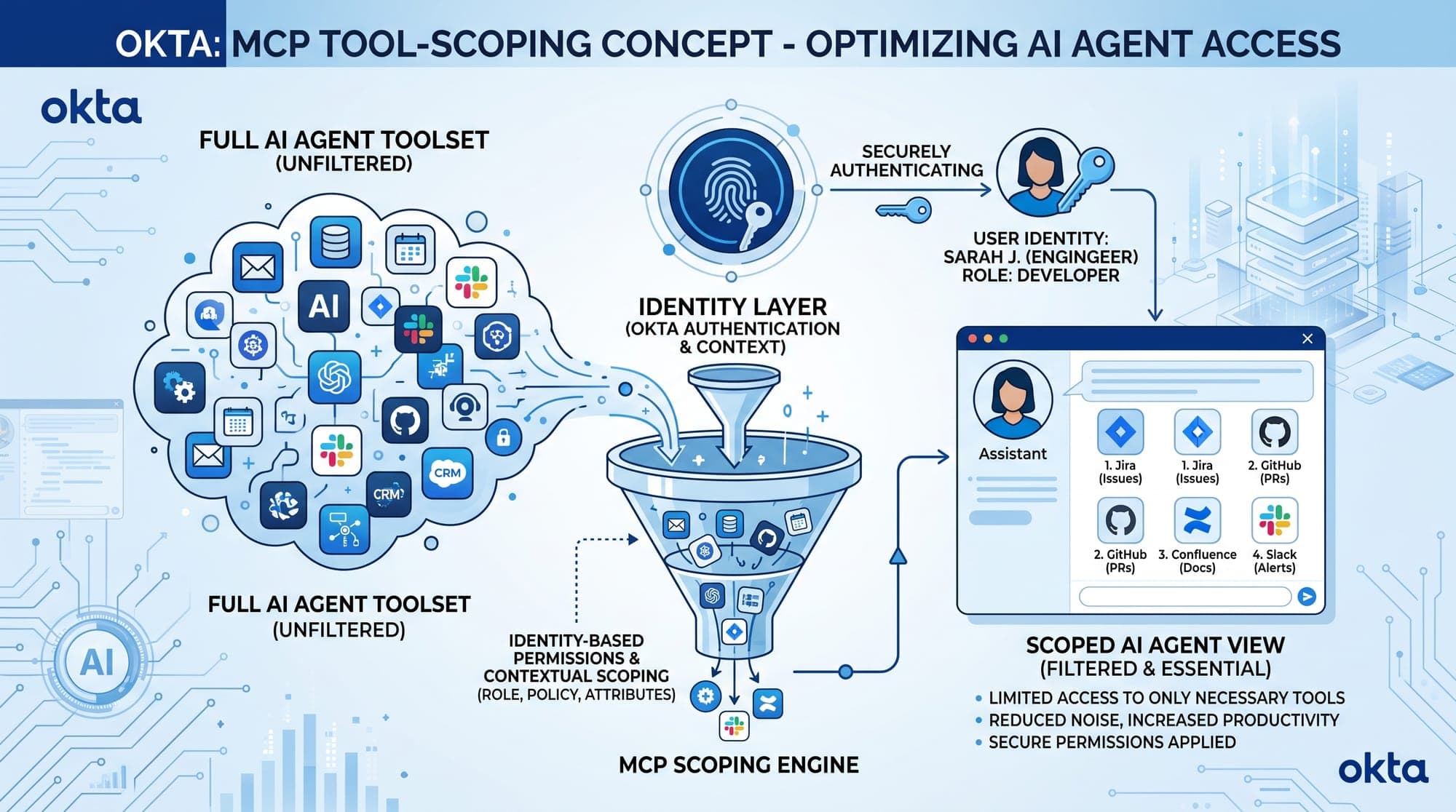
Okta has introduced a new approach to reduce the token costs associated with AI agents by implementing identity-based permissions for Model Context Protocol (MCP) tool lists. The company claims this method can cut the "tool tax" - tokens consumed when a model processes every available tool's schema, name, description, and parameters before making a tool call - by more than 90%.

According to Okta, this tool overhead occurs prior to any tool call attempt, meaning tokens are spent processing tool definitions even if a request is later rejected as unauthorized. Their solution filters the tool list at the identity level before it reaches the model, using permissions assigned to both the agent identity and the associated user.
Internal modelling by Okta showed that certain permission scenarios could reduce the number of visible tools to the model by more than 90%, with a corresponding drop in tool-schema token costs. The approach is part of Okta's "blueprint for the secure agentic enterprise," which shifts the access question from entire MCP servers to individual tools on those servers. Administrators configure which specific tools each identity may use via the Okta dashboard, and agents receive only this scoped list in their prompts for each turn, with a second scope check performed at runtime before any tool call executes.
This method applies least-privilege access at the tool level, ensuring agents are not aware of resources, databases, or tools they are not expressly authorized to use. By removing unavailable tools from the prompt, their schema costs are also eliminated from the model call. While no live customer deployment is described in their announcement, the evidence for the claimed reductions comes from internal modelling using Okta product data and public vendor documentation.
The modelling process involved mapping Okta MCP Server tools to the OAuth scopes that unlock them, then defining representative user segments such as helpdesk read-only users, helpdesk operators, app administrators, brand and email administrators, and super administrators. Each segment was weighted by an assumed share of monthly traffic. Tool-count reduction was calculated as one minus the ratio of scoped tools to unscoped tools, with Okta stating that tool-schema token cost tracks tool count nearly linearly due to each tool contributing its name, description, and parameter schema to every prompt.
Okta contrasts this identity-based entitlement approach with gateway spending controls, which can cap spending by key, team, or group and support routing and rate limiting. While gateways can meter tokens entering and leaving a system as well as dollars spent, identity entitlements determine the tools available to a specific agent or the person behind that agent, rather than applying access information at a group level.
Additionally, Okta links the same mechanism to security exposure: removing tools from an unauthorised identity's view also removes actions that identity could take if compromised. The proposed scope check operates at two points - when assembling the tool list for the agent prompt and when the agent attempts to execute a tool call - resulting in a smaller blast radius for a compromised identity. For organisations assessing MCP access, tool inventory and entitlement mapping are identified as the main operational inputs.
Sources
- https://www.artificialintelligence-news.com/news/okta-targets-ai-agent-token-costs-with-mcp-scoping/



