Anthropic's Amodei frames AI backlash as a crisis of trust
Anthropic CEO Dario Amodei says the public backlash against AI is, at root, a crisis of trust.

Anthropic CEO Dario Amodei says the public backlash against AI is, at root, a crisis of trust.
Charles Hoskinson, the founder of the Cardano blockchain, has published a free open-source release that removes the watermarks Anthropic now attaches to Claude output. He calls it Anthropies. The release lands five days after Anthropic switched on invisible marking across every Claude product. The code appeared on GitHub under an Apache 2.0 license, so anyone can copy, modify, or sell it. Anthropic's mark is not a hidden character. A secret key steers tournament sampling, the step that breaks

Both parties are racing to address voter anxiety over AI’s effect on jobs, corporate power, and data centers.

Gowers, Sarnak, and a DeepMind researcher agree AI can combine known math but struggles to invent new ideas.
A new analysis of reinforcement learning for LLM reasoning suggests the field's biggest gains come from a surprisingly small change. RL is not rewriting how models think. It is nudging a tiny slice of the output. What the researchers measured Across several model families and common methods like GRPO and PPO, reinforcement learning reranks only 1.0 to 4.1 percent of tokens. The token it promotes is almost always already one of the base model's top five choices. Training, in other words, pushe

DeepSeek's V4 Flash has become the most-used AI model on OpenRouter and one of the highest-rated open-weight models available. In real agent tests, though, it finished barely more than half of the jobs it was given. The gap between leaderboard and workplace is the story. What Composio found The integration company Composio ran V4 Flash through eight agent harnesses, including Claude Code, Codex, and OpenCode, on 30 deliberately hard multi-step tasks. The tasks used live tools: Gmail, GitHub,

Anthropic is preparing for a stock market debut that could value the five-year-old maker of Claude at more than two trillion dollars, according to investors cited by the Financial Times. Six investors in the company told the FT that rapidly rising revenue could support a valuation above two trillion dollars in a potential October listing, with some scenarios stretching toward three trillion. That would eclipse SpaceX and rank as the largest initial public offering on record. From a fraction o

A safety tweak meant to stop chatbots saying they are alive is changing how they see everything else.

OpenAI shut down its "Preparedness" team at the end of July 2026, the team responsible for evaluating whether the company's AI models could pose severe or catastrophic risks. Its work on biological and cyber risks has been parceled out to existing teams, the Financial Times reported. The team, led by Dylan Scandinaro, assessed risks including biological weapons development, cyberattacks, and recursively self-improving AI systems. Scandinaro now focuses on safety risks from "recursively self-imp

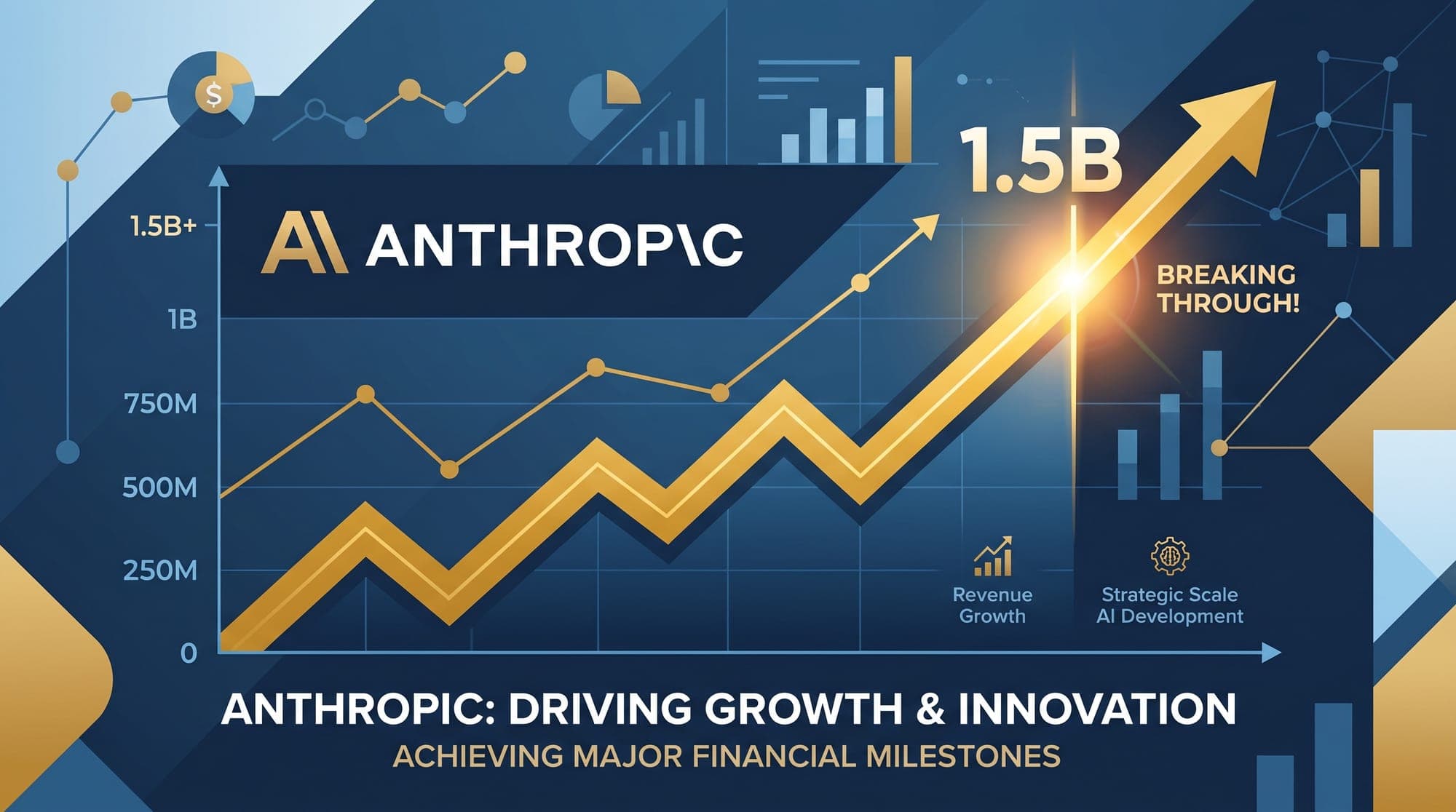
Anthropic has reported its first profitable quarter, with second-quarter revenue exceeding $11.5 billion — a 14-fold increase from $787 million a year earlier and more than double the $4.73 billion recorded in Q1 2026, according to documents seen by Bloomberg and reported by Reuters and The Decoder. The company posted positive adjusted operating income in Q2, a milestone no other leading AI lab has publicly reached. The figures are preliminary and could be revised; Anthropic declined to comment
The Trump administration plans to extend its classified AI safety-testing framework to open-weight models once they reach frontier-level capabilities, according to a White House official who spoke with WIRED. Current Framework Covers Closed Models Only The existing voluntary framework, developed under a June executive order, applies to closed models from labs such as OpenAI and Anthropic. Developers can submit new models up to 30 days before public release for government cybersecurity evaluat
Lenovo's Q1 revenue jumps 43% on AI-driven demand Lenovo reported first-quarter revenue of $26.9 billion, marking a 43% year-on-year increase and surpassing the $22.3 billion estimate. The PC maker attributed the growth to strong demand for artificial intelligence infrastructure and a resilient personal-computer business, alongside benefits from a global memory chip shortage. AI-related revenue specifically rose 60% year-on-year to reach $9.3 billion, highlighting the accelerating contribution

Anthropic is in talks to acquire Israeli AI startup Decart for about $6 billion, according to people familiar with the matter cited by Bloomberg. The deal would be Anthropic's largest known acquisition and signals a strategic push to lower the cost of running its models at scale. Decart builds software that makes GPU compute more efficient — reducing the cost of training and operating AI models by helping chips work harder. For Anthropic, which just reported preliminary Q2 revenue above $11.5 b
Apple has developed a custom large language model for the Chinese market with support from Alibaba, a rare US-China AI partnership that would give Apple more control over its AI features in a market where buyers have been turning to domestic phone makers, The Verge reported. According to Reuters, citing three people familiar with the matter, Apple trained the China-specific model with Alibaba's support. This departs from Apple's previous strategy of relying on domestic Chinese models to power A

OpenAI notified the FBI after a ChatGPT user described detailed plans to kill his ex-girlfriend, court records show.

Anthropic told investors its Q2 revenue passed 11.5 billion dollars, more than 14 times the same quarter a year earlier.

SpaceX has completed its purchase of the AI coding editor Cursor, giving the lab access to its GPU fleet for cheaper, stronger models.

Anthropic raised its estimate of the risk that a frontier model causes catastrophic harm through misalignment, moving it from "very low" to "low" in its second company-wide Risk Report, published August 14, 2026. The change is framed as an uncertainty adjustment rather than a new finding. Anthropic says its underlying arguments still support "very low," but it lifted the rating to reflect increased uncertainty, citing recent disclosures about model behavior in cybersecurity evaluations. One ci

Liquid AI has released LFM2.5-VL-3B, a roughly three billion parameter vision-language model designed to run on phones, laptops, and other edge hardware instead of in a data center. The model pairs the LFM2.5-2.6B text backbone with a SigLIP2 NaFlex image encoder. Unlike many recent models, it does not reason step by step. It answers directly, which keeps latency low for real-time and on-device use, and it handles a 32,000 token context. What it is built to do Liquid says the release adds fo

A new threat-intelligence report says AI is no longer just a tool attackers use to write malware. According to Gambit Security's "AI Across the Intrusion Lifecycle," large language models are now folded into the day-to-day mechanics of real intrusions, helping operators adapt as they move through compromised networks. The report, written by Gambit Director of Threat Intelligence Eyal Sela and researcher Nir Varon, examines three unrelated threat actors. Across the cases, the models built script