Latest / page 47

The latest stories

1230 articles

Articles, page 47

921-940 of 1230
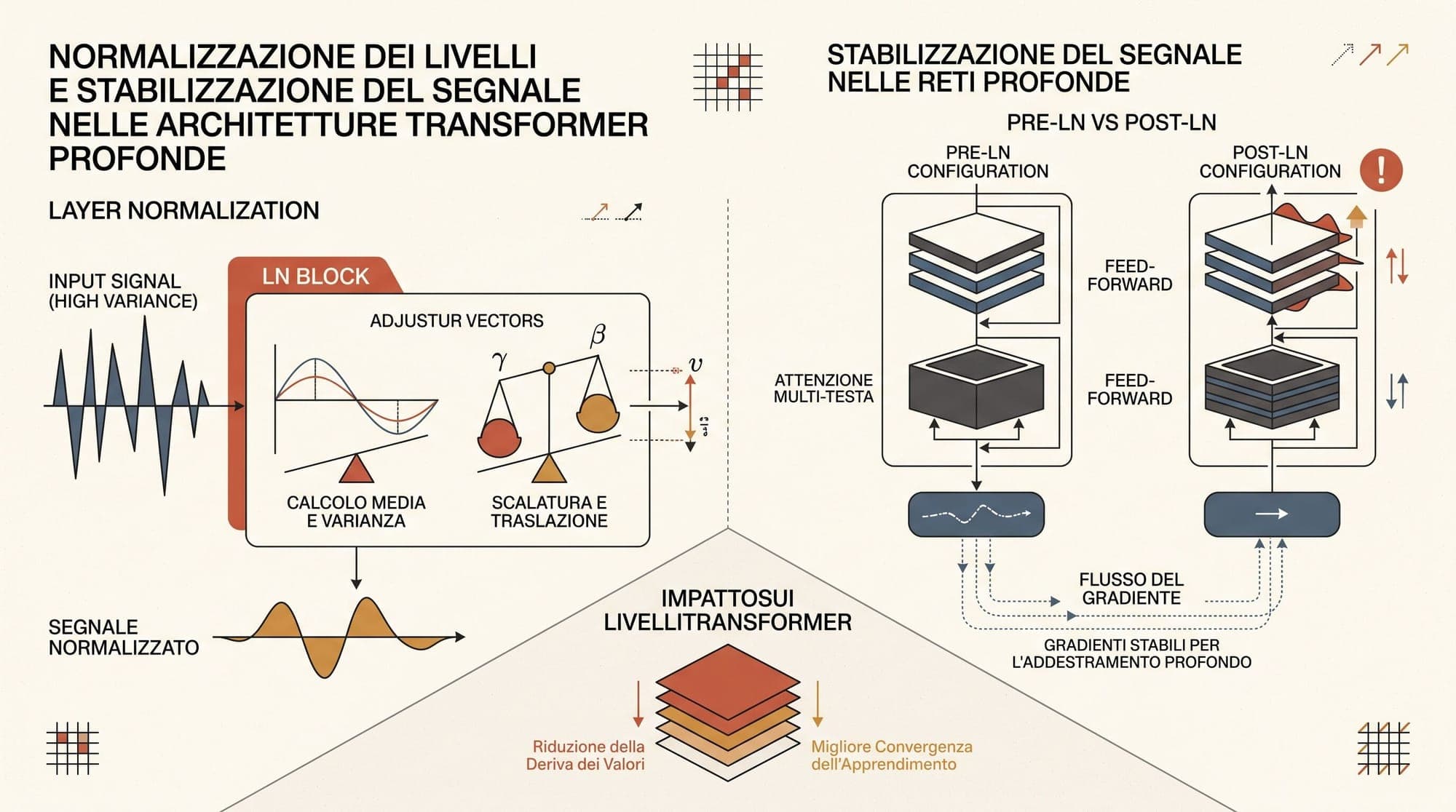
  1. Layer Normalization and RMSNorm in Large Language Models: How Pre-LN, Scaling Invariance, and QK-Norm Stabilize Deep Transformers

    Training deep autoregressive Transformers requires maintaining numerical stability across dozens or hundreds of stacked attention and feed-forward blocks. As models scale from 7 billion to hundreds of billions of parameters, uncontrolled variance growth along the residual stream or unbounded attention logits can trigger catastrophic loss spikes, gradient underflow, or numerical divergence. Normalization layers act as the primary stabilizing mechanism in modern Large Language Models (LLMs). Whil
    AI
    8 min read
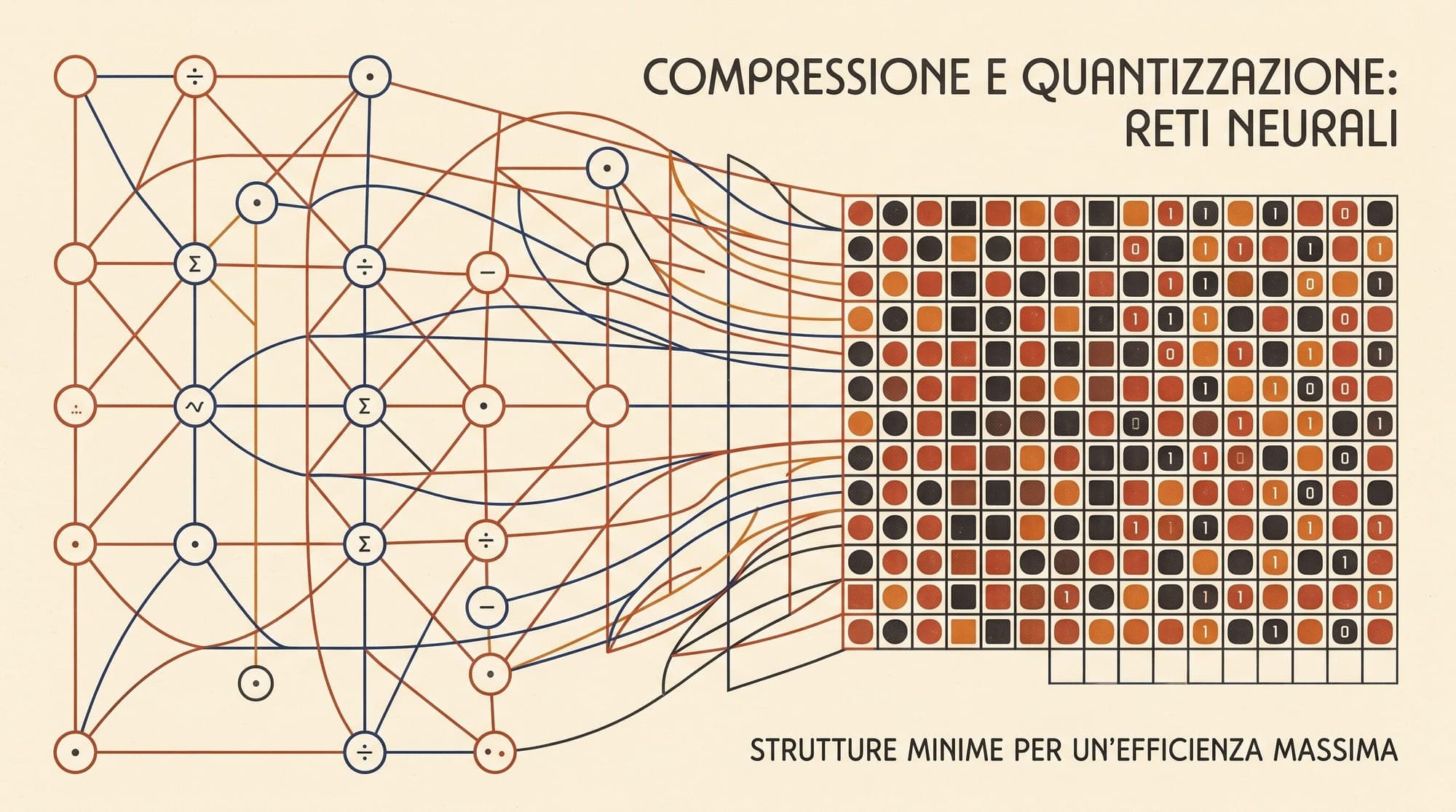
  2. Liquid AI Releases Quantization-Aware Distilled Q4_0 Checkpoints for LFM2.5 Models

    Liquid AI has released Quantization-Aware Distillation (QAD) Q4_0 GGUF checkpoints for its LFM2.5 model series, allowing edge runtimes to execute 4-bit quantized non-transformer architectures without the accuracy degradation typically associated with standard post-training quantization (PTQ). The release covers four models in the LFM2.5 family: LFM2.5-230M, LFM2.5-350M, LFM2.5-1.2B-Instruct, and LFM2.5-2.6B. The checkpoints are packaged in the standard GGUF format and run across llama.cpp and c

    AI
    2 min read
  3. Palo Alto Networks Enlists Anthropic, OpenAI, and OT Vendors for Critical Infrastructure Defense

    Palo Alto Networks has introduced the Frontier AI Critical Defense Program, a coordinated security initiative uniting frontier AI research labs, enterprise software vendors, and industrial control systems providers to protect critical infrastructure from automated vulnerability exploitation. The program includes participation from Anthropic, OpenAI, industrial automation and operational technology (OT) manufacturers Mitsubishi Electric and Axis Communications, healthcare and finance risk-sharin

    AI
    2 min read
  4. Long-Context LLMs vs. RAG in Production: Break-Even Economics, Attention Degradation, and Hybrid Architectures

    The emergence of production models supporting context windows of 1 million tokens or more, including Google Gemini 1.5 Pro, Anthropic Claude 3.5 Sonnet, and OpenAI GPT-4o, has disrupted conventional enterprise retrieval architectures. For several years, Retrieval-Augmented Generation (RAG) served as the mandatory workaround for strict context limits, forcing engineering teams to build chunking pipelines, embedding indices, and vector database infrastructures. With massive context windows and th

    AI
    6 min read
  5. Chinchilla Scaling Laws: How Compute-Optimal Pre-Training and Inference Economics Reshaped LLM Architecture

    Before 2022, frontier artificial intelligence labs scaled large language models primarily by increasing parameter counts while keeping training dataset sizes relatively static. OpenAI's 2020 GPT-3 model trained 175 billion parameters on 300 billion tokens. DeepMind's 2021 Gopher trained 280 billion parameters on 300 billion tokens, and Megatron-Turing NLG scaled to 530 billion parameters on 270 billion tokens. These allocation decisions followed early empirical scaling laws that suggested parame

    Education
    6 min read
  6. Oracle Health Adds Automated Coding, Dictation, and Chart Review to Clinical AI Agent

    Oracle Health has expanded the capabilities of its Clinical AI Agent in the United States, introducing automated professional fee coding, real-time clinician-controlled dictation, and AI-assisted chart review. The release marks a deliberate expansion beyond ambient clinical documentation into revenue cycle workflows and structured electronic health record retrieval. The update builds on Oracle's ambient listening platform, which transcribes patient encounters and synthesizes clinical notes. By

    AI
    2 min read
  7. On-Device LLM Inference in Production: Architecture, Runtimes, and Hardware Constraints

    Deploying generative language models directly onto edge devices such as smartphones, laptops, embedded systems, and browser sandboxes marks a fundamental shift in AI systems engineering. Moving inference from centralized GPU clusters to client silicon eliminates cloud API costs, cuts network latency to zero, guarantees data privacy by keeping user inputs local, and enables offline functionality. However, executing modern autoregressive models on resource-constrained client hardware presents str

    AI
    7 min read
  8. SK Hynix Announces $29 Billion Share Buyback to Calm AI Spending Worries

    SK Hynix announced Wednesday it will buy back and cancel 40 trillion won ($28.61 billion) worth of treasury shares, allocating more than 50 percent of free cash flow generated between 2025 and 2027 to shareholder returns. The buyback, to be executed between August 20 and November 19, represents roughly 24 million shares. The company also said it would pursue an expansion of its total shareholder return target from the previous "within 50 percent of cumulative FCF" to "over 50 percent of cumulat

    AI
    1 min read
  9. Samsung Raises 4nm and 5nm Foundry Prices up to 15% on AI Chip Demand

    Samsung Electronics has raised prices for its most advanced contract chipmaking services by up to 15 percent for new orders, according to two sources familiar with the matter, as demand for AI chips tightens capacity at the South Korean foundry. The increases apply to Samsung's 4-nanometer SF4 and 5-nanometer SF5 process nodes. Prices for SF4 wafers rose 10 to 15 percent for customers in China and the United States from the previous month, while customers in Taiwan saw increases of 5 to 10 perc

    AI
    1 min read
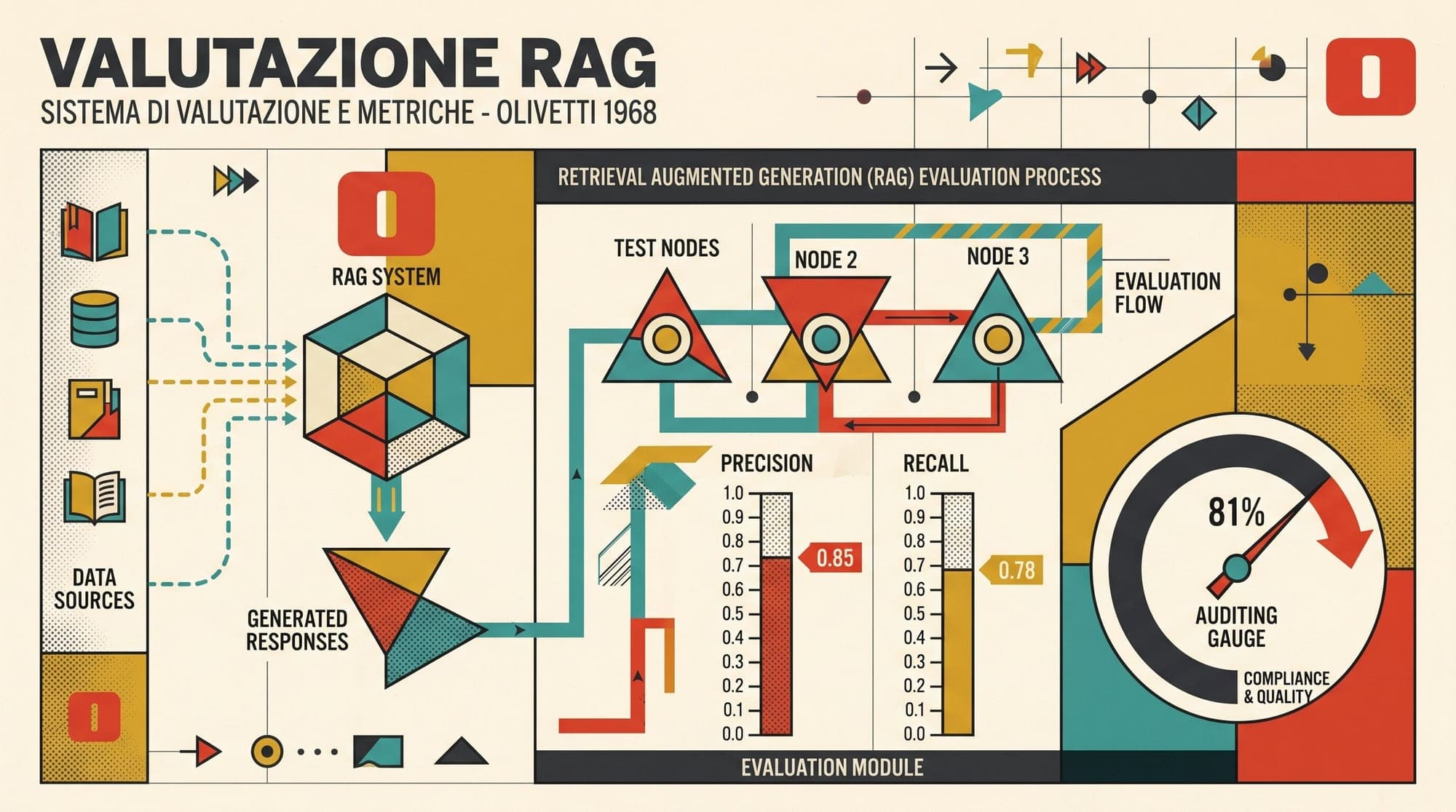
  10. RAG Evaluation Frameworks in Production: Architecture, Metrics, and CI/CD Trade-Offs for Ragas, DeepEval, TruLens, and ARES

    Production Retrieval-Augmented Generation (RAG) systems fail silently. Unlike traditional software pipelines that throw explicit exceptions on invalid states, a broken RAG pipeline produces syntactically fluent, confident prose that conceals severe underlying defects. When a user receives an incorrect response, the failure can stem from multiple distinct failure points across the stack: the query embedding failed to retrieve relevant chunks, the reranker discarded the critical passage, the chunk

    LLM
    7 min read
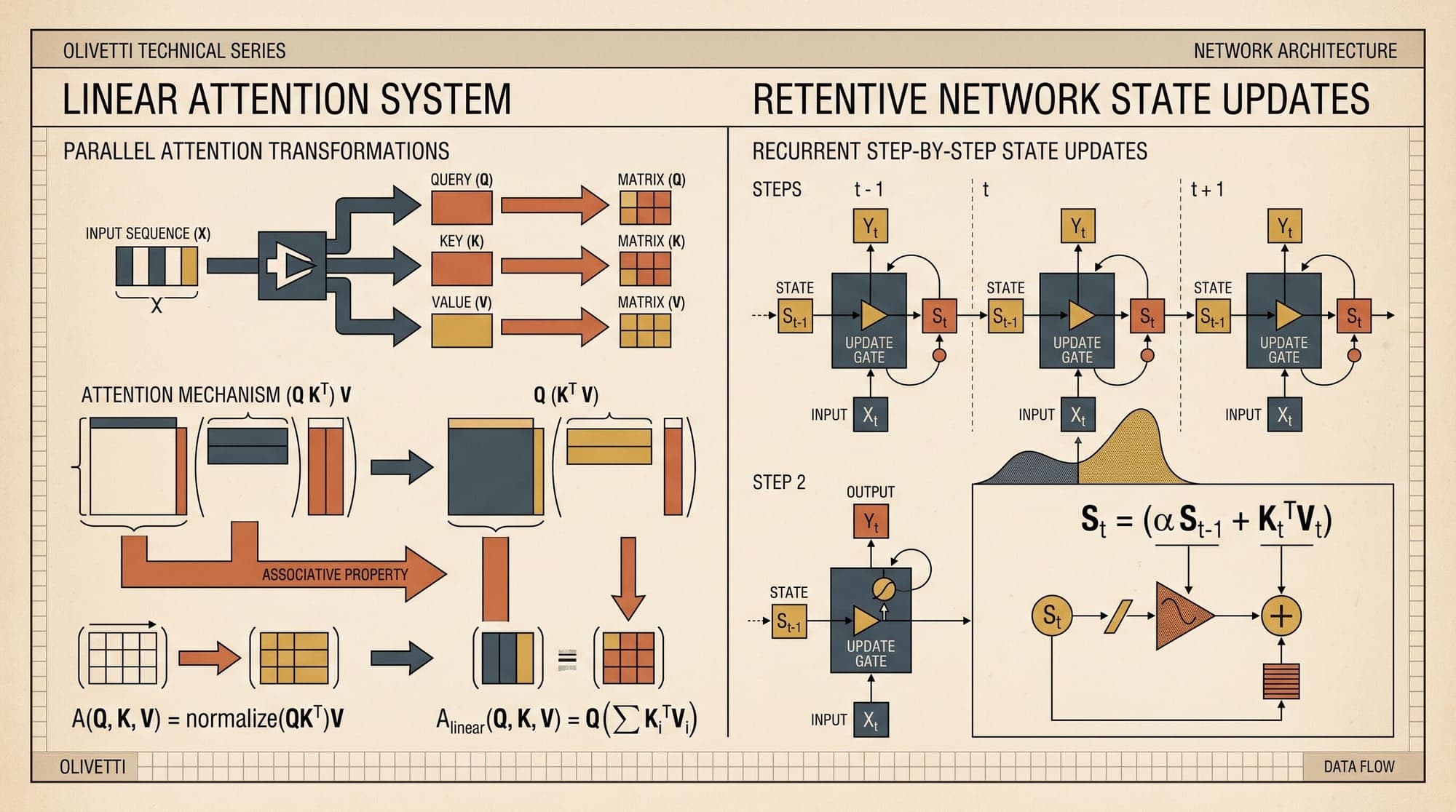
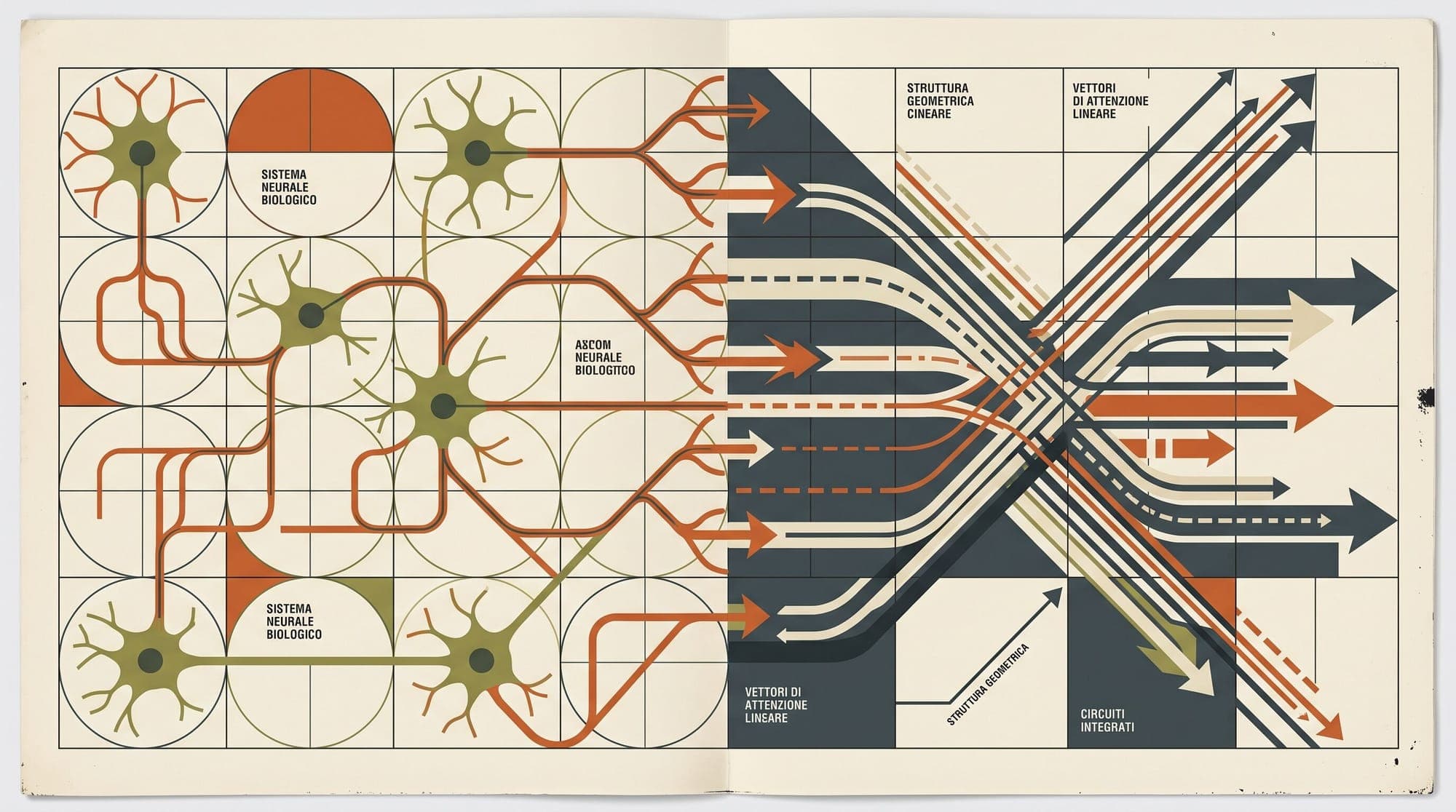
  11. Linear Attention and Retentive Networks: How Recurrent Duals and Chunkwise Tiling Eliminate the Quadratic Bottleneck

    Linear Attention and Retentive Networks: How Recurrent Duals and Chunkwise Tiling Eliminate the Quadratic Bottleneck Autoregressive large language models built on standard multi-head self-attention face two fundamental scaling ceilings: quadratic compute and memory complexity during pre-training, and linearly expanding key-value (KV) cache memory footprints during autoregressive generation. While optimizations such as FlashAttention reduce memory access overheads and Grouped-Query Attention (GQ

    Architecture
    8 min read
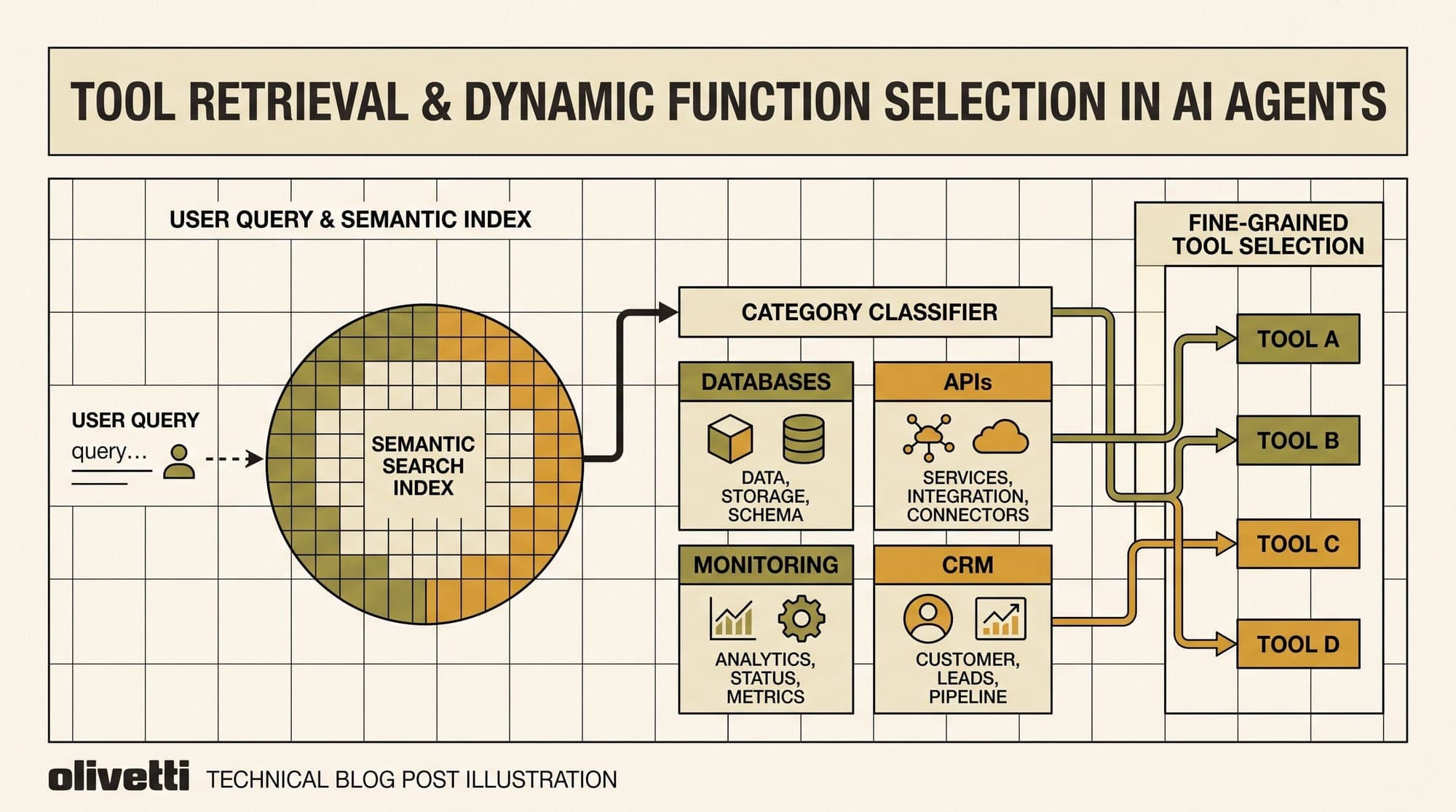
  12. Tool Retrieval and Dynamic Function Selection in Production AI Agents: Architecture, Semantic Indexing, and Serving Trade-Offs

    Tool Retrieval and Dynamic Function Selection in Production AI Agents: Architecture, Semantic Indexing, and Serving Trade-Offs The default approach to LLM tool calling—stuffing every function schema into the prompt—works for demos with a dozen tools. It fails in production where agents face hundreds or thousands of available functions. Context windows saturate, selection accuracy degrades, and latency grows linearly with registry size. This post surveys the architectural progression from stati

    AI
    6 min read
  13. Relativity Networks Raises $22M and Lands $40M Hyperscaler Deal for Hollow-Core AI Data Center Fiber

    Optical fiber startup Relativity Networks has secured $22 million in SAFE note funding and booked a $40 million follow-on order from an unnamed hyperscaler to deploy hollow-core fiber across distributed AI data center facilities. The funding round included participation from Rhapsody Venture Partners, Bell Ventures Inc., and Faster Than Glass LLC. The capital will support scaling production and deployment of hollow-core fiber cables engineered specifically for low-latency interconnects between

    AI
    2 min read
  14. Knowledge Editing in Large Language Models: How Causal Tracing, ROME, and MEMIT Modify Factual Storage in MLP Weights

    Updating factual information in pre-trained large language models has traditionally required two imperfect extremes: computationally expensive continual pre-training, or external prompt-stuffing through Retrieval-Augmented Generation (RAG). Standard gradient descent fine-tuning on isolated facts leads to catastrophic forgetting, parameter drift, and degraded general reasoning. To solve this, mechanistic interpretability researchers introduced direct model editing: a paradigm that treats transfo

    AI
    6 min read
  15. MIT, Stanford, and 12 Academic Labs Launch Public AI Observatory to Track Real-World LLM Usage

    A consortium of researchers from MIT, Stanford University, and 12 other academic institutions has launched the Public AI Observatory (ai-observatory.org), an independent, auditable data repository designed to measure how individuals interact with artificial intelligence assistants in real-world settings. The initiative aims to address the empirical opacity surrounding commercial LLM deployment. While frontier AI developers such as OpenAI and Anthropic periodically release aggregated user metric

    research
    1 min read
  16. DDR5 Memory Prices Climb 500% in 12 Months as AI Hyperscalers Corner Global DRAM Capacity

    Spot and contract prices for standard DDR5 dynamic random-access memory (DRAM) have climbed by up to 500 percent over the past 12 months, driven by hyper-scaler procurement teams reserving global semiconductor fabrication lines for enterprise AI accelerator memory. Historical retail and channel tracking data compiled by PCPartPicker and reported by Tom's Hardware highlights severe price spikes across high-density modules. A 128GB DDR5-6400 kit that carried an all-time low of $329 now retails fo

    Hardware
    2 min read
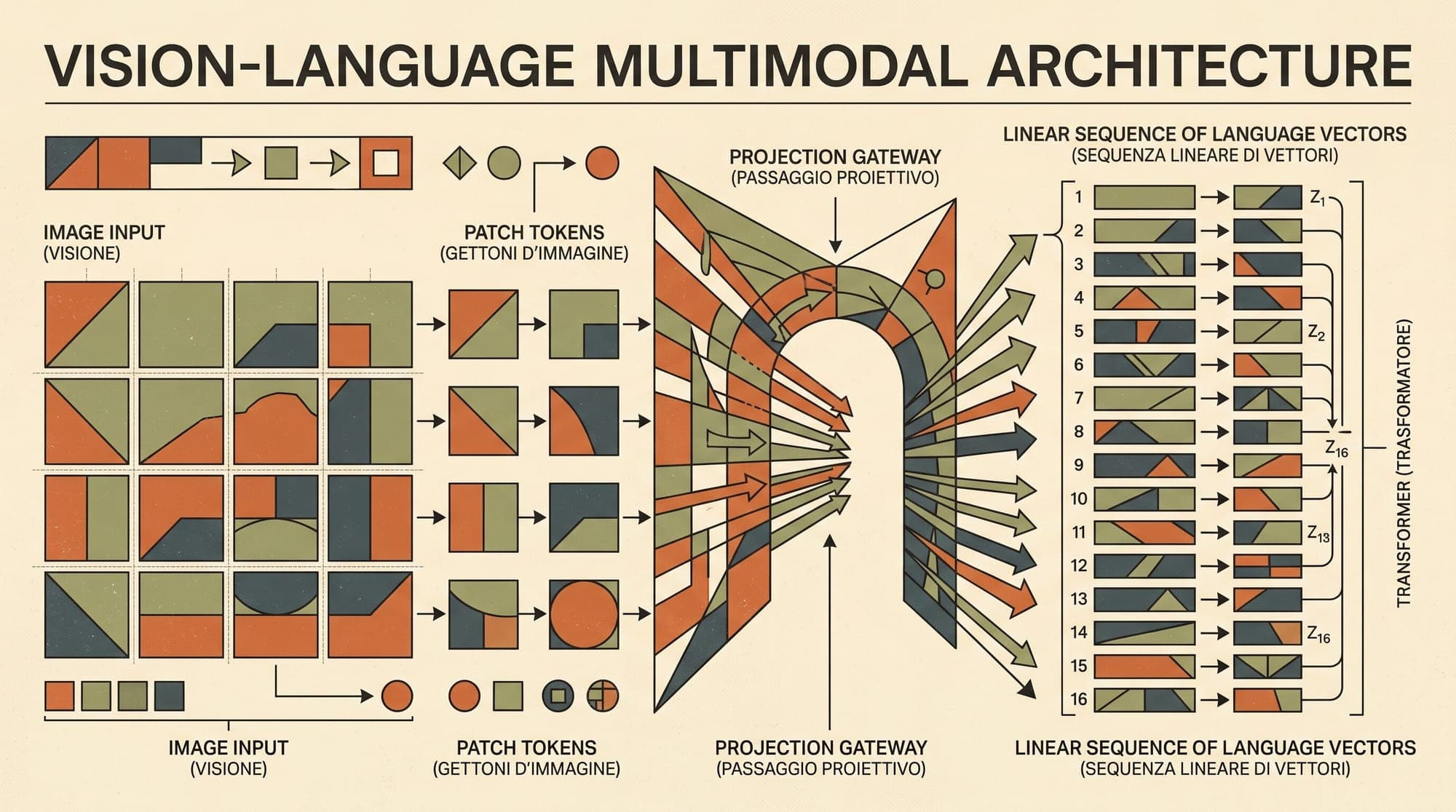
  17. Vision-Language Model Architectures: How Vision Encoders, Token Projectors, and Dynamic Resolution Bridge Modalities

    Modern large language models operate exclusively on discrete sequences of token embeddings. Integrating visual perception into these systems requires converting continuous, two-dimensional spatial arrays into linear sequences of embedding vectors that match the dimensionality and distribution of the language model's hidden states. Vision-language models (VLMs) like LLaVA, Flamingo, Qwen2-VL, and InternVL accomplish this conversion through a three-stage pipeline: a vision encoder, a cross-modal

    AI
    7 min read
  18. GUI Agent Architectures in Production: Visual Grounding, DOM vs. Pixel Parsing, and Action Spaces

    Graphical user interface (GUI) automation has undergone a structural transition from programmatic DOM manipulation to vision-based foundation agents. Where earlier browser automation relied on CSS selectors, XPath expressions, and accessibility trees, modern desktop and cross-platform agents interact with operating systems through raw pixel observations and virtual input devices. Deploying GUI agents in production environments introduces distinct engineering constraints. Visual grounding precis

    AI
    6 min read
  19. Pathway Secures $30M Seed at $500M Valuation to Scale BDH Post-Transformer Architecture

    AI research company Pathway has secured additional capital at a $500 million valuation, bringing its total seed funding to $30 million. The company is developing a post-Transformer architecture dubbed Baby Dragon Hatchling (BDH) designed to combine continuous in-weights adaptation, long-horizon reasoning, and memory within neural representations without relying on expanding KV caches or external retrieval pipelines. The BDH Post-Transformer Architecture Standard Transformer architectures suff

    AI
    2 min read
  20. Temporal in Talks to Raise $500M at $12B+ Valuation as Agent Orchestration Surges

    Developer infrastructure platform Temporal Technologies is in discussions to raise approximately $500 million in a new funding round that would value the company at over $12 billion pre-money, according to reports from Bloomberg. The financing represents a rapid increase in valuation from its $5 billion Series D round earlier this year, driven by accelerating adoption of durable execution runtimes for multi-step AI agents. The Shift Toward Durable Execution Runtimes While foundational model d

    AI
    2 min read