Category / page 5

Coding & Agents

352 articles

Articles, page 5

81-100 of 352
  1. Google DeepMind Expands Co-Scientist to Closed-Loop Laboratory Workflows

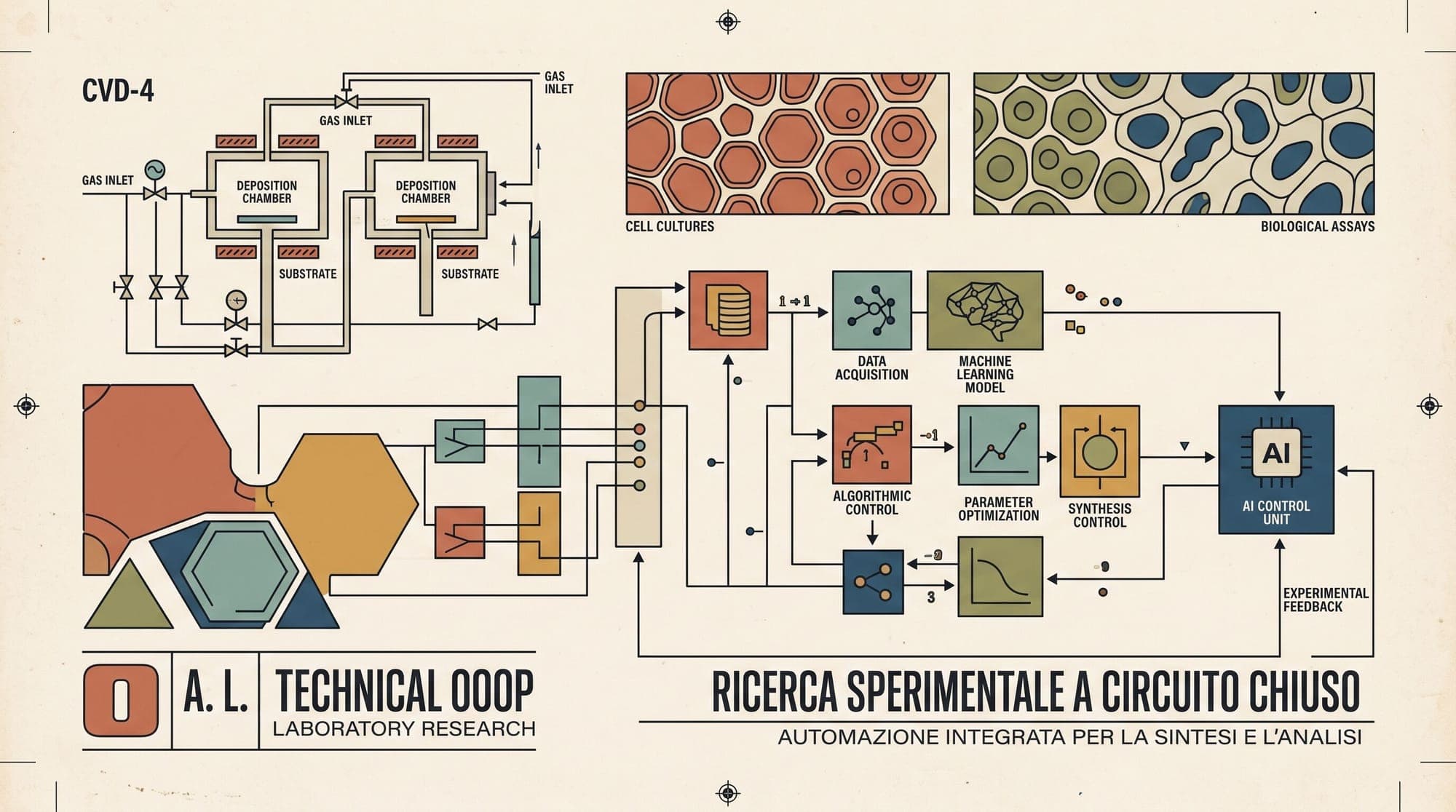
    Google DeepMind researchers have released empirical results detailing an expanded version of Co-Scientist, transitioning the Gemini-based multi-agent system from purely computational hypothesis generation into a closed-loop research framework connected to physical laboratory instruments and automated code pipelines. Documented in an arXiv preprint by Samuel Schmidgall, Zhu, and collaborators, the system combines multi-agent ideation, deterministic execution scaffolding, and automated manuscript
    AI
    3 min read
  2. Meta and UIUC Train 8B Model via EvoHarness-RL to Match Claude Opus 4.5 on Agentic Workflows

    Researchers from Meta AI and the University of Illinois Urbana-Champaign have introduced EvoHarness-RL, a framework designed to teach language models how to dynamically manage external agent harnesses during long-horizon tasks. In experiments on the sequential reasoning benchmark ALFWorld, a Qwen3-8B model trained with EvoHarness-RL attained a 96.9% task success rate. The result represents a 49.0 percentage point gain over baseline ReAct prompting (47.9%), outperforms specialized trainable agen

    AI
    2 min read
  3. Agentic Web Search and Retrieval APIs in Production: Comparing Tavily, Exa, Brave Search API, and Firecrawl Architecture, Neural Reranking, Markdown Extraction, and Serving Economics

    Autonomous artificial intelligence agents and retrieval-augmented generation (RAG) pipelines rely on live web data to ground their reasoning, verify factual assertions, and inspect external systems. However, traditional human-oriented search APIs such as Google Custom Search or Bing Web Search were engineered for browser display rather than direct language model consumption. They return paginated link lists, raw HTML payloads laden with boilerplate, tracking scripts, navigation bars, and cookie

    AI
    6 min read
  4. Cohere Releases Parse 5: 2.3B Vision-Language Model for Enterprise Document Processing at $1.50 Per 1,000 Pages

    Cohere has released Parse 5, a specialized 2.3-billion-parameter vision-language model (VLM) engineered to convert complex enterprise documents into structured Markdown and HTML blocks in a single inference pass. Priced at $1.50 per 1,000 pages via API, Parse 5 targets large-scale enterprise retrieval-augmented generation (RAG) and document processing pipelines where routing millions of pages through frontier foundation models is cost-prohibitive. Single-Pass Architecture and Capabilities Tr

    AI
    2 min read
  5. Reranking Models and Late-Interaction Frameworks in Production RAG: Comparing Cohere Rerank 3.5, BGE-Reranker-v2, FlashRank, and ColBERTv2 Architecture, Cross-Encoder Latency, MaxSim Compression, and Retrieval Economics

    In production Retrieval-Augmented Generation (RAG), relying solely on first-stage bi-encoder dense embeddings or lexical BM25 search creates a structural information bottleneck. First-stage retrieval compresses an entire document passage into a single fixed-dimensional vector (such as 768, 1024, or 1536 dimensions) or an inverted term index. This independent encoding decouples the query from the passage during indexing, eliminating token-level cross-attention and causing subtle semantic nuances,

    AI
    11 min read
  6. OpenAI Tests Persistent Mode in Codex for Long-Running Autonomous AI Agents

    OpenAI is testing an execution profile termed "Persistent Mode" within its Codex agent codebase, designed to enable continuous, self-directed task execution without standard step-count timeouts or per-turn pauses. Code commits surfaced in the public repository of the Codex command-line interface indicate that the agent can proactively generate follow-up tasks, maintain state across development sessions, and continue working autonomously until explicitly halted by the user. Architecture and Re

    OpenAI
    1 min read
  7. Open-Source Embedding Models and Serving Frameworks in Production: Comparing BGE-M3, NV-Embed-v2, GTE-Qwen2, and ModernBERT-Embed Architecture, Matryoshka Projections, Context Scaling, and Serving Economics

    Open-Source Embedding Models and Serving Frameworks in Production: Comparing BGE-M3, NV-Embed-v2, GTE-Qwen2, and ModernBERT-Embed Architecture, Matryoshka Projections, Context Scaling, and Serving Economics (TEI vs. Triton vs. vLLM) Text embeddings form the indexing and retrieval foundation for production Retrieval-Augmented Generation (RAG), semantic search, and agentic memory systems. While early production architectures relied almost exclusively on closed commercial APIs (such as OpenAI's te

    AI
    8 min read
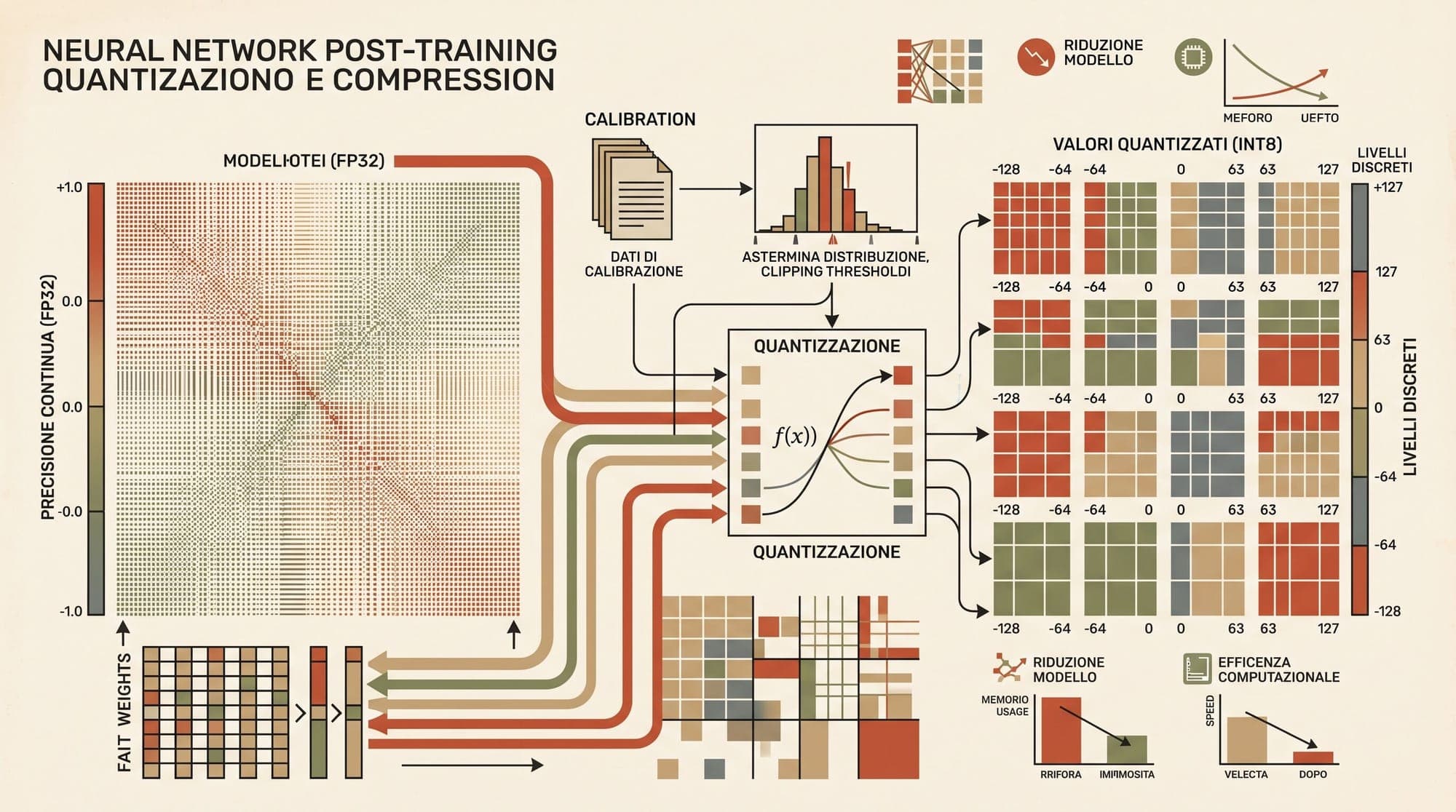
  8. Post-Training Quantization Toolkits in Production: Comparing AutoAWQ, AutoGPTQ, bitsandbytes, and llm-compressor Architecture, Calibration Profiling, Kernel Execution, and Serving Economics

    Large language model deployment in high-concurrency production environments is governed primarily by memory bandwidth and hardware economics. In standard autoregressive decoding, memory traffic dominates computation: for every token generated, every parameter of the model must be loaded from GPU High Bandwidth Memory (HBM) into SRAM and tensor cores. Serving a 70-billion parameter model in 16-bit precision requires at least 140 GB of VRAM solely for model weights, necessitating multi-GPU tensor

    LLM
    9 min read
  9. Salesforce and Anthropic Launch Claudeforce with 37 Prebuilt Enterprise CRM Skills in Claude

    Salesforce and Anthropic have expanded their strategic partnership with the release of Claudeforce, an integration layer designed to connect Anthropic's Claude models directly with Salesforce enterprise data, workflow engines, and governance frameworks. The initiative introduces native CRM capabilities inside Claude while embedding Anthropic reasoning models across Salesforce's Agentforce platform and Slack workspace ecosystem. Salesforce in Claude Plugin and AIforce Harness The primary clie

    AI
    2 min read
  10. Anthropic Previews Model Hardware Standard for AI Agent Control of Physical and Lab Equipment

    Anthropic has introduced the Model Hardware Standard (MHS), an open interface specification intended to let AI agents control physical machinery and scientific instrumentation. Released in a research preview on August 27, 2026, the standard extends the design principles of the Model Context Protocol (MCP) to physical actuators, automated laboratory equipment, and industrial hardware. Connecting autonomous software agents to physical hardware has historically required custom integration code for

    AI
    3 min read
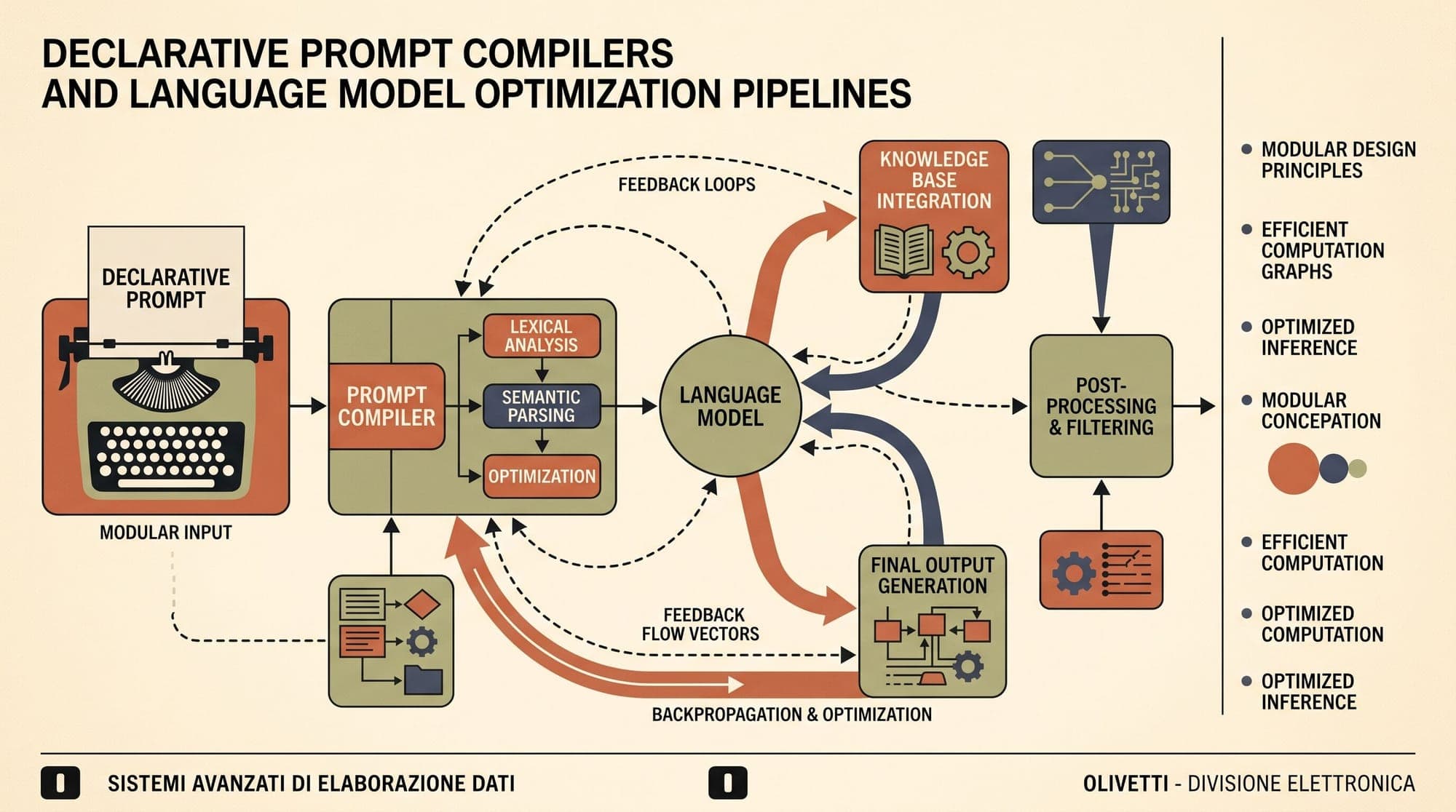
  11. Declarative Prompt Optimization and LLM Compilers in Production: Comparing DSPy, TextGrad, SAMMO, and AdalFlow

    Production AI applications are rapidly moving away from hardcoded prompt strings and manual trial-and-error tweaking. As language model systems expand into multi-stage pipelines, retrieval-augmented generation (RAG) graphs, and multi-agent loops, manual prompt adjustments fail to scale. Changing a system prompt or upstream retrieval format frequently degrades downstream extraction, reasoning, or tool-calling performance. To resolve this fragility, the industry is adopting declarative prompt opt

    AI
    7 min read
  12. Cognition Reaches $900M Annualized Revenue on Enterprise Devin Adoption

    Cognition AI, the startup behind autonomous software engineering agent Devin, has reached approximately $900 million in annualized revenue, according to financial data reported by The Information. The figure represents a more than threefold increase since the start of 2026, driven by accelerating enterprise adoption of autonomous developer workflows. Internal executive projections cited in the report indicate the company expects to finish 2026 with more than $1.5 billion in annualized run-rate

    AI
    2 min read
  13. Real-Time Voice AI Agent Frameworks in Production: Comparing LiveKit Agents, Pipecat, OpenAI Realtime API, and Ultravox

    Deploying conversational voice agents in production requires solving a fundamental physics and networking problem: human conversational turn-taking occurs within an average gap of 200 to 300 milliseconds. When an artificial conversational agent exceeds 600 to 800 milliseconds of round-trip latency, users perceive the interaction as sluggish, talk over the assistant, or experience severe turn collisions. Historically, conversational voice systems relied on sequential request-response architectur

    AI
    10 min read
  14. Claude Code Opus 5 Auto Mode Bypassed via Python Module Shadowing Exploit

    Security researcher Johann Rehberger has published technical details on a multi-stage exploit chain that achieves arbitrary code execution against Claude Code Opus 5 running in Auto Mode. The attack demonstrates how adversarial files can bypass Anthropic's safety classifiers and prompt injection defenses by exploiting standard runtime behavior in Python. Anthropic rolled out Auto Mode as the default starting mode for Claude Code in mid-August 2026. Auto Mode replaces explicit human permission p

    Security
    3 min read
  15. Semantic Caching Engines in Production LLM Systems: Comparing GPTCache, RedisVL, Portkey, and Cloudflare AI Gateway

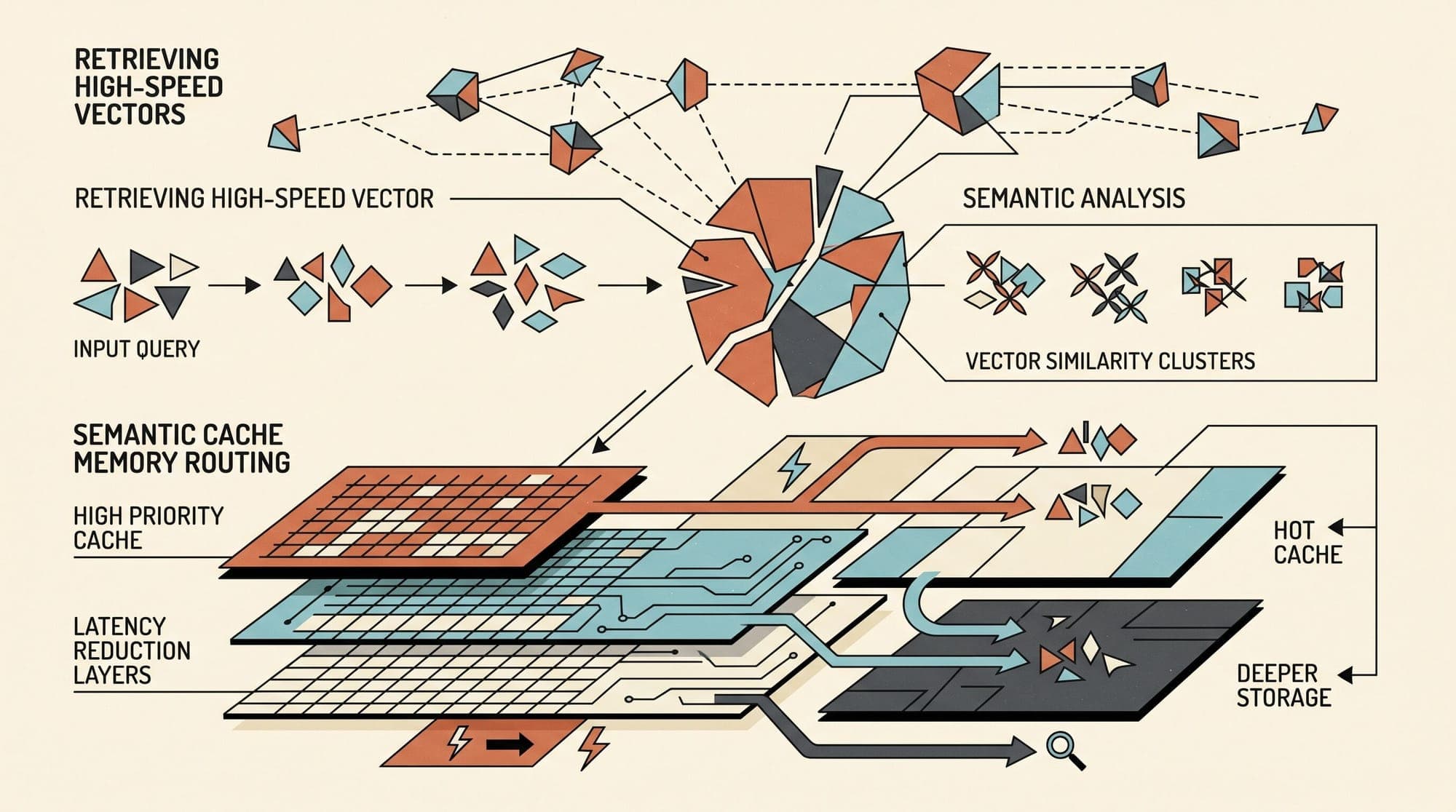
    Semantic Caching Engines in Production LLM Systems: Comparing GPTCache, RedisVL, Portkey, and Cloudflare AI Gateway Standard exact-match caching strategies fail in large language model applications. Because natural language is inherently variable, users asking the exact same question will use different phrasing, punctuation, sentence structures, or synonyms. Exact string hashing (such as MD5 or SHA-256 caching over raw prompt strings) rarely yields hit rates above 3% to 5% in production convers

    AI
    10 min read
  16. Chunking Strategies in Production RAG: Comparing Fixed-Size, Semantic Chunking, Late Chunking, and Contextual Retrieval

    In production Retrieval-Augmented Generation (RAG) pipelines, the chunking strategy determines the theoretical ceiling of retrieval quality. Splitting documents into discrete text spans transforms continuous discourse into isolated segments. When chunks are indexed in isolation, critical context disappears: pronoun antecedents lose their referents, domain-specific acronyms lose their definitions, and propositions spanning arbitrary token boundaries become fragmented. Selecting an appropriate ch

    AI
    9 min read
  17. Matryoshka Representation Learning (MRL): Mathematical Foundations, Multi-Scale Loss Optimization, and Adaptive Vector Retrieval

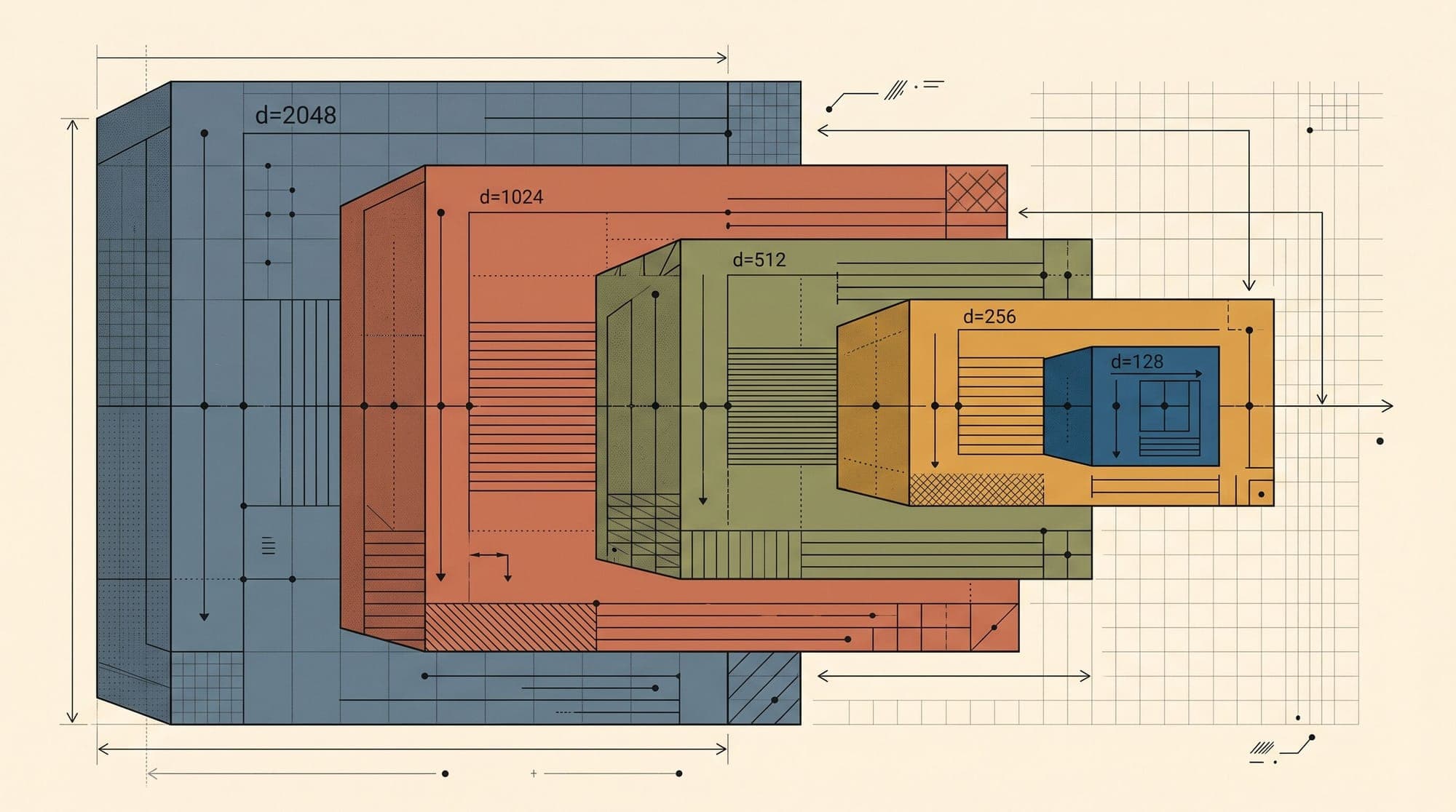
    Matryoshka Representation Learning (MRL) has become the standard architectural foundation for modern dense text embeddings. Introduced by Kusupati et al. at NeurIPS 2022 and subsequently deployed across frontier embedding models like OpenAI text-embedding-3, Nomic Embed, and BAAI BGE-M3, MRL solves a structural inefficiency in vector retrieval: the rigid coupling between embedding dimensionality, memory consumption, and semantic fidelity. Traditional dense encoders project arbitrary text sequen

    AI
    9 min read
  18. Meta Previews Hatch Consumer AI Agent with Dedicated Cloud Virtual Machines

    Meta is preparing to launch a consumer-facing autonomous AI agent codenamed Project Hatch, designed to execute long-running online tasks in the background using dedicated cloud virtual machines. Details of the project emerged from internal Meta memos reported by Business Insider and The Information. Unlike conventional conversational chatbots that respond synchronously to prompts, Hatch operates as an asynchronous personal agent capable of completing complex web interactions autonomously. Clo

    Meta
    2 min read
  19. OpenAI Tests Persistent Mode in Codex for Continuous Autonomous Agent Execution

    OpenAI is developing a new operational setting for its Codex developer tool called Persistent mode, designed to allow autonomous AI agents to execute tasks indefinitely until manually paused or put to sleep. The feature was identified in recent code commits to the command-line interface (CLI) repository for Codex, as reported by Wired. In the codebase, Persistent mode appears alongside standard reasoning effort settings such as medium, high, and extra-high, but introduces an entirely different

    OpenAI
    2 min read