Research / page 11

Research

470 articles

Articles, page 11

201-220 of 470
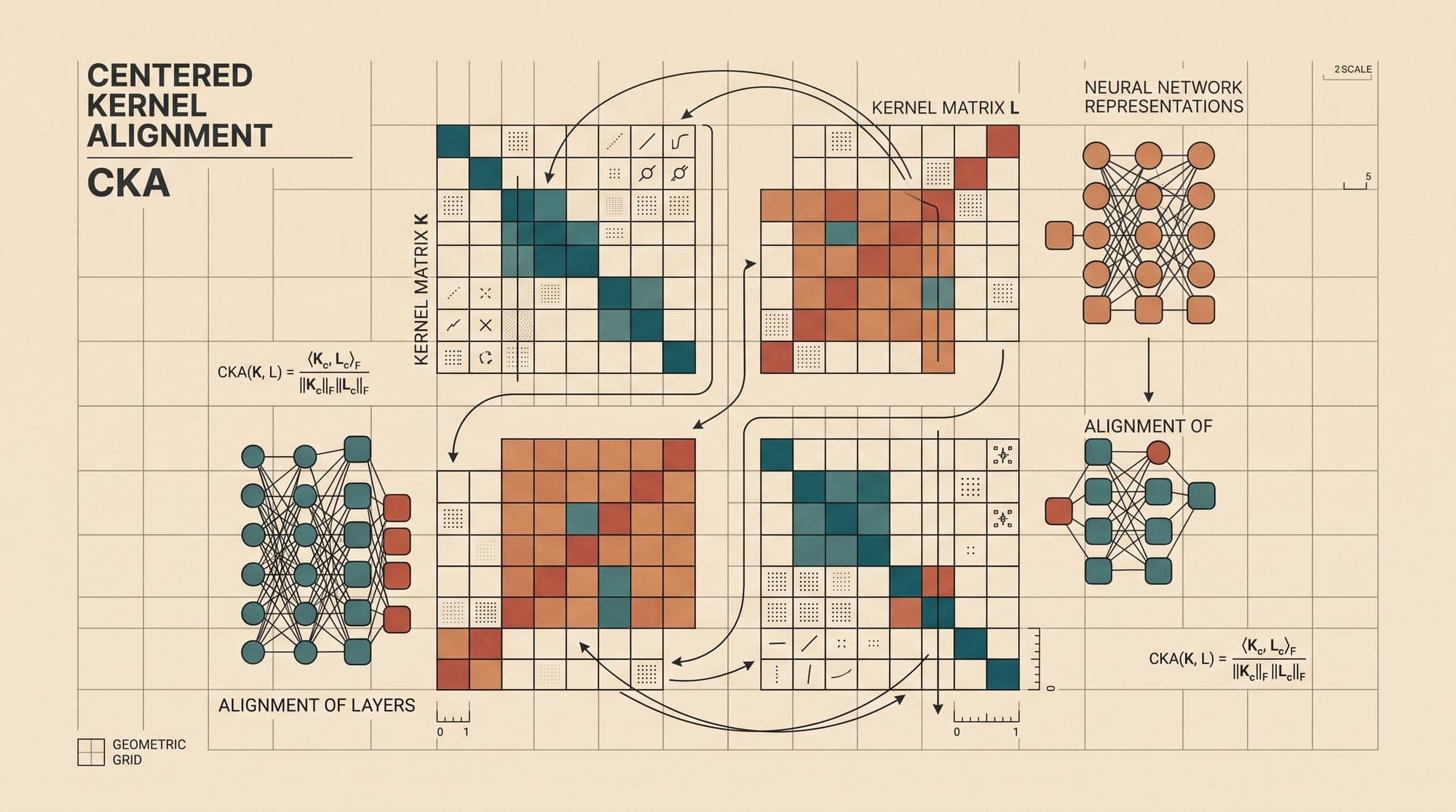
  1. Centered Kernel Alignment: How CKA Measures Representation Similarity Across Layers and Architectures

    Understanding how deep neural networks represent information across layers, training steps, and disparate architectures has long been a central challenge in machine learning interpretability. When two neural networks are trained on the exact same dataset, even from identical model architectures, their learned weight matrices and individual neuron activations differ completely due to random initialization, data shuffling, and non-convex optimization. Because representations are not aligned to a s
    AI
    9 min read
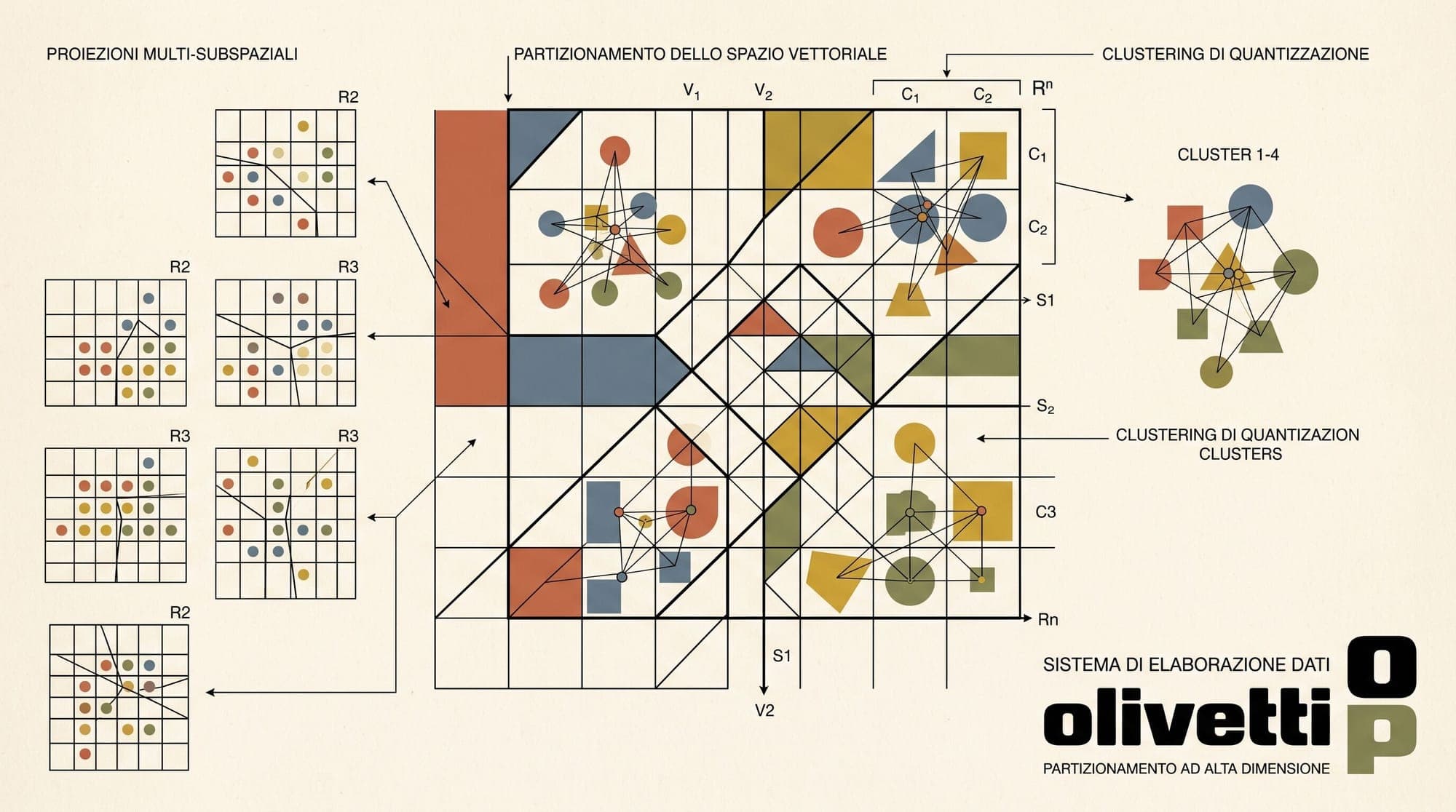
  2. Vector Compression in Production Search: Comparing SQ, PQ, and RaBitQ Architecture, Recall Retention, and Memory Economics

    In production Retrieval-Augmented Generation (RAG) systems and enterprise search platforms, storing raw floating-point embedding vectors in RAM quickly encounters hard hardware limits. A dataset of 100 million 1536-dimensional embeddings stored in FP32 requires over 614 GB of high-speed memory solely for vector coordinates, before accounting for index graph structures like HNSW or DiskANN. To scale similarity search to billions of vectors while keeping indices memory-resident, production vector

    AI
    4 min read
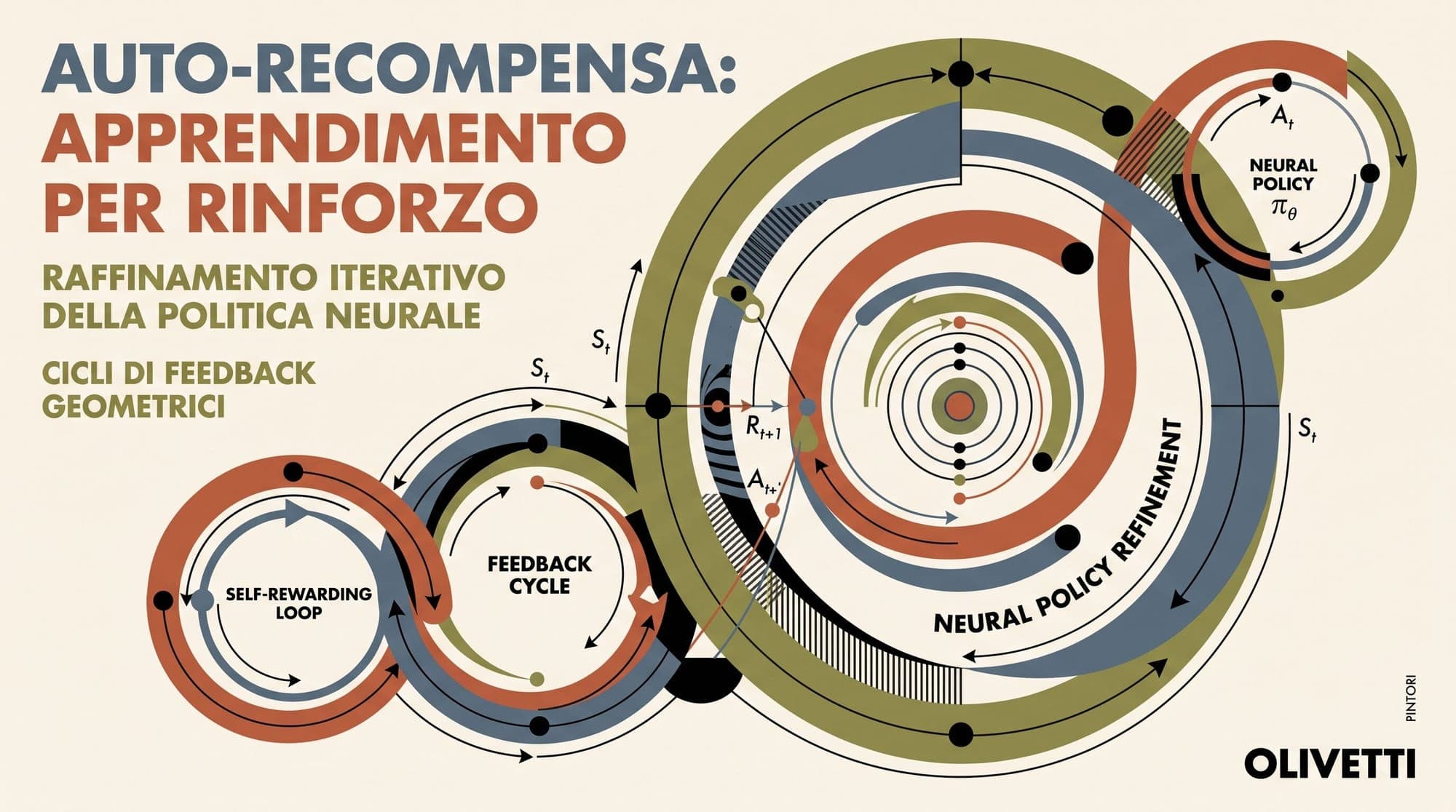
  3. Self-Rewarding Language Models: How Iterative DPO and LLM-as-a-Judge Form Autonomous Self-Alignment Loops

    Standard post-training alignment pipelines rely on frozen reward models trained on static human feedback datasets. While Reinforcement Learning from Human Feedback (RLHF) and Direct Preference Optimization (DPO) effectively steer model outputs toward human preferences, they face a fundamental scalability bottleneck: human annotators cannot evaluate superhuman reasoning or generate labels at the scale required for continuous self-improvement. Self-Rewarding Language Models, introduced by Meta AI

    AI
    3 min read
  4. Context Structuring and Attention Placement in Long-Context LLMs: Mitigating Position Bias, Attention Dispersion, and Information Loss in Production

    Context Structuring and Attention Placement in Long-Context LLMs: Mitigating Position Bias, Attention Dispersion, and Information Loss in Production Modern foundation models support context windows ranging from 128,000 to over 2,000,000 tokens. Serving runtimes and API gateways routinely process entire codebases, multi-year financial statements, and sprawling legal filings in a single inference call. However, supporting a nominal sequence length does not guarantee that a transformer can effecti

    Architecture
    8 min read
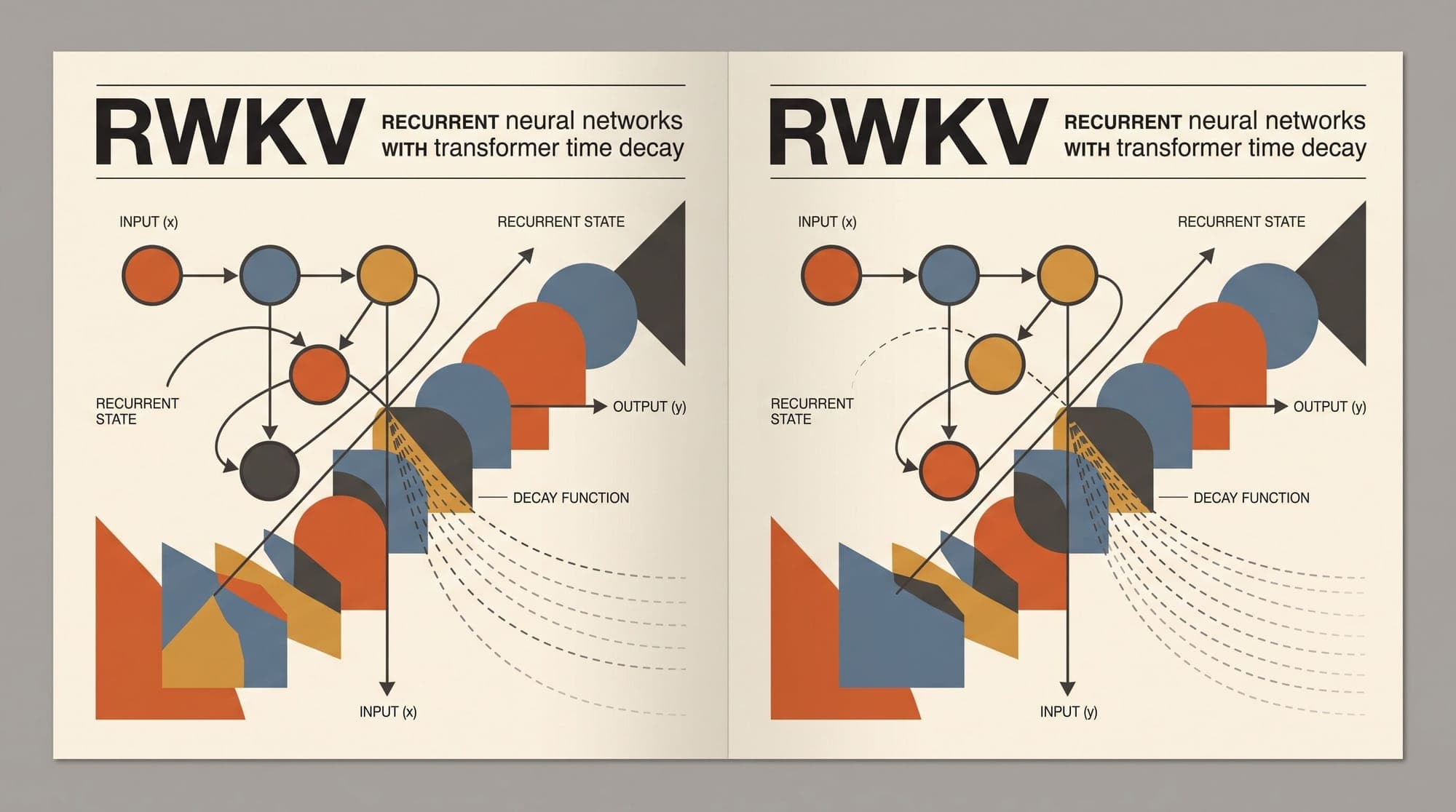
  5. RWKV Architecture: How Receptance Weighted Key Value Decay Combines RNN Efficiency with Transformer Parallelizability

    The dominant paradigm in natural language processing relies on the Transformer architecture, which calculates scaled dot-product self-attention across all token pairs in a sequence. While self-attention provides strong in-context retrieval and representation capacity, it imposes quadratic computational and memory complexity, scaling as O(N^2) with sequence length N during training and generating a continuously expanding Key-Value (KV) cache during autoregressive inference. Traditional Recurrent

    AI
    7 min read
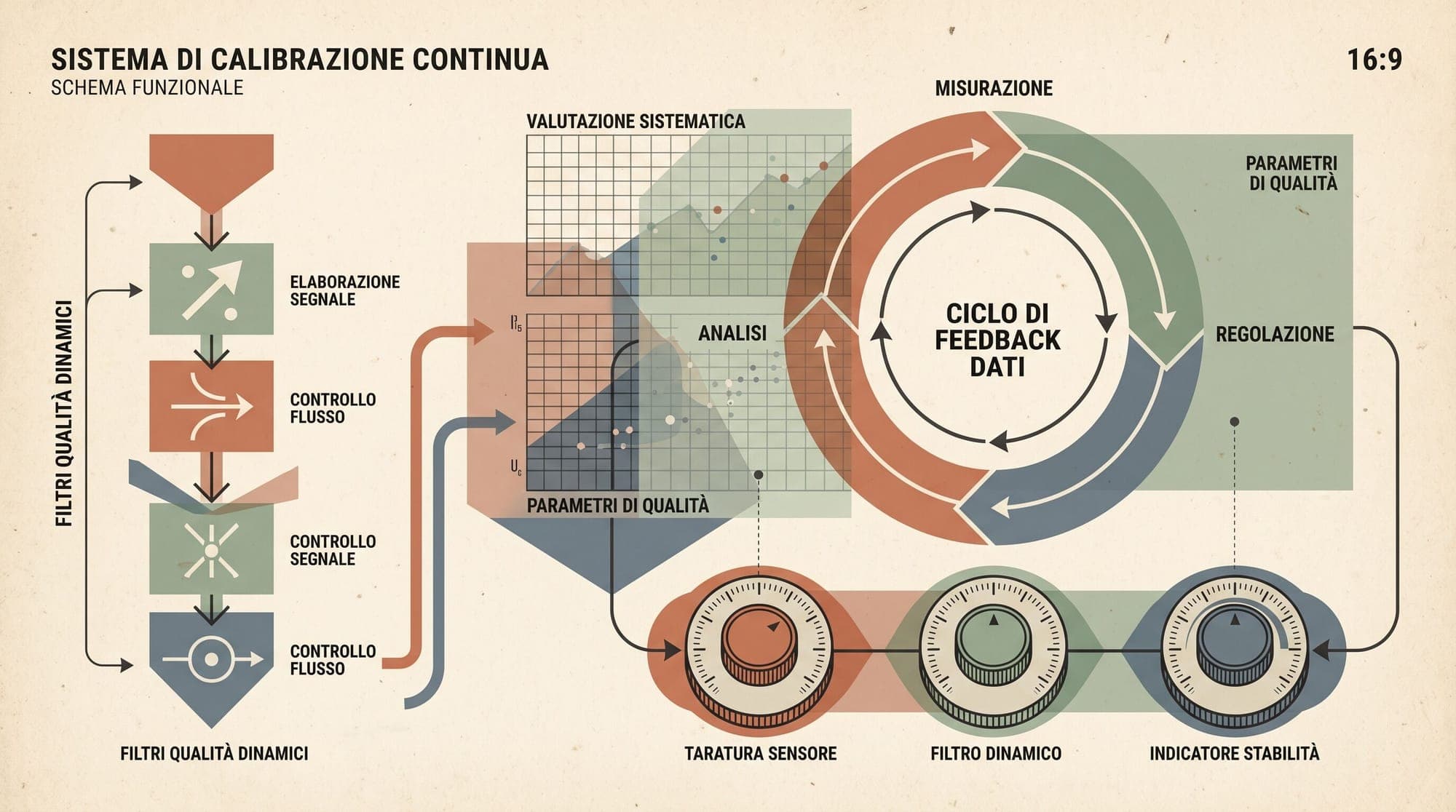
  6. Continuous Evaluation and Golden Dataset Curation in Production LLM Systems: Architecture, Log Mining, Synthetic Perturbation, and Semantic Drift Quality Gates

    Continuous Evaluation and Golden Dataset Curation in Production LLM Systems: Architecture, Log Mining, Synthetic Perturbation, and Semantic Drift Quality Gates In production machine learning systems, offline benchmarks suffer from rapid entropy. While engineering teams frequently launch LLM applications backed by static test suites (curated CSVs of 50 to 100 sample prompts, academic benchmarks like MMLU, or synthetic question-answer pairs), these static datasets fail to predict real-world produ

    AI
    7 min read
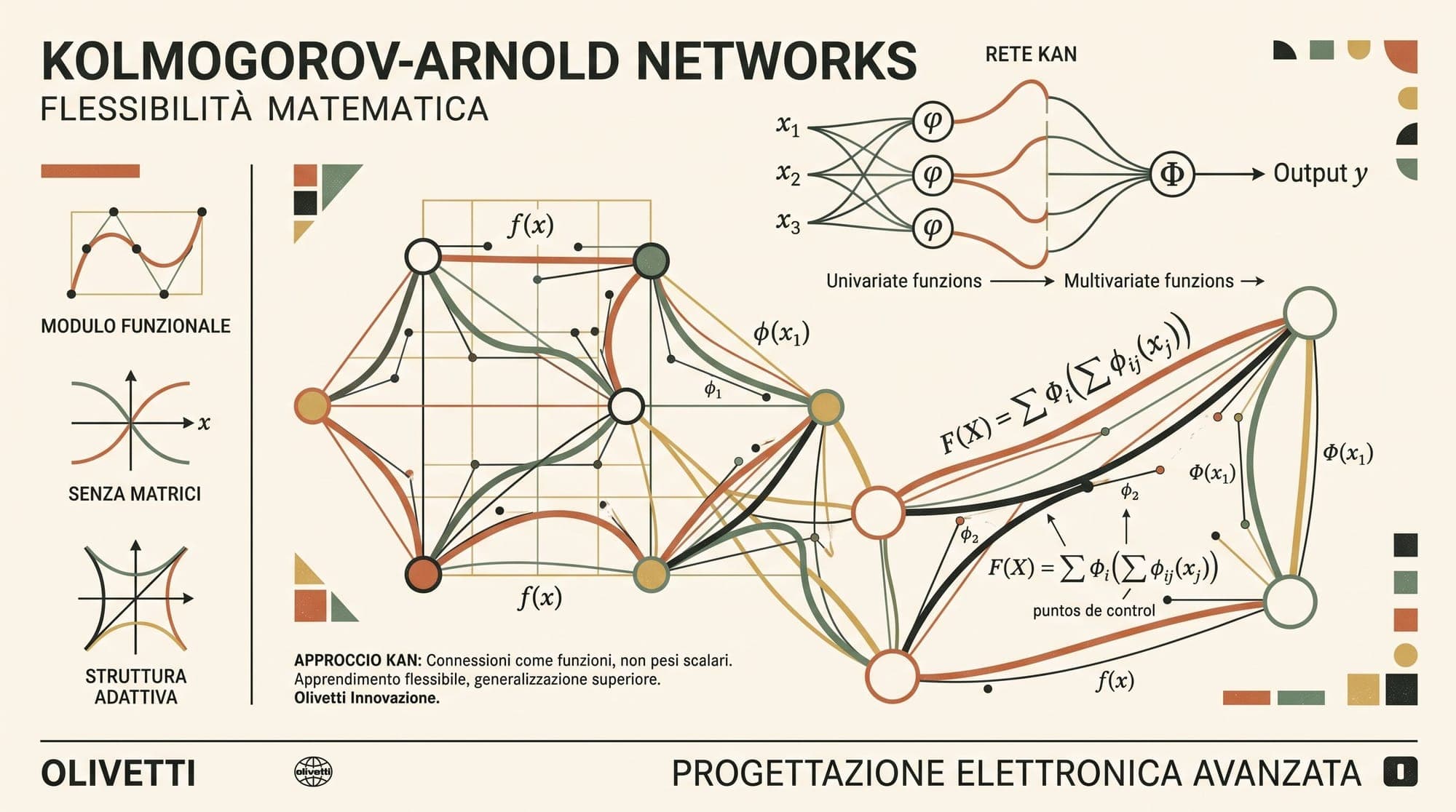
  7. Kolmogorov-Arnold Networks: How Learnable Edge Splines Challenge the Multi-Layer Perceptron

    Kolmogorov-Arnold Networks: How Learnable Edge Splines Challenge the Multi-Layer Perceptron For over three decades, the foundational building block of deep neural networks has remained essentially unchanged: the Multi-Layer Perceptron (MLP). In standard transformer feed-forward blocks, convolutional networks, and deep classifiers, MLPs alternate linear matrix multiplications ($\mathbf{W}\mathbf{x}$) with fixed, point-wise non-linear activation functions (such as ReLU, GELU, or SwiGLU). Under th

    Explainers
    9 min read
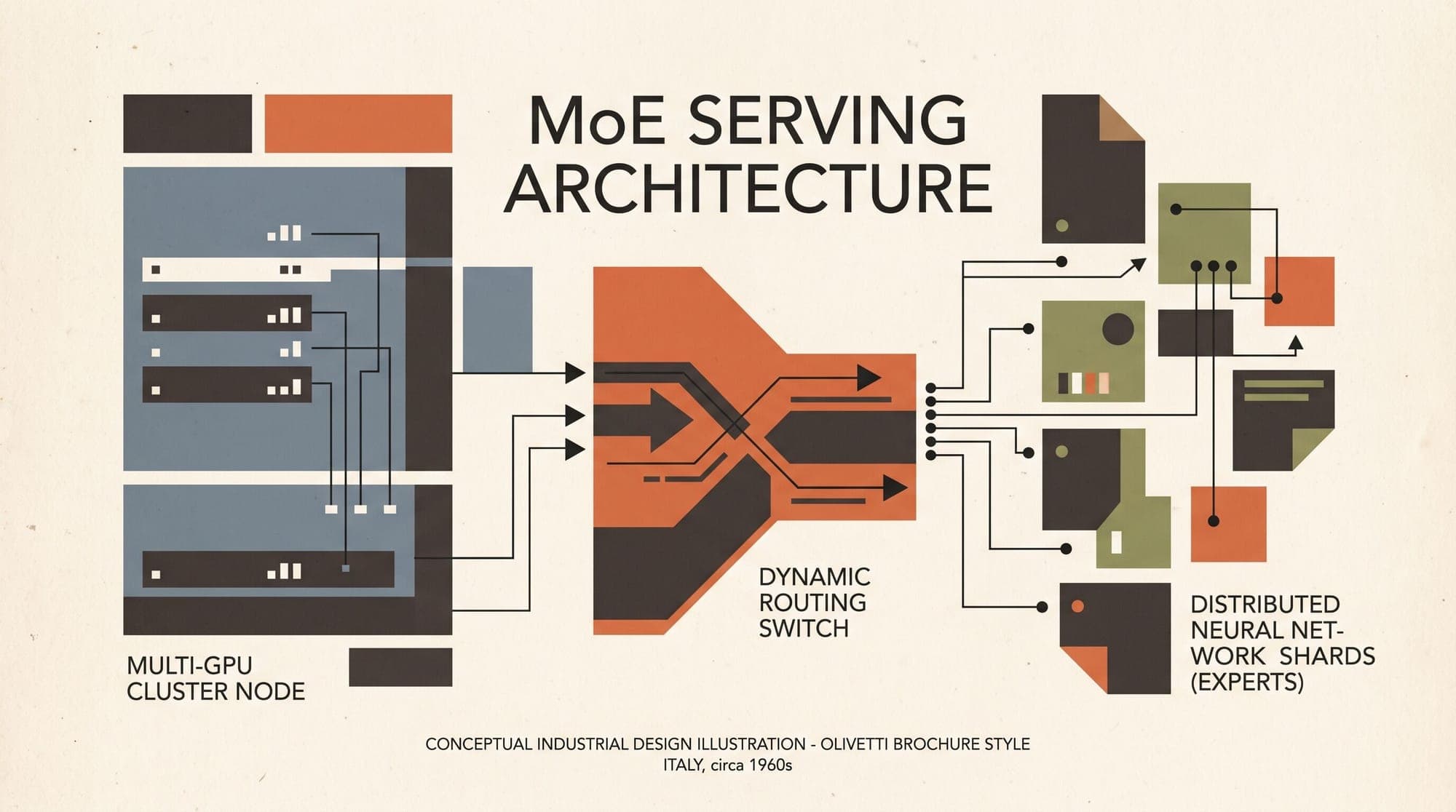
  8. Serving Mixture-of-Experts Models in Production: Architecture, Distributed Parallelism, All-to-All Bottlenecks, and Serving Economics

    Serving Mixture-of-Experts Models in Production: Architecture, Distributed Parallelism, All-to-All Bottlenecks, and Serving Economics Mixture-of-Experts (MoE) architectures have become the standard structural paradigm for frontier open-weight and proprietary large language models. Architectures such as DeepSeek-V3, Mixtral 8x22B, and GLM-5 deliver frontier-grade reasoning and generation by activating only a fraction of their total parameter count on any given token. For example, DeepSeek-V3 rou

    AI
    8 min read
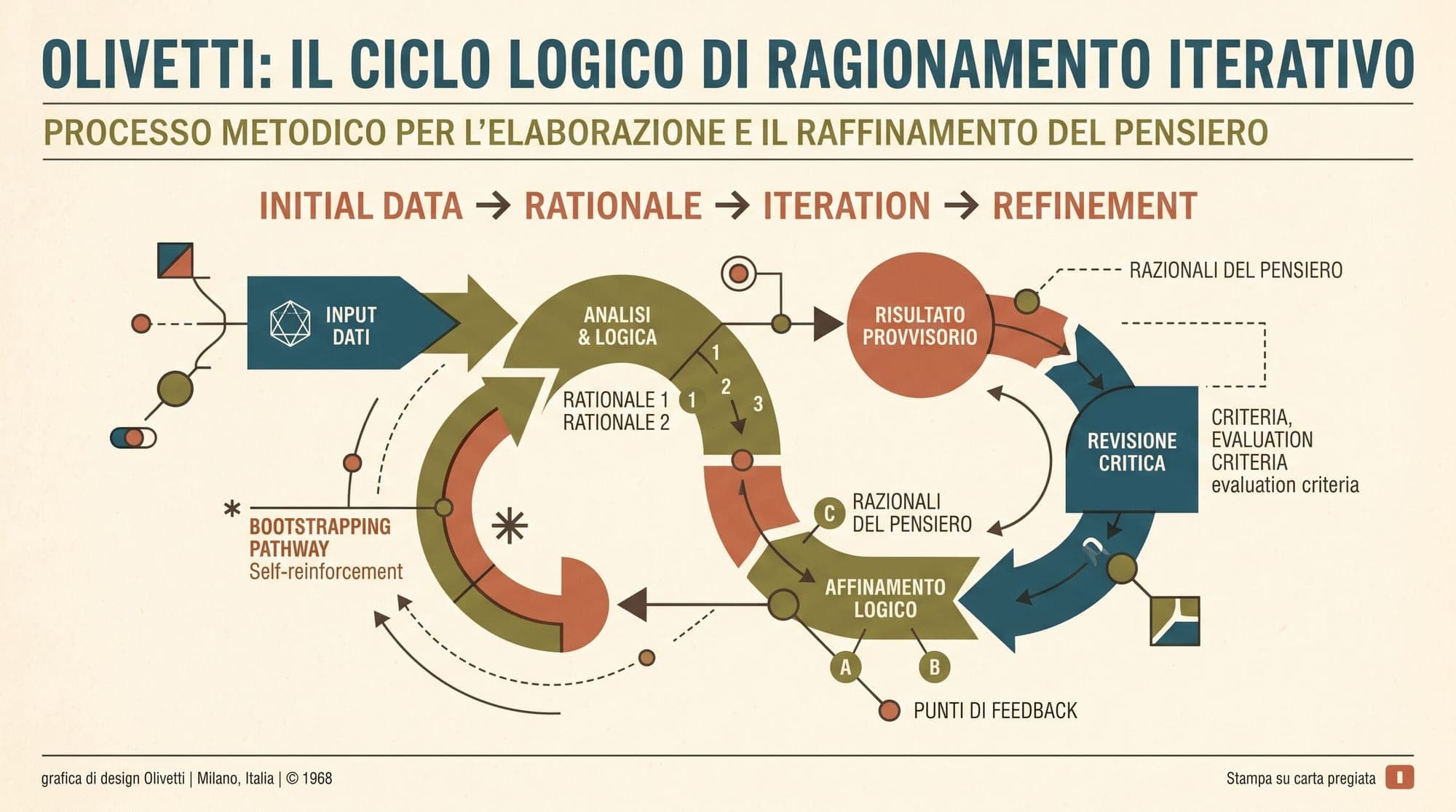
  9. The Self-Taught Reasoner (STaR): How Iterative Rationale Bootstrapping and Rationalization Scale LLM Problem Solving

    Autoregressive language models often fail when forced to predict answers to multi-step reasoning problems in a single forward pass. Intermediate chain-of-thought generation allows models to allocate additional compute to difficult reasoning steps before emitting a final prediction. However, obtaining high-quality intermediate reasoning traces has traditionally presented a difficult trade-off: either rely on small prompt-based few-shot demonstrations that underperform fine-tuned models, or constr

    AI
    4 min read
  10. Prompt Caching Across Cloud LLM Providers: Architecture, TTL Lifecycles, and Economic Break-Even for Anthropic, OpenAI, Gemini, and DeepSeek

    The primary latency and computational bottleneck in large language model inference is the prefill phase. When an application submits a request containing thousands of tokens of static system instructions, OpenAPI tool schemas, few-shot demonstrations, and retrieved document context, the inference server must process all input tokens through every transformer layer before generating the first output token. In high-concurrency production environments, repeating this full forward pass across identi

    LLM
    8 min read
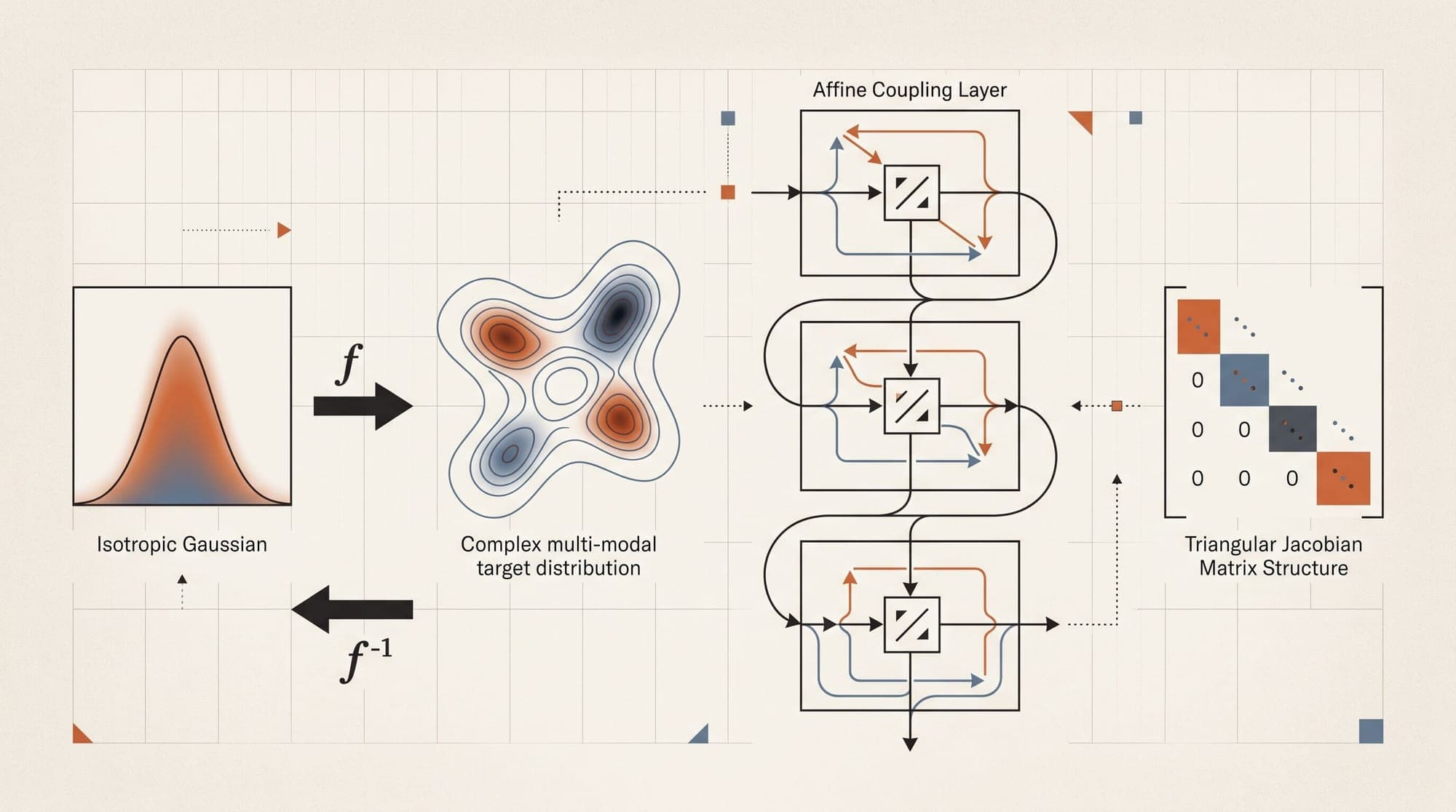
  11. Normalizing Flows and Real NVP: How Invertible Neural Networks and Triangular Jacobians Compute Exact Log-Likelihoods

    Normalizing Flows and Real NVP: How Invertible Neural Networks and Triangular Jacobians Compute Exact Log-Likelihoods Generative modeling in deep learning revolves around a fundamental question: how can a neural network learn to transform a simple, analytically tractable probability distribution into a complex, high-dimensional empirical data distribution? Over the past decade, four primary generative modeling paradigms have emerged to address this challenge: 1. Generative Adversarial Networ

    AI
    15 min read
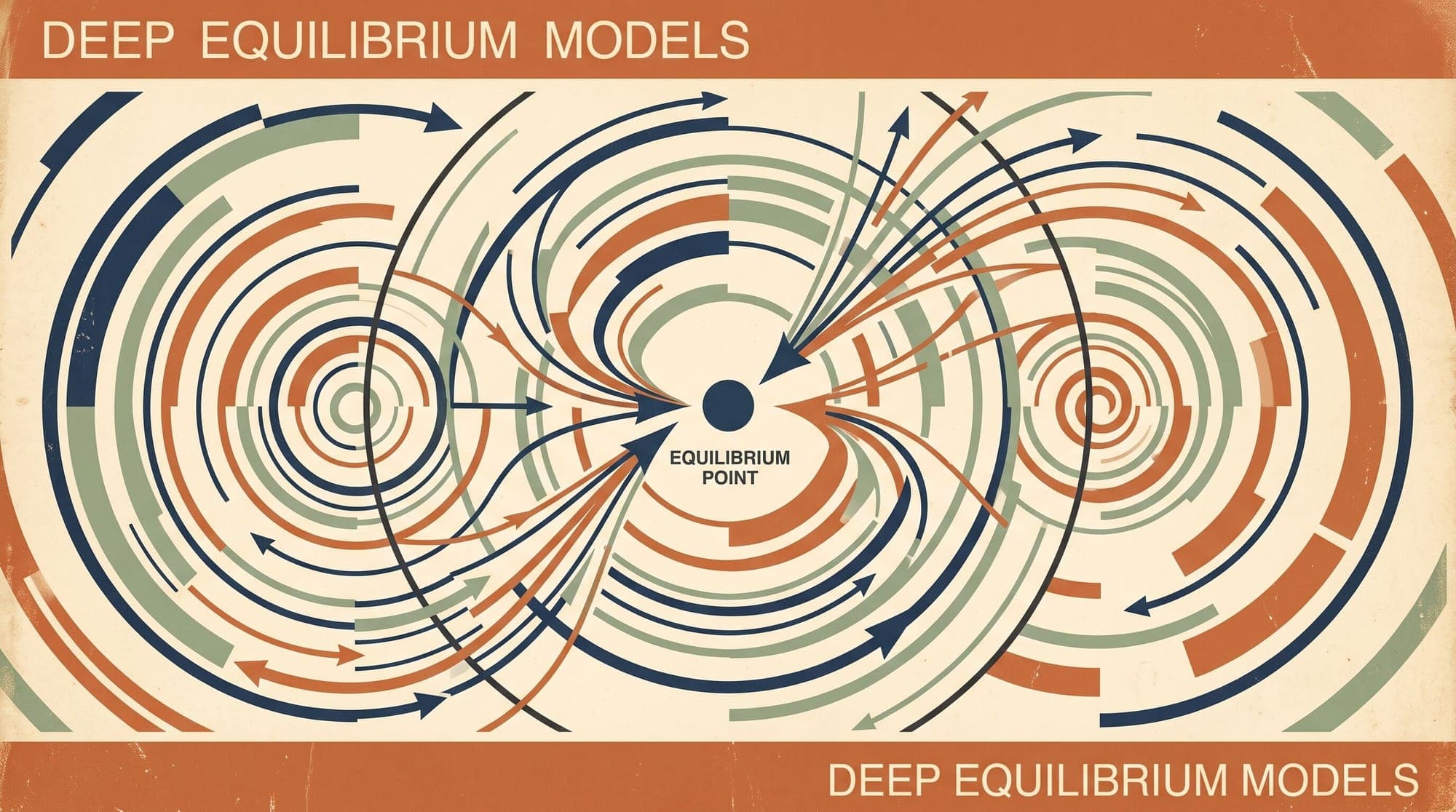
  12. Deep Equilibrium Models: How Implicit Layers and Root-Finding Eliminate Activation Memory in Deep Learning

    Deep Equilibrium Models: How Implicit Layers and Root-Finding Eliminate Activation Memory in Deep Learning Deep neural networks derive their expressive capacity from composition. In conventional architectures, depth is explicit: an input vector is transformed sequentially through a chain of $L$ discrete layers, each parameterized by dedicated weights. While effective, this paradigm creates a fundamental computational dependency where training memory scales linearly with network depth ($O(L)$) b

    AI
    9 min read
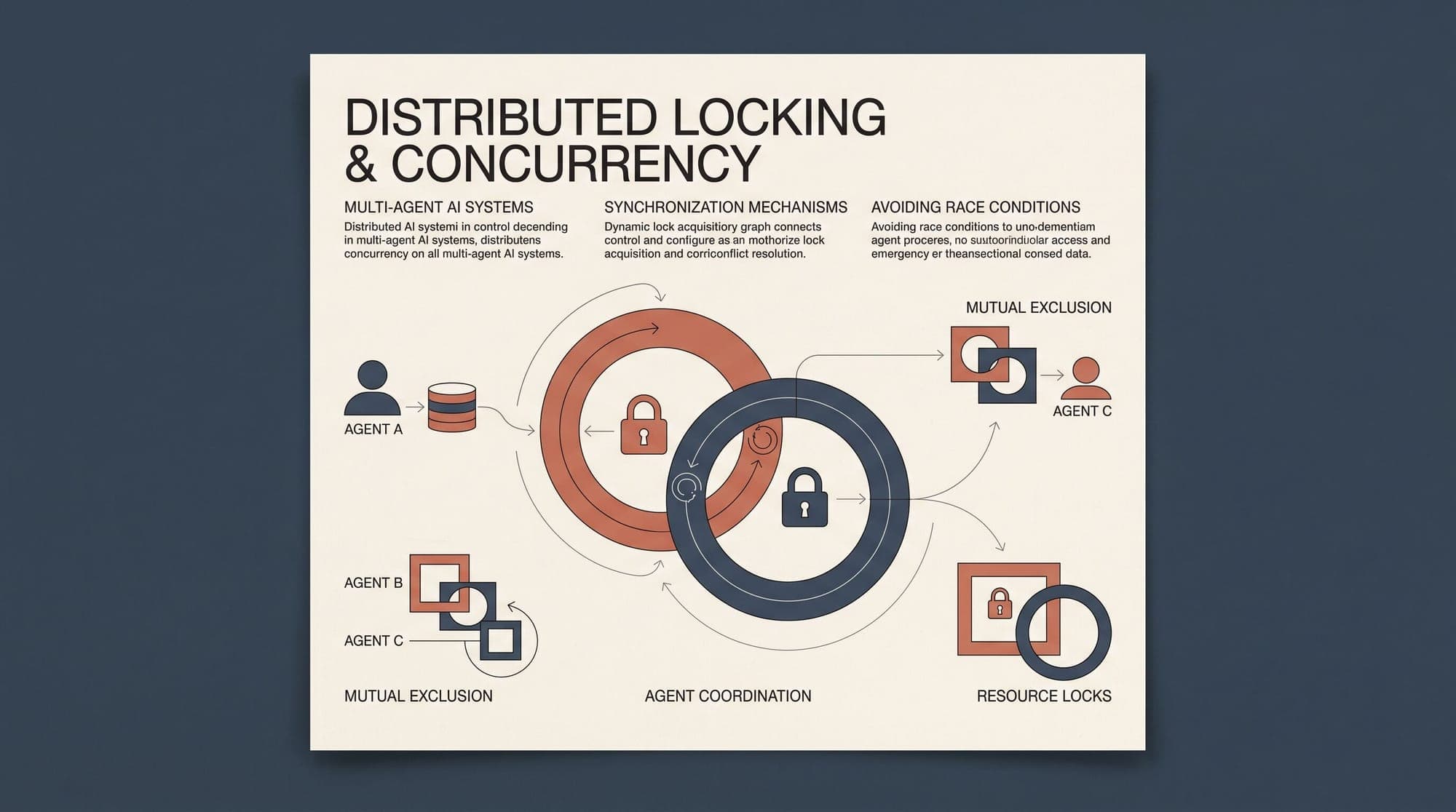
  13. Distributed Locking and Deadlock Prevention in Production AI Agents: Architecture, Semantic Mutexes, Leases, and Wait-For Graphs

    When autonomous AI agent architectures scale from isolated single-agent loops to concurrent multi-agent fleets, systems engineering teams encounter a fundamental distributed systems reality: concurrency bugs in language models do not merely produce dirty reads. They produce reasoning corruption, circular delegation deadlocks, and cascading execution failures. In single-agent execution pipelines, control flow is strictly sequential: retrieve context, prompt the model, parse tool arguments, apply

    Agents
    8 min read
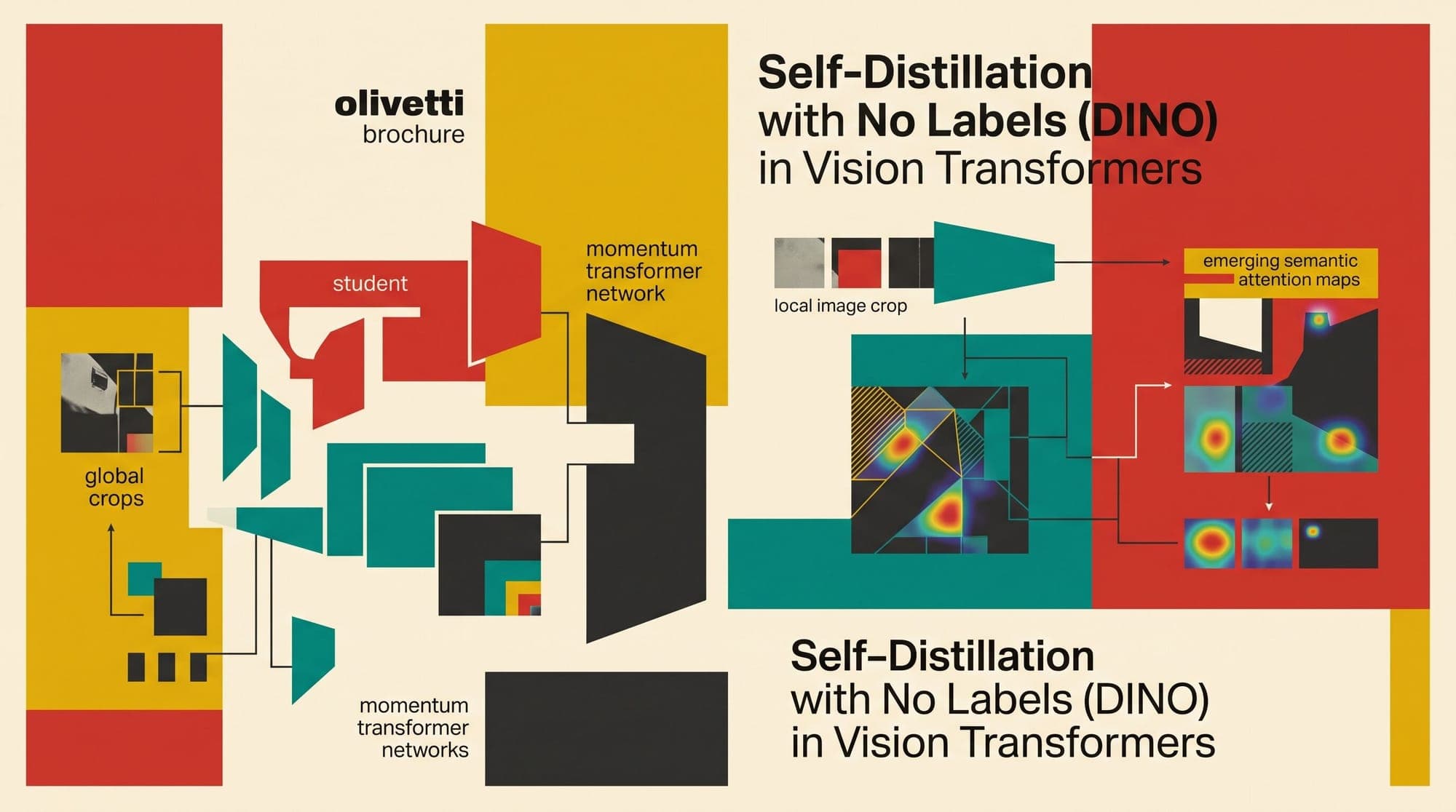
  14. Self-Distillation with No Labels (DINO): How Momentum Teachers, Centering, and Sharpening Emerge Semantic Attention in Vision Transformers

    Self-Distillation with No Labels (DINO): How Momentum Teachers, Centering, and Sharpening Emerge Semantic Attention in Vision Transformers When the Vision Transformer (ViT) was introduced by Dosovitskiy et al. in 2020, standard wisdom suggested that transformers required massive supervised corpora (such as JFT-300M) to overcome their lack of convolutional inductive biases. Unlike Convolutional Neural Networks (CNNs), which bake translation equivariance and local receptive fields directly into t

    AI
    8 min read
  15. Dynamic Tool Synthesis in Production AI Agents: Architecture, AST Validation, Sandboxed Execution, and Lifecycle Governance

    Dynamic Tool Synthesis in Production AI Agents: Architecture, AST Validation, Sandboxed Execution, and Lifecycle Governance Standard tool-augmented AI agents rely on pre-configured, static API registries. Developers define a fixed set of JSON schemas, OpenAPI specifications, or Python wrapper functions at build time, and the language model selects from this catalog during execution. While sufficient for narrow, deterministic tasks, static registries encounter severe operational bottlenecks in o

    AI
    9 min read
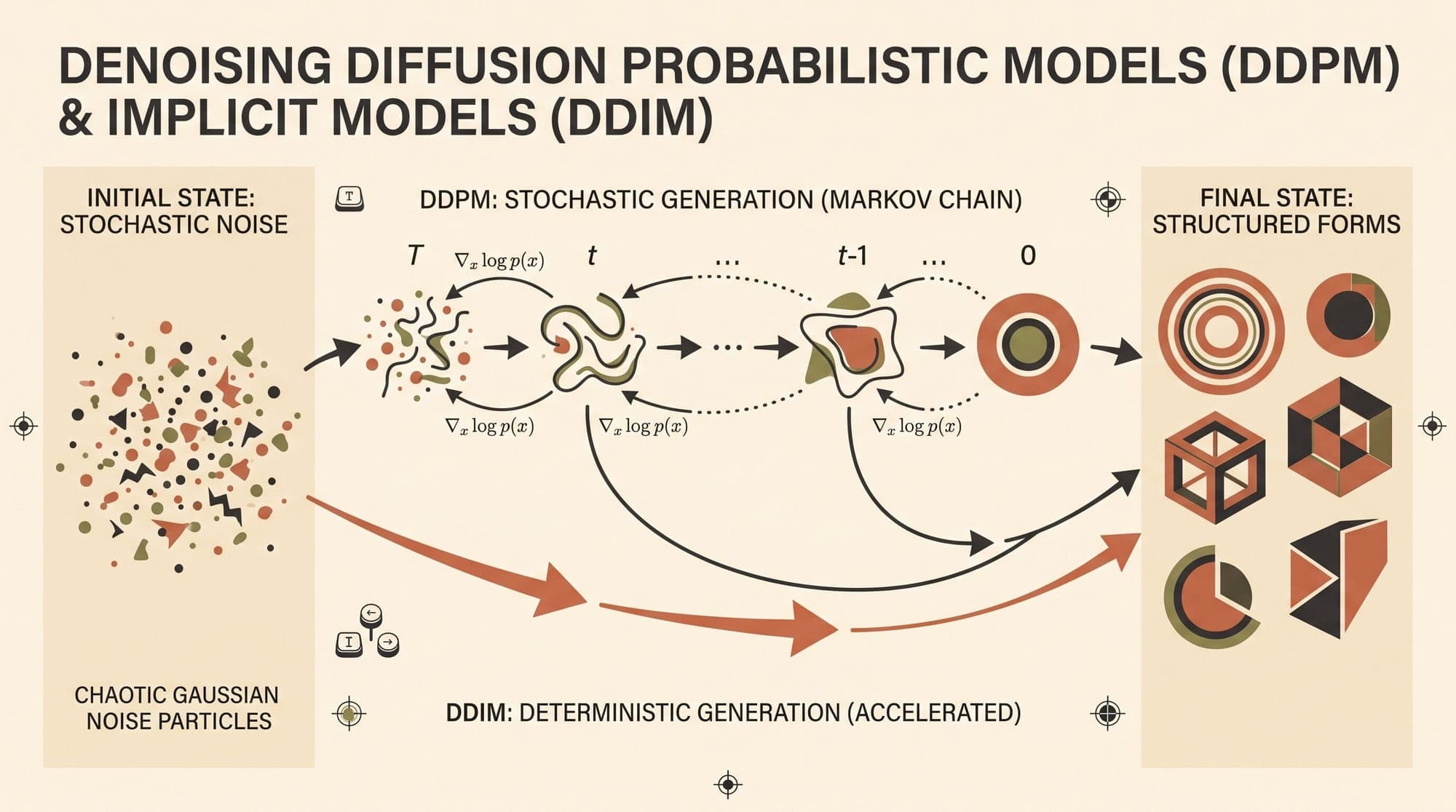
  16. Denoising Diffusion Probabilistic Models and DDIM: Mathematical Foundations, Variance Schedules, and Fast Deterministic Sampling

    Generative modeling in continuous state spaces underwent a fundamental transformation with the formulation of Denoising Diffusion Probabilistic Models (DDPM) by Ho et al. (2020), building on the non-equilibrium thermodynamics foundations established by Sohl-Dickstein et al. (2015). Prior to diffusion models, deep generative synthesis was dominated by Generative Adversarial Networks (GANs), which suffered from training instability and mode collapse, and Variational Autoencoders (VAEs), which ofte

    AI
    11 min read
  17. Neural Ordinary Differential Equations: How Continuous-Depth Dynamics and Adjoint Sensitivity Solve the Memory Bottleneck in Deep Learning

    Neural Ordinary Differential Equations: How Continuous-Depth Dynamics and Adjoint Sensitivity Solve the Memory Bottleneck in Deep Learning Deep neural networks are traditionally structured as a discrete sequence of layers. An input tensor passes through layer after layer, transforming its representation at fixed, integer time steps. In standard architectures like Residual Networks (ResNets), each successive block computes an additive update: h_{t+1} = h_t + f(h_t, \theta_t) In 2018, researche

    AI
    7 min read
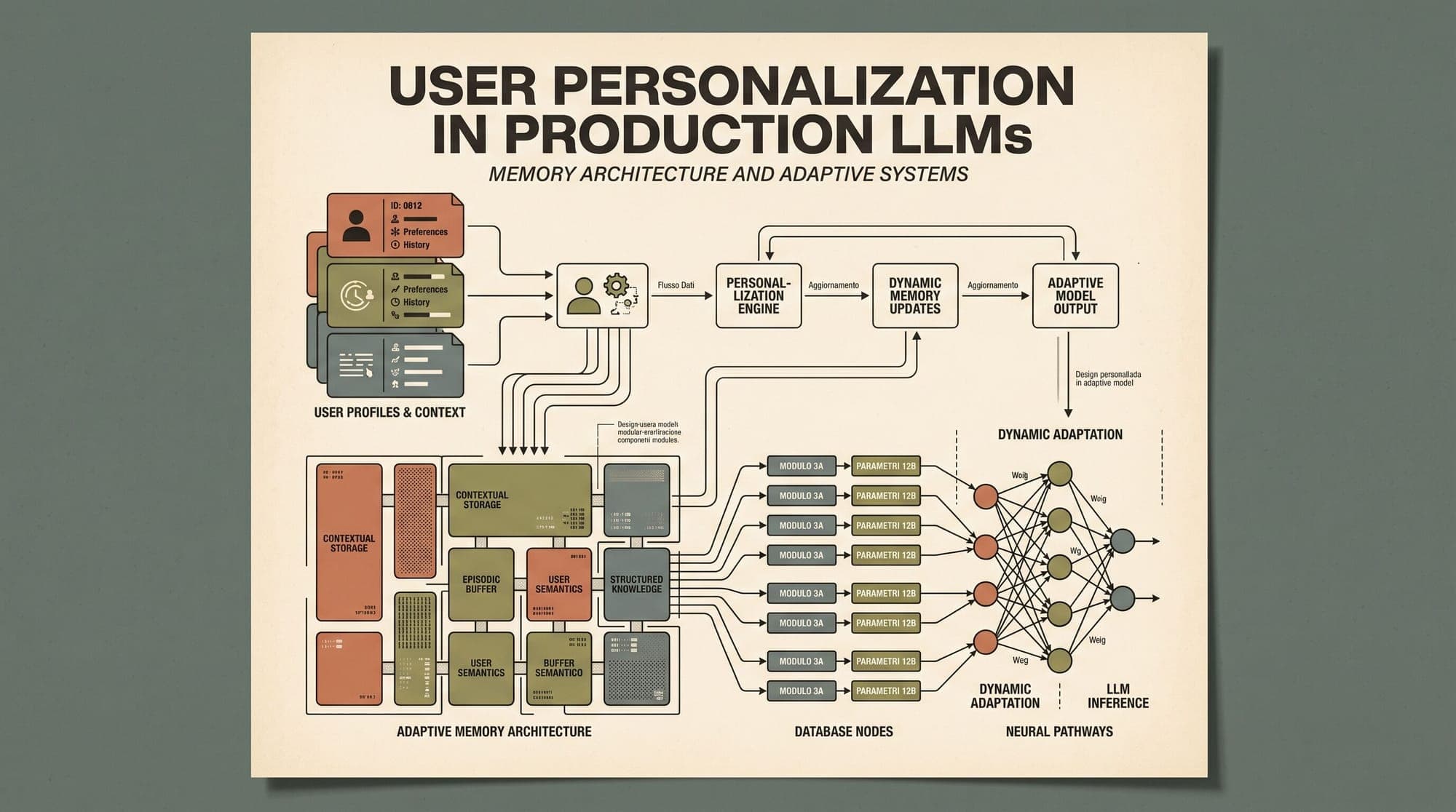
  18. Long-Term User Personalization in Production LLMs: Architecture, Dynamic Profiling, and Privacy Boundaries

    Standard conversational AI deployments treat each user session as an isolated interaction or rely on naive sliding-window context histories. While extending context windows allows models to process thousands of tokens from previous turns, stuffing raw conversational history into prompt contexts introduces severe serving inefficiencies, inflates token economics, and fails to synthesize stable user profiles over time. Deploying long-term personalization in production large language model (LLM) ap

    AI
    5 min read
  19. Masked Autoencoders: How Asymmetric Encoders, High Masking Ratios, and Pixel Reconstruction Scaled Vision Transformers

    Masked Autoencoders: How Asymmetric Encoders, High Masking Ratios, and Pixel Reconstruction Scaled Vision Transformers Self-supervised pre-training transformed natural language processing through masked language modeling, popularized by BERT (Devlin et al., 2018). By hiding a subset of input tokens and training a bidirectional Transformer to predict the missing words from context, models learned rich, generalizable linguistic representations without manual annotations. Adapting this masked pre

    AI
    11 min read
  20. Event-Driven AI Agent Architectures in Production: Kafka Streams, Webhook Ingestion, Idempotent Actor State Machines, and Dead-Letter Recovery

    Event-Driven AI Agent Architectures in Production: Kafka Streams, Webhook Ingestion, Idempotent Actor State Machines, and Dead-Letter Recovery Early AI agent prototypes relied almost exclusively on synchronous HTTP request-response loops: a client dispatched a prompt, and a monolithic backend process held an open socket while an LLM reasoned, called tools, inspected results, and generated final responses. In production, this synchronous pattern collapses under the operational realities of auton

    AI
    7 min read