

Security vendors now publish prompt-level telemetry about what employees leak into AI tools. The numbers disagree, the samples are undisclosed, and most of the enforcement is newer than it looks.
The paste is the breach vector now
There are no attackers in the most common AI data incident. An employee pastes semiconductor source code into a chatbot to debug it, or uploads an insurance claim to summarize it, and the data leaves the company's control. Samsung discovered this in March 2023, when three incidents at its semiconductor division, including internal source code entered into ChatGPT, prompted a company-wide restriction on generative AI tools, reported by Bloomberg on May 2, 2023.
Three years on, the vendors that guard the paste have begun publishing what they see. The headline figures, each measured differently, each on an undisclosed sample of the vendor's own customer base:
- Harmonic analyzed tens of thousands of prompts to ChatGPT, Copilot, Gemini, Claude and Perplexity during Q4 2024 and found 8.5 percent of employee prompts contained sensitive data. In its 2025 data, it attributed 71.2 percent of sensitive exposures to ChatGPT alone.
- LayerX's State of AI Usage Report 2026 puts the share of enterprise AI conversations containing sensitive data above 6 percent (6.48 percent across its platform), with ChatGPT at 8.38 percent and Microsoft 365 Copilot at 3.65 percent. DeepSeek, with minimal adoption inside its sample, showed the highest rate at 12.63 percent.
- Cyberhaven's 2026 AI Adoption and Risk Report claims 39.7 percent of all AI interactions involve sensitive data, with the average employee inputting sensitive data into an AI tool once every three days.
That spread, 6 percent to 40 percent, is not disagreement about reality. It is disagreement about the meter. Cyberhaven counts whatever each customer's own labels mark sensitive, which inflates the share wherever labels are broad. Harmonic and LayerX classify prompt text themselves. As with LLM API pricing, the first job is reading the unit before comparing the number.
What actually leaves
The category mix is more alarming than the totals. In Harmonic's Q4 2024 analysis, customer data including billing and authentication information was 46 percent of leaked prompts, employee data such as payroll and PII was 27 percent, and legal and financial data 15 percent. The remaining sliver, 6.88 percent, was security information: penetration test results, network configurations, incident reports. An employee pasting a pentest summary into a public chatbot hands a stranger, plus the model's operators, a map of the company's holes.
Volume-wise, Zscaler's ThreatLabz 2026 AI Security Report, measured across the traffic it proxies, recorded 18,033 TB of enterprise data sent to AI and ML applications in a year, up 93 percent, across 989.3 billion AI/ML transactions and more than 3,400 distinct AI applications, itself a fourfold increase year over year. Its DLP rulebase flagged 410 million violations for ChatGPT alone (up 99 percent), 242 million for the Codeium coding assistant, and 31 million for GitHub Copilot. Grammarly absorbed the most enterprise bytes, 3,615 TB, more than ChatGPT's 2,021 TB. The writing-assistance tab is quietly one of the largest data exits in the modern office.
The economics, from IBM's 2025 Cost of a Data Breach Report produced with the Ponemon Institute: breaches involving shadow AI, meaning unsanctioned tools, averaged $4.63 million, and organizations with high shadow AI levels paid $670,000 more per breach than peers with little or none ($4.74 million versus $4.07 million). Shadow AI factored into roughly one in five breaches studied, and those incidents compromised customer PII more often (65 percent versus a 53 percent global average).
The four lanes of enforcement
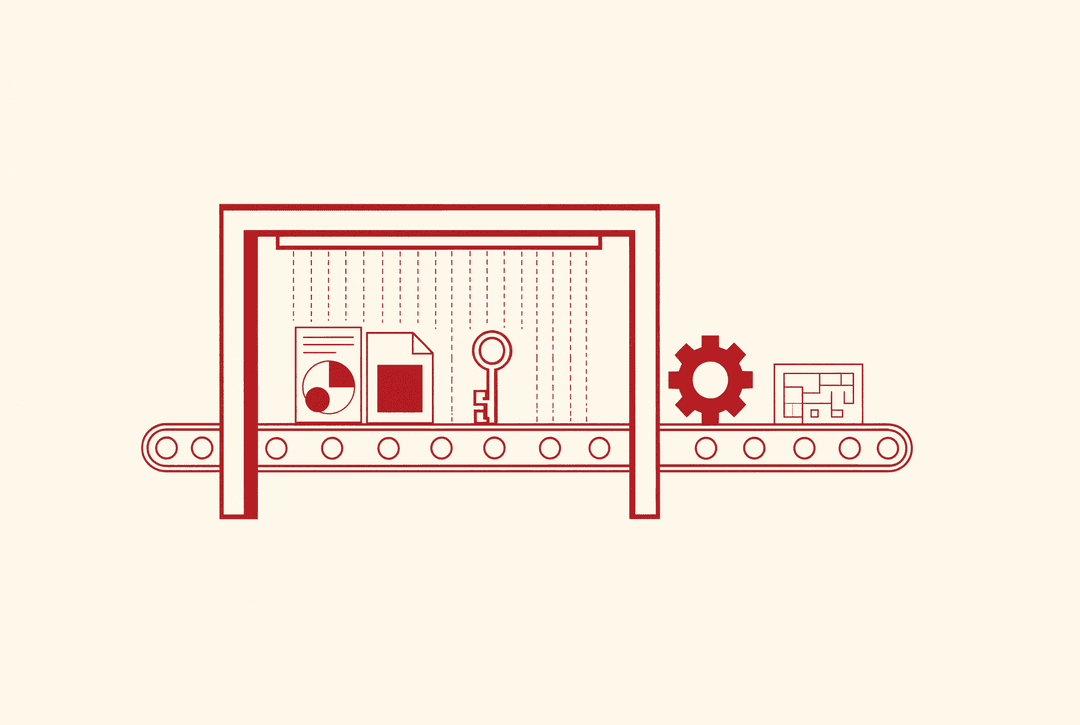
The product category, usually sold as GenAI DLP or prompt security, splits by where the control sits relative to the browser tab.
Inside the assistant. Microsoft Purview's DLP for Microsoft 365 Copilot is the deepest native integration. If a prompt matches configured sensitive information types, Copilot can be restricted from sending it to external web search, or from processing it at all, in which case it returns no response. The prompt-processing block is rolling out as of a documentation update dated November 10, 2026, and was still in preview during the fall. Purview also extends to ChatGPT Enterprise and Enterprise Claude through connectors, though as independent write-ups of the December 2025/January 2026 rollout note, those connectors detect and report; the actual blocking lives in Edge for Business and network partners. Microsoft's own licensing fine print matters here: the richest controls presuppose E5-style licensing.
Browser extensions. Harmonic Protect, LayerX and similar tools run as extensions across Chrome, Edge, Firefox and Safari, classify the prompt in the last moment before send, and offer warning, redaction or block. Harmonic runs small language models on the endpoint so prompt text is not shipped to a vendor cloud, and claims 96 percent greater accuracy than legacy pattern-based DLP. The lane's weakness is structural: an extension guards managed browsers, not phones, not personal laptops, not desktop AI apps.
Endpoint agents. Nightfall and Cyberhaven deploy an agent that watches clipboard, file and network activity across surfaces, and now also covers the agent era: Nightfall advertises inspection of local stdio and remote HTTP MCP servers, IDE-embedded assistants, and tool calls and responses, claiming roughly 95 percent detection precision against a 5-to-25 percent range it attributes to regex-era DLP. Cyberhaven leans on data lineage to follow the document rather than the string. Agent-based coverage is the broadest control surface and the hardest deployment: IT must own the device.
Proxy and SASE. Zscaler and Netskope evaluate prompts as they cross the gateway and can allow, redact or block, with Zscaler describing context-aware inspection weighing user, destination app and data type per request. Its own telemetry shows what the blunt version of this lane does: 39 percent of AI/ML transactions were blocked outright, with Grammarly, GitHub Copilot and ChatGPT the most-blocked apps. Full-tunnel proxies see everything routed through them and nothing that does not, which is precisely the unmanaged-device problem again.
What the guards do not catch
Three gaps survive every lane.
First, semantics. Traditional sensitive-information-type detection matches patterns: Social Security numbers, card numbers, IBANs. It does not know that "Project Obsidian launch date" is confidential or that the pasted function is proprietary. This is why the newer entrants sell small language models and lineage instead of regex, and why vendors' accuracy comparisons, mostly self-published, deserve the same skepticism the industry applies to model benchmarks.
Second, the personal account. Cyberhaven found 32.3 percent of ChatGPT usage, 58.2 percent of Claude usage and 60.9 percent of Perplexity usage in its sample came through personal accounts that bypass SSO, logging and retention policy. Harmonic found 54 percent of sensitive prompts entered on ChatGPT's free tier, whose terms historically permit training on inputs unless the user toggles it off. No enterprise control reaches an employee's phone browser logged in with a Gmail account, which is why every report in this category doubles as an argument for providing sanctioned tools. Gartner's Arun Chandrasekaran put it plainly in CSO's analysis: employees use shadow AI because IT has not given them usable alternatives.
Third, agents. The exposure is no longer only what an employee types. Coding assistants and agent platforms read repositories, clipboards and file systems directly. Cyberhaven measured developer coding-assistant use at 49.5 percent by December 2025, up from about 20 percent at the start of the year, with nearly 23 percent of its organizations running agent-building platforms. The MCP-era coverage that endpoint vendors now advertise is an admission that the typed prompt was yesterday's exfiltration channel.
The contractual promise is not a control
One more distinction the vendors themselves make. Enterprise AI agreements generally promise not to train on customer input, and data specialists quoted in the CSO piece warn against treating that as sufficient. Trade secret law protects information only if the owner takes reasonable measures to keep it secret, and an IP attorney's framing in the same analysis is that contractual no-training clauses alone will not carry that burden in court. Enforcement logs, policy and blocking history are what the "reasonable measures" argument actually runs on. A DLP deployment is therefore partly a legal artifact, which is worth remembering when the CFO asks why security is buying another console.
What to demand before buying
There is no reason to restate the pitch decks. The checklist that falls out of the data: demand the denominator of any leak statistic the vendor quotes you (sample size, classification method, definition of sensitive); test detection on your own unstructured crown jewels, source code and deal terms, not on synthetic SSNs; ask where classification runs, endpoint or vendor cloud; ask what happens on personal devices, because the answer is nothing; and if agents or IDE assistants are in use, ask specifically whether MCP and tool-call traffic is inspected, since the coverage claims there are newest and thinnest.
The honest summary of the market in late 2026: the measurement is real, the enforcement is partial, and the biggest leak, personal accounts, is outside every product on this list. The number that should govern budget is not 8.5 percent or 39.7 percent. It is the one thing all these vendors agree on, which is that employees are pasting faster than any guard can classify.
Sources
- Nearly 10% of employee genAI prompts include sensitive data, CSO Online, Feb 10, 2025 (Harmonic Q4 2024 analysis; Forrester and Gartner commentary)
- LayerX State of AI Usage Report 2026 (PDF)
- Sensitive Enterprise Data Is Flowing Into AI Tools at Scale, Cyberhaven, Feb 11, 2026
- Zscaler ThreatLabz 2026 AI Security Report findings (infographic PDF) and Zscaler product blog on securing GenAI usage
- IBM Cost of a Data Breach Report 2025; shadow AI figures corroborated via Nudge Security's report summary
- Samsung Bans Staff's AI Use After Spotting ChatGPT Data Leak, Bloomberg, May 2, 2023
- Microsoft Purview: DLP for Microsoft 365 Copilot, Copilot Chat and Cowork (Learn, updated Nov 10, 2026) and Microsoft Tech Community blog on DLP for Copilot interactions
- Extending Purview into Enterprise Claude and Enterprise ChatGPT, Caleb McDowell (independent analysis of connector enforcement limits)
- Harmonic DLP for GenAI product page (endpoint small language models, accuracy claim)
- Nightfall comparisons of Forcepoint and Netskope DLP (prompt inspection, MCP coverage, precision claims)
- How often employees paste sensitive data into AI tools, Jazz Security (cross-vendor denominator critique)
