

The writing of production code is mostly settled. The checking of it is a market in motion, and for the first time the pricing pages disagree about what the customer is even buying.
Here is the problem the tools are chasing. Veracode has now tested more than 100 AI models on security-sensitive coding tasks across four years of its GenAI Code Security Report. The average security pass rate is 56 percent. In the very first report it was 55 percent. Roughly 44 percent of AI code generation tasks introduced a risky vulnerability, and the rate has not moved while the volume of AI-generated code entering pipelines has exploded. The best model in the Summer 2026 dataset, GPT-5.5, still failed nearly one in three security tasks. Coding-specialized models averaged 51 percent, general-purpose models 52 percent: being trained to write code faster does not mean writing it safer. The failure classes are uneven and unglamorous, 83 percent pass on SQL injection but 15 percent on cross-site scripting and 12 percent on log injection (Veracode report, Veracode blog).
The consequences are no longer hypothetical. The Cloud Security Alliance's tracking project counted six CVEs attributable to AI-generated code in January 2026, fifteen in February, thirty-five in March, and 74 across the project's lifetime, with Claude Code implicated in 27 of them (CSA Lab Space). On the survey side, Aikido's 2026 State of AI in Security and Development report found 69 percent of organizations had found vulnerabilities introduced by AI-generated code, one in five had experienced a serious security incident linked to it, and only 21 percent believe AI will ever write secure code without human oversight (Aikido). Not all measurements are this alarming. AppSec Santa's own 2026 study ran 522 code samples from six LLMs through five SAST tools and got a 25.7 percent confirmed vulnerability rate, lower than the roughly 40 percent of older academic work, which the author attributes to model improvements (AppSec Santa). Snyk's marketing page goes further than its data, claiming 65 to 70 percent of production code is now AI-generated and that nearly half of it contains vulnerabilities. Treat that as a vendor position, not a census.
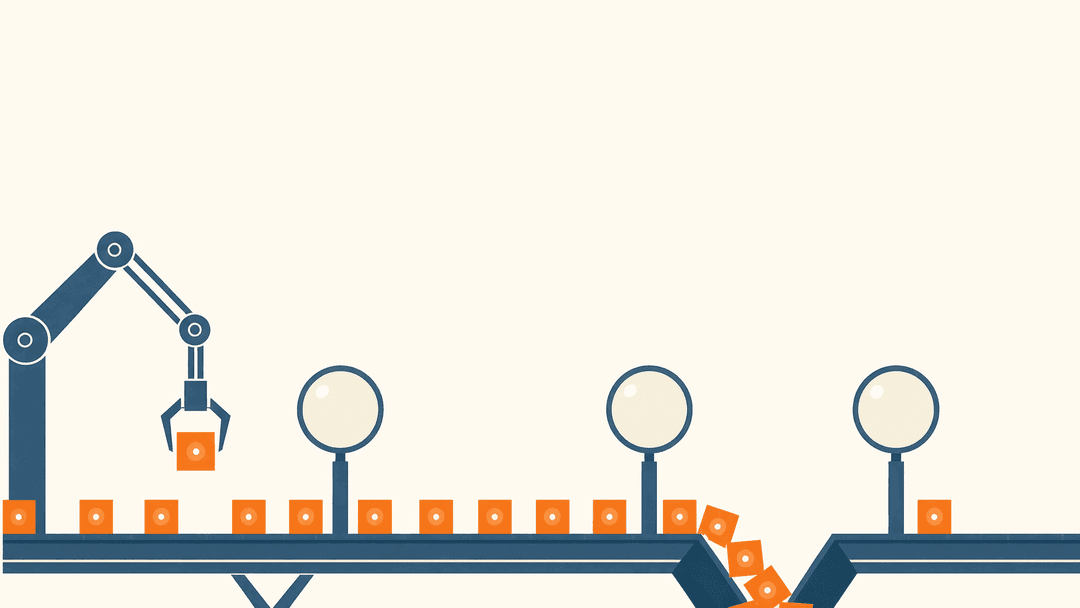
What matters for a buyer is that these numbers arrive in a market that is still priced for human typists. Four lanes have emerged, and each one meters something different.
Lane 1: per-active-committer platforms
This is the incumbent shape. GitHub sells its security stack as two add-ons on top of Team or Enterprise plans: GitHub Code Security at $30 per active committer per month, which covers CodeQL scanning, Copilot Autofix, dependency review and premium Dependabot, and GitHub Secret Protection at $19, with both together at $49. An "active committer" is anyone who pushed at least once to a protected repository in the last 90 days (GitHub, CRACI breakdown).
Snyk meters the same headcount. Its Team plan runs $25 per contributing developer per month, with a five-developer minimum and a ten-developer cap, and a contributing developer is defined by a commit to a monitored private repository within 90 days (Snyk plans, Checkmarx pricing guide). Semgrep is the same shape with separate module prices: Code at $30 per contributor per month, Supply Chain at $30, Secrets at $15, and a free tier covering up to 10 contributors (Semgrep pricing, AppSec Santa comparison).
For a 50-developer team the worked math is easy: roughly $15,000 to $20,000 a year in this lane before negotiations.
Lane 2: the per-seat scanner that lives inside the agent
Semgrep Guardian is the clearest attempt to reprice the problem for agentic development. It is a scanner that runs inside Claude Code, Cursor and similar harnesses through an MCP server, hooks and skills, checking generated code and drafted fixes before a commit exists, not at PR time (Semgrep Guardian). The price is $10 per seat per month after a 30-day trial, or $40 bundled with Semgrep Code.
The vendor argument for putting the meter here is a cost gradient: Semgrep prices a fix at one cent in the coding agent, a dollar in CI, ten dollars in production code, ten thousand in a pentest and over a hundred thousand in an incident (Semgrep blog). Its operating claims are similarly self-reported: Guardian catches an average of four issues per developer per week, and at Semgrep's own usage it fixes 3.6 times more issues at 38 times the rate of PR-stage findings. One B2B SaaS deployer reportedly blocks over 180 critical issues weekly (Semgrep introduction post). None of it is independently benchmarked.
Lane 3: the install-time supply-chain gate
Socket does not scan your code. It scans what your code pulls in, using 70-plus behavioral risk signals to catch malicious packages, typosquats and obfuscated backdoors rather than matching against CVE lists, which is precisely the risk an agent creates when it hallucinates a dependency name. Its pricing is per developer seat with a scan cap bolted on: free at 1,000 scans per month, Team at $25 per seat per month with a five-seat minimum and 5,000 scans, Business at $50 per seat with a 20-seat minimum, adding SBOM import, SSO and AI model scanning (Socket pricing). Socket says it protects 27,000 organizations and 1.5 million repositories. In May 2026 it raised a $60 million Series C at a $1 billion valuation, and its April 2026 acquisition of Secure Annex extended coverage to browser extensions, editor extensions, MCP servers and AI tools (DevTune profile).
Note the unit: seats plus scans. This is the only lane where the meter can bind before headcount does, because an agent fleet installs packages at machine speed.
Lane 4: quote-only AI-native AppSec
Endor Labs sells an AI-native platform for teams that generate more findings than humans can triage. Its pitch is reachability analysis at function level, reporting up to a 97 percent reduction in SCA alerts, a vendor best-case figure from its own customer data, and an AI Security Review that runs three agents over every pull request, which Endor's June 2026 benchmark claims finds three times more real vulnerabilities than frontier models reviewing alone (AppSec Santa profile, Endor Labs). There is no free tier and no list price: every route goes through sales, which is itself a signal about who the customer is assumed to be, an AppSec team with a budget rather than a developer with a card. The company raised $93 million to expand the platform (HPCwire/BigDATAwire). Snyk and Endor Labs were both named Leaders in Forrester's Q4 2026 Wave on agentic development security tools, a category that did not have a pricing page eighteen months ago (Snyk, Endor Labs).
Beneath all four lanes sits the open-source floor: Semgrep's CLI, Gitleaks and Trivy remain free, and enough teams now wire them into the coding agent itself as a zero-license scanner.

What the meters get wrong
The shared assumption in lanes one and four is that the bill tracks humans who commit. In 2026 that assumption is doing less work. Agents commit through human accounts, so the committer count does not rise no matter how much code arrives: a Cursor engineering report, cited by Semgrep, says the top one percent of AI-active developers generate 46 times more AI-written code per day than the median (Semgrep blog). Your seat bill stays flat while your generated-lines-per-week, and therefore your unreviewed risk, does not.
The visible market responses are small but pointed. Snyk has moved its enterprise lane to a credit card, one credit to one dollar, with code and open-source scanning billed per active contributor per day rather than per month, the first meter here with a time dimension (Snyk plans). Guardian's $10 add-on prices the generation moment itself. Socket caps scans, not just seats. Nobody yet sells you a plan metered per AI-generated line or per agent run, probably because per-line pricing would make today's vulnerability rates visibly unaffordable.
For a buyer in late 2026 the short checklist is boring and useful. Ask which 90-day window defines your "active committer" and whether agent commits count. Ask what happens at the free tier's edge: ten contributors, 1,000 scans. Ask which numbers on the vendor's slide came from a benchmark anyone outside the company ran, because the honest independent studies disagree with each other by a factor of two on how bad AI code actually is. And budget for the lane mismatch: the scanners are priced for a world where one seat produced one stream of keystrokes, and you are now paying for that world while generating code at a rate it never assumed.
The code is written. The checking is where the money, and the differentiation, is moving.
Sources
- Veracode 2026 GenAI Code Security Report: https://www.veracode.com/resources/analyst-reports/2026-genai-code-security-report
- Veracode blog on the 2026 report: https://www.veracode.com/blog/2026-genai-code-security-report-ai-risk
- Cloud Security Alliance Lab Space, AI-generated code CVE tracking: https://labs.cloudsecurityalliance.org/research/csa-research-note-ai-generated-code-vulnerability-surge-2026
- Aikido, 2026 State of AI in Security and Development: https://www.aikido.dev/reports/2026-state-of-ai-in-security-development
- AppSec Santa AI security statistics and own 2026 code study: https://appsecsanta.com/research/ai-security-statistics
- AppSec Santa Semgrep vs Snyk: https://appsecsanta.com/sast-tools/semgrep-vs-snyk
- AppSec Santa Endor Labs profile: https://appsecsanta.com/endor-labs
- Snyk plans and pricing: https://snyk.io/plans
- Snyk homepage claims and Forrester Wave: https://snyk.io
- Checkmarx Snyk pricing guide: https://checkmarx.com/learn/snyk/snyk-pricing-free-vs-paid-plans-tco-and-what-users-have-to-say
- Semgrep pricing: https://semgrep.dev/pricing
- Semgrep Guardian: https://semgrep.dev/guardian
- Semgrep, Introducing Guardian: https://semgrep.dev/blog/2026/introducing-semgrep-guardian-real-time-security-for-ai-written-code
- Semgrep, Agentic AppSec Platform: https://semgrep.dev/blog/2026/agentic-appsec-platform
- Semgrep, AppSec at 60K LOC a day: https://semgrep.dev/blog/2026/appsec-program-going-from-zero-to-60k-lines-of-code-a-day
- Socket pricing: https://socket.dev/pricing
- DevTune Socket profile (funding, Secure Annex acquisition): https://devtune.ai/verticals/devsecops-application-security/socket
- Endor Labs AI Security Review: https://www.endorlabs.com/use-case/ai-security-review
- Endor Labs raises $93M: https://www.hpcwire.com/bigdatawire/this-just-in/endor-labs-raises-93m-to-expand-ai-powered-appsec-platform
- GitHub security plans: https://github.com/security/plans
- CRACI GitHub Advanced Security pricing breakdown: https://craci.com/compare/github-advanced-security
