
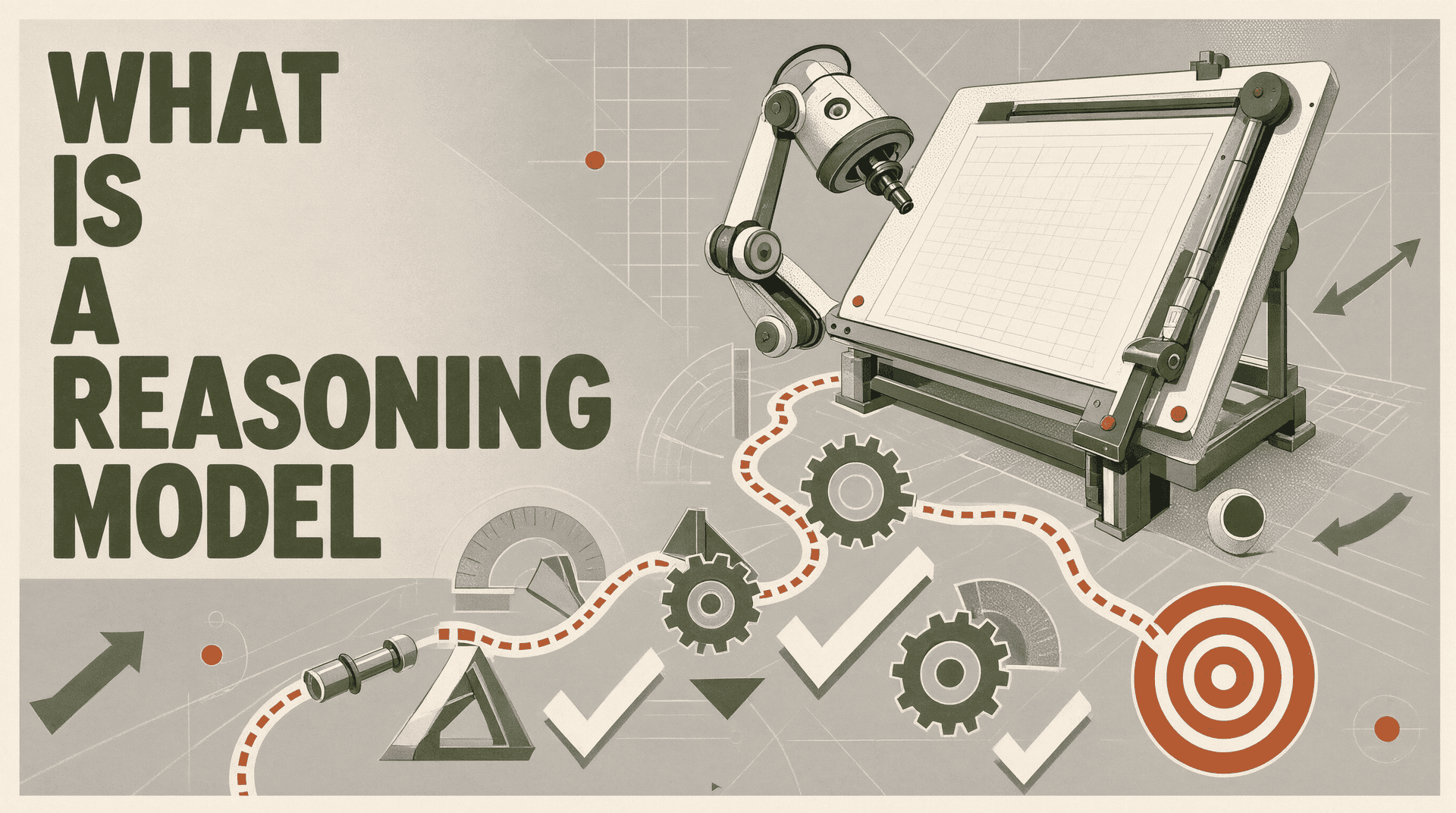
Most language models answer immediately. Ask one for the solution to a math problem it has never seen and it produces its best guess token by token, the same way it writes an email. A reasoning model does something different: it first generates a long internal draft, a chain of thought, working through the problem step by step, checking its own work, and trying a different approach when one fails. Only then does it write the answer you see.
OpenAI shipped the first mainstream version of this idea in September 2024. The company's description of what made the o1 model different was blunt: o1 "thinks before it answers" and can produce a long internal chain of thought before responding to the user (OpenAI, Learning to reason with LLMs). By 2026, every major lab ships some version of the capability, and "thinking" is now a slider in the chat app rather than a separate product line.
The trick is not new. The training is.
Chain-of-thought generation, the "let's think step by step" trick, has existed since 2022 as a prompting technique: ask a model to show intermediate steps and its arithmetic and logic scores jump. But prompt-induced chains of thought are shallow. The model recites reasoning-shaped text without learning to actually search the solution space.
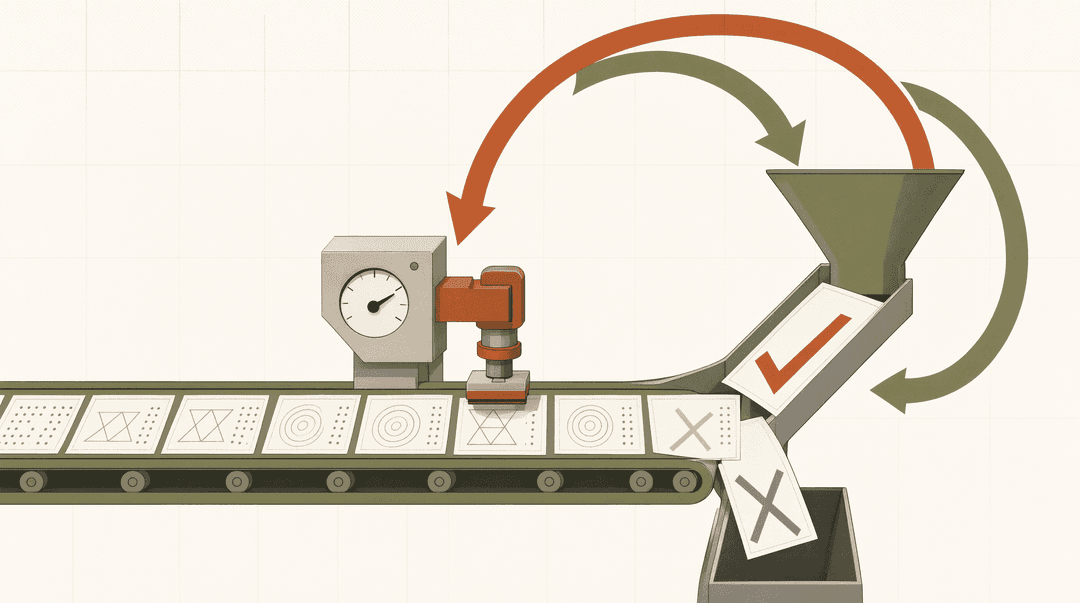
What reasoning models add is training. OpenAI's o1 was trained with large-scale reinforcement learning that "teaches the model how to think productively using its chain of thought," and the model learned to recognize and correct its own mistakes, break hard steps into simpler ones, and backtrack when a branch fails (OpenAI, Learning to reason with LLMs). The chain of thought is no longer a prompt trick. It is a behavior the model was rewarded for developing.
DeepSeek made the mechanism clearer because it published the recipe. DeepSeek-R1-Zero, described in a paper released in January 2025, was a base model dropped directly into reinforcement learning with no human-written reasoning examples at all (DeepSeek-AI, arXiv:2501.12948). Rewards came from rules: did the final answer match the correct solution, was the format parseable. Out of that simple setup, longer thinking times emerged on their own during training. The model progressively allocated more tokens to hard problems, and behaviors like self-reflection and "aha moments," where it stops and rechecks its work, appeared without being programmed (DeepSeek-AI, arXiv:2501.12948). The training algorithm, GRPO, scores a group of candidate answers to the same question and rewards the ones that beat the group average, which removes the need for a separate value network (Nature, 2025).
The general lesson: reasoning capability comes from optimizing against verifiable rewards over many generated attempts, so the model internalizes a search process it used to fake.
A second scaling axis
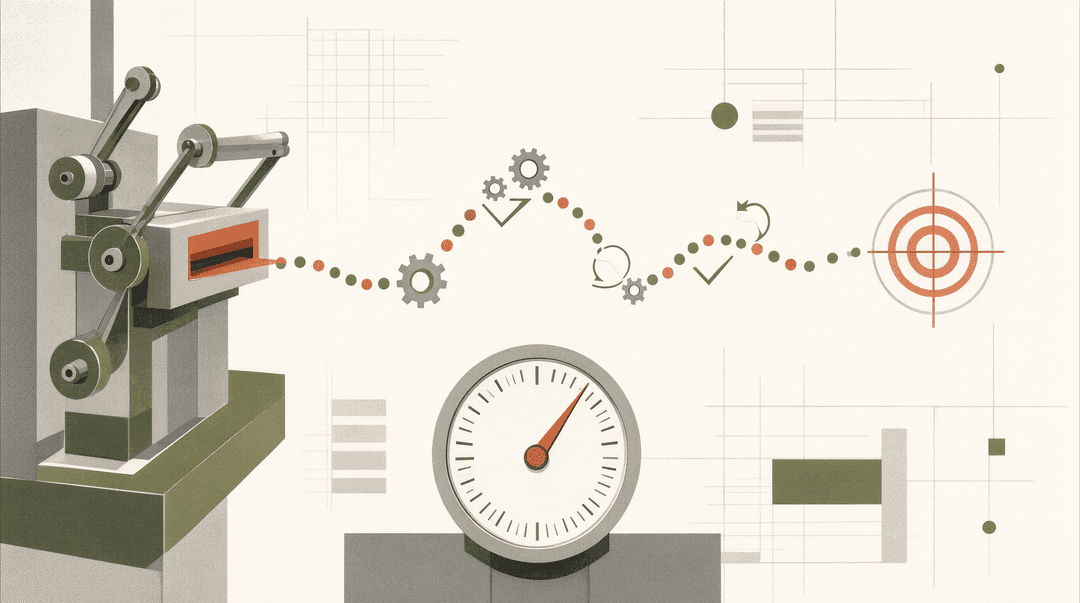
Pre-training scaled by adding data, parameters and training compute. Reasoning models introduced an axis you can turn at inference time. OpenAI reported that o1 performance improves with both more reinforcement learning during training and more time spent thinking on each question (OpenAI, Learning to reason with LLMs). On easy questions the model can think for a few hundred tokens. On a competition problem it may generate thousands before committing to an answer.
Anthropic frames this as "serial test-time compute": accuracy on, for example, math questions improves logarithmically with the number of thinking tokens the model is allowed to sample (Anthropic, Claude's extended thinking). Logarithmic is the important word. The first doubling of thinking time buys a lot, the fifth buys little.
The effect can be reproduced cheaply. The s1 paper showed that supervised fine-tuning on just 1,000 reasoning examples, 26 minutes of training on 16 H100 GPUs, plus a test-time technique called budget forcing, capped thinking when it ran long or appended "Wait" to push the model to keep going, reproduced OpenAI's test-time scaling curves (Slagle et al., arXiv:2501.19393). Test-time scaling was not a secret recipe locked in one lab's datacenter.
From o1 to everywhere
- September 12, 2024: OpenAI releases o1-preview and o1-mini; the full o1 follows on December 5, 2024 (Wikipedia, OpenAI o1; The Verge, OpenAI releases o1).
- January 2025: DeepSeek-R1 arrives with open weights, reporting performance "comparable to OpenAI's o1 model" on reasoning benchmarks (DeepSeek-AI, arXiv:2501.12948).
- February 2025: Anthropic ships Claude 3.7 Sonnet, pitched as the first hybrid reasoning model: one model that answers instantly or switches into extended thinking, with an API parameter that sets a thinking budget (Anthropic, Claude 3.7 Sonnet and Claude Code).
- The same window brings Google's Gemini thinking models into the lineup, and labs converge on giving users a knob for how long the model thinks before answering.
The benchmark headline these models chased: on ARC-AGI, a visual-puzzle suite designed to resist memorization, OpenAI's o3 scored 87.5% on the semi-private test set in early 2025. ARC-AGI's creator François Chollet called the o3 result a genuine breakthrough while explicitly noting the benchmark is not an AGI acid test (arXiv:2501.07458, Forrester).
The cost of thinking
Reasoning tokens are not free. They are generated, stored in the context window and billed as output: Anthropic's pricing folded extended thinking tokens into the standard $15 per million output tokens, and Bedrock documents that thinking tokens count toward the context window (AWS). A question that costs a fraction of a cent to answer instantly can cost cents when the model drafts ten thousand tokens of scratchpad first. There is also latency: the answer arrives only after the whole internal monologue streams out, one token at a time.
Hybrid designs are the industry's answer. Claude 3.7's toggle made "think or don't" a per-request decision, and every major API now exposes some form of reasoning-effort control. The practical rule that fell out of two years of experience: instant mode for extraction, rewriting, simple lookups; thinking mode for multi-step math, debugging, planning and other tasks where checking and backtracking pay.
What reasoning models are still bad at
Better reasoning did not make models honest about uncertainty. Meta's AbstentionBench, a benchmark of 20 datasets covering unanswerable questions, false premises and underspecified requests, found that reasoning fine-tuning degrades the ability to decline to answer, by 24% on average, even in the math and science domains reasoning models are trained on. The models reason fluently about a question that has no answer and then state a wrong answer confidently (Kirichenko et al., arXiv:2506.09038). Scaling models did not fix it; a well-worded system prompt helps the score but not the underlying problem.
A second caution came with the first wave of visible traces: the chain of thought is a draft, not a transcript of the computation, and models can produce reasoning that reads like diligence while the conclusion was always where the probabilities pointed. Treat visible thinking as a debugging aid and a cost signal, not as proof the model did what it shows.
The short version
A reasoning model is an ordinary transformer that was trained, usually with reinforcement learning against verifiable rewards, to spend extra tokens drafting and checking before it commits. It buys real gains on hard, checkable problems and it buys them along an axis labs can dial: more thinking per query costs more money and more time, with returns that diminish. It does not buy reliability about what a model does not know, which is why the standard advice in 2026 is still: turn thinking on for problems with an answer you could verify, leave it off for everything else.
Sources
- OpenAI: Learning to reason with LLMs
- DeepSeek-AI: DeepSeek-R1: Incentivizing Reasoning Capability in LLMs via Reinforcement Learning
- Nature: DeepSeek-R1 incentivizes reasoning in LLMs through reinforcement learning
- Anthropic: Claude 3.7 Sonnet and Claude Code
- Anthropic: Claude's extended thinking
- AWS: Claude 3.7 Sonnet hybrid reasoning model in Amazon Bedrock
- Slagle et al.: s1: Simple test-time scaling
- Kirichenko et al.: AbstentionBench: Reasoning LLMs Fail on Unanswerable Questions
- arXiv: Understanding and Benchmarking AI: OpenAI's o3 Is Not AGI
- Forrester: OpenAI's o3: Hype Or A Real Step Toward AGI?
- Wikipedia: OpenAI o1
- The Verge: OpenAI releases new o1 reasoning model
