
The short answer
A foundation model is an AI model trained on broad data at scale, then adapted to many different downstream tasks. The term comes from a 2021 Stanford report by Rishi Bommasani and colleagues at what became the Center for Research on Foundation Models: "any model that is trained on broad data (generally using self-supervision at scale) that can be adapted (e.g., fine-tuned) to a wide range of downstream tasks." Their examples at the time: BERT, GPT-3, CLIP. Every mainstream AI product since is built on one, whether or not the marketing says so.
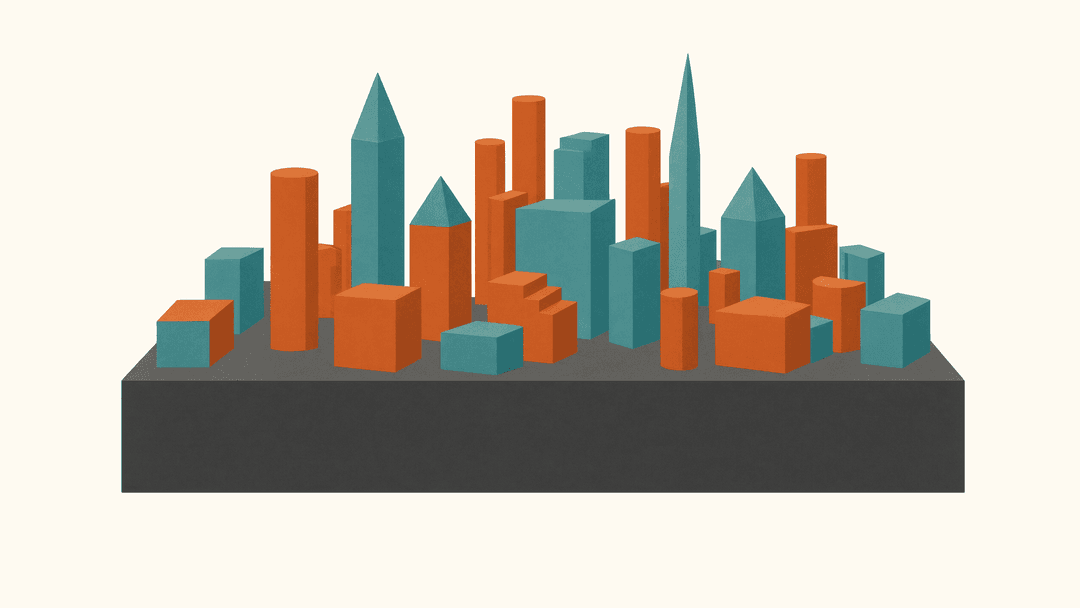
The metaphor is architectural. A building's foundation is load-bearing, expensive, poured once, and nobody lives in it. You build the interesting parts on top. That is what the term encodes: the model is infrastructure, and the product is what sits above it.
The mechanism was old. The claim was new.
Nothing in the recipe was invented in 2021. Pre-training on unlabeled text and transferring to tasks had a running history: ELMo in early 2018, OpenAI's GPT in June 2018, BERT (340 million parameters in its large configuration) that November, GPT-3 at 175 billion parameters in 2020, CLIP pairing text and images in 2021.
What the Stanford report claimed was that this stopped being a trick and became a paradigm. It organized the argument around two concepts. The first was emergence: capabilities appearing in training that nobody explicitly built in. The second was homogenization: the same handful of models becoming the common starting point for nearly every application. The report's warning attached to the second concept, and it is the sentence that has aged best: "the defects of the foundation model are inherited by all the adapted models downstream."
If you want the mechanics behind that inheritance, see our explainers on what fine-tuning does and why emergence claims deserve skepticism.
What happened next was mostly economics
Stanford walked the talk: it launched CRFM in 2021 under then-director Percy Liang, built the HELM evaluation framework that has analyzed 30-plus foundation models, and started grading labs on disclosure with the Foundation Model Transparency Index. The industry side of the story is a cost curve. The 2023 AI Index estimated GPT-2 (2019) cost about $50,000 to train and DeepMind's PaLM (2022, 540 billion parameters) about $8 million. Estimates kept climbing: roughly $78 million for GPT-4 (Sam Altman later said more than $100 million), about $191 million for Gemini Ultra. DeepSeek-V3 then undercut the trend at a reported $6 million, and Anthropic's Dario Amodei said in mid-2024 that billion-dollar training runs were already underway.
Two structural shifts followed, both tracked by the AI Index. Production moved to industry: of new foundation models released in 2023, 108 came from companies and 28 from academia. And the models became raw material: of the 149 foundation models Stanford counted in 2023, more than double the 2022 total, 65.7% were released open-source, up from 33.3% in 2021. The cost of using one, meanwhile, collapsed. Matching GPT-3.5's MMLU score cost $20 per million tokens in November 2022; by October 2024 it cost $0.07. A foundation model is now, in practice, a public input good, which is exactly what the 2021 framing predicted and the labs spent a decade pretending they were doing research for.
Foundation model vs. LLM vs. frontier model vs. GPAI
The vocabulary overlaps and people use these loosely, so here is the map as the field actually deploys the terms:
- Large language model describes what a system is: a language model, trained at scale. It says nothing about how you use it.
- Foundation model describes what a system does in the market: it is the base layer other products adapt. BERT was an LLM and a foundation model. A vertical product fine-tuned from it is neither, though it will call itself one in a press release.
- Frontier model is a moving term for the current strongest class, popular in policy circles. It has no fixed definition, which is its feature.
- General-purpose AI model is the legal term. The EU AI Act declined to adopt "foundation model" and instead defines in Article 3(63) "an AI model, including where such an AI model is trained with a large amount of data using self-supervision at scale, that displays significant generality and is capable of competently performing a wide range of distinct tasks." Recital 98 treats models with at least a billion parameters trained with self-supervision at scale as presumptively general-purpose, and a training-compute threshold of 10^25 FLOP triggers the stricter systemic-risk obligations. That is the closest anything has come to a hard boundary around a very soft term.
What the term is worth now
Honest ledger. The definition never had teeth: "broad data" and "a wide range of tasks" are not testable, which is why the AI Index has to hand-curate lists of "notable" models instead of running a filter. The report's emergence framing took a real hit: a NeurIPS 2023 outstanding paper by Schaeffer, Miranda and Koyejo argued that apparent capability jumps evaporate under continuous metrics and are largely an artifact of the yardstick, not the model.
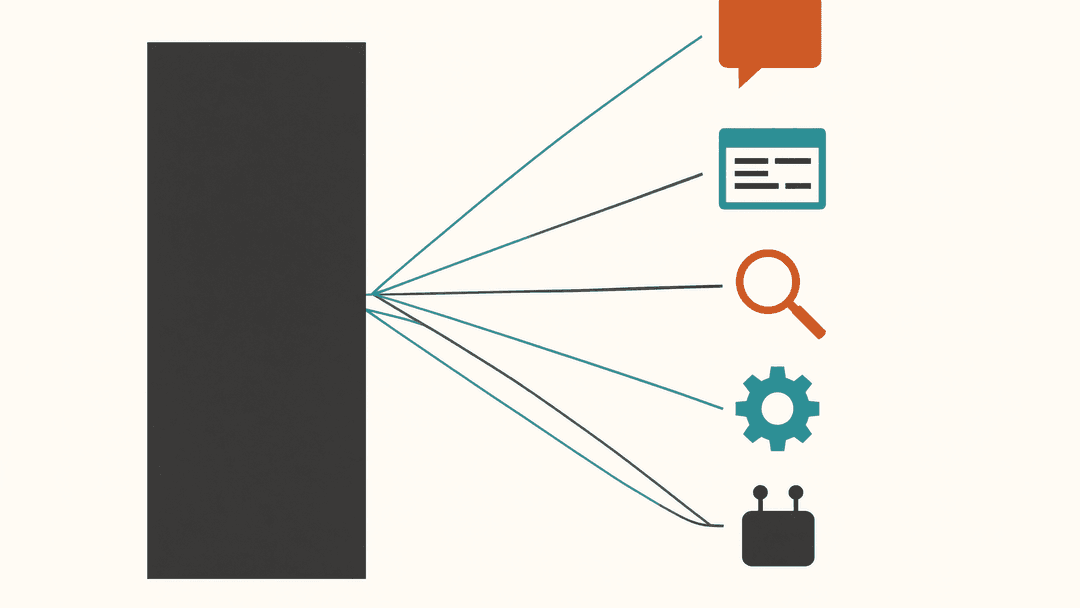
The economic claim, though, held. Homogenization happened. Chat interfaces, coding assistants, agents, search engines and enterprise tools all pour from a handful of training runs, so a regression in one base model is a regression in a thousand products, and a deprecation notice is a migration project. When you evaluate anything sold as AI in late 2026, the useful question is the foundation-model question: which base model, from whom, under what license, and what happens when the provider retires it. The word started as coinage and became plumbing. That is usually how the winners in this field look by year five.
Sources
- Bommasani et al., On the Opportunities and Risks of Foundation Models, arXiv:2108.07258, 2021
- Stanford CRFM, Foundation Models report page
- Stanford HAI, Stanford HAI at Five
- Stanford HAI, AI Index Report 2023
- Stanford HAI, Inside The New AI Index: Expensive New Models, Targeted Investments
- Stanford HAI, AI Index Report 2025: Research and Development and full PDF
- European Commission, General-Purpose AI Models in the AI Act: Questions and Answers; AI Act Article 3
- Schaeffer, Miranda, Koyejo, Are Emergent Abilities of Large Language Models a Mirage?, NeurIPS 2023
- Peters et al., Deep Contextualized Word Representations (ELMo), 2018
- Radford et al., Improving Language Understanding by Generative Pre-Training, OpenAI, 2018
- Devlin et al., BERT, 2018
- Brown et al., Language Models are Few-Shot Learners (GPT-3), 2020
- Radford et al., Learning Transferable Visual Models From Natural Language Supervision (CLIP), 2021
