
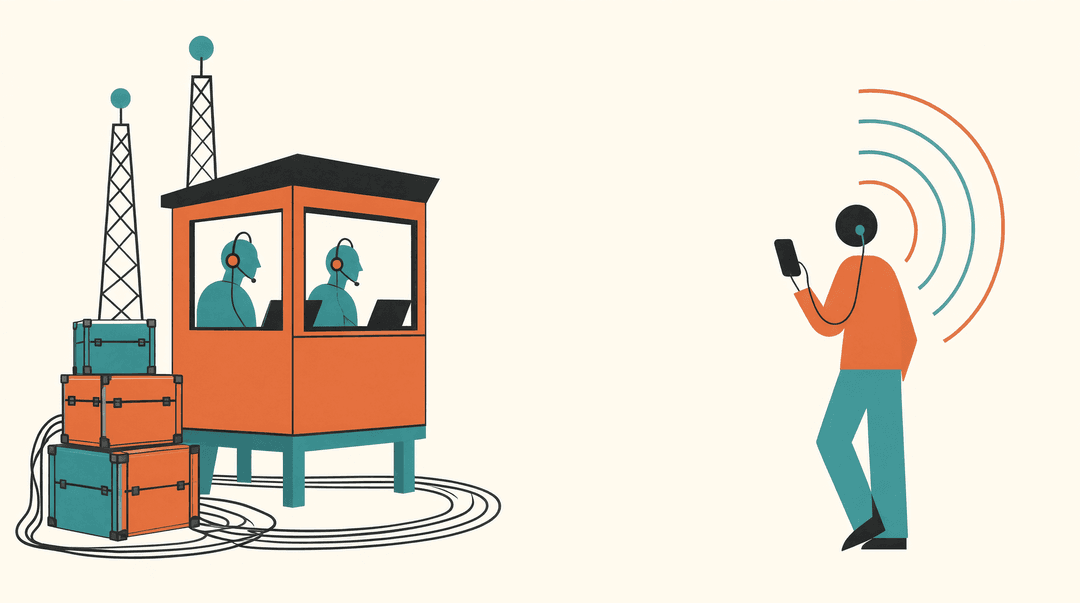
Real-time interpretation was, until recently, the last language service that resisted automation. A room of delegates speaking five languages needed five pairs of human interpreters, soundproof booths, radio receivers and a technician, and nobody questioned the invoice because the alternative was people not understanding each other. In 2026, speech-to-speech models quietly became products. The price ladder that resulted spans more than two orders of magnitude for the same minute of audio, and the quality evidence is thinner than the pricing is interesting.
The anchor: what the human version costs
A conference interpreter charges a day rate, not a per-minute meter. Practitioner guides put simultaneous interpreters at $600 to $1,500 per interpreter per day, with agencies quoting $700 to $1,200 for common pairs and North American on-site rates cited as high as $1,200 to $2,500 per day. Sessions over an hour require two interpreters per language because simultaneous interpreting exhausts anyone solo, so the effective labor line is $1,200 to $3,000 per language per day. Equipment stacks on top: booths at $1,500 to $5,000 per day each, receivers and headsets at $15 to $25 per attendee, a sound technician at $500 to $1,000 per day. The UN publishes its own 2026 short-term interpreter rates for reference.
This is why the AI pitch is written in event totals. Wordly, which sells AI interpretation to European works councils, prices traditional setup at 50,000 to 150,000 euros for a two-to-three day, 10-language meeting (20 interpreters, 10 booths) and claims its product cuts that by up to 90 percent. Treat the vendor spread as marketing, but note the structure it exploits: per-language, per-day human costs multiply, while a platform fee does not.
Four meters, one minute of speech
The AI options do not share a billing unit, which makes comparison charts dishonest unless you convert. Converted to a per-minute-of-translated-speech basis, late-2026 prices run like this:
- Raw API, cheapest lane: roughly $0.03 to $0.04 per minute. A 2026 roundup of speech-to-speech vendors prices OpenAI's gpt-realtime-translate at $0.034 per minute since May 2026 and Google's Gemini Live Translate audio at about $0.037 per minute at published token rates, while Alibaba's Qwen live-translate API lists higher. DeepL's Voice API lands around $0.07 to $0.20 per minute.
- Subscription per user: DeepL Voice Starter costs $13 per user per month for 300 translated-audio minutes (about 4 cents per minute if fully used), and Voice Business costs $38 for 600 pooled minutes. Since September 2026, every paid DeepL Translator plan bundles 30 Voice minutes per user per month, and the support page is explicit that there is no overage path: when the 30 minutes are gone, translation stops until the reset.
- Event platforms: the same roundups price KUDO's AI speech translation at roughly $0.80 to $1.25 per minute and Interprefy's Aivia at $0.60 to $1.00, with per-attendee fees sometimes added on top. KUDO sells platform, AI and services as annual licenses sized to meeting recurrence, or pay-as-you-go for one-off events, with no public rate card. Wordly quotes by hours and attendee counts.
- Human on-demand phone interpreting, the incumbent meter: LanguageLine publishes $3.95 per minute for audio and $4.95 for video with no contract. Volume buyers pay far less: a Louisiana public-sector contract lists Spanish at $0.64 per minute, and Cornell's institutional schedule runs $1.85 to $2.95.
The worked example that makes the ladder absurd: a 12-hour, three-language event is 2,160 minutes of translated speech. At the API floor that is roughly $75. At KUDO-style event rates it is $1,700 to $2,700. At LanguageLine's published pay-as-you-go rate it would be $8,500, and at human conference day rates plus booths a comparable three-day setup lands in the $10,000 to $50,000 range by any planner guide's arithmetic. The same audio, a 100-times price gap, and the cheapest lanes require you to build the product yourself.
The quality file is short and not kind
The only institutional test set that anyone cites is the World Health Organization's evaluation of Wordly, and the report itself is public (hosted by the American Translators Association). The WHO interpretation team ran 90 test speeches in the organization's official languages, where large models exist. Grades ranged from 5 to 83 percent by language combination. Exactly one interpretation, English into French, passed. Every single interpretation, including the passing one, carried at least one flagged reputational risk: mangled proper nouns, a confusable rendering of Hamas and the United States, lag that swallowed sentence endings. The WHO's conclusion was that AI interpretation sits at an experimental stage, fit at best for internal meetings, and it recommended a human fallback channel for anything official.
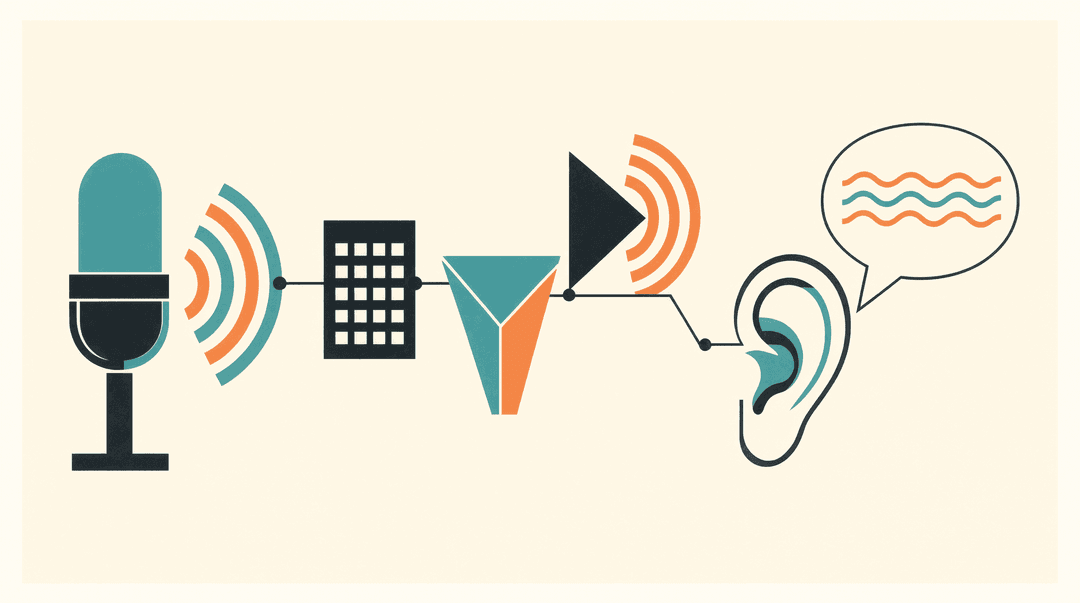
The counterweight is vendor surveys. Wordly's own enterprise report claims 79 percent of regular users say AI performs better than human interpreters, with 88 percent adoption among its customer base. Nobody has published an independent, preregistered study of event AI interpretation comparable to the WHO file, which tells you more about the market than either number does. The structural argument on the human side is well stated by interpreter-practitioner analysis: simultaneous interpreting is a real-time cognitive task that current pipelines (speech recognition, machine translation, speech synthesis chained together) handle with seconds of lag and no repair mechanism, while human teams get rest rotations and error recovery.
Where it is actually being deployed
Three patterns are visible in late 2026.
Hybrid tiers. The European Commission's own Interpreting Europe conference, which opens today in Brussels, runs human simultaneous interpreting across five hub languages and international sign, and displays closed captioning plus automatic translation in all EU official languages. That is the standard institutional compromise: humans carry the floor, AI captioning covers the long tail. The Commission's Directorate-General for Interpretation has been running internal AI and multilingual speech events through 2026 and piloting expanded coverage for low-cost formats such as virtual citizens' panels.
Bundling. Google Meet, Zoom and Microsoft Teams are folding translated captions and, on higher plans, translated voice into per-user licenses rather than selling interpretation as a service. DeepL's 30-bundled-minutes move is the same logic: interpretation becomes a checkbox on a productivity suite, metered invisibly until you hit the cap.
Regulatory drag. Courts, hospitals and public agencies in the United States still treat human interpretation as the standard of care, and state legislatures are actively litigating the boundary: bills to allow AI-assisted interpreting in hospital and nursing-home settings are pending in New Jersey, while a Wisconsin push to replace court interpreters stalled in committee after professional opposition. In the EU, synthetic-voice output falls under Article 50 transparency duties of the AI Act, which have applied since August 2026.
The fine print
Buy the meter that matches the trust level of the room. A 200-person all-hands with routine content is a $13-per-user DeepL subscription or a low-cent API build. A deposition, a medical consent, a ministerial press conference is still a $1,000-per-day human pair, because the one-passed-in-90 result says the failure mode of AI interpretation is not silence, it is fluent nonsense: a real sentence with the wrong entity in it, delivered with perfect prosody. The thing being priced in late 2026 is not translation, which machines do well enough now. It is accountability for what was said, and that is still billed per diem, in booths, to humans.
Sources
- Wordly, European works council interpretation pitch and cost claims: https://www.wordly.ai/blog/ewc-meeting-interpretation
- Snapsight conference interpretation cost guide (2026): https://www.snapsight.com/en/resources/language-translator/pricing-guide
- Translators USA, simultaneous interpretation 2026 planner guide: https://translators-usa.com/simultaneous-interpretation-for-events-the-2026-planners-guide
- Ablio, interpreting service rate ranges: https://blog.ablio.com/how-much-does-an-interpreting-service-cost-2
- UN CEB, 2026 interpreters' rates: https://unsceb.org/products/2026-interpreters-rates
- Forasoft, speech-to-speech translation vendor benchmark roundup (2026): https://www.forasoft.com/blog/article/real-time-speech-translation-vendor-benchmarks
- DeepL Voice plan structure via UsagePricing: https://www.usagepricing.com/blueprint/deepl
- DeepL Help Center, bundled Voice minutes: https://support.deepl.com/hc/en-us/articles/30158527549596-DeepL-Voice-minutes-included-with-paid-DeepL-Translator-plans
- LanguageLine pay-as-you-go pricing: https://www.languageline.com/interpreting-services/pay-as-you-go-interpreting-services
- LanguageLine rates in Louisiana public-sector contract: https://ldh.la.gov/assets/cphe/resources/LanguageLine.Services.Contract.Overview.pdf
- Cornell University LanguageLine rate schedule: https://tdx.cornell.edu/TDClient/95/Portal/KB/Article/6396/LanguageLine-Service-Costs-Billing
- WHO interpretation team, Report on WORDLY AI Interpretation (PDF): https://www.atanet.org/wp-content/uploads/2025/06/Report-on-AI-Interpretation.pdf
- American Translators Association advocacy summary: https://www.atanet.org/advocacy-outreach/think-ai-should-replace-interpreters-think-again
- Wordly enterprise survey on AI vs human interpretation: https://www.wordly.ai/blog/ai-translation-outperforms-human-interpretation
- Futurity of Social Sciences, AI in simultaneous interpreting review: https://futurity-social.com/index.php/journal/article/view/232
- European Commission, Interpreting Europe Conference 2026: https://commission.europa.eu/get-involved/events/interpreting-europe-conference-2026-11-26_en
- European Commission SCIC newsletter, March 2026: https://ec.europa.eu/newsroom/scicinfo/newsletter-archives/73813
- KUDO pricing and plans: https://kudo.ai
- NCSL, AI legislation database (interpreter provisions): https://www.ncsl.org/technology-and-communication/artificial-intelligence-2025-legislation
