
Google DeepMind published results from an experiment in which teams of Gemini 4 agents independently rediscovered and improved well-known quantum algorithms, with every claimed improvement machine-verified in the Lean theorem prover before it was allowed to count. The lab says the agent-produced circuits cut resource costs on several scientific applications by large multiples, up to 290x for one quantum arithmetic routine.
The catch, stated plainly in the blog post: even the improved algorithms would demand more compute than the first error-corrected quantum computers are likely to provide. DeepMind's claim is about the discovery method, not about any near-term quantum advantage.
Why the proofs matter more than the speedups
Quantum circuits for real applications are too large to test on classical computers and too expensive for today's small quantum processors. A claimed improvement is unverifiable by simulation alone. So DeepMind built a library of quantum computation in Lean, a formal theorem prover, and required agents to synthesize programs against formal problem specifications and prove both correctness and cost.
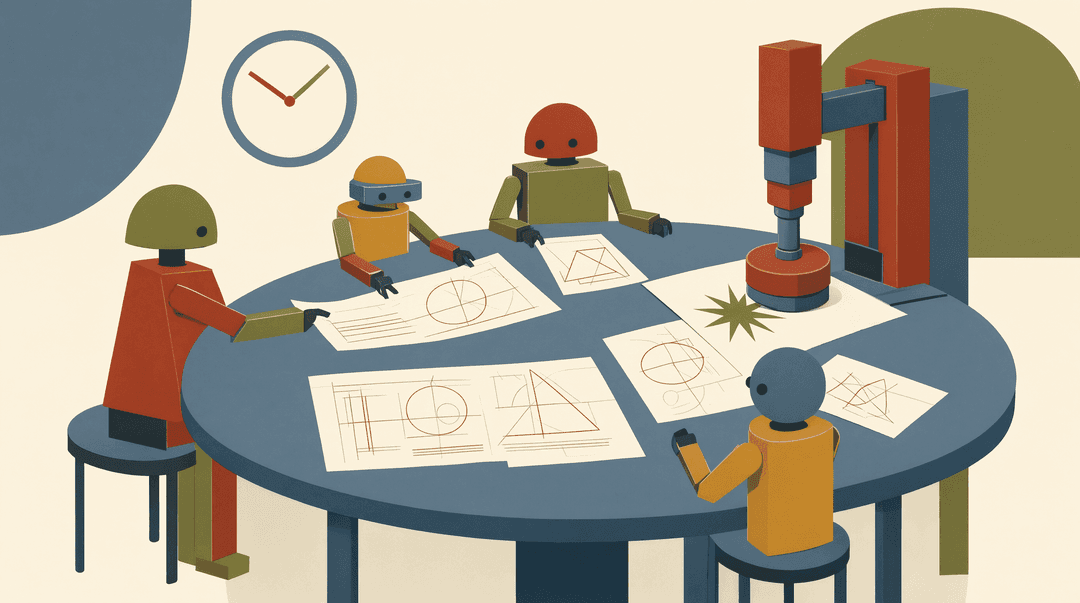
The setup was social as well as formal. Separate, independent agent teams worked each problem. Verified ideas entered a shared notebook. Every four hours, agents from each team met at a virtual conference to trade, debate and compare ideas. As better ideas circulated, the computational cost of the best known solution stepped down until the run finished.
The numbers
From the paper (arXiv, submitted November 6, revised November 16):
- Parallel search: up to 2.57x improvement over prior baselines
- Quantum arithmetic: 290x
- Simulations relevant to fusion energy: 12x
- Photochemistry: 8x
- Drug metabolism: 2.5x
The authors include researchers from Google DeepMind and Google Quantum AI, with Guang Hao Low, Ryan Babbush, Pushmeet Kohli and others listed on the paper. DeepMind is open-sourcing the Lean library, the problem specifications and the verified solutions on GitHub, so other agent teams can build on the same formal ground.
Applications, then the method
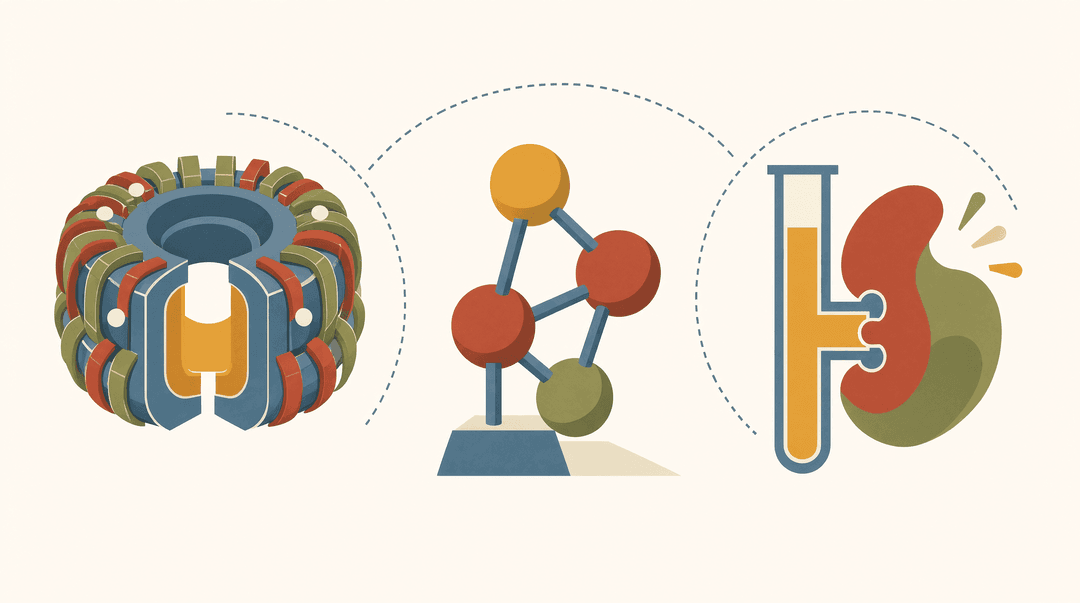
Running these algorithms in scientific simulations would still demand more resources than the first error-corrected machines will likely provide, DeepMind says, but the improvements are significant. The lab is also excited by how it found them.
An emerging pattern: proof-checked AI science
This is not an isolated event. In October, Anthropic reported researchers using Claude to optimize quantum computing circuits by up to 17x. Across the field, labs are converging on the same trick: let LLMs generate candidate mathematics, but gate every result through a formal verifier so hallucinations cannot enter the ledger. DeepMind's contribution here is scale and structure, wiki-shared knowledge, scheduled agent conferences, and a growing library of checked primitives, rather than a single prompt-and-answer pass.
"Combining human and artificial intelligence at scale, under the rigor of mathematical proof, lets researchers design algorithms that today's classical and quantum computers cannot test, shortening the path to practical quantum computation," the paper's abstract concludes.
The human role shifts accordingly. DeepMind says it set the research direction by specifying problems and supervising progress, and that its own knowledge of quantum algorithms shaped how the teams were configured. Proof-checked search, the lab argues, compresses work that once took years of manual design, leaving researchers to choose problems and interpret results.
Whether agent conferences produce comparable dividends outside quantum computing is the obvious next question, and DeepMind says the method is not limited to these problem areas. For now, the practical effect is that the roadmap to useful quantum algorithms got a little shorter, and the tooling to argue about it publicly, with machine-checkable receipts, is free on GitHub.
