

Anthropic's cyber-capable models turned vulnerability discovery into a commodity. Operational technology was never able to keep up with the old supply rate.
An Industrial Cyber feature published Monday lays out where that leaves critical infrastructure. Claude Mythos Preview, announced in April, was judged able to exploit vulnerabilities so well that Anthropic restricted it to vetted organizations under Project Glasswing. That cohort has since grown to 150 organizations in 15 countries. In October the company folded the work into a broader Anthropic Cyber Mission and a Critical Infrastructure Defense Program, with Dragos, Nozomi Networks and Rockwell Automation among the first partners.
The scoreboard so far: between April and July, Glasswing partners found at least 129,000 known software vulnerabilities in their own systems, and Anthropic's open-source scanner turned up another 5,500 between April and October. More than 33,000 verified flaws were rated critical or high severity. The article stresses these are undercounts, built from survey responses by a subset of partners, and puts the real number at least five times higher.
What the models actually do, and what is still claimed
Anthropic says Mythos found thousands of high-severity vulnerabilities, including some in every major operating system and web browser, working nearly unaided in the published cases and developing exploits for many of them. Clint Bodungen, director of AI/ML engineering at Arcova, calls that over-hyped: most of the discoveries would be low likelihood or low impact in a given environment, and a high CVSS score is not the same as high consequence. He also notes the disclosures rest on Anthropic's own reporting, many technical details are withheld until fixes ship, and published results cover source code and open-source projects, not the closed firmware most OT runs on.
The product line matters for anyone modeling the threat. Mythos 5 and Fable 5 launched in June, were suspended within days under US export controls, and returned July 1. Fable 5.1, generally available since September, can identify vulnerabilities but cannot build exploits; it leans on the Opus models for exploit generation and binary scanning. In July, Anthropic classified assessments of ICS, SCADA, DCS, PLC, RTU and HMI systems, and abuse of Modbus, DNP3, OPC and IEC 61850 protocols, as high-risk activities blocked by Fable 5 safeguards, and has not said whether Fable 5.1 changed that. The more permissive Mythos 5.1 remains vetted-only, so almost no outside researcher has tested these claims against industrial targets.
The OT bottleneck is the story
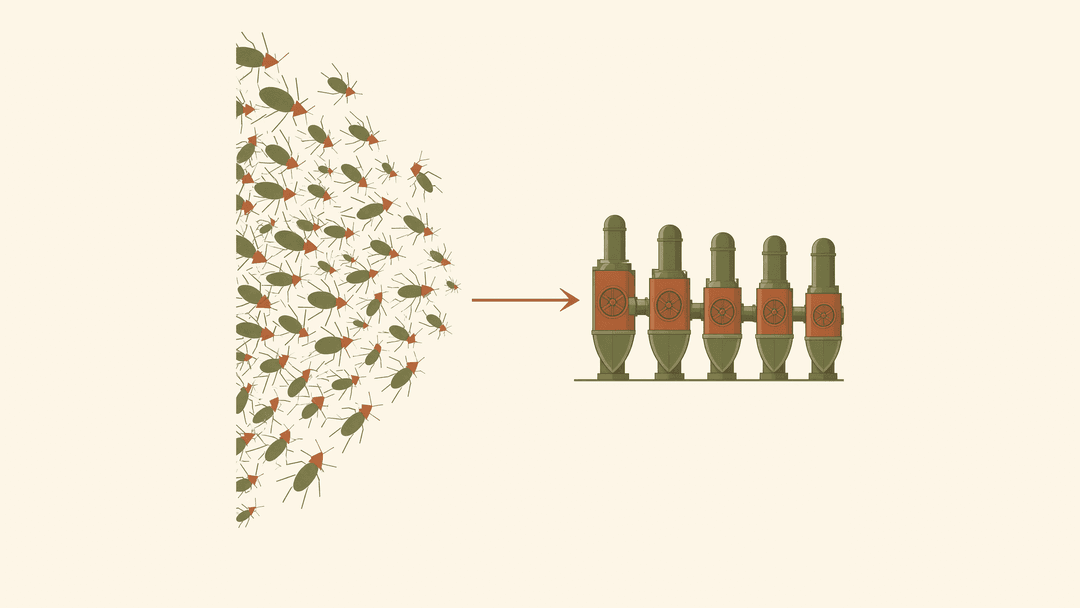
The piece's central argument is economic. Finding bugs became cheap; verifying and fixing them stayed slow and manual, and in OT that gap is everything. TXOne's 2026 report found 96% of OT incidents begin as IT-level compromises, 56% direct penetration and 40% collateral damage, and while 90% of organizations patch frequently, only 24% achieve over 90% asset coverage. Dragos's 2025 data says only 3% of OT vulnerabilities need immediate action, 4% get exploited, and 25% of advisories have neither a patch nor a mitigation. Patching waits on maintenance windows and vendor certification; some legacy equipment cannot be patched at all. Anthropic's own experience with Glasswing findings mirrors this: verified vulnerabilities sometimes sat unresolved for months, and OT fixes can take decades to implement safely.
Historically, the friction was the defense. Bodungen points out that the 2015 and 2016 Ukraine grid attacks got in through IT credentials and remote access, not exotic PLC zero-days, and even Stuxnet and TRITON, the custom-controller exceptions, started on the shared Windows layer. Specialized hardware and vendor-specific protocols raised the cost of the last mile and confined top-end OT attacks to a handful of funded groups.
Does AI actually lower the barrier?
RunSafe Security CEO Joseph Saunders says the calculus has flipped: models like Mythos and Fable find vulnerabilities and produce working exploits with far less time and expertise, so the window to respond shrinks even before the attacker pool changes. His concern is the software bolted onto industrial operations from outside: remote access systems, engineering workstations, network-connected devices. Bodungen's version: the middle tier of attackers gets more capable, and defenders should plan for more groups doing what only a few could, with far less time between disclosure and exploitation.
The recommendations are unfashionable ones. Triage by physical consequence rather than raw CVSS, starting with internet-exposed gateways. Inventory unsupported assets, rehearse manual recovery, press vendors for realistic patch timelines and SBOMs. Move assessment frequency above the annual tabletop cadence that ISA/IEC 62443 and NERC CIP-007 assume, and weight compensating controls and reachability over patch compliance. Anthropic expects defense to win within two years. For plant operators, the article's practical takeaway is shorter: the next 90 days are for consequence rework and recovery drills, not for waiting on the model vendors.
Sources
- Industrial Cyber, "Mythos changes the clock: What Anthropic's cyber-capable AI models mean for OT, critical infrastructure security," Nov 24, 2026: https://industrialcyber.co/features/mythos-changes-the-clock-what-anthropics-cyber-capable-ai-models-mean-for-ot-critical-infrastructure-security
- Industrial Cyber, "Anthropic launches Critical Infrastructure Defense Program": https://www.industrialcyber.co/industrial-cyber-security/anthropic-launches-critical-infrastructure-defense-program-with-security-firms-to-protect-industrial-ot-environments
- Industrial Cyber, "Dragos applies Claude Mythos Preview to uncover vulnerabilities in OT security software": https://industrialcyber.co?p=52101
- Anthropic, Fable & Mythos access: https://www.anthropic.com/news/fable-mythos-access
- Anthropic, Cyber Verification Program: https://www.anthropic.com/news/cyber-verification-program
- TXOne Networks, Annual OT/ICS Cybersecurity Report 2026: https://www.txone.com/resources/security-reports/annual-ot-ics-cybersecurity-report-2026/
- Dragos, OT Cybersecurity Year in Review 2025: https://www.dragos.com/ot-cybersecurity-year-in-review
