
Every RAG pipeline and document agent has the same unglamorous bottleneck: the PDF has to become text or JSON before any language model can touch it. That step is now its own API category, and the price sheets are unusually hard to compare. One vendor charges per page, another per credit, a third prices the same page 40 times higher depending on which endpoint you call.
This piece lines up the eight commercial document AI APIs teams actually shortlist in late 2026: Mistral OCR, Cohere Parse, LlamaParse, Reducto, Extend, AWS Textract, Azure Document Intelligence, and Google Document AI. All prices are per 1,000 pages at list rates, read from vendor pricing pages and recent trackers in November 2026.
Two products hiding inside one category
The first distinction that clears up the pricing chaos: these APIs sell two different things.
Page reading turns a PDF or image into markdown or structured text blocks. Tables become markdown tables, formulas become LaTeX, reading order is preserved. This is what you want before handing a document to an LLM.
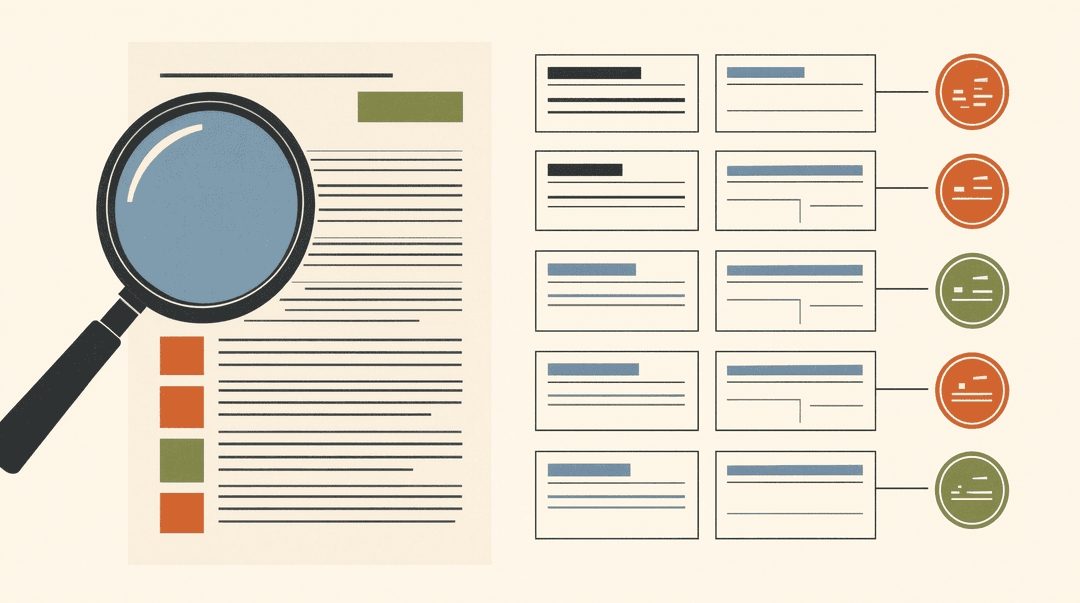
Field extraction turns a document into schema-conformant JSON: invoice number, total amount, policy effective date, usually with bounding boxes or citations back to the source span. This is what you want when a human or a downstream system has to trust the number.
Most vendors price the two layers separately, and the gap between them is large. Reducto charges $1 per 1,000 pages for r-1 mini parsing and $20 per 1,000 for Extract with parsing included, with Deep Extract at $40 (Reducto pricing). AWS Textract charges $1.50 per 1,000 pages for DetectDocumentText and $50 per 1,000 for forms extraction on the same page (AWS pricing, cross-checked by Wring's pricing guide and SimpleIndex's read of the US East price list).
The price ladder
For plain page reading, the market has converged on a floor: AWS Textract, Azure Document Intelligence (Read), and Google Document AI (Enterprise Document OCR) all list $1.50 per 1,000 pages, and Google's pricing page confirms volume drops to $0.60 per 1,000 above 5 million pages monthly (Google Document AI pricing). Below and around that floor sit two aggressive newcomers: Reducto's r-1 mini at $1 per 1,000 pages and Cohere Parse at $1.50 per 1,000 (IntuitionLabs' comparison of parse APIs).
The AI-native parsers price above the commodity OCR floor. Mistral OCR 4 and 4.1 list at $4 per 1,000 pages, $2 via the Batch API, and $5 per 1,000 when annotated output (bounding boxes and block labels) is requested (IntuitionLabs, citing Mistral's model page and launch announcement; Hokai's model hub entry). That is a fourfold increase from the original Mistral OCR launch in March 2025, when the API debuted at $1 per 1,000 pages (Mistral's launch post), then $2 for OCR 3 in December 2025 (CodeSOTA's verified review).
LlamaParse prices in credits: $1.25 to $1.50 per 1,000 credits depending on plan, with parsing tiers of 1 (Fast), 3 (Cost-effective), 10 (Agentic), and 25 (Agentic Plus) credits per page (official LlamaParse pricing docs). In dollars per 1,000 pages that is roughly $1.25 at the Fast floor up to about $31 on Agentic Plus at Pro rates. A 45-credit figure for Agentic Plus that circulates in comparisons refers to the older v1 modes (Firecrawl's category roundup). Re-parsing a file within 48 hours is free, since results are cached (Extend's LlamaParse review).
Extend, which only appears on its own comparison pages, lists Light Parse at $0.005 per page ($5 per 1,000), Performance Parse at $0.02, Light Extract at $0.012 and Performance Extract at $0.05, with 10,000 free credits (Extend vs Reducto page). Treat every number on a vendor's own comparison page as self-reported.
At the top of the ladder sits agentic and custom extraction: Textract forms plus tables bills $65 per 1,000 pages and $101.50 with all features stacked (Wring), Azure Custom Extraction is $30 with add-ons layering roughly $6 to $10 more (Parsli's rate breakdown, consistent with Microsoft's own Q&A answers), and Google Form Parser and Custom Extractor list at $30 per 1,000, dropping to $20 above a million pages (Google).

What each tool is actually good at
- Mistral OCR is a dedicated parsing model: markdown output, block-level labels, bounding boxes and confidence scores, with a dedicated batch endpoint. The original release's fuzzy-match table showed it ahead of Azure OCR and Google Document AI on Mistral's own benchmark suite, 99.02 versus 97.31 and 95.88 (Mistral launch post). Self-reported, as always.
- Cohere Parse sits at the cheap end of parse APIs ($1.50 per 1,000) with markdown and blocks output, and dedicated hosting from $2,500 per month (IntuitionLabs).
- LlamaParse is the most flexible unit-pricing sheet: four parse tiers, Extract (500 pages and 100 MB per file), Classify and Split, with schema support up to 5,000 properties and seven nesting levels (LandingAI's comparison, LlamaParse docs). It is the natural pick if you are already inside LlamaIndex.
- Reducto rebuilt its pricing in September 2026 from credits to per-product rates (Reducto pricing). Its differentiator is provenance: extraction returns citations to source spans and bounding boxes, which is what an auditable agent needs (Firecrawl's roundup).
- Extend leads with price per operation and self-serve pay-as-you-go, no contract below its Growth tier (Extend comparison page, self-reported).
- AWS Textract remains the deepest forms engine via AnalyzeDocument Queries, but each feature is billed separately per page, and the 3-month free tier caps structured calls at 100 pages per month (Wring).
- Azure Document Intelligence keeps the classic IDP tiers: Read, Layout, prebuilt models (receipts, invoices, IDs, tax forms) at $10, custom models at $30, with 500 free pages per month on F0 (Parsli).
- Google Document AI is the only hyperscaler that priced RAG explicitly: its Layout Parser includes initial chunking, and re-chunking parsed documents costs $0.02 per 1,000 (Google pricing).
The benchmark caveat
There is no independent leaderboard that covers this whole set. Academic benchmarks like OmniDocBench (1,355 pages across papers, books, slides and newspapers, scoring text edit distance, table TEDS, formula recognition and reading order) mostly rank open models and frontier VLMs rather than commercial document APIs (OmniDocBench, CVPR 2025; Nanonets' leaderboard mirror). On that mirror, Gemini-3-Flash and GPT-5-class models score around 88 to 90 overall, which is a reminder that a general VLM with a good prompt is now a credible baseline parser.
Vendor-vs-vendor accuracy claims on this market are consistently self-published. Reducto, Extend, Mistral and LlamaIndex all publish win rates against each other. Third-party trackers that read pricing pages, like Dupple's November 2026 comparison, confirm the price bands but note the same problem with accuracy tables. The only number that predicts production behavior is your own corpus: field-level recall on 200 of your documents, scored by whoever reviews exceptions today.
Decision rules
- Reading documents for an LLM, high volume, simple formats: the $1 to $1.50 per 1,000 floor. r-1 mini, Cohere Parse, or the hyperscaler read tier.
- Reading messy documents (scans, multi-column, dense tables) for an LLM: Mistral OCR or a LlamaParse agentic tier, at $2 to $31 per 1,000 depending on mode.
- Extraction that a human must audit: Reducto Extract or Textract/Azure/Google custom tiers, $20 to $70 per 1,000, chosen for citation and bounding-box support.
- Already paying for one cloud's egress and IAM: the matching hyperscaler, because integration cost usually dwarfs the per-page delta.
The category's real spread is 40x between reading a page and extracting from it. Budget the second layer honestly, or run everything through the cheapest read API and let your LLM do the extraction, which is its own trade of per-page cents against per-token dollars.
Sources
- Reducto pricing
- AWS Textract pricing
- Wring: AWS Textract pricing guide
- SimpleIndex: what AWS charges for Textract
- Google Document AI pricing
- Parsli: Azure Document Intelligence pricing 2026
- Microsoft Q&A: Document Intelligence model pricing
- LlamaParse pricing docs
- Extend vs Reducto
- Extend's LlamaParse review
- LandingAI ADE vs LlamaParse comparison
- IntuitionLabs: Mistral OCR 4.1 vs Cohere Parse
- Hokai: Mistral OCR 4 model hub entry
- CodeSOTA: Mistral OCR 3 verified review
- Mistral OCR launch announcement
- Firecrawl: best structured data extraction tools for AI agents
- Dupple: best AI document processing tools, prices read 18 November 2026
- OmniDocBench (OpenDataLab, CVPR 2025)
- Nanonets IDP leaderboard for OmniDocBench
