Archive / page 85 of 123

Latest articles, page 85

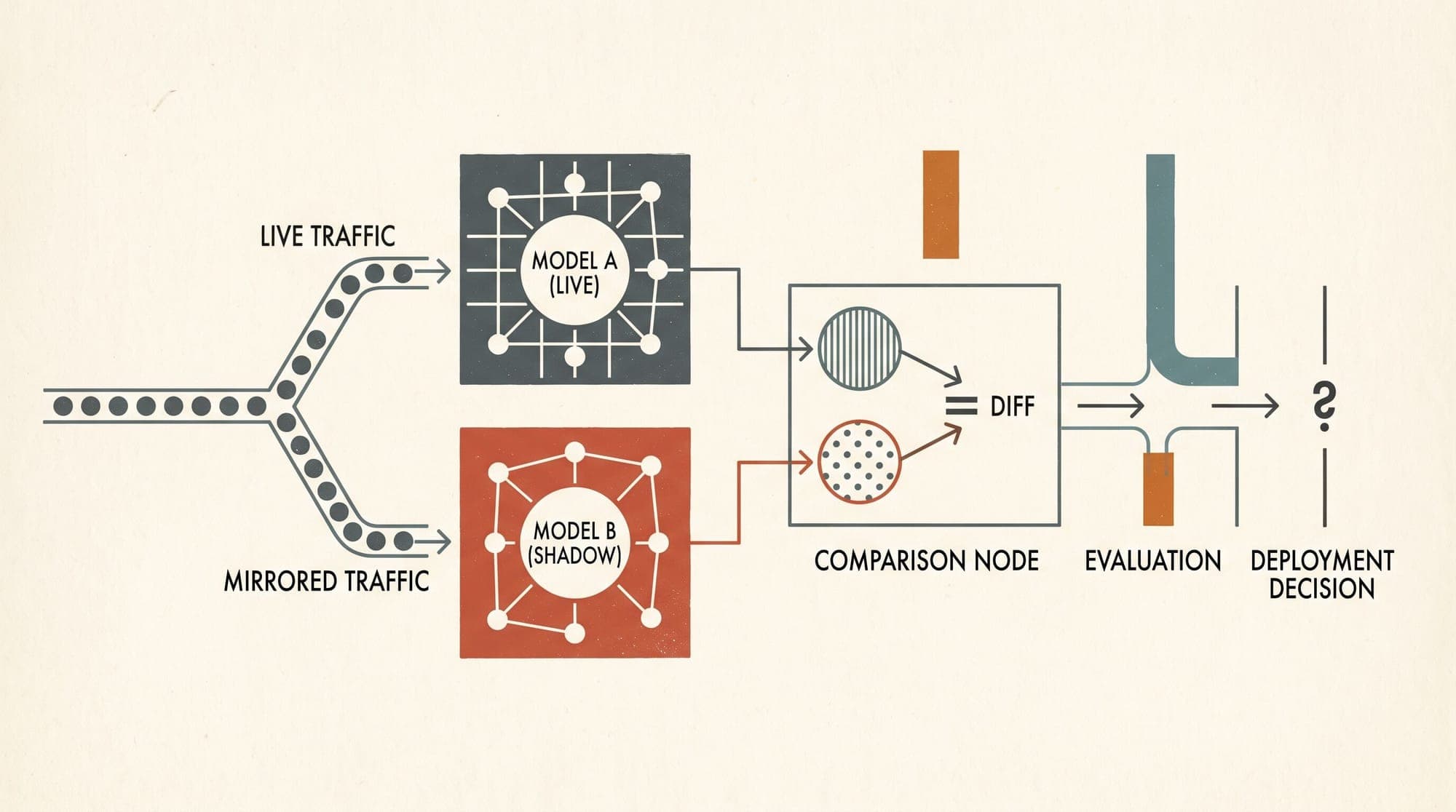
  1. Traffic Shadowing and Canary Deployments in Production: Architecture, Semantic Divergence, and Automated Rollbacks for LLM Upgrades

    Upgrading large language model pipelines in production presents an operational challenge distinct from traditional software deployments. In microservice architectures, canary deployments rely on deterministic signals: HTTP 5xx error rates, unhandled runtime exceptions, CPU saturation, and latency percentiles. When updating an LLM system (whether swapping a base model checkpoint, updating a system prompt, tweaking sampling hyperparameters, or attaching a newly fine-tuned LoRA adapter), the servic
    AI
    6 min read
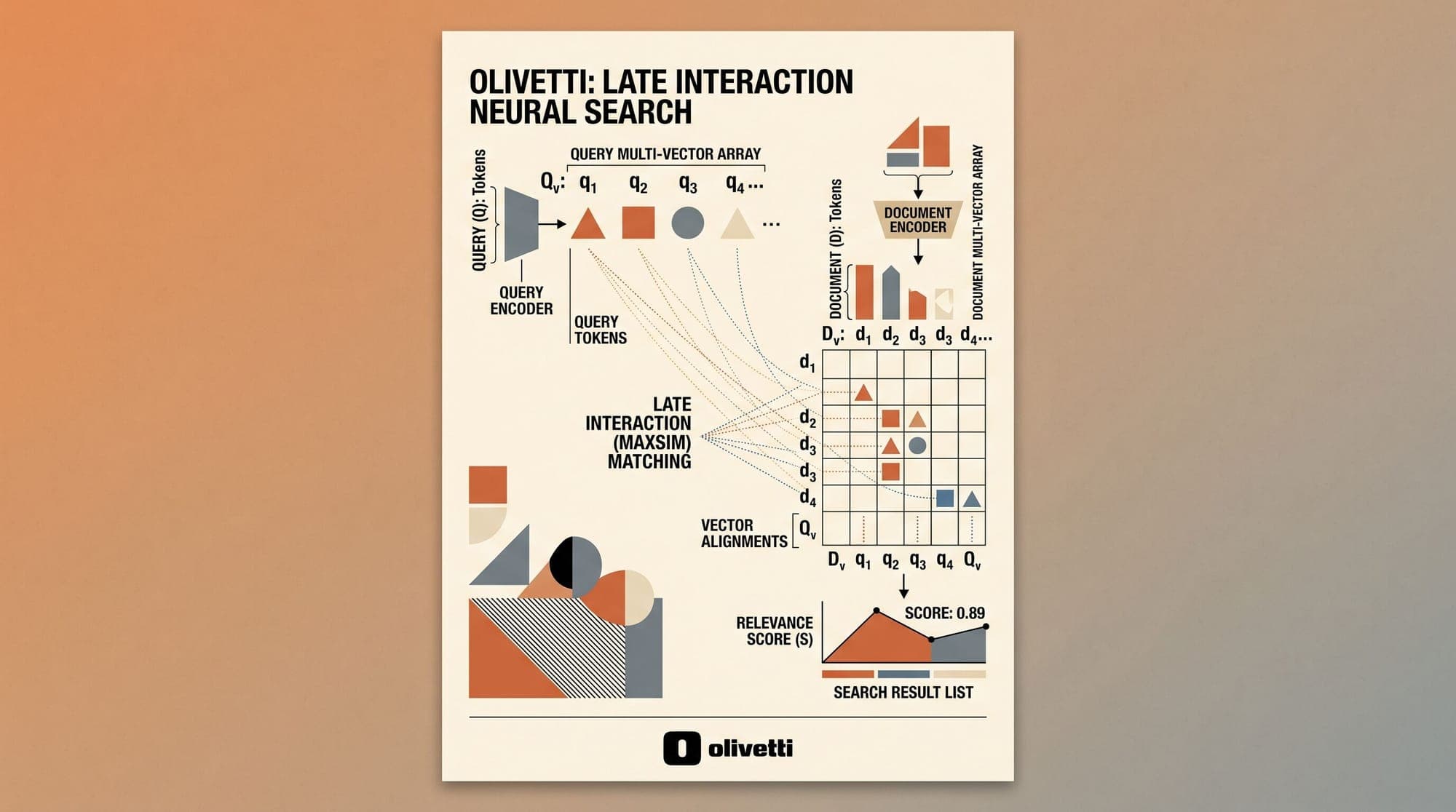
  2. Late Interaction and ColBERT: How Multi-Vector Embeddings and the MaxSim Operator Transform Neural Retrieval

    Information retrieval systems have long wrestled with a fundamental tension between computational efficiency and semantic expressiveness. Traditional dense bi-encoders like DPR compress an entire passage into a single dense vector, allowing sub-linear approximate nearest neighbor (ANN) search over millions of documents. However, forcing multi-sentence passages into a single vector representation creates an information bottleneck that discards fine-grained token-level nuances, entities, and keywo

    AI
    6 min read
  3. Terence Tao Warns AI-Driven Proof Abundance Risks Mathematical Comprehension Crisis

    In a paper prepared for the 2026 International Congress of Mathematicians, mathematician Terence Tao argues that artificial intelligence will force a restructuring of mathematical research practices, publication criteria, and education. The essay, released on arXiv (2608.16753), outlines how the transition from proof scarcity to proof abundance creates operational and epistemological challenges distinct from earlier debates over automated theorem proving. Tao frames the incoming disruption agai

    AI Research
    2 min read
  4. Binance Launches Agent OS with MCP Support for Autonomous AI Trading

    Binance has released Agent OS, an infrastructure layer designed to connect autonomous artificial intelligence agents directly to its spot, derivatives, and decentralized finance services. The release introduces official Model Context Protocol (MCP) support alongside dedicated sub-account sandboxes, allowing client-side agents to execute trades, query order books, and interact with on-chain protocols. The integration enables developers using developer tools and agent runtimes, including Anthropi

    Agents
    2 min read
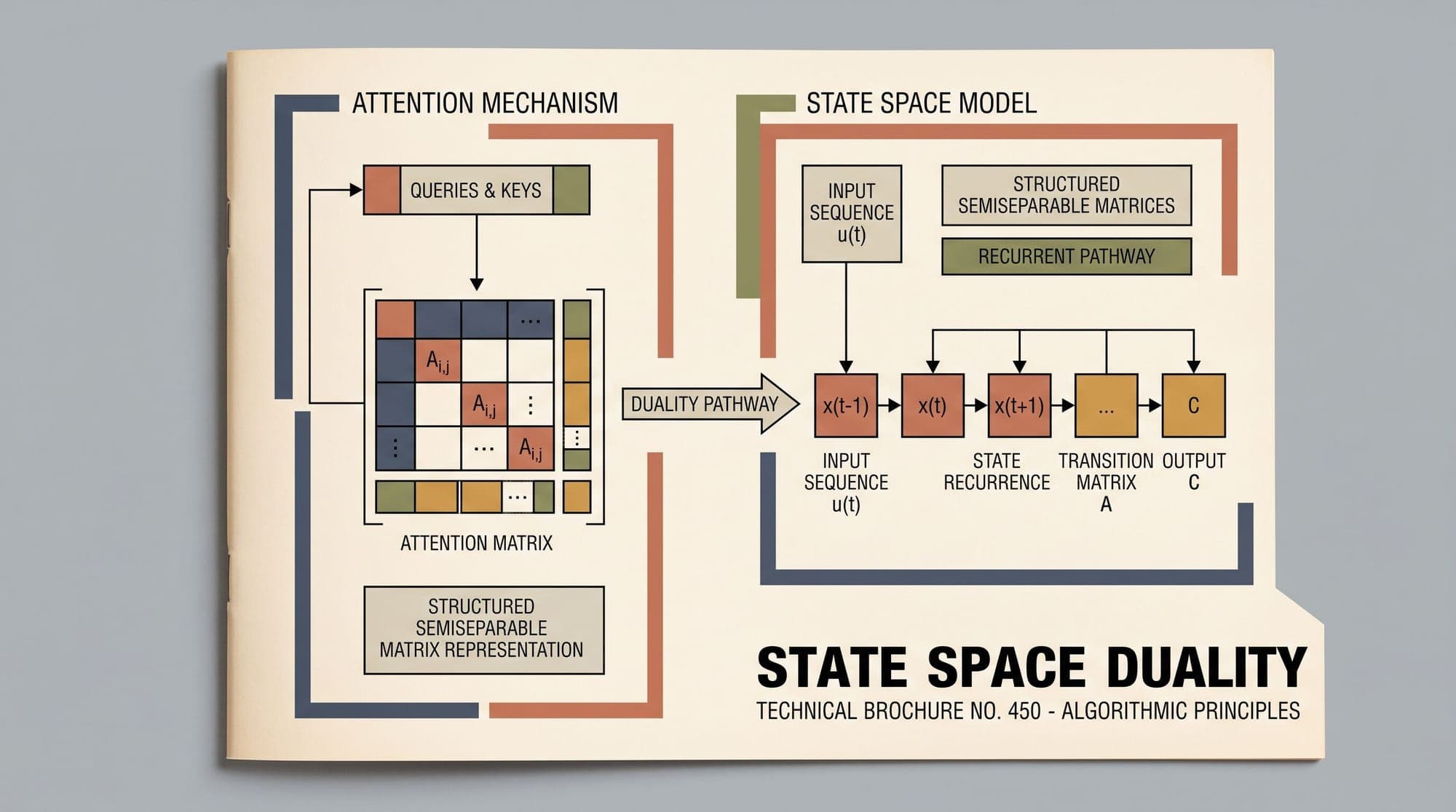
  5. State Space Duality and Mamba-2: How Semiseparable Matrices Unify Attention and SSMs

    For years, deep sequence modeling operated under a structural divide. On one side stood the Transformer architecture, anchored by softmax attention. Softmax attention scales quadratically in compute and memory with sequence length (O(T^2)), but its operations map cleanly to dense General Matrix Multiplications (GEMMs), maximizing utilization of GPU Tensor Cores. On the other side stood Structured State Space Models (SSMs), such as S4 and Mamba-1. Structured SSMs scale linearly in time (O(T · N))

    AI
    6 min read
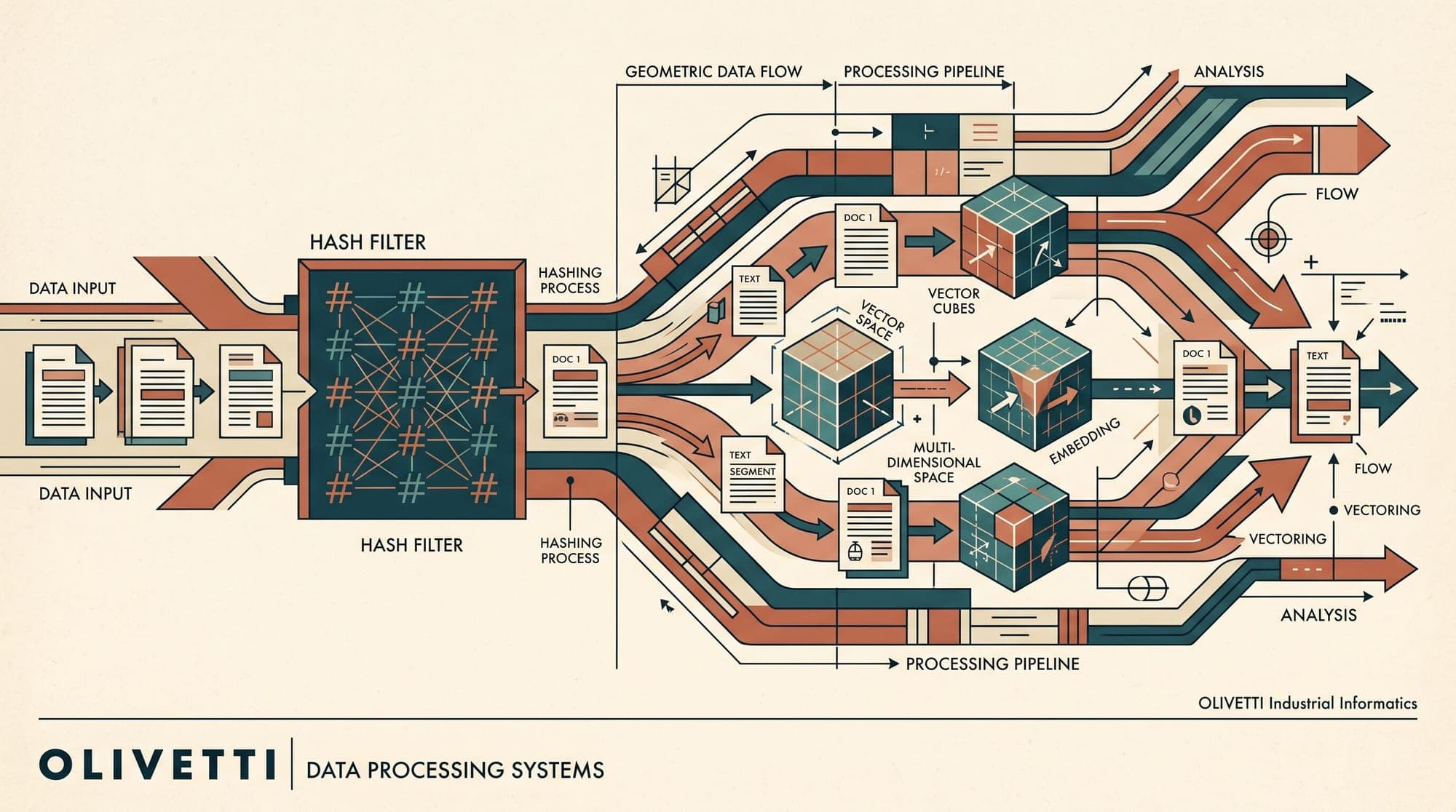
  6. Data Ingestion and Incremental Sync for Production RAG: CDC Streams, Content Hashing, Backpressure, and Zero-Downtime Indexing

    Maintaining retrieval-augmented generation (RAG) systems in production introduces a fundamental distributed systems challenge that rarely surfaces in proof-of-concept architectures: state synchronization. While initial ingestion across a static document corpus is straightforward, production data sources (PostgreSQL databases, transactional stores, object storage, and enterprise knowledge hubs) undergo continuous mutation. Records are inserted, updated, soft-deleted, and reassigned new access per

    RAG
    8 min read
  7. Unsloth Releases Dynamic V3.0 GGUFs for Qwen 3.8 27B with 1-Bit Mode and MTP

    Unsloth AI has published its Dynamic V3.0 quantization suite for Alibaba's Qwen 3.8 27B model family, releasing optimized GGUF and NVFP4 checkpoints alongside public calibration matrices. The release claims a greater than 10 percent increase in top-1 percent accuracy at identical file sizes compared to standard baseline quantizations, while introducing an ultra-low-bit dynamic tier that operates within 8GB of memory. Qwen 3.8 27B is a dense vision-language model utilizing hybrid attention layer

    Open Weights
    2 min read
  8. HoneyBook Launches Claude MCP Connector for Autonomous Small Business CRM

    Small-business CRM platform HoneyBook has rolled out an official integration for Anthropic's Claude built on the Model Context Protocol (MCP). The connector exposes structured customer records, project timelines, and billing systems to conversational AI agents, allowing service professionals to run client workflows through natural language interfaces. While large enterprises have increasingly deployed autonomous AI agents into core enterprise resource planning systems, smaller operators face st

    Anthropic
    2 min read
  9. State Data Farms Account for 20% of China's Humanoid Robot Shipments

    Government-backed data collection hubs and municipal training centers accounted for roughly 20 percent of China's more than 20,000 humanoid robot shipments last year, according to an analysis from Bernstein. The purchases reflect a national strategy to overcome the primary bottleneck in physical artificial intelligence: the scarcity of high-fidelity physical interaction data needed to train embodied foundation models. Unlike large language models that train on vast public text corpora scraped f

    Robotics
    2 min read
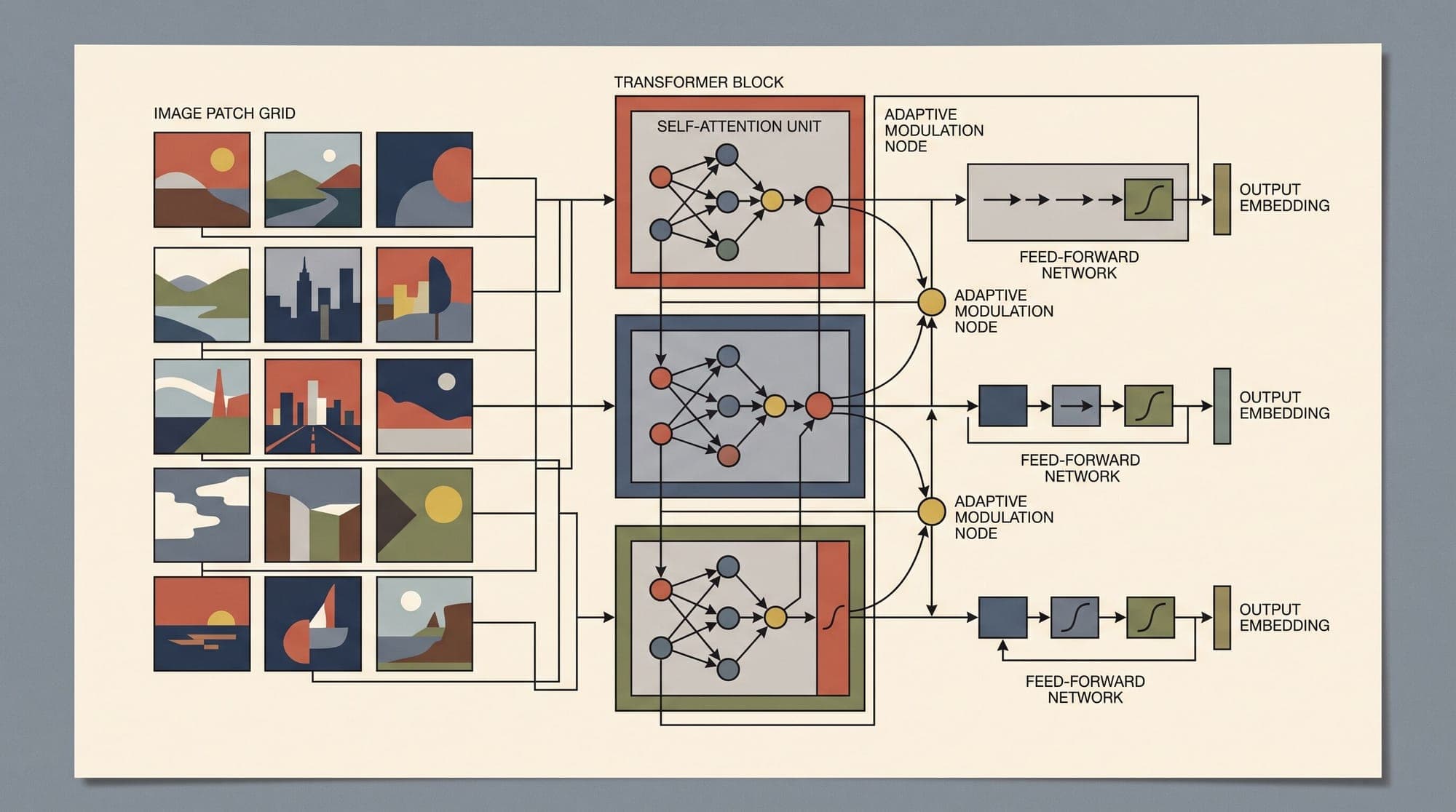
  10. Diffusion Transformers (DiT): How Patchification and adaLN-Zero Replaced U-Nets in Generative AI

    Generative visual models relied for years on convolutional U-Net architectures to execute iterative denoising. From Denoising Diffusion Probabilistic Models (DDPM) and Ablated Diffusion Models (ADM) to Latent Diffusion Models (LDMs) behind Stable Diffusion, convolutional backbones served as the default engine for image synthesis. While convolutional inductive biases provided translation equivariance and local spatial hierarchies, they imposed architectural rigidities that resisted compute scalin

    AI
    8 min read