Archive / page 84 of 123

Latest articles, page 84

  1. Rich Sutton: Relying on Synthetic Data to Scale Foundation Models Is a 'Big Mistake'

    Reinforcement learning pioneer Richard Sutton has challenged the artificial intelligence industry's accelerating pivot toward synthetic data, characterizing the strategy as a fundamental misstep that cannot resolve the scaling bottlenecks confronting foundation models. Speaking alongside Oak Lab co-founder Khurram Javeed, the author of the foundational 2019 essay "The Bitter Lesson" argued that synthetic data generation inherently runs counter to the principles that govern general intelligence.

    AI
    2 min read
  2. Slack Launches Slack Code to Host AI Coding Agents in Dedicated Project Channels

    Slack has introduced Slack Code, a native environment that shifts AI-assisted software development out of private chat windows and into dedicated, collaborative workspace channels. Available immediately across all Slack subscription tiers, including free accounts, the feature enables engineering and product teams to summon autonomous coding agents directly into project-scoped spaces where teammates can monitor implementation progress, inspect code diffs, review live web previews, and control pro

    AI
    2 min read
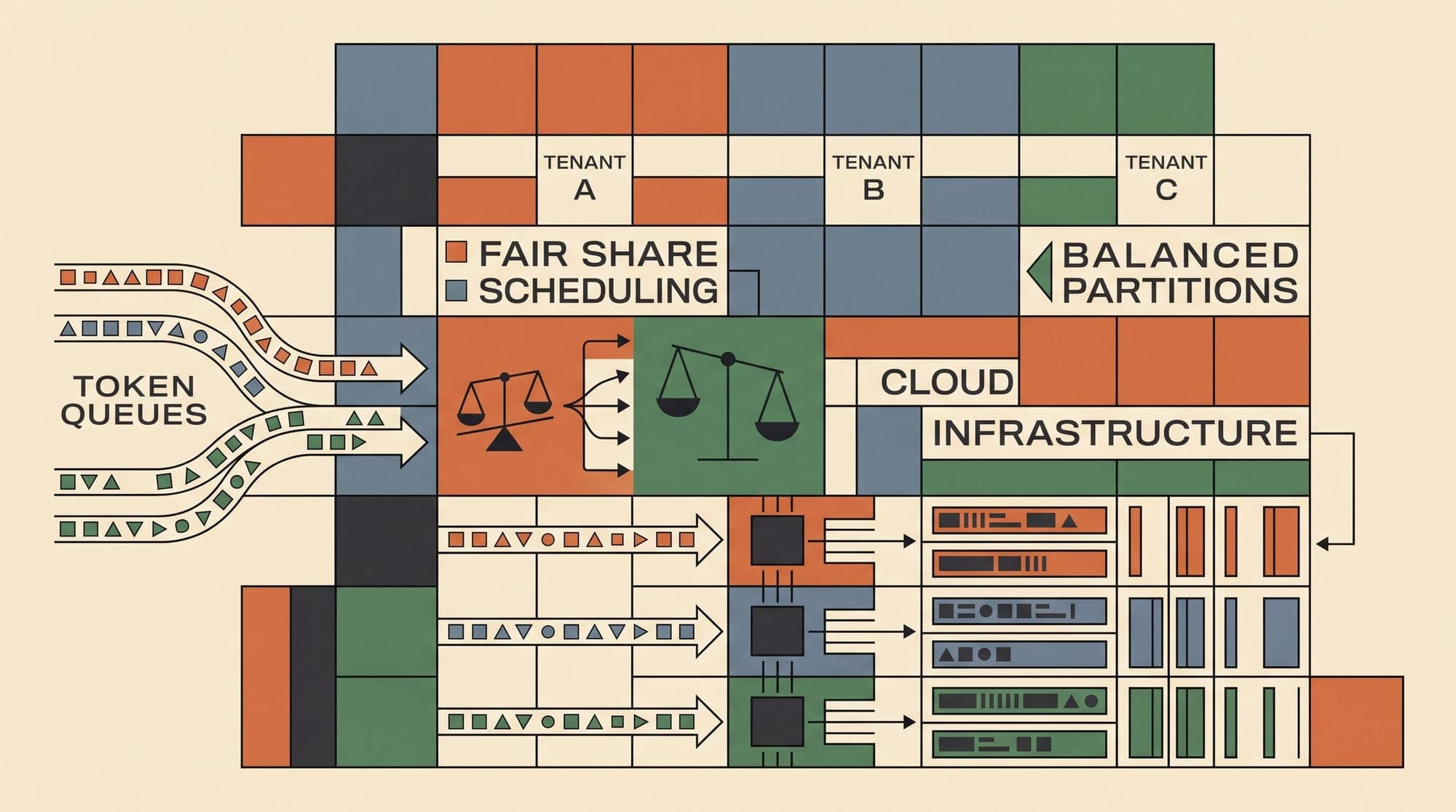
  3. Multi-Tenant LLM Serving in Production: Fair-Share Scheduling, Dynamic KV Cache Quotas, and Noisy Neighbor Isolation

    Operating a shared, multi-tenant large language model (LLM) serving cluster differs fundamentally from traditional stateless web tier hosting. In conventional microservices, tenants consume CPU cycles and static memory footprints in predictable, linear increments. In LLM serving, however, requests exhibit severe non-uniformity across multiple competing hardware dimensions: compute-bound prefill operations, memory-bandwidth-bound autoregressive decoding, and persistent High-Bandwidth Memory (HBM)

    Inference
    7 min read
  4. ReAct in Large Language Models: How Interleaving Reasoning and Action Traces Built the Foundation of AI Agents

    ReAct in Large Language Models: How Interleaving Reasoning and Action Traces Built the Foundation of AI Agents Before autonomous agents could interact reliably with APIs, search engines, and bash environments, large language models (LLMs) operated in one of two disconnected paradigms: internal reasoning without external interaction, or external action generation without internal deliberation. In pure reasoning paradigms such as Chain-of-Thought (CoT) prompting, models generate intermediate natu

    AI
    10 min read
  5. Z.ai Delays GLM-5.3 Open-Weight Release After New Cyber Benchmark Scores

    Z.ai Delays GLM-5.3 Open-Weight Release After New Cyber Benchmark Scores Chinese AI lab Z.ai has delayed the open-weights release of its GLM-5.3 model by approximately two weeks, citing safety evaluations and hardening following benchmark results that show the model excels at finding vulnerabilities but trails peers on exploitation. GLM-5.3 scored 84.5% on CyberGym, a benchmark testing vulnerability discovery and verification -- ahead of Anthropic's Mythos 5 (83.8%) and OpenAI's GPT-5.6 Sol (8

    3 min read
  6. Muon Space Closes $250M Series C to Scale Orbital AI Infrastructure

    Muon Space Closes $250M Series C to Scale Orbital AI Infrastructure Satellite manufacturer Muon Space has closed a $250 million Series C round led by Eclipse Capital, with participation from Google, Salesforce Ventures, Wellington Management, I Squared Capital, and Woven Capital. The funding values the Mountain View startup at approximately $1.5 billion and will accelerate production of its Condor-Ultra spacecraft platform designed for orbital data centers and AI compute. The five-year-old com

    2 min read
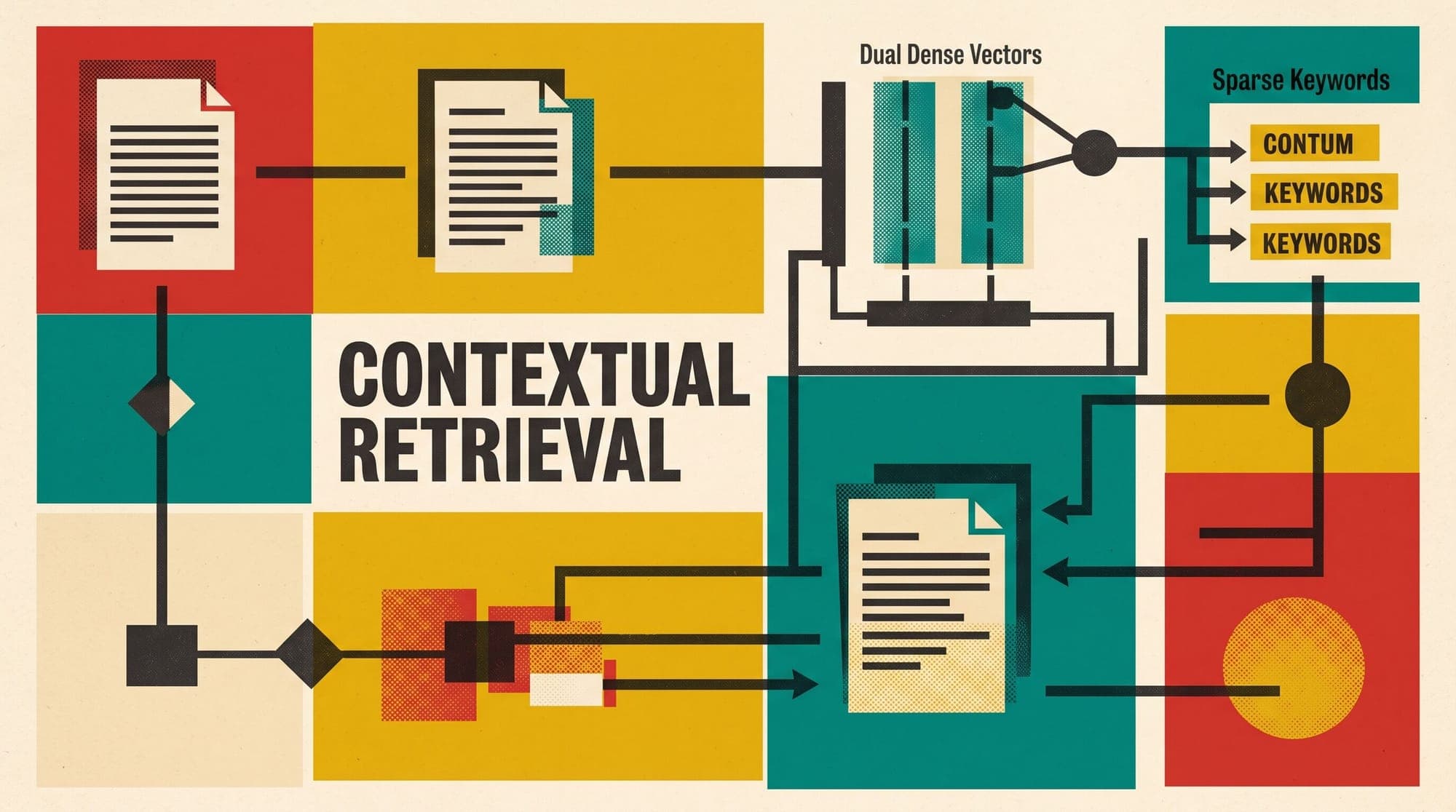
  7. Contextual Retrieval in Production RAG: Architecture, Prompt Caching Economics, Hybrid Fusion, and Reranking Pipelines

    Contextual Retrieval in Production RAG: Architecture, Prompt Caching Economics, Hybrid Fusion, and Reranking Pipelines Standard Retrieval-Augmented Generation (RAG) architectures suffer from an inherent design flaw at the preprocessing stage: chunking destroys document hierarchy. When a system divides a large document corpus into fixed-size passages (such as 300 to 800 tokens) or applies semantic boundaries, the resulting chunks lose their surrounding narrative, parent headings, entity definiti

    AI
    7 min read
  8. Self-Consistency Decoding: How Sampling Diverse Reasoning Paths Eliminates Single-Trajectory Fragility in LLMs

    Self-Consistency Decoding: How Sampling Diverse Reasoning Paths Eliminates Single-Trajectory Fragility in LLMs Standard inference pipelines in large language models rely on greedy decoding or low-temperature sampling to generate answers. For tasks requiring direct factual recall or basic classification, greedy token selection generates fluent and accurate outputs. However, when large models are tasked with complex multi-step reasoning, greedy generation exhibits severe structural fragility. In

    AI
    6 min read
  9. Study: One-Third of In-Assistant ChatGPT Ads Land in Irrelevant Conversations

    An empirical analysis of more than 11,000 advertisements served inside ChatGPT conversations found that 33% had no discernible relevance to the surrounding discussion. Conducted by AI visibility platform Searchable between July 4 and August 4, 2026, the study paired live ad impressions with conversation logs to evaluate contextual alignment, commercial intent, and sector-specific accuracy across OpenAI's conversational ad inventory. OpenAI introduced advertising into ChatGPT in February 2026, r

    OpenAI
    2 min read
  10. Guidelight Assessment Finds Frontier AI Labs Lack Basic Internal Safety Controls

    Nonprofit AI safety evaluation organization Guidelight has published its inaugural assessment of internal control practices across frontier AI developers. Evaluating public disclosures from Anthropic, OpenAI, Google DeepMind, xAI, and Meta, the study finds that foundational mechanisms for monitoring, gating, and containing advanced internal AI models remain only partially implemented across the industry. No evaluated organization achieved full or near-full implementation on any of the standard'

    AI Safety
    3 min read