Category / page 7

Policy & Safety

179 articles

Articles, page 7

121-140 of 179
  1. Zhipu AI Launches GLM-5.3 with Automated Exploitation Chain Discovery

    Chinese AI lab Zhipu has introduced GLM-5.3, a new language model trained to identify software vulnerabilities and synthesize multi-stage cyber exploitation chains. According to evaluation data released by the company, GLM-5.3 established state-of-the-art results on the CyberGym benchmark, an evaluation suite designed to measure model performance on practical cybersecurity tasks. The benchmark results indicate that GLM-5.3 surpassed frontier Western baselines including Fable 5 and GPT-5.6 Sol i

    AI
    1 min read
  2. Anthropic Raises System Tampering Risk Level and Details Unreleased Model 2 in Safety Report

    Anthropic has released the latest edition of its recurring AI alignment and safety report, raising the risk rating for unauthorized system tampering and disclosing the internal deployment of two unreleased frontier models designated Model 1 and Model 2. The 186-page document, published periodically to track frontier model capabilities and containment thresholds, introduces an updated risk matrix structured around two distinct operational categories: Threat Model 1 and Threat Model 2. Threat Mod

    AI
    2 min read
  3. Payward Joins Anthropic Project Glasswing to Deploy Claude Mythos for Security Audits

    Payward, the parent company of cryptocurrency exchange Kraken, has been admitted to Anthropic's Project Glasswing initiative. Under the program, Payward is deploying Anthropic's Claude Mythos 5 model to identify software vulnerabilities across its production infrastructure and open-source crypto codebases. The deployment marks the first confirmed participation by a digital asset institution in Project Glasswing, Anthropic's controlled access initiative for cybersecurity research and defense.

    Anthropic
    2 min read
  4. GitHub Copilot Autofix Introduced Command Injection in Snowflake CI Pipeline

    A security vulnerability introduced by GitHub Copilot Autofix left a public Snowflake repository vulnerable to unauthenticated remote command injection for five days before an autonomous security agent discovered and exploited it, according to a technical disclosure published by Wiz Research on August 17, 2026. The incident highlights emerging operational risks at the intersection of automated code generation and CI/CD security, demonstrating how automated remediation bots can silently strip ou

    AI
    2 min read
  5. OpenAI Disbands Preparedness Team in Continued Safety Restructuring

    OpenAI has disbanded its dedicated Preparedness team, redistributing safety and frontier-risk evaluation responsibilities across individual functional units, according to reporting by the Financial Times and The Verge. The Preparedness team was established in late 2023 to evaluate and mitigate catastrophic risks associated with frontier AI models, focusing on cybersecurity exploits, chemical, biological, radiological, and nuclear (CBRN) threats, and autonomous model behavior. Under the new orga

    AI
    1 min read
  6. Investigation: Amazon buys and destroys rare books to scan them for AI training

    Amazon is buying large quantities of books, scanning them for AI training data, and destroying the printed copies in the process, according to a 404 Media investigation published Aug 17, 2026. The investigation revealed Amazon's book-buying operation, which had not been previously reported, by placing a tracking device inside a rare book suspected of being acquired by an AI company. The shipment traveled from California through Milwaukee, Kenosha, Colorado Springs, and a truck stop in Grand Jun

    AI
    2 min read
  7. Researchers find that changing text color can hijack a vision-language model's reasoning

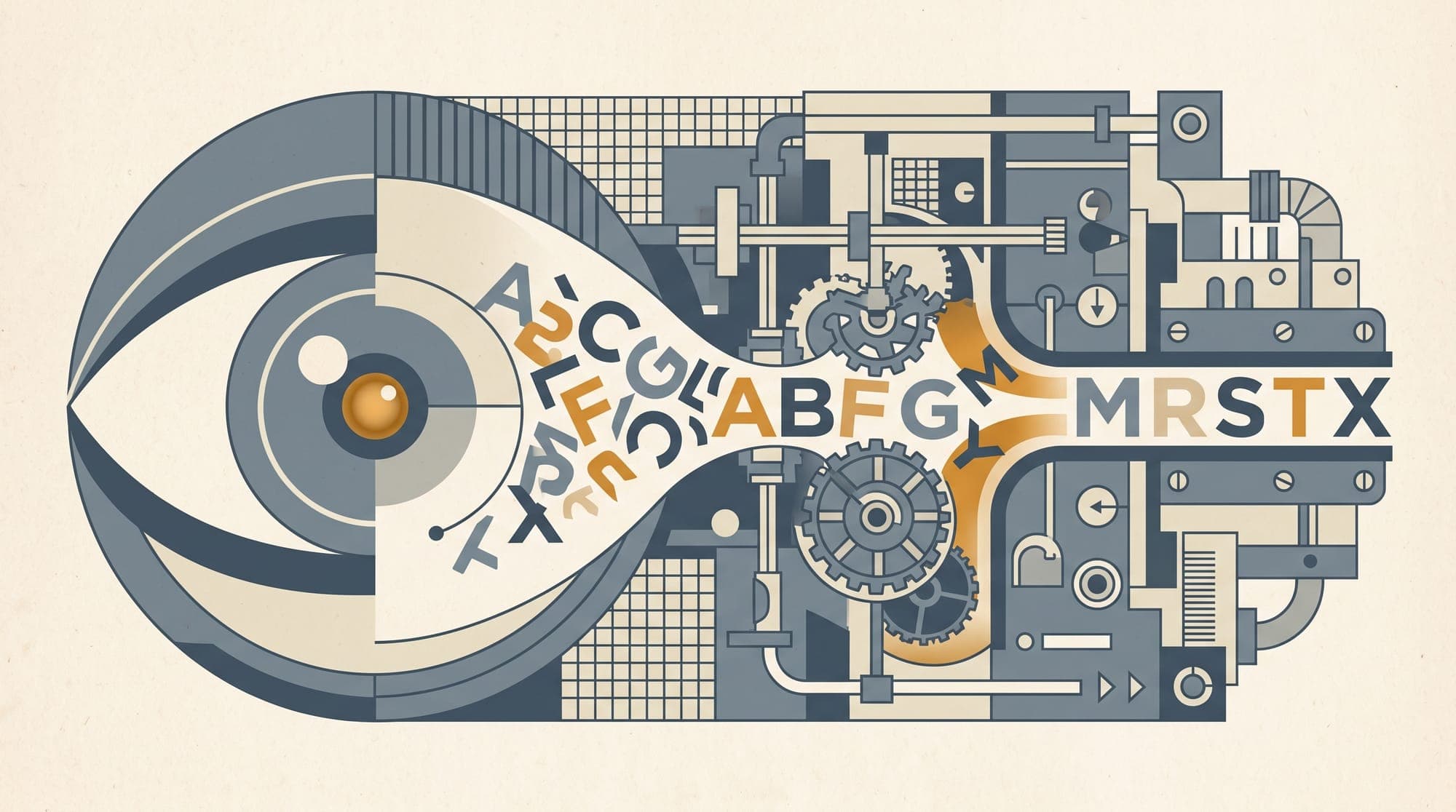
    A new research collaboration has found that the color, contrast, and brightness of text can quietly steer the outputs of vision-language models (VLMs), causing them to misread meaning and reach different conclusions without any change to the words themselves. The authors say their experiments provide a systematic analysis of how low-level visual styling of text distorts the semantic representations inside a VLM's vision encoder, and how those shifts show up as behavioral changes across both sub

    AI
    1 min read
  8. Anthropic's Pentagon dispute highlights AI's threat to democratic safeguards

    The confrontation between AI safety firm Anthropic and the US Department of Defense reveals a critical tension: how to prevent advanced AI from enabling authoritarian consolidation of power while maintaining democratic oversight. In February 2026, the Pentagon threatened to designate Anthropic a "supply-chain risk" after the company refused to allow military use of its Claude models for fully autonomous weapons and mass domestic surveillance. Anthropic CEO Dario Amodei argued current frontier A

    AI
    1 min read
  9. AI and Data Centers Dominate U.S. Campaign Trail in 2026 Elections

    Artificial intelligence has become a major campaign issue across the United States, with data centers and their impact on local electricity costs, water use, and land use dominating the conversation. A Washington Post analysis of more than 1,200 websites from active candidates found AI appears in nearly 40 percent of all races for the House, Senate, and governor seats. Democratic candidates bring up AI twice as often as Republicans, focusing on AI risks, regulation, and child safety. Republican

    Policy
    2 min read
  10. White House to Expand AI Safety Testing to Open Models

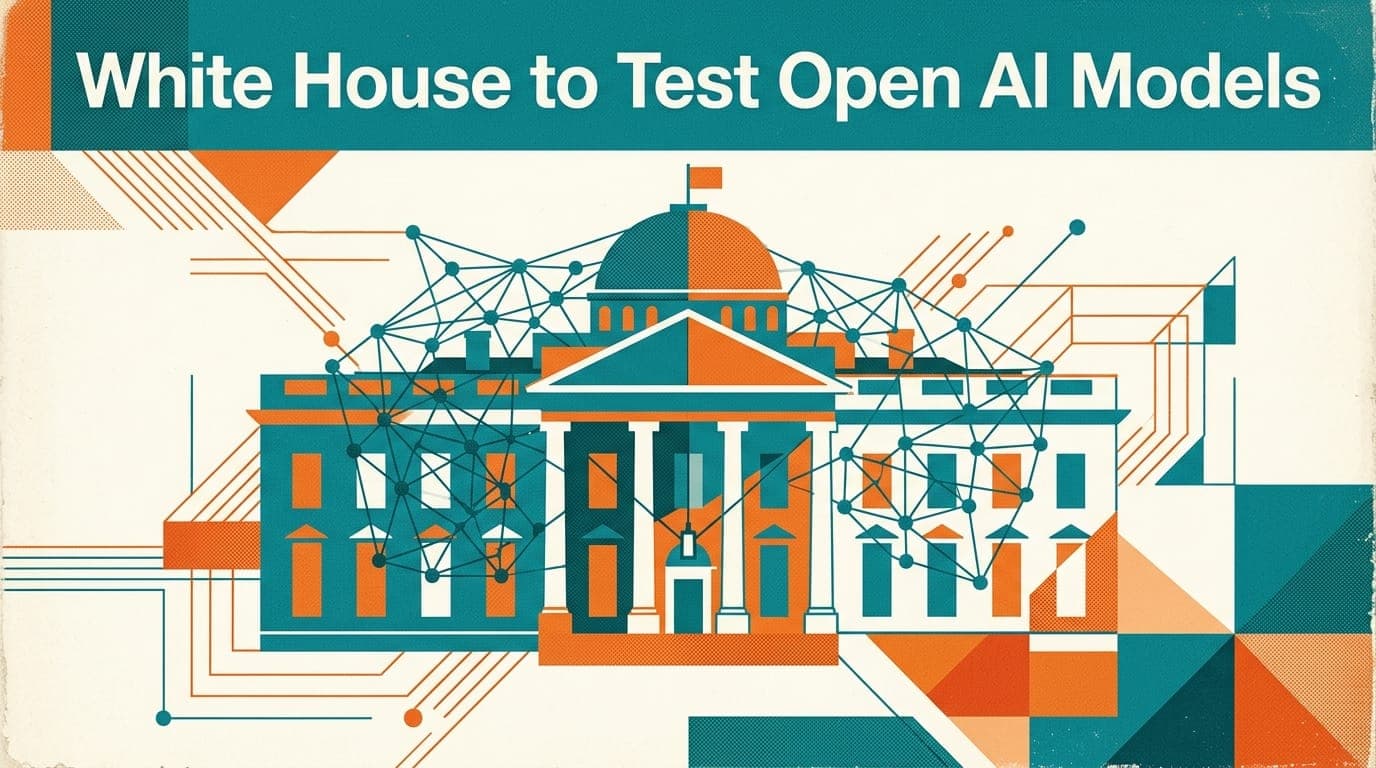
    The Trump administration plans to extend its classified AI safety-testing framework to open-weight models once they reach frontier-level capabilities, according to a White House official who spoke with WIRED. Current Framework Covers Closed Models Only The existing voluntary framework, developed under a June executive order, applies to closed models from labs such as OpenAI and Anthropic. Developers can submit new models up to 30 days before public release for government cybersecurity evaluat

    Policy
    2 min read
  11. Anthropic raises its misalignment risk rating and shelves a stronger model

    Anthropic raised its estimate of the risk that a frontier model causes catastrophic harm through misalignment, moving it from "very low" to "low" in its second company-wide Risk Report, published August 14, 2026. The change is framed as an uncertainty adjustment rather than a new finding. Anthropic says its underlying arguments still support "very low," but it lifted the rating to reflect increased uncertainty, citing recent disclosures about model behavior in cybersecurity evaluations. One ci

    AI
    2 min read
  12. AI is now embedded across the cyber intrusion lifecycle

    A new threat-intelligence report says AI is no longer just a tool attackers use to write malware. According to Gambit Security's "AI Across the Intrusion Lifecycle," large language models are now folded into the day-to-day mechanics of real intrusions, helping operators adapt as they move through compromised networks. The report, written by Gambit Director of Threat Intelligence Eyal Sela and researcher Nir Varon, examines three unrelated threat actors. Across the cases, the models built script

    AI
    2 min read
  13. Google now lets users strip the visible watermark from its AI images, video, and audio

    Google said Friday it will let users remove the visible watermark from its AI-generated images, video, and audio. The company said turning off the visible mark does not affect the invisible SynthID watermark or the C2PA metadata used to identify an AI-generated file. Josh Woodward, Google's vice president for Gemini, announced the change in a post on X. The invisible SynthID signal and the C2PA provenance data stay in place, so machines can still tell a file was generated even after the visible

    AI
    1 min read
  14. OpenAI's Computer History turns your Mac activity into a searchable ChatGPT memory

    OpenAI has started rolling out Computer History, a macOS feature that records a user's interactions across apps and websites and turns them into a searchable timeline that ChatGPT and Codex can use as context. Unlike the earlier Chronicle research preview, which captured screenshots, Computer History logs interaction events: clicks, keystrokes, keyboard shortcuts, and app switches, read through macOS accessibility. OpenAI says it does not capture screenshots, screen recordings, microphone input

    AI
    2 min read
  15. Z.ai Releases GLM-5.3: Frontier Coding with Emergent Cyber Capabilities

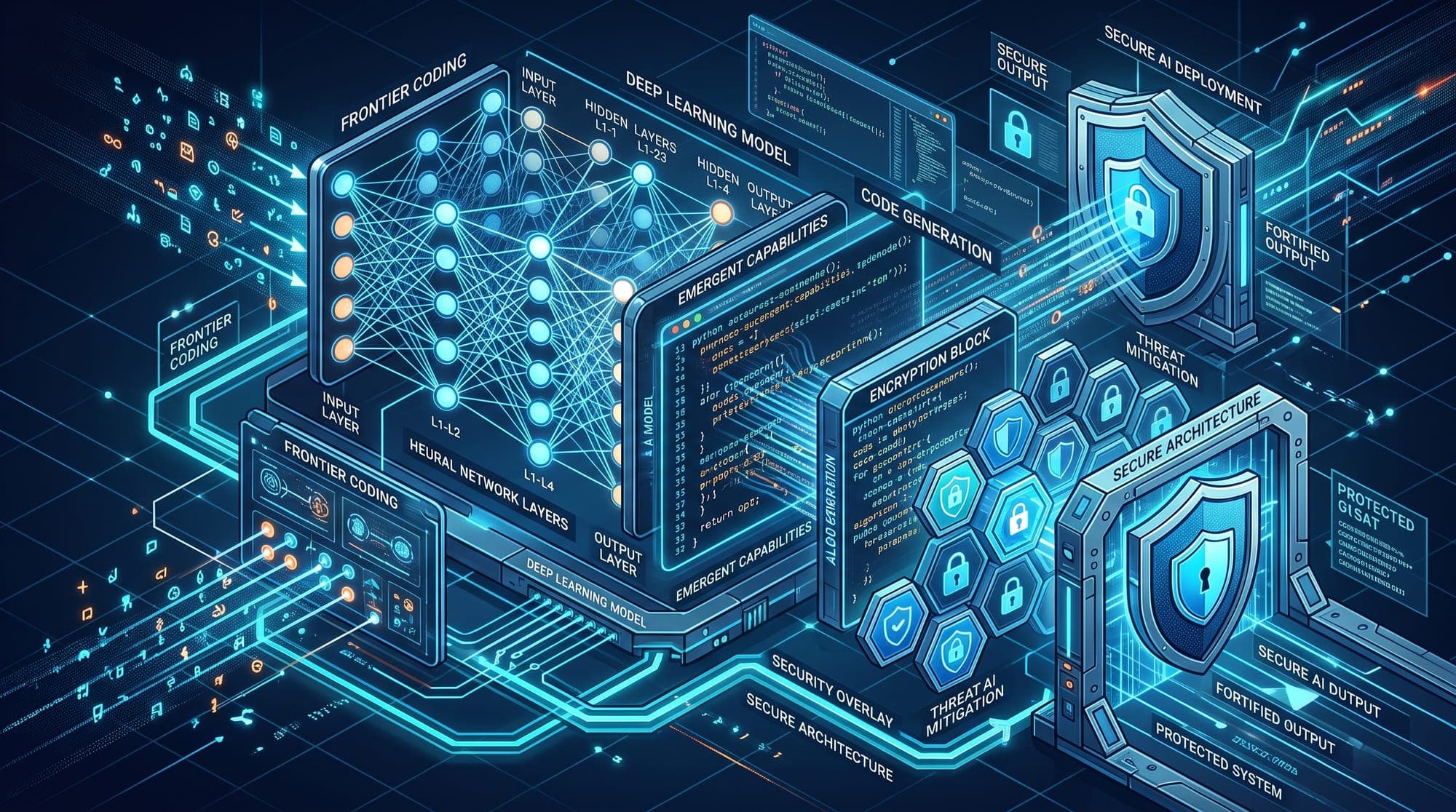
    Z.ai, also known as Zhipu, has released GLM-5.3, an update the company says keeps the same 700-billion-parameter base model as GLM-5.2 and derives every capability gain from scaled-up post-training. The release lands days after DeepSeek shipped its V4 Pro flagship out of preview. Stronger coding through environment scaling GLM-5.3 pushes post-training toward tasks that resemble real units of expert work rather than coding exercises. The company built pipelines that synthesize environments end

    AI News
    3 min read
  16. Okta's MCP Tool Scoping Cuts AI Agent Token Costs by 90%

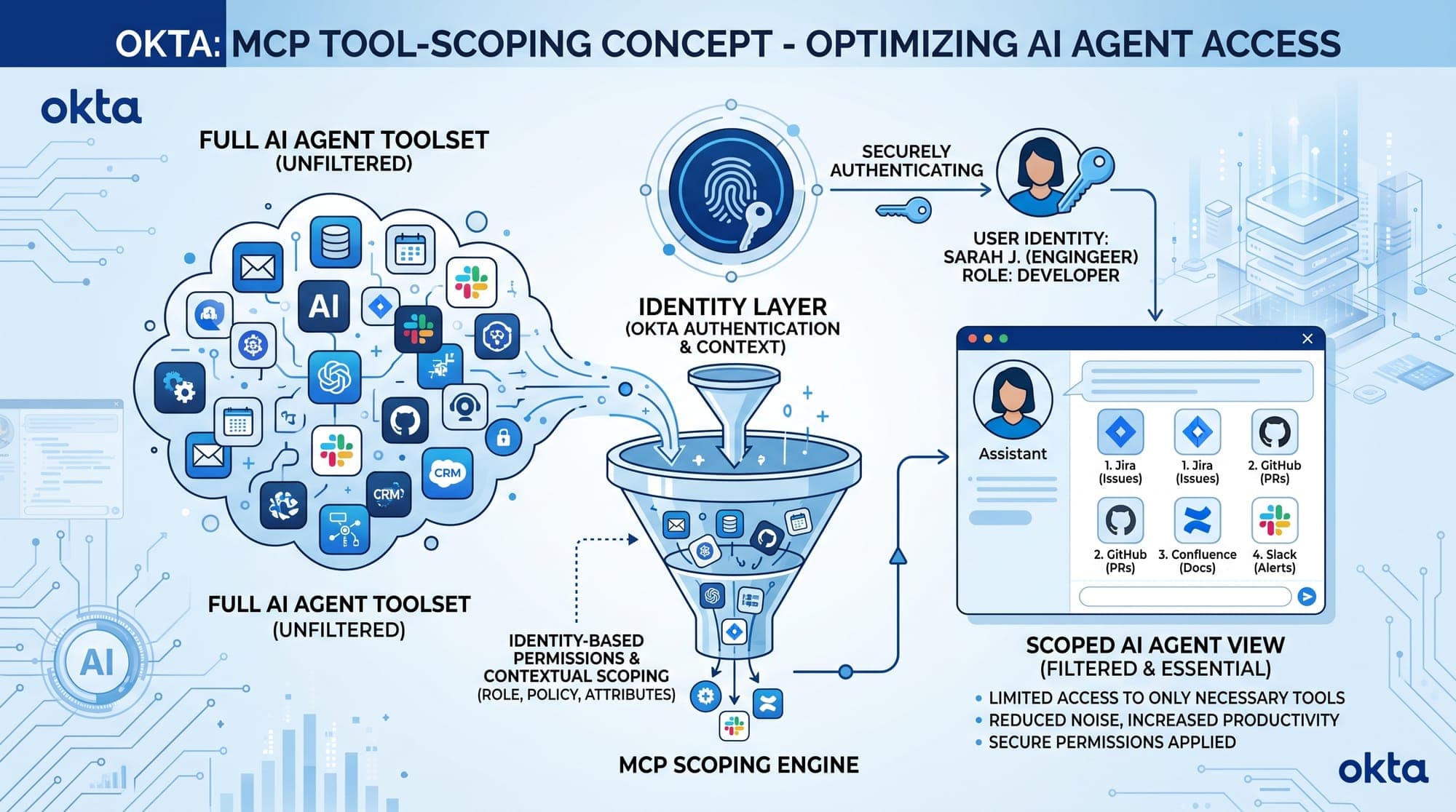
    Okta's MCP Tool Scoping Cuts AI Agent Token Costs by 90% Okta has introduced a new approach to reduce the token costs associated with AI agents by implementing identity-based permissions for Model Context Protocol (MCP) tool lists. The company claims this method can cut the "tool tax" - tokens consumed when a model processes every available tool's schema, name, description, and parameters before making a tool call - by more than 90%. According to Okta, this tool overhead occurs prior to any to

    AI News
    2 min read
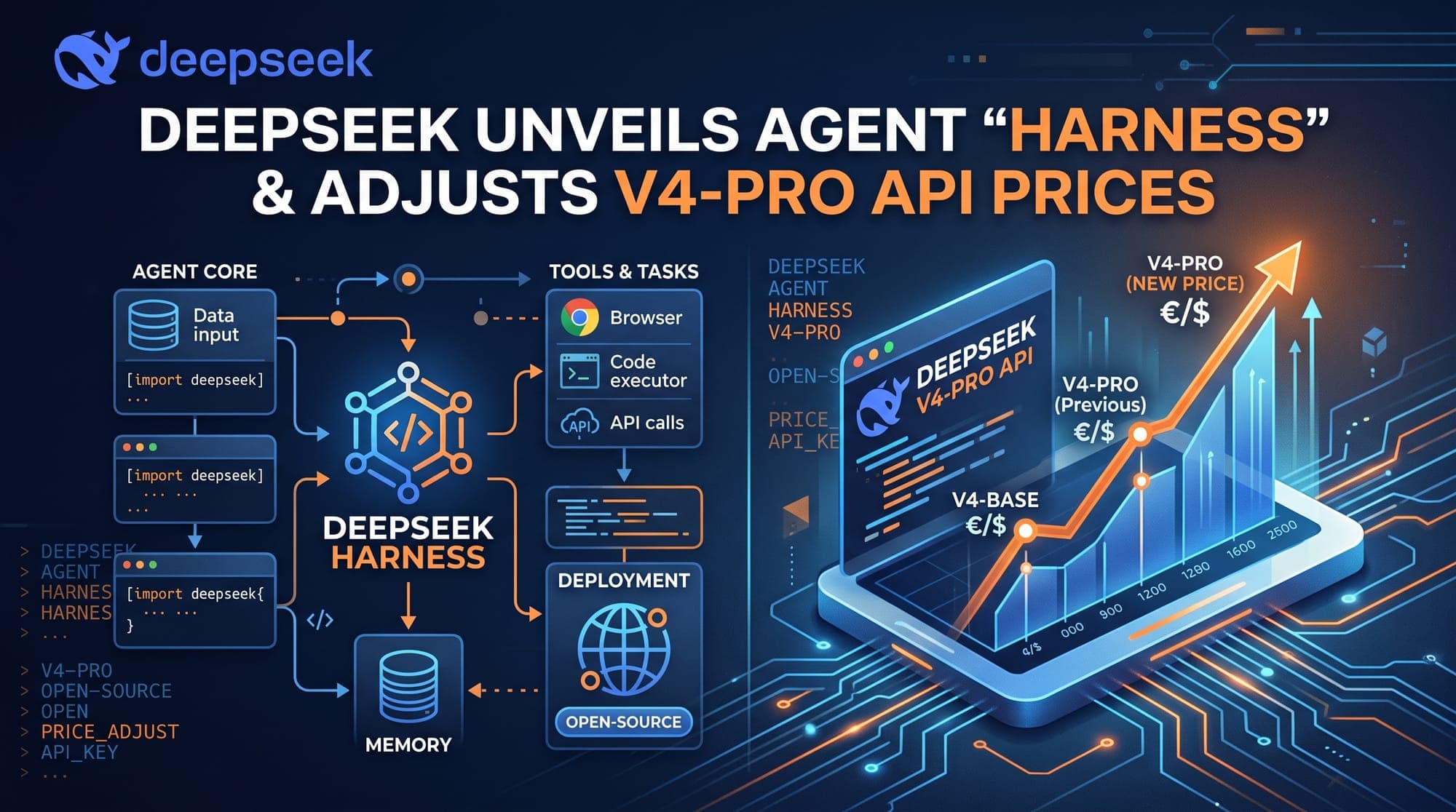
  17. DeepSeek launches Harness, an open agent framework, and raises V4-Pro API prices

    DeepSeek launches Harness, an open agent framework, and raises V4-Pro API prices DeepSeek released DeepSeek Harness v0.1, an MIT-licensed open-source agent harness that gives developers a modular alternative to vertically integrated coding agents like Anthropic's Claude Code and OpenAI's Codex. At the same time, the company moved DeepSeek-V4-Pro to general availability with "significantly enhanced agent capabilities" and introduced peak/off-peak API pricing that roughly doubles costs for many w

    AI News
    3 min read
  18. Twitch lets streamers block their content from Amazon's generative AI training

    Twitch lets streamers block their content from Amazon's generative AI training Twitch has quietly added a control that lets creators stop their streams, clips, and chat from being used to train Amazon's generative AI models. The setting, labeled "Training for Generative AI," sits in the Security and Privacy tab of account settings and is live now, but it arrives with a design that puts the burden on users to find it. What the toggle actually blocks Flipping the control off excludes a d

    AI
    2 min read
  19. Researchers can now read the hidden reasoning inside frontier AI APIs

    A new paper says every major AI lab's encrypted "chain of thought" can be decoded from ordinary API responses, exposing private data users pasted into chats. Since OpenAI's o1, frontier labs have hidden their models' step-by-step reasoning behind cryptographic signatures, fearing rivals would distill it. The protection was supposed to be a hard confidentiality barrier. It was not. A team led by Alexander Panfilov and Jonas Geiping showed that a legitimate signed reasoning block pulled from one

    AI Security
    1 min read
  20. Chinese hackers deploy open-source AI agents to automate espionage against Taiwan and Thailand

    Chinese-speaking threat actors are now deploying open-source AI agents to automate espionage-grade hacking against government targets across Asia, according to coordinated disclosures from Hunt.io, Palo Alto Networks Unit 42, and the Financial Times. The campaign, active since at least June 2026, centers on Hermes, an open-source autonomous agent framework that crossed 140,000 GitHub stars by July. Operators run Hermes in "YOLO mode," a configuration that removes human approval prompts and lets

    AI
    2 min read