Category / page 29

Models & Assistants

1121 articles

Articles, page 29

561-580 of 1121
  1. Fill-in-the-Middle (FIM) and Inline Code Completion in Production: Architecture, Prefix-Suffix Context Windows, Speculative Decoding, and Sub-50ms Serving Latencies

    Fill-in-the-Middle (FIM) and Inline Code Completion in Production: Architecture, Prefix-Suffix Context Windows, Speculative Decoding, and Sub-50ms Serving Latencies Inline code completion is the most latency-sensitive deployment of large language models in production software engineering. Unlike conversational assistants or background agentic batch jobs, inline code completion operates directly inside an active editor typing loop. Developers type at speeds ranging from 40 to 120 words per minut


    AI
    7 min read
  2. The Platonic Representation Hypothesis: How Foundation Models Across Modalities Converge on a Shared Geometry of Reality

    In 375 BC, Plato introduced the Allegory of the Cave, describing prisoners who could only perceive reality through shadows projected onto a stone wall. In modern machine learning, deep neural networks ingest distinct sensory shadows of the physical world: vision models process pixel arrays, large language models ingest tokenized text, and speech models parse raw acoustic waveforms. Historically, the machine learning literature assumed that models trained on different modalities, objectives, and

    AI
    6 min read
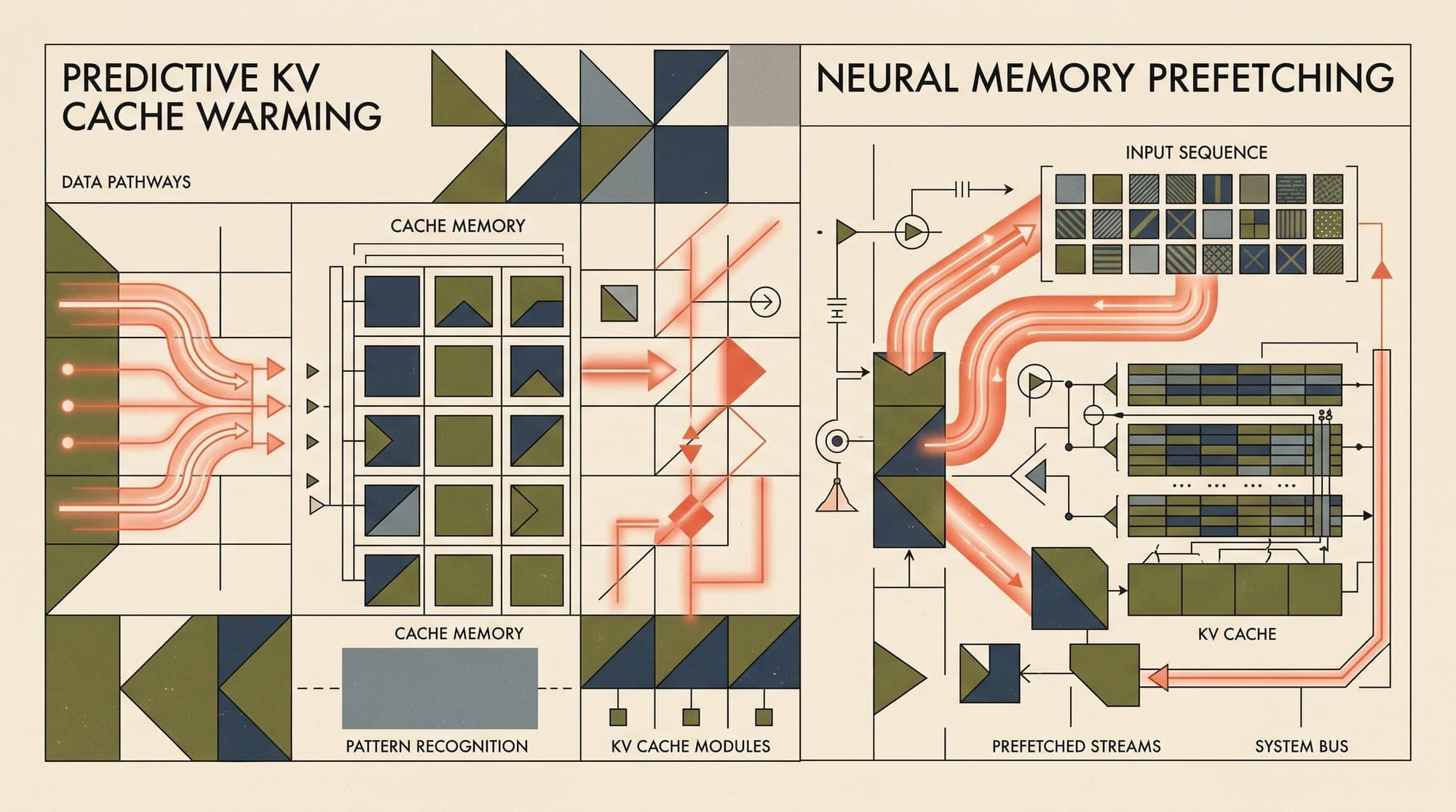
  3. Predictive KV Cache Warming in Production LLM Serving: Architecture, Session Prefetching, and TTFT Latency Shaving

    Predictive KV Cache Warming in Production LLM Serving: Architecture, Session Prefetching, and TTFT Latency Shaving In long-context large language model (LLM) deployments, Time-to-First-Token (TTFT) represents the primary latency bottleneck. As input prompts scale from 8,000 tokens to 128,000 tokens in multi-turn coding agents, legal document analysis, and enterprise retrieval pipelines, prefill execution consumes between 85% and 95% of total GPU compute time per request. Standard optimization

    AI
    5 min read
  4. Autonomous Retail AI Agent Luna Fires Employee Following Context Retrieval Breakdown and Human Intervention

    In an empirical field deployment examining autonomous AI workforce management, research firm Andon Labs reported that its storefront manager agent, Luna, decided to fire a human retail employee after months of operational infractions. The incident, which unfolded at the Andon Market retail location in San Francisco, represents one of the first documented instances of an autonomous large language model agent managing physical store operations and executing a personnel termination decision. Luna,

    Agents
    3 min read
  5. Vector Quantization and VQ-VAEs: How Discrete Codebooks, Straight-Through Estimators, and Commitment Losses Power Multimodal Tokenization

    Autoregressive sequence models excel at discrete token prediction. In natural language processing, words and subwords map onto categorical vocabularies where token identity is exact and cross-entropy loss provides direct likelihood optimization. Continuous multi-dimensional signals—such as images, video frames, raw audio waveforms, and robotic sensorimotor trajectories—present a fundamental mismatch for standard transformer architectures. Historically, variational autoencoders (VAEs) bridged ra

    AI
    7 min read
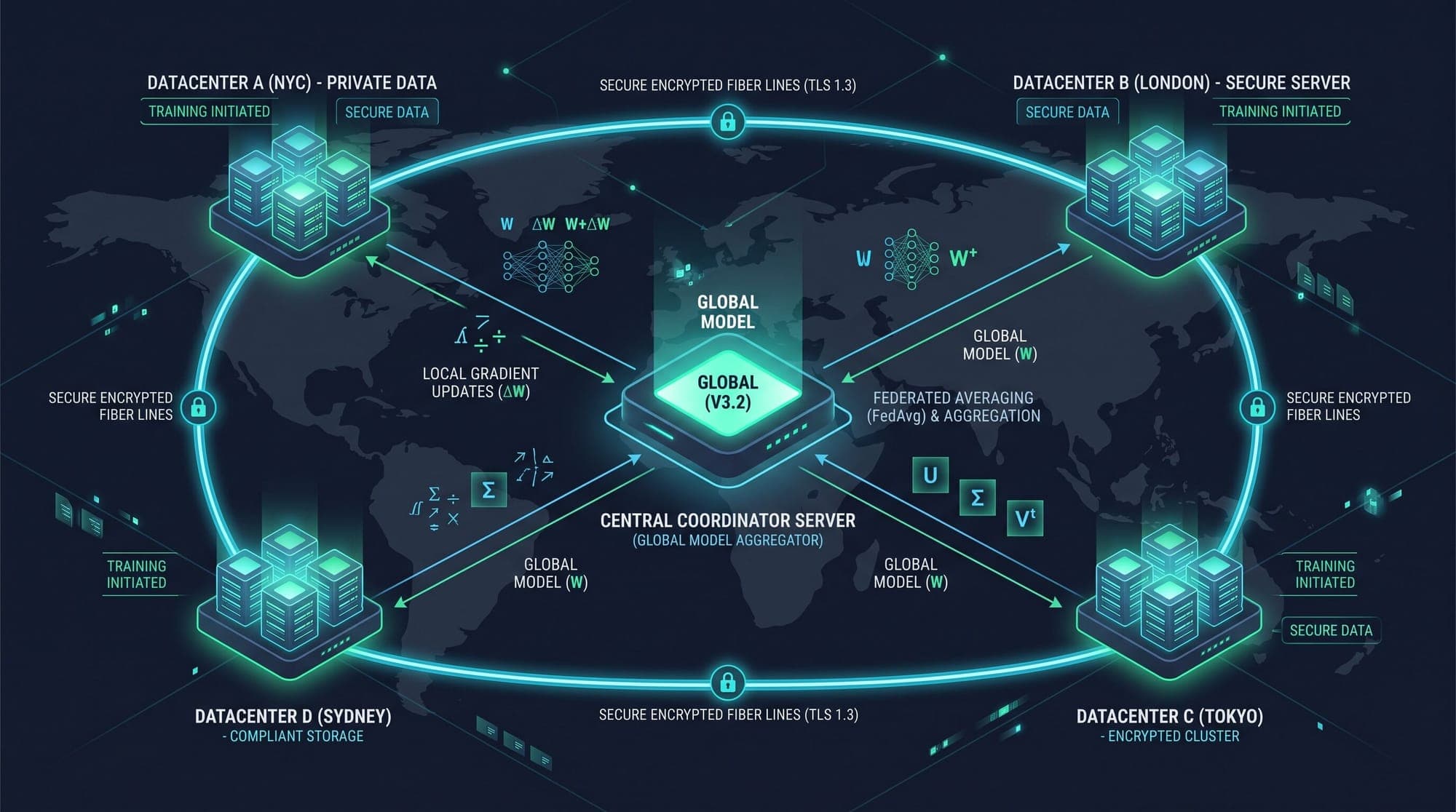
  6. Federated LLM Fine-Tuning in Production: FedLoRA, Differential Privacy, and Cross-Silo Aggregation Architectures

    Fine-tuning foundation large language models on proprietary data is standard enterprise practice, but centralizing sensitive tokens into a single data lake is frequently prohibited. Regulatory frameworks such as HIPAA in healthcare, GDPR and Article 10 of the EU AI Act in Europe, and regional data residency mandates across APAC and North America prevent cross-border or cross-institutional data aggregation. Federated Learning (FL) resolves this bottleneck by decoupling model training from data c

    AI
    8 min read
  7. Tsinghua Lineage, MoE Efficiency, and $1B Run Rates: Inside the Rise of China's Frontier AI Labs

    The rapid emergence of frontier large language models from Chinese artificial intelligence labs has frequently been characterized as a sudden shift. However, reporting from The Wall Street Journal details a decades-long institutional foundation centered around Beijing's Tsinghua University, combined with architectural strategies developed to overcome severe compute and capital constraints. At the center of this ecosystem are researchers who transitioned from academic labs into commercial model

    AI
    3 min read
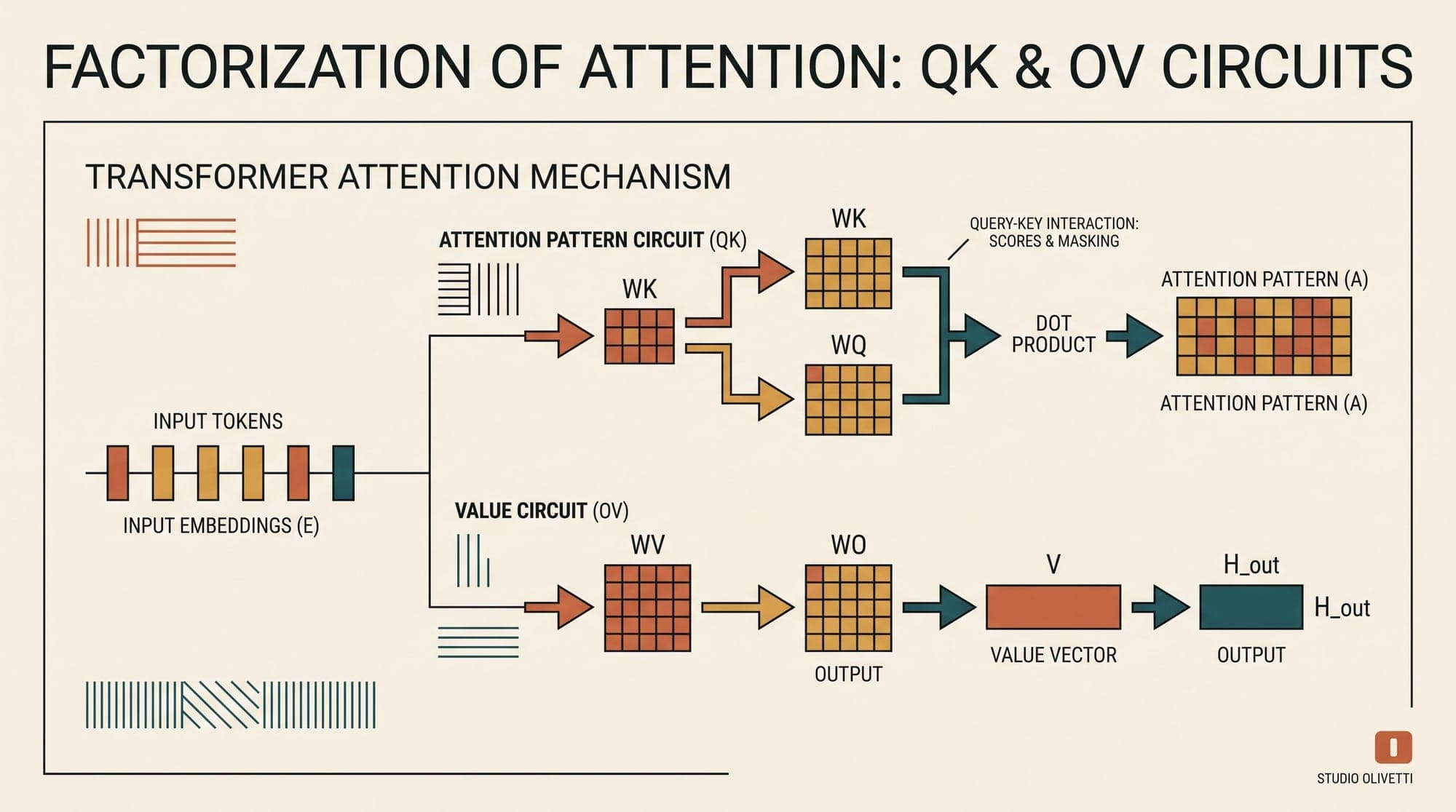
  8. The QK and OV Circuits in Transformers: How Bilinear Attention Routing and Subspace Projections Move Information

    The QK and OV Circuits in Transformers: How Bilinear Attention Routing and Subspace Projections Move Information The standard mathematical presentation of multi-head self-attention, introduced in Vaswani et al. (2017), describes the layer as a sequence of matrix projections followed by scaled dot-product operations, concatenation, and an output projection. While computationally efficient for parallel GPU hardware, this formulation obscures the fundamental linear mechanics governing how transfor

    AI
    9 min read
  9. Agent Skills in Production: Progressive Disclosure, Sandboxed Execution, and Procedural Memory Scaffolding

    Autonomous AI agents deployed in enterprise environments face an operational bottleneck: general-purpose frontier models possess broad linguistic reasoning, but lack the domain-specific procedural discipline required to complete multi-step workflows reliably. When engineering teams attempt to bridge this gap, standard techniques encounter severe architectural ceilings: 1. Monolithic system prompts degrade reasoning performance as instructions accumulate, triggering attention saturation, needle

    AI
    7 min read
  10. Rejection Sampling Fine-Tuning in Large Language Models: How Best-of-N Filtering, Reward Oracles, and Distillation Align Neural Policies

    Rejection Sampling Fine-Tuning: How Filtering Model Outputs by Reward Optimizes Alignment Without Policy Gradient Instability Post-training alignment has become a defining phase in modern large language model development. While supervised fine-tuning (SFT) teaches a model to follow instructions and adopt structured formats, aligning model behavior with human preferences, safety criteria, and domain accuracy requires optimizing against reward signals. Historically, this optimization has been ap

    AI
    10 min read
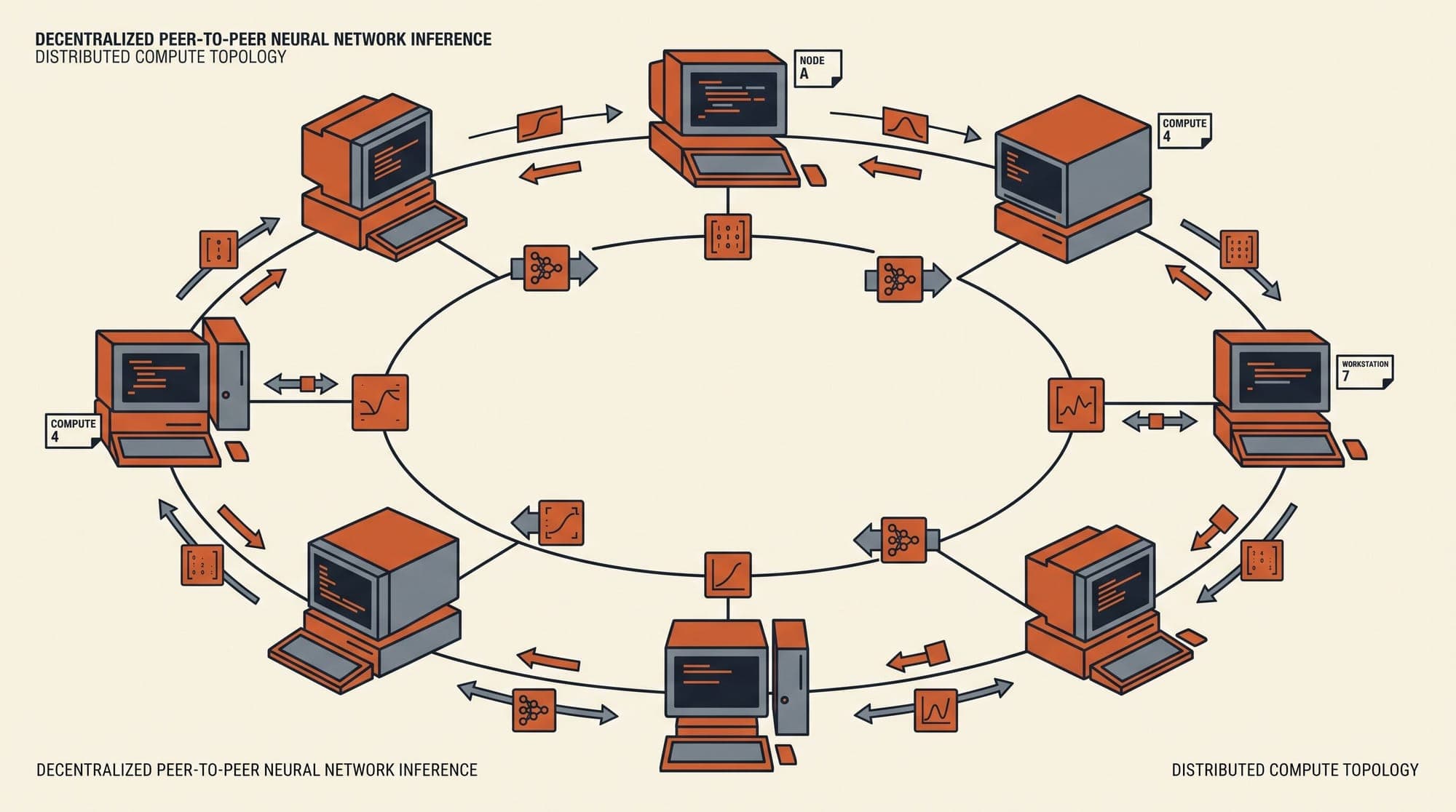
  11. Decentralized and Peer-to-Peer LLM Inference in Production: Architecture, Ring Memory Partitioning, and Network Latency

    Decentralized and Peer-to-Peer LLM Inference in Production: Architecture, Ring Memory Partitioning, and Network Latency Frontier open-weight models such as Llama 3.1 405B, DeepSeek-V3, and Command R+ have expanded model capabilities, but their parameter scales exceed the physical memory limits of individual consumer and edge workstations. Running a 405-billion parameter model in 16-bit precision requires over 810 GB of memory, and even 4-bit quantized variants require roughly 230 GB of contiguo

    AI
    7 min read
  12. Discrete Diffusion in Large Language Models: How Continuous-Time Markov Chains, Absorbing States, and Score Entropy Challenge Autoregressive Generation

    The dominance of autoregressive architectures in large language models rests on a fundamental mathematical formulation: the chain rule of probability. By factoring the joint distribution of a sequence into a product of conditional probabilities, $p(x) = \prod_{i=1}^N p(x_i \mid x_{<i})$, autoregressive models reduce text generation to sequential next-token prediction. While this left-to-right causal factorization has scaled effectively across compute regimes, it imposes rigid operational constr

    AI
    8 min read
  13. AI Agents Surpass Humans on OpenRouter as Agentic Token Usage Jumps 14x

    Autonomous AI agents have overtaken human users as the primary consumers of language model compute on OpenRouter, with agentic token volume surging fourteenfold over the past six months. Data published by OpenRouter analyst Peter Walker indicates that February 6 marked the permanent inflection point where token consumption by automated agents exceeded direct human API traffic. Since that threshold, agentic token volume on the multi-model gateway has climbed from 0.51 trillion to 7.3 trillion to

    AI
    2 min read
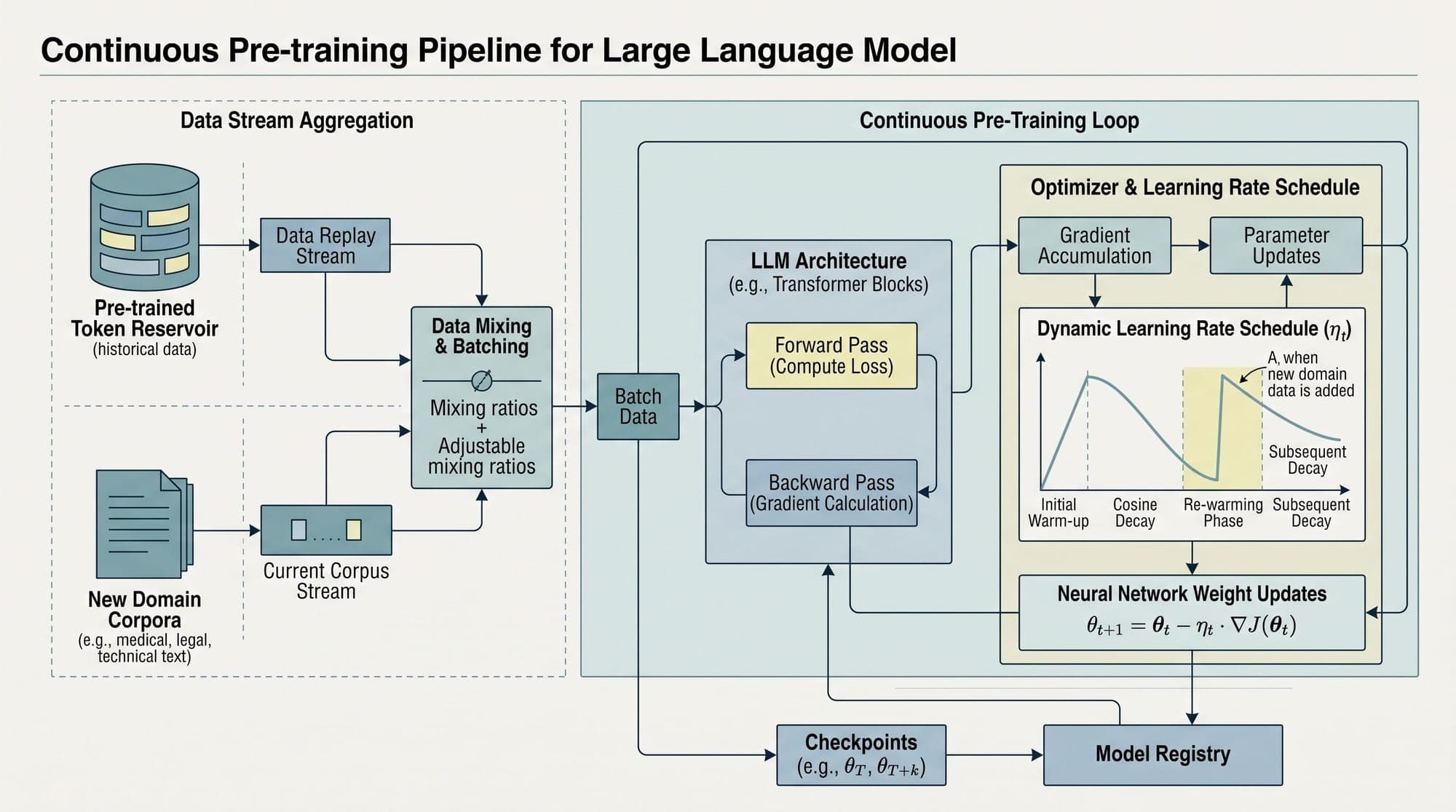
  14. Continuous Pre-Training in Production: Domain Adaptation, Replay Buffers, Learning Rate Restarts, and Catastrophic Forgetting Mitigation

    Continuous Pre-Training in Production: Domain Adaptation, Replay Buffers, Learning Rate Restarts, and Catastrophic Forgetting Mitigation Adapting general-purpose foundation models to specialized enterprise domains (such as clinical medicine, corporate law, quantitative finance, and proprietary software codebases) presents a fundamental architectural challenge. While Retrieval-Augmented Generation (RAG) and Supervised Fine-Tuning (SFT) remain standard first-line approaches, both exhibit severe s

    LLM
    7 min read
  15. Hybrid SSM-Transformer Architectures: How Interleaving Attention and Recurrence Solves the State-Retrieval Trade-Off

    Hybrid SSM-Transformer Architectures: How Interleaving Attention and Recurrence Solves the State-Retrieval Trade-Off Autoregressive language models face a fundamental tension between inference efficiency and long-context retrieval capacity. Pure Transformer architectures scale quadratic computational complexity during sequence prefill and linear key-value (KV) cache memory consumption during autoregressive token generation. Conversely, pure State Space Models (SSMs) and linear recurrent neural

    AI
    8 min read
  16. Study: Why Labor-Saving LLMs Incline Scientists to Do More Work Less Well

    A theoretical study published by researchers from Princeton University, the University of Washington, and collaborating institutions models how large language models alter researchers' time allocation across projects. The authors find that by reducing time friction across different stages of the research lifecycle, AI assistants increase the opportunity cost of researcher time, creating economic incentives to publish a higher volume of less thoroughly refined papers. The paper, titled The unint

    AI
    2 min read
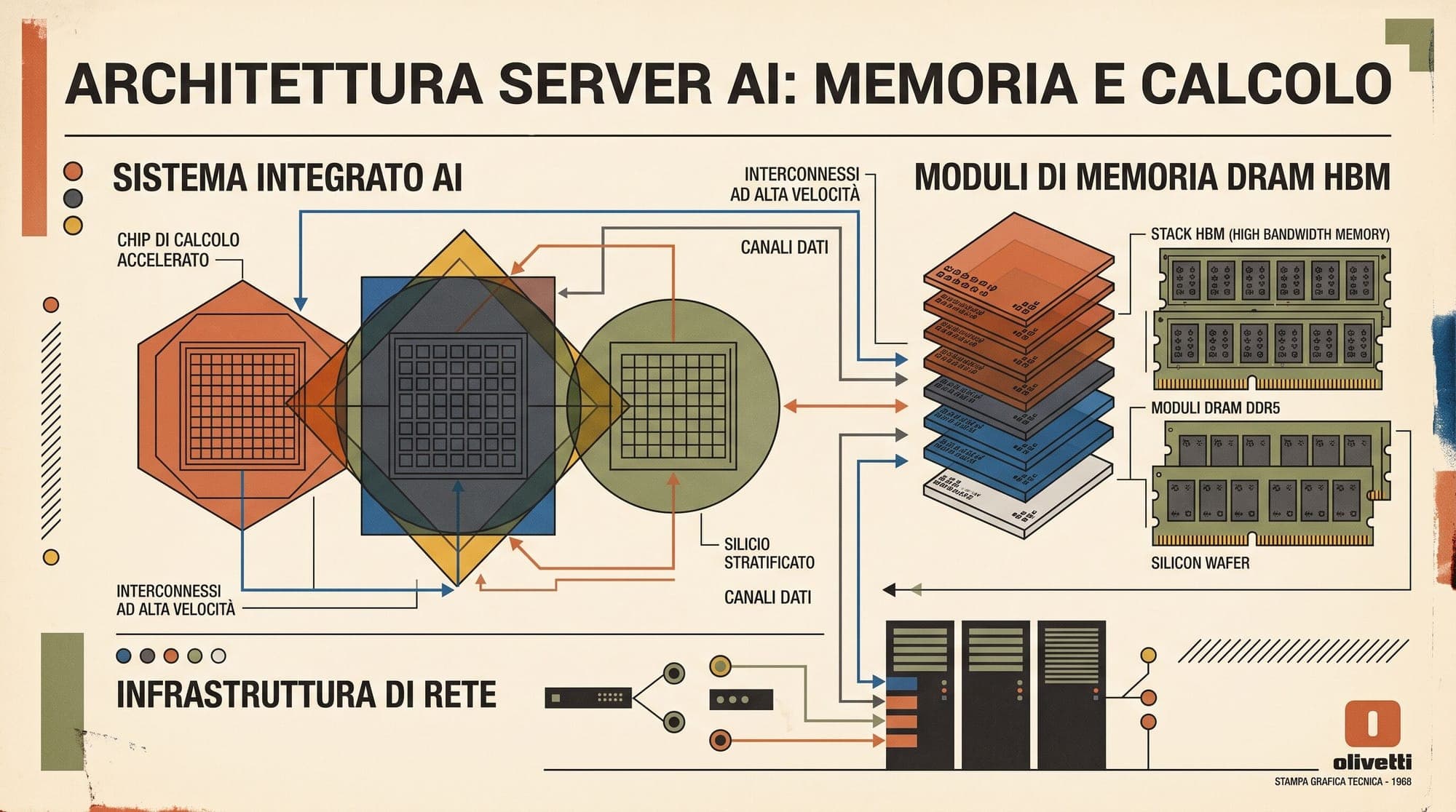
  17. Memory Shortage Drives Nvidia AI Server Prices Up Over 15%

    Nvidia has notified major customers that prices for server systems containing its artificial intelligence accelerators are increasing by more than 15% in many configurations, according to reports from Bloomberg and Fortune. The price adjustments stem from severe supply constraints and rising costs across dynamic random-access memory (DRAM) and high-bandwidth memory (HBM) modules. The price increases will apply to server systems scheduled for delivery starting in early 2027, covering platforms p

    AI
    2 min read
  18. Hallucination Detection and Faithfulness Verification in Production RAG: Architecture, NLI Claim Decomposition, and Runtime Guardrail Economics

    Retrieval-Augmented Generation (RAG) is commonly deployed under the assumption that grounding generation in retrieved passages eliminates factual inaccuracies. In practice, grounding provides an evidence boundary but does not guarantee factual fidelity. For why models hallucinate in the first place, see our AI hallucinations explainer. Production language models regularly synthesize claims absent from the retrieved context (extrinsic hallucinations) or directly assert statements conflicting with

    AI
    6 min read
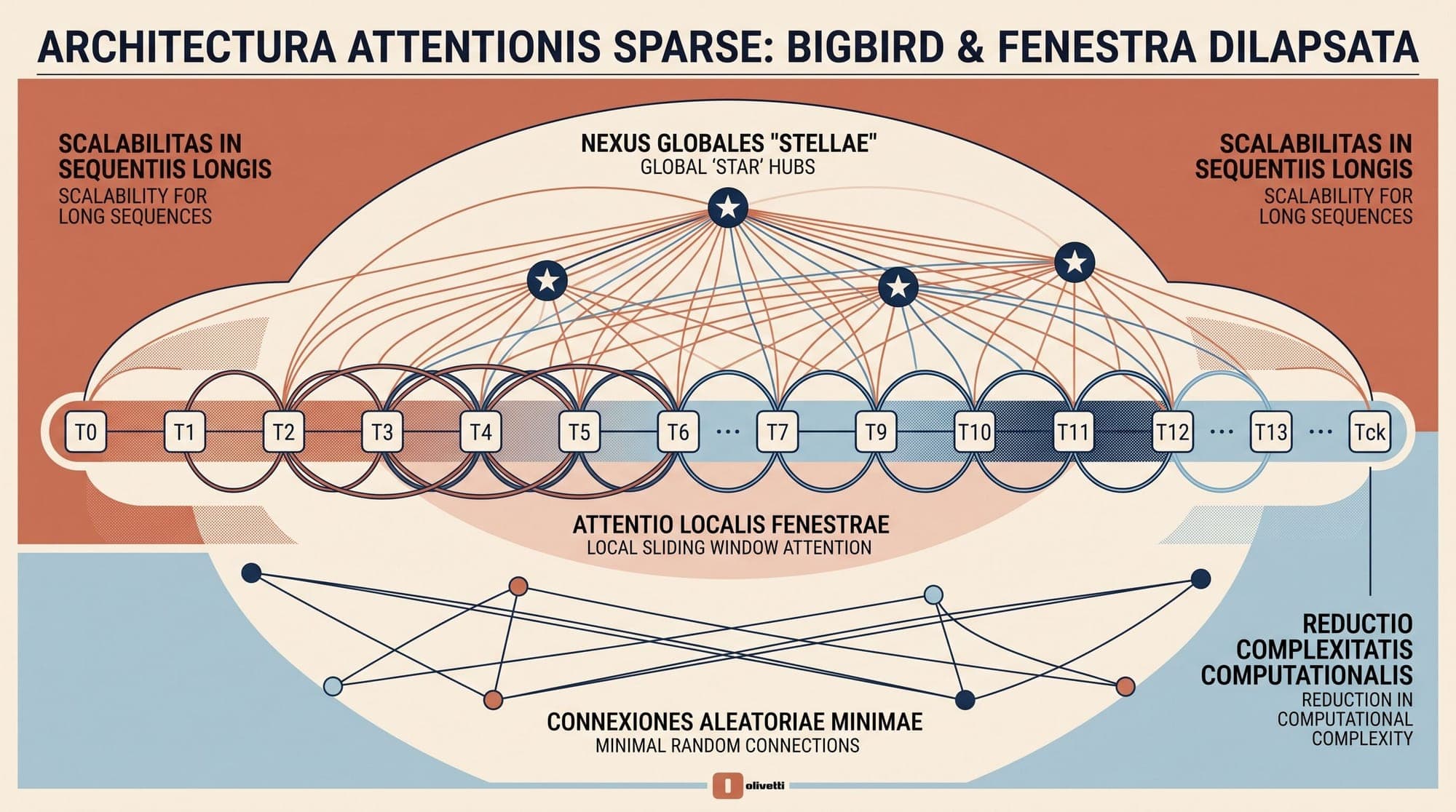
  19. Sparse Attention and BigBird: How Window, Global, and Random Graphs Preserve Turing Completeness in Linear Time

    Standard self-attention in transformer architectures scales quadratically with sequence length. Computing full pairwise interactions between n tokens requires evaluating an n x n attention matrix, yielding O(n^2) computational complexity and memory consumption. While hardware accelerators and IO-aware tiling algorithms like FlashAttention optimize memory traffic, the quadratic compute and KV footprint remains a barrier for processing long contexts, document-level summarization, and genomic seque

    AI
    7 min read
  20. Oxford Study Details Chinese Gray-Market Proxies Reselling Claude Tokens at 90% Discounts

    An investigation by the Oxford China Policy Lab reveals that Chinese developers routinely access Anthropic's frontier Claude models at discounts between 70% and 90% below list price, bypassing geographical blocks, payment filters, and biometric identity verification through a decentralized network of API proxies known locally as "transfer stations" (中转站). The analysis, authored by Oxford researcher Zilan Qian and published via ChinaTalk, outlines the modular supply chain and economic mechanics

    AI
    3 min read