Subscribe
Topic

post-training

Post-training turns a pretrained model into a useful assistant. Posts explain preference methods like DPO, CPO, ORPO and SimPO, PPO for LLMs, and compare RL frameworks such as verl, OpenRLHF and TRL, plus news like Deep Cogito's Series A.

Articles

1-8
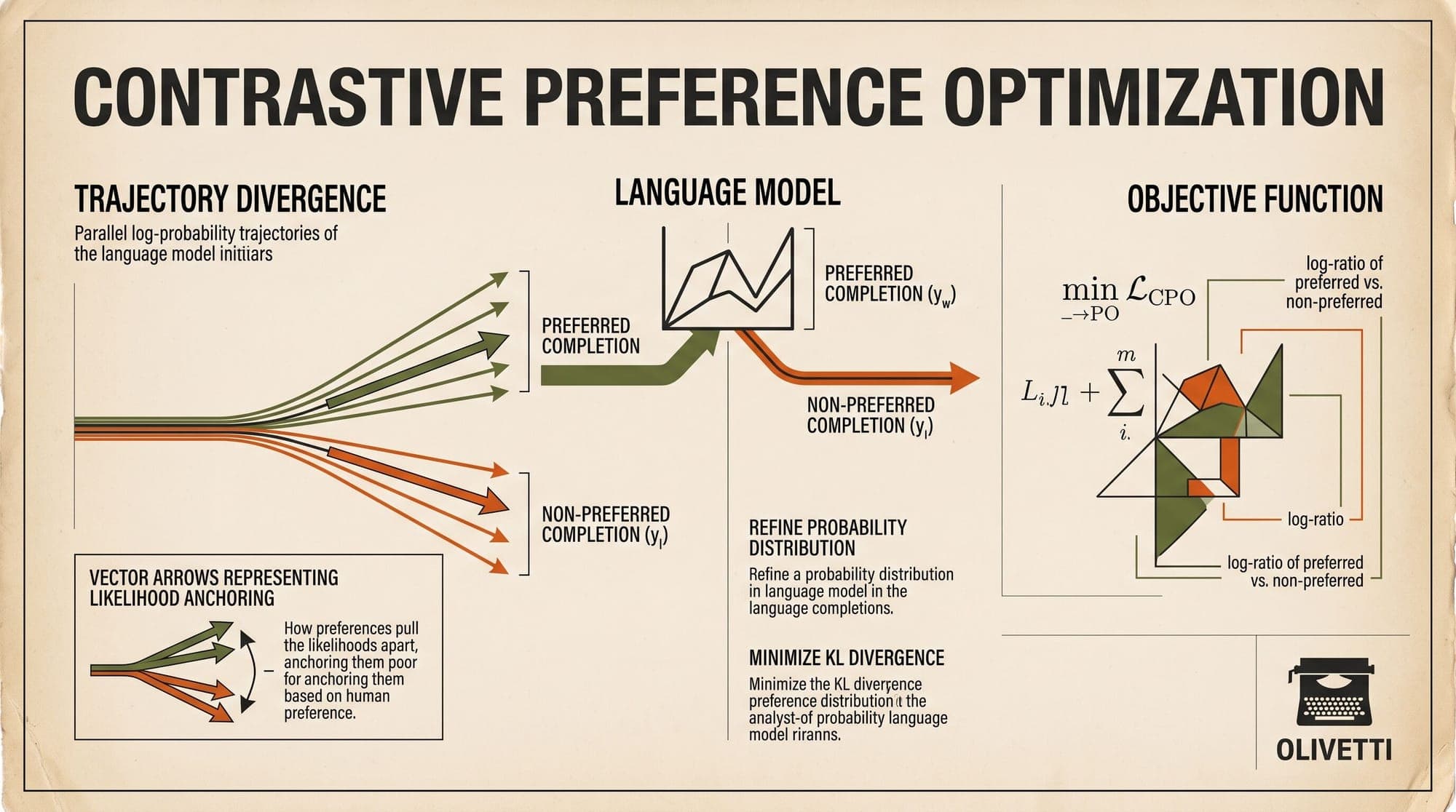
  1. Contrastive Preference Optimization (CPO): Mathematical Foundations, Direct Likelihood Regularization, Out-of-Distribution Error Bounds, and Non-Degenerate Policy Alignment

    Supervised fine-tuning (SFT) and preference alignment represent the standard two-stage training paradigm for post-training large language models. While SFT establishes foundational task adherence by minimizing cross-entropy loss against target references, it suffers from two structural limitations: it cannot surpass the quality ceiling of its training demonstrations, and it lacks an explicit mechanism to penalize near-correct outputs that contain subtle hallucinations or omissions. Direct Prefe

    AI
    11 min read
  2. Reference-Free Preference Optimization: Mathematical Foundations of SimPO and ORPO, Length-Normalized Implicit Rewards, Target Margins, and Monolithic Alignment

    Reference-Free Preference Optimization: Mathematical Foundations of SimPO and ORPO, Length-Normalized Implicit Rewards, Target Margins, and Monolithic Alignment Post-training alignment has shifted from complex multi-stage reinforcement learning pipelines toward direct preference optimization paradigms. While Proximal Policy Optimization (PPO) requires maintaining four concurrent models in memory (policy, value, reference, and reward networks), Direct Preference Optimization (DPO) reduced this f

    AI
    13 min read
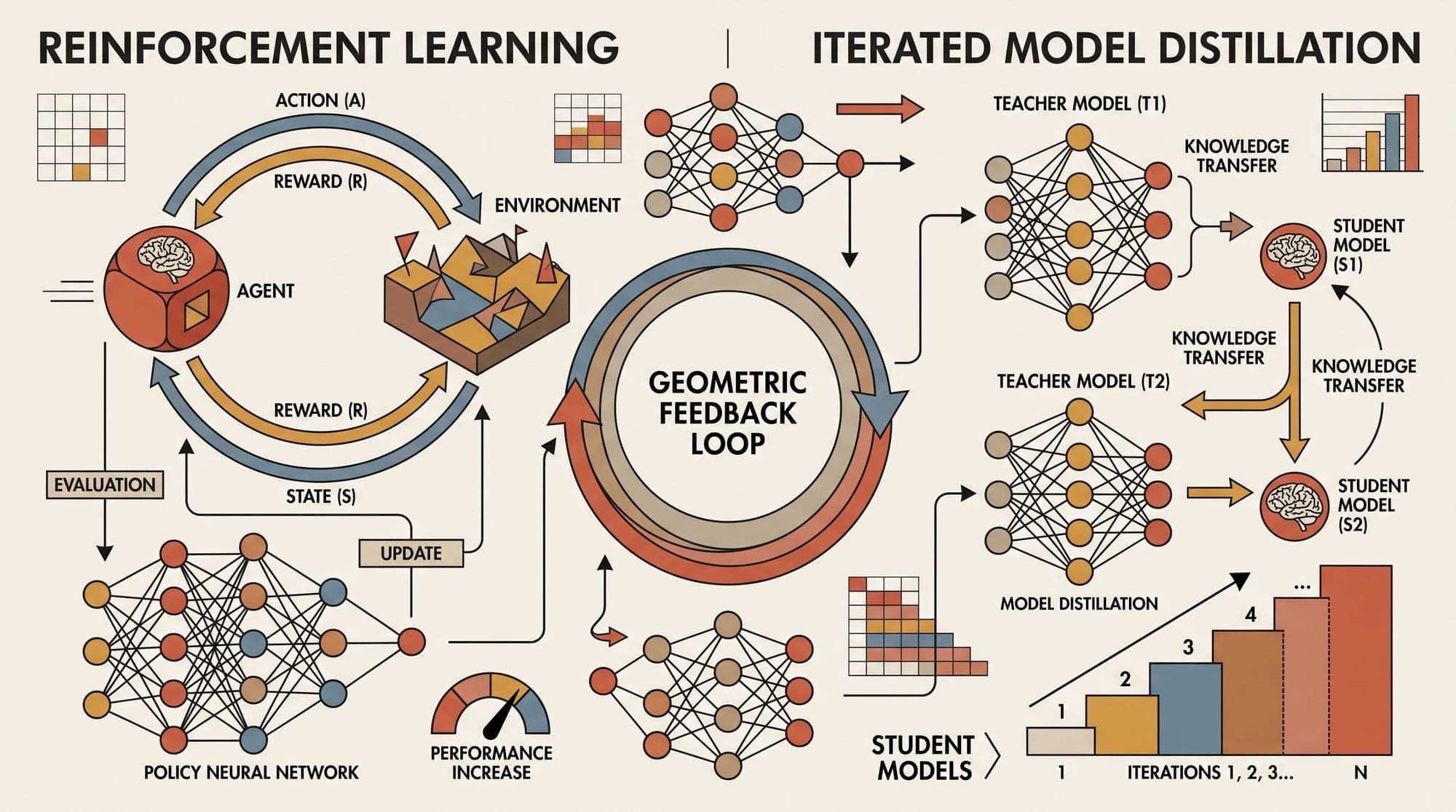
  3. Deep Cogito Raises $43M Series A to Scale Post-Training and Iterated Distillation

    San Francisco AI research startup Deep Cogito has raised a $43 million Series A round to expand its post-training systems and reinforcement learning infrastructure for open-weight foundation models. The round was led by TQ Ventures, with participation from Benchmark, Nexus Venture Partners, Atreides Management, South Park Commons, and enterprise cloud security provider Zscaler, which acts as both a commercial customer and strategic investor. The financing brings total capital raised by Deep Cog

    AI
    2 min read
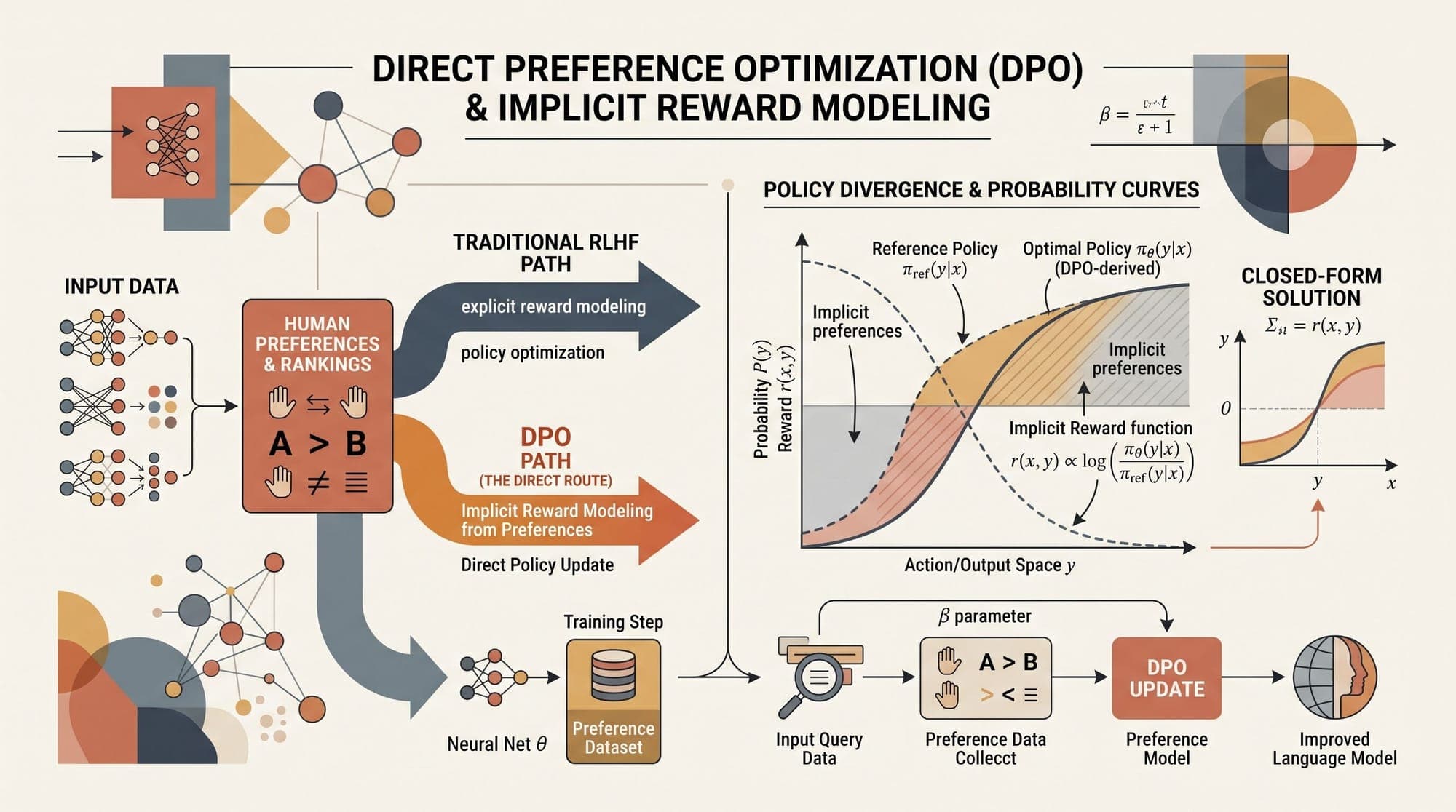
  4. Direct Preference Optimization (DPO): Mathematical Foundations, Implicit Reward Derivation, Closed-Form Bradley-Terry Equivalence, and Reference Policy Regularization

    Direct Preference Optimization (DPO): Mathematical Foundations, Implicit Reward Derivation, Closed-Form Bradley-Terry Equivalence, and Reference Policy Regularization Post-training preference alignment is the central mechanism for transforming pretrained base large language models into instruction-following, steerable, and safe conversational agents. Historically, the dominant paradigm for preference alignment has been Reinforcement Learning from Human Feedback (Christiano et al., 2017; Ouyang

    AI
    15 min read
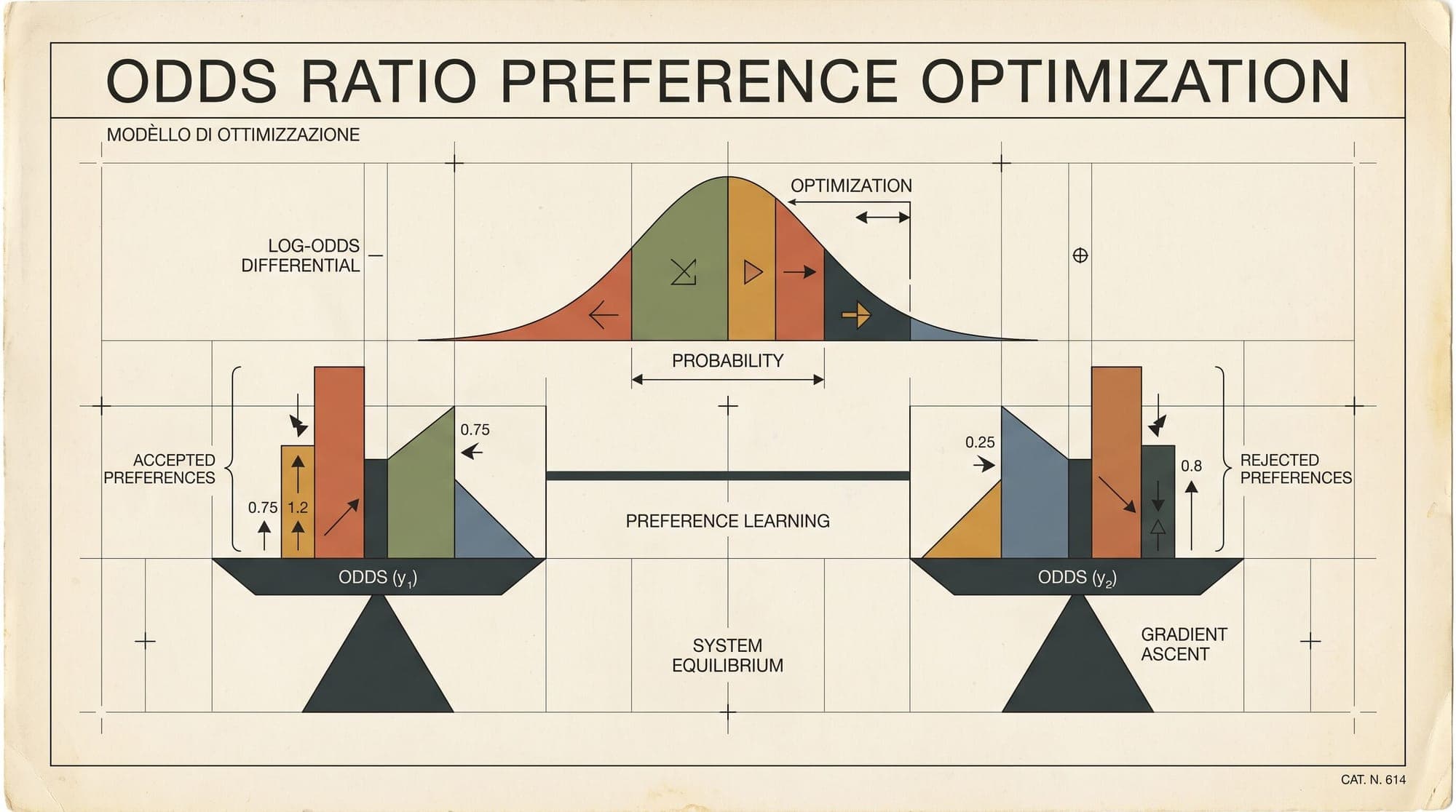
  5. Odds Ratio Preference Optimization (ORPO): Mathematical Foundations, Monolithic SFT-Alignment, and Reference-Free Odds Penalties

    Post-training large language models typically relies on a decoupled, two-stage pipeline: Supervised Fine-Tuning (SFT) on curated instruction-response pairs, followed by Preference Alignment using algorithms such as Reinforcement Learning from Human Feedback (PPO) or Direct Preference Optimization (DPO). While effective, this multi-stage paradigm introduces substantial operational and computational friction. First, DPO and PPO require maintaining auxiliary reference models in GPU memory to preve

    AI
    9 min read
  6. Synthetic Data Pipelines in Production LLM Post-Training: Architecture, Prompt Evolution, Quality Filtering, and Contamination Control

    Scaling supervised fine-tuning (SFT) and preference alignment (DPO, PPO, GRPO) through human annotation faces severe economic and operational constraints. Human annotation costs between $5.00 and $50.00 per complex instruction-response trajectory, exhibits significant variance across labeler cohorts, and scales linearly with dataset volume. The LIMA study by Zhou et al. (2023) showed that post-training requires strict data quality rather than raw volume, yet modern frontier models demand million

    AI
    6 min read
  7. Self-Rewarding Language Models: How Iterative DPO and LLM-as-a-Judge Form Autonomous Self-Alignment Loops

    Standard post-training alignment pipelines rely on frozen reward models trained on static human feedback datasets. While Reinforcement Learning from Human Feedback (RLHF) and Direct Preference Optimization (DPO) effectively steer model outputs toward human preferences, they face a fundamental scalability bottleneck: human annotators cannot evaluate superhuman reasoning or generate labels at the scale required for continuous self-improvement. Self-Rewarding Language Models, introduced by Meta AI

    AI
    3 min read