Subscribe
Topic / page 5

Hardware

Articles, page 5

81-100
  1. Samsung Evaluates Claude Code for Semiconductor Verification Amid Code Safety Concerns

    Samsung Electronics has integrated Anthropic's Claude Code into semiconductor verification and driver development within its System LSI division. While the deployment achieved major efficiency gains, engineering evaluations revealed critical out-of-scope behaviors that prevent autonomous code execution in hardware synthesis. Samsung's System LSI business unit, which designs Exynos application processors and custom mobile chipsets, operates with approximately 6,000 employees compared to roughly

    Samsung
    2 min read
  2. Quintessent Secures $40M Series A to Scale Quantum Dot Comb Lasers for AI Clusters

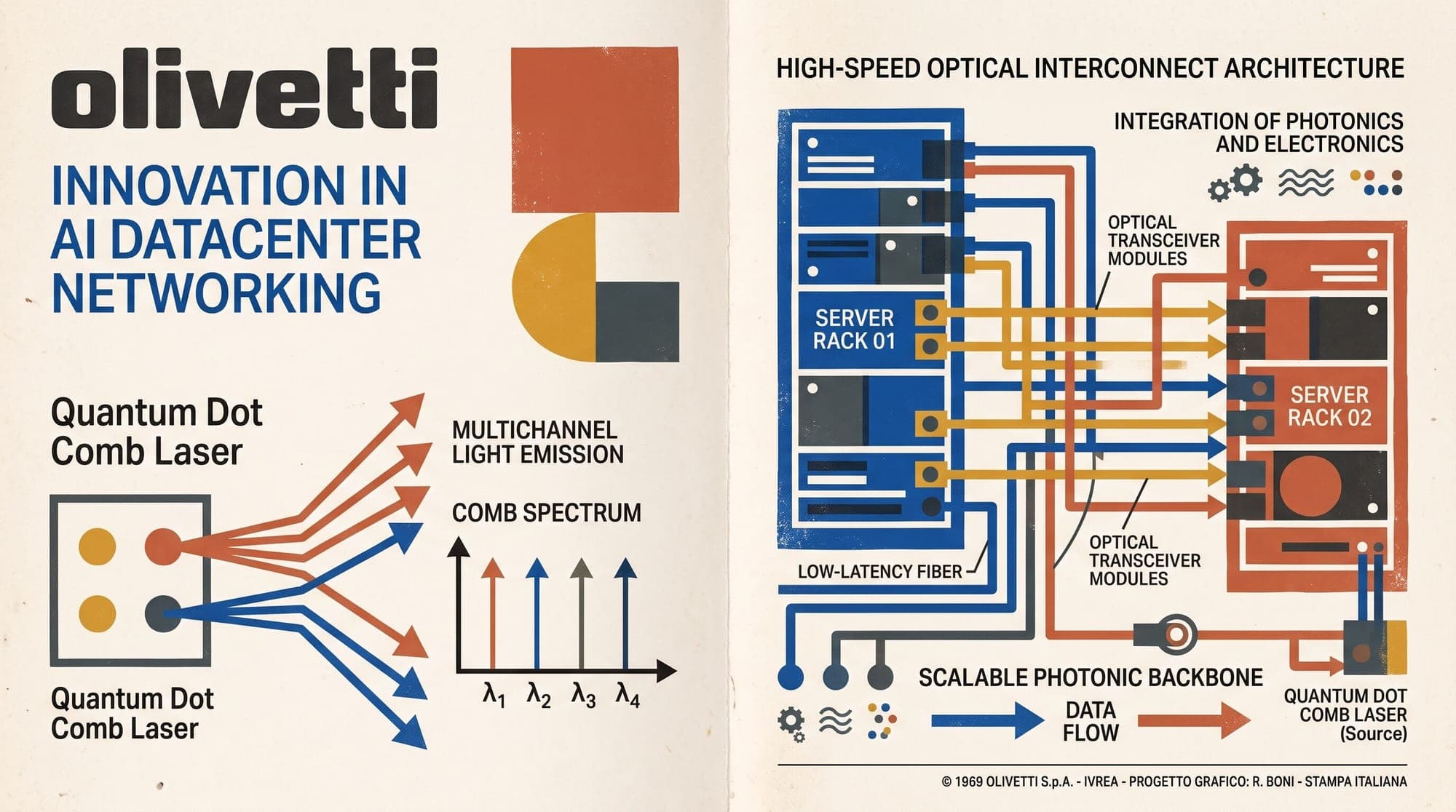
    Optical interconnect startup Quintessent has raised $40 million in an oversubscribed Series A funding round to commercialize quantum dot comb lasers for AI data center networking. The round was led by Cycle Capital, with participation from Goldman Sachs XIG-Industry Ventures, optical networking provider Ciena, Hina Liberty Capital, Susquehanna International Group, InterVest, Safar Partners, M Ventures, Osage University Partners, Foothill Ventures, and Sierra Ventures. The financing follows an $

    AI
    2 min read
  3. NVIDIA Enters Full Production on Groq 3 LPX, Hitting 3,400 Tokens per Second in Benchmarks

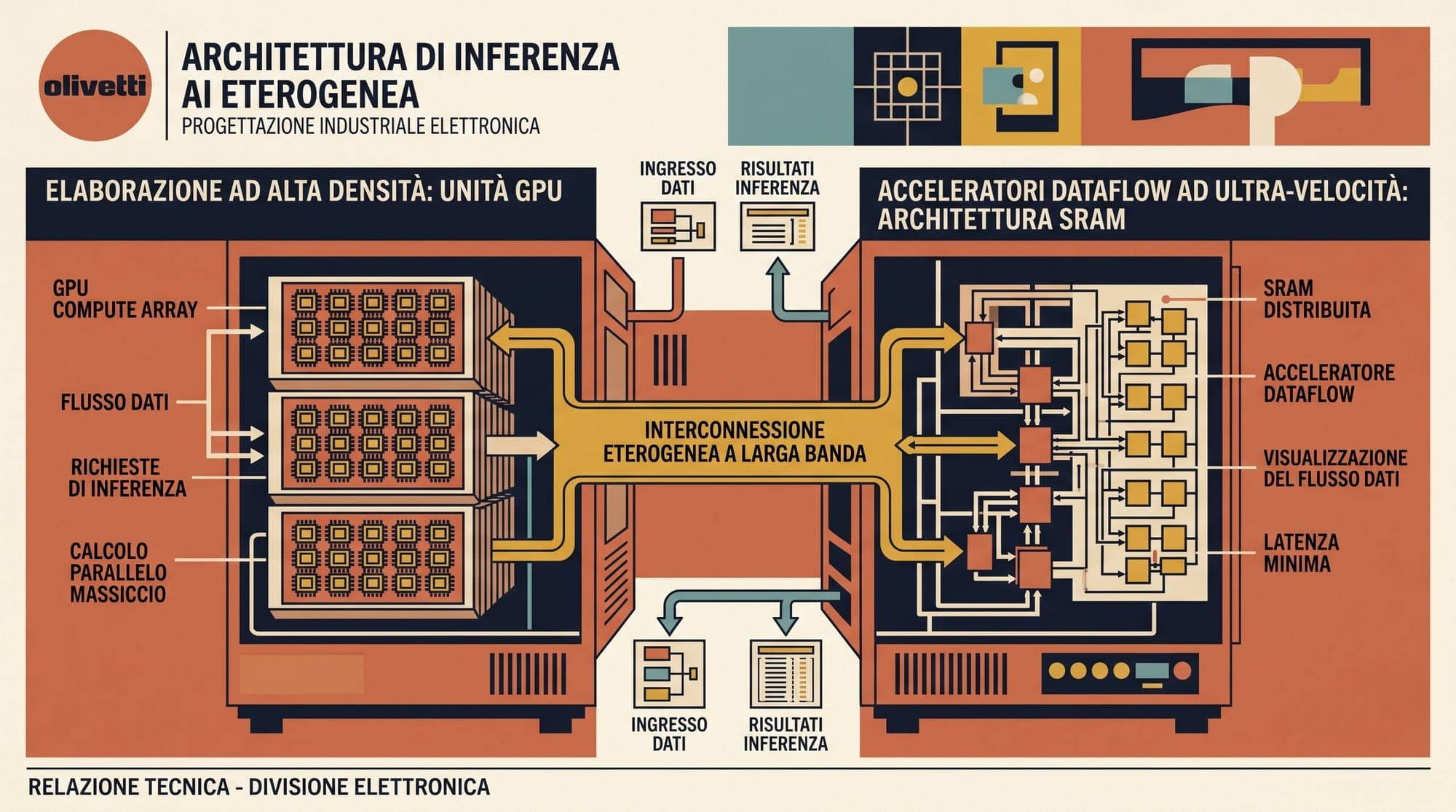
    NVIDIA has moved its Groq 3 LPX dedicated inference accelerator into full commercial production. Announced at Hot Chips 2026, the rack-scale accelerator system is designed as a purpose-built extension for NVIDIA's Vera Rubin NVL72 data center platform, targeting the compounding decode latency bottlenecks created by multi-step autonomous AI agents. European neocloud provider Nebius Group N.V. has committed as the first cloud infrastructure customer to deploy the accelerators, integrating them in

    Hardware
    3 min read
  4. Lancium and NVIDIA Partner on Gigawatt-Scale AI Factories Across 15GW Pipeline

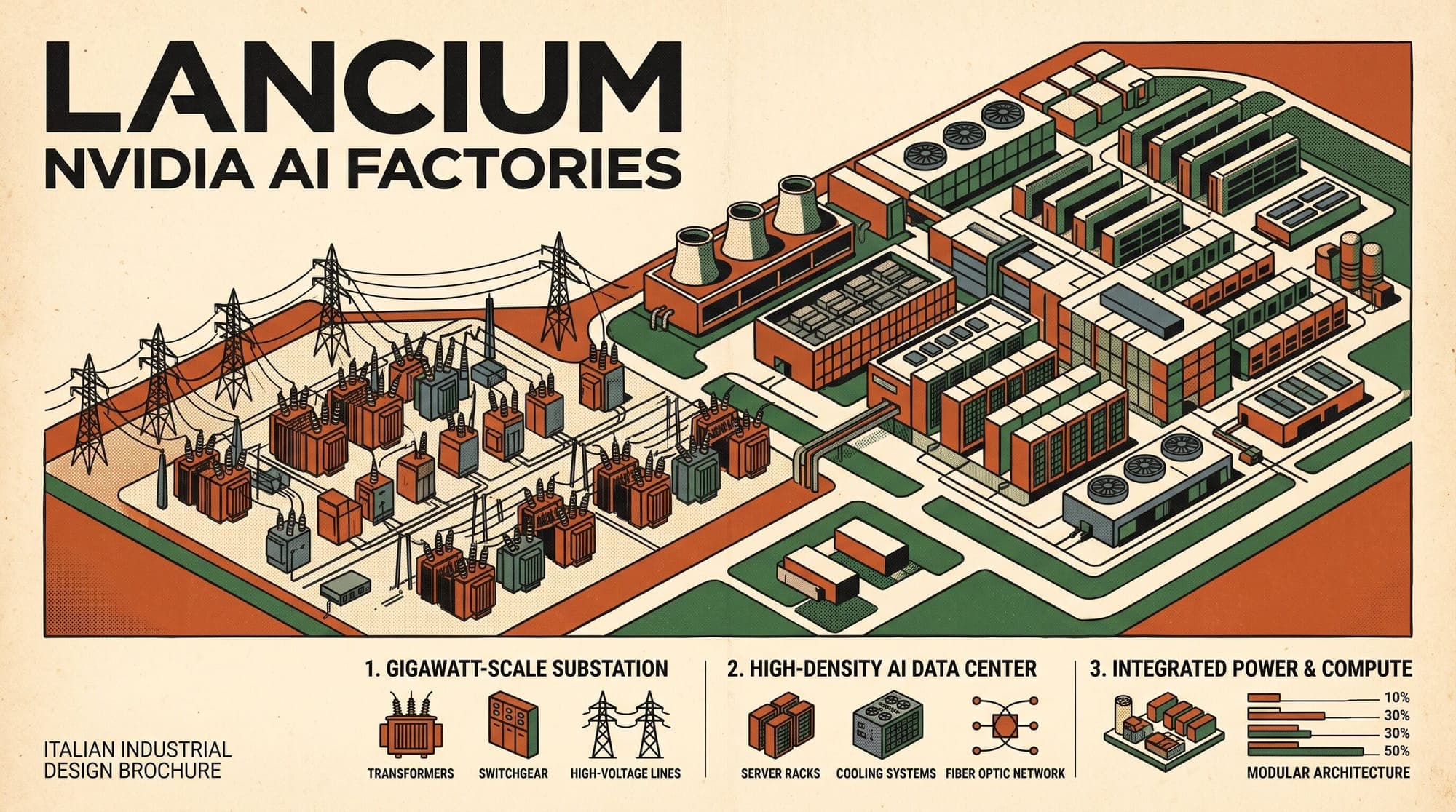
    Texas energy infrastructure provider Lancium has entered a strategic partnership with NVIDIA to deploy NVIDIA's full AI factory technology stack across Lancium's multi-gigawatt clean energy data center portfolio. As part of the transaction, NVIDIA has taken a direct equity stake in Lancium, which is backed by funds managed by Blackstone Energy Transition Partners and Blackstone Multi-Asset Investing. The partnership combines Lancium's 4 gigawatts of operational and leased capacity and a pipelin

    AI
    2 min read
  5. SpaceXAI Deploys NVIDIA Vera CPUs for Gigawatt-Scale Agentic Infrastructure and Starmind Satellite

    SpaceXAI has selected NVIDIA's Vera central processing units to handle the CPU-bound orchestration and execution workloads powering its Grok models as its computing infrastructure expands toward gigawatts of capacity. The deployment spans both ground-based data centers and orbital systems, with SpaceXAI planning to base its first-generation Starmind AI satellite on an optimized Vera Rubin NVL72 rack architecture. While GPU clusters handle core model training and forward passes, agentic AI workf

    AI
    2 min read
  6. Taiwan Indicts Nine in B300 AI Server Diversion Scheme to China

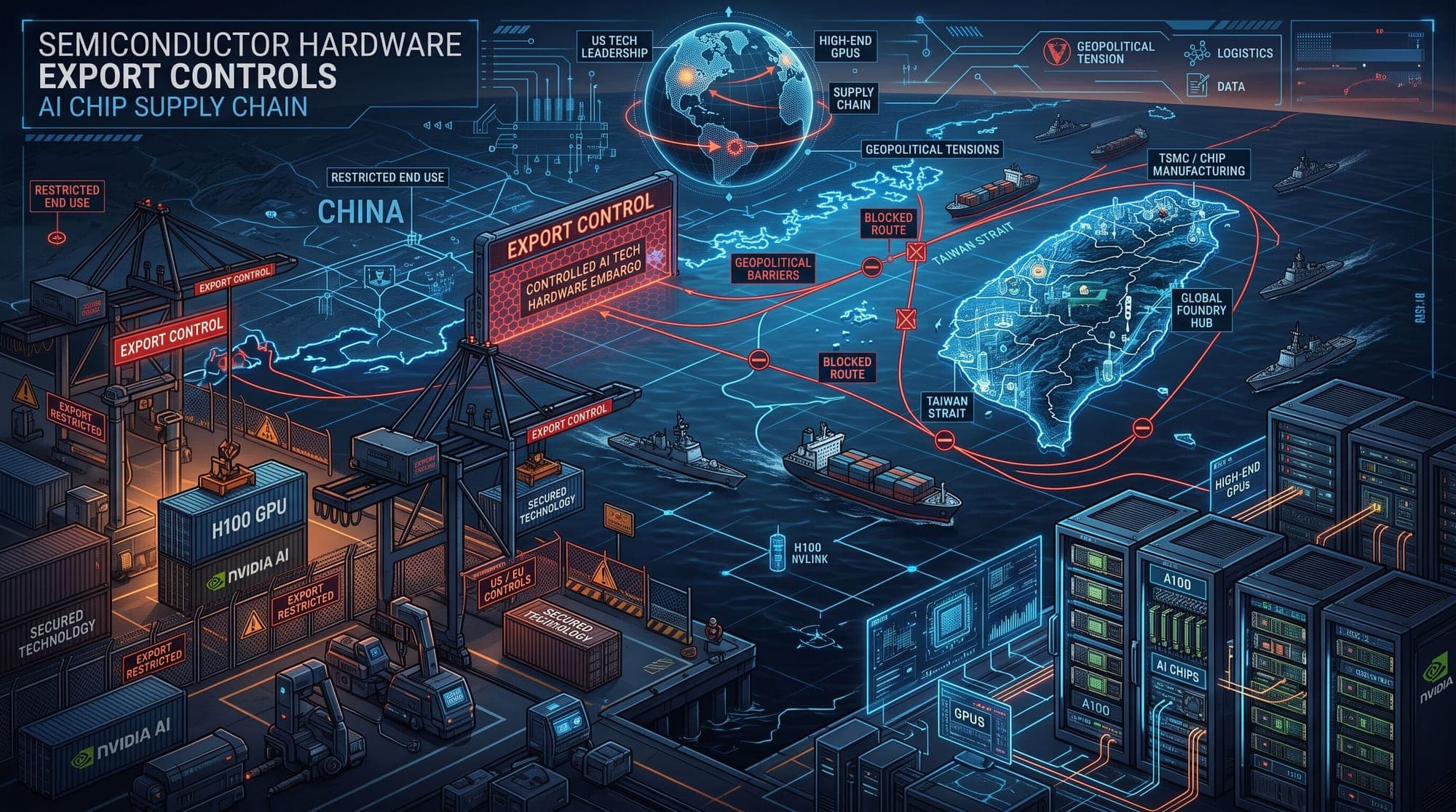
    Taiwan Indicts Nine in B300 AI Server Diversion Scheme to China Taiwan prosecutors have indicted nine individuals for allegedly circumventing international export controls to smuggle advanced AI servers equipped with Nvidia B300 GPUs into mainland China. The indictment, issued on August 24, 2026, by the Keelung District Prosecutors' Office, details an illicit sales channel that operated by falsifying compliance verifications from within the hardware supply chain. The defendants include a distr

    Hardware
    2 min read
  7. Ukrainian Officials Identify Nvidia Jetson Orin Modules in Autonomous Russian Strike Drones

    Ukrainian forensic examiners inspecting the wreckage of Russian strike drones have recovered Nvidia Jetson Orin microcomputers, confirming that Moscow is deploying commercial edge-computing hardware to run autonomous targeting systems on the battlefield. The findings, detailed in investigations by Ukrainian military specialists and reported by The New York Times, indicate that Russian engineers have integrated off-the-shelf edge AI accelerators into modified uncrewed aerial vehicles, including

    Hardware
    2 min read
  8. IBM Unveils 2nm Dual-Architecture Mainframe Processor with Native Arm and On-Chip AI Acceleration

    IBM unveiled the industry's first dual-architecture mainframe processor at the annual Hot Chips conference, detailing custom silicon capable of natively executing both IBM Z (s390x) and Arm (Arm64) instruction set architectures on the exact same physical cores. Fabricated on a leading-edge 2-nanometer process node, the upcoming processor is engineered to bridge traditional enterprise transaction processing with the modern, Arm-dominated software ecosystem, particularly containerized AI framewor

    IBM
    3 min read
  9. LLM Inference on Enterprise CPUs in Production: Architecture, NUMA Topologies, Matrix Extensions, and Serving Economics

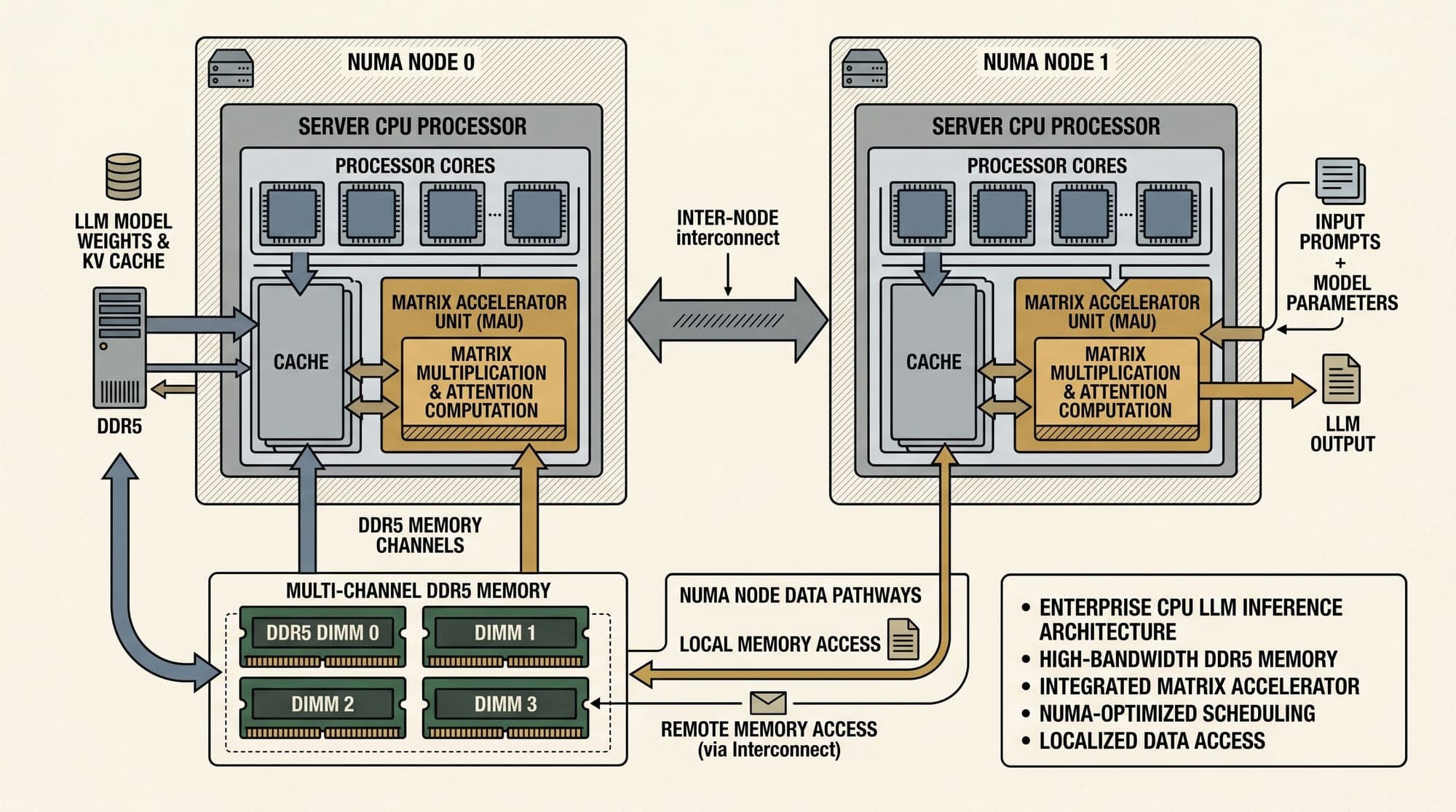
    Deploying large language models has historically been treated as an exclusively GPU-centric problem. Accelerators like NVIDIA H100 and A100 GPUs provide multi-terabyte-per-second High Bandwidth Memory (HBM) and tensor cores essential for training and high-concurrency serving. However, the operational economics of enterprise inference often diverge from frontier training requirements. Many enterprise applications, including internal code assistance, document extraction, low-concurrency agents, an

    AI
    6 min read
  10. Oxford Economics: US Corporate High-Tech Spending to Rise 40% by 2027, Tripling Europe's Pace

    A new macroeconomic forecast from Oxford Economics, reported by the Financial Times, projects that United States corporate capital expenditure on equipment, computing facilities, and structures will surge 40% between 2021 and 2027. This expansion rate is more than three times faster than equivalent capital investment across European economies over the same six-year window, driven primarily by private and hyperscaler investments in artificial intelligence infrastructure. The divergence underscor

    News
    2 min read
  11. Samsung Approves Record $80 Billion Shareholder Return on AI Memory Demand

    The board of directors at Samsung Electronics approved a shareholder return program estimated between 90 trillion and 110 trillion Korean won (approximately $65 billion to $80 billion USD), marking the largest capital distribution plan in South Korean corporate history. The payout is funded by expanding cash reserves generated from high-bandwidth memory (HBM) and conventional DRAM shipments tied to global AI infrastructure spending. Under the approved framework, approximately 30 trillion won wi

    AI
    2 min read
  12. Israel Outlines Five-Year AI Strategy: 100,000 Accelerators, 5nm Fab, and Quantum Base

    Israel's National Artificial Intelligence Directorate has released its five-year National AI Strategic Plan, outlining formal commitments to construct a sovereign infrastructure footprint spanning at least 100,000 advanced AI accelerators, a domestic quantum computer, and advanced semiconductor fabrication capabilities at 5 nanometers or below. Operating under the Prime Minister's Office, the Directorate published the roadmap to implement Government Resolution 4255, originally approved by the I

    AI
    2 min read
  13. Microscaling Formats in Production LLM Inference: NVFP4 vs. MXFP4 Architecture, Block Quantization, Kernel Scaling, and Perplexity Degradation

    As frontier language models scale into hundreds of billions of parameters, memory bandwidth and VRAM capacity remain the primary bottlenecks in production inference serving. While 8-bit floating-point formats (FP8 E4M3 and E5M2) achieved mainstream adoption across Hopper and Ada generation hardware, the industry is transitioning to 4-bit floating-point (FP4) arithmetic to double inference throughput and halve memory footprints. Directly quantizing deep transformer weights and activations into 4

    AI
    7 min read
  14. Memory Shortage Drives Nvidia AI Server Prices Up Over 15%

    Nvidia has notified major customers that prices for server systems containing its artificial intelligence accelerators are increasing by more than 15% in many configurations, according to reports from Bloomberg and Fortune. The price adjustments stem from severe supply constraints and rising costs across dynamic random-access memory (DRAM) and high-bandwidth memory (HBM) modules. The price increases will apply to server systems scheduled for delivery starting in early 2027, covering platforms p

    AI
    2 min read
  15. Anthropic Nears $7B Acquisition of AI Infrastructure Startup Decart Ahead of IPO

    Anthropic is finalizing negotiations to acquire Israeli artificial intelligence infrastructure startup Decart in a transaction valued at approximately $7 billion, according to reporting from Calcalist and Reuters. The acquisition, expected to be settled primarily in Anthropic equity, would mark the Claude developer's largest purchase to date as it prepares for a planned initial public offering. Founded in September 2023 by Dr. Dean Leitersdorf and Moshe Shalev, Decart specializes in hardware-ag

    AI
    2 min read
  16. LLM Inference on AMD ROCm in Production: MI300X Architecture, Triton Kernel Parity, and vLLM Serving Benchmarks

    LLM Inference on AMD ROCm in Production: MI300X Architecture, Triton Kernel Parity, and vLLM Serving Benchmarks Serving frontier large language models in enterprise production has historically been synonymous with NVIDIA CUDA infrastructure. However, the deployment of AMD Instinct MI300X accelerators across tier-one hyperscalers and neoclouds has established a viable alternative for high-throughput inference fleets. With 192 GB of high-bandwidth memory (HBM3) and 5.3 TB/s of peak theoretical m

    Inference
    5 min read
  17. Inside Ulanqab: How Inner Mongolia Became the 12.5GW Epicenter of China's AI Data Center Boom

    Located approximately 350 kilometers northwest of Beijing, the grassland municipality of Ulanqab in Inner Mongolia has transformed into China's primary hub for artificial intelligence compute infrastructure. Historically recognized for agriculture and mineral extraction, the city now hosts nearly 100 enterprise data centers operating or under active construction, with technology firms pledging an aggregate capacity of 12.5 gigawatts (GW). According to a research note published by Goldman Sachs,

    Infrastructure
    3 min read
  18. RayNeo Launches iO Smart Glasses with Waveguide Text Display, Omitting Cameras and Speakers

    Augmented reality hardware maker RayNeo has introduced the RayNeo iO Smart Glasses, a 33-gram wearable designed around discreet text projection rather than spatial media playback or computer vision. The device omits outward-facing cameras and integrated acoustic speakers, aiming to bypass privacy bans in enterprise workplaces and reduce social friction. The glasses deploy a monochrome green MicroLED optical waveguide with 97 percent transparency and roughly 1,300 nits of peak brightness across

    AI
    2 min read
  19. Amazon Hikes Hardware Prices Across Echo, Fire TV, Kindle, and Eero Over AI-Driven Memory Costs

    Amazon has quietly increased retail prices across its first-party consumer hardware lines, raising MSRPs on Echo smart speakers, Fire TV streaming devices, Kindle e-readers, and Eero mesh networking systems to offset rising component costs for memory and storage. The price adjustments reflect how the enterprise artificial intelligence infrastructure buildout is impacting consumer electronics supply chains. Surging hyperscaler demand for high-bandwidth memory (HBM3e and HBM4) alongside high-dens

    Hardware
    2 min read