Subscribe
Topic / page 7

Education

Articles, page 7

121-126
  1. OpenAI Launches Dedicated ChatGPT for Teens with Study Modes and Model Spec Guardrails

    OpenAI has introduced ChatGPT for Teens, a dedicated environment for users aged 13 through 17 that combines educational scaffolding tools with reinforced safety constraints and parental controls. The rollout automatically routes users into the teen environment if they register as 13 to 17 years old or if OpenAI's automated age-prediction classifier estimates they fall into that demographic. Children under the age of 13 remain prohibited from the platform under OpenAI's standard terms of service

    OpenAI
    2 min read
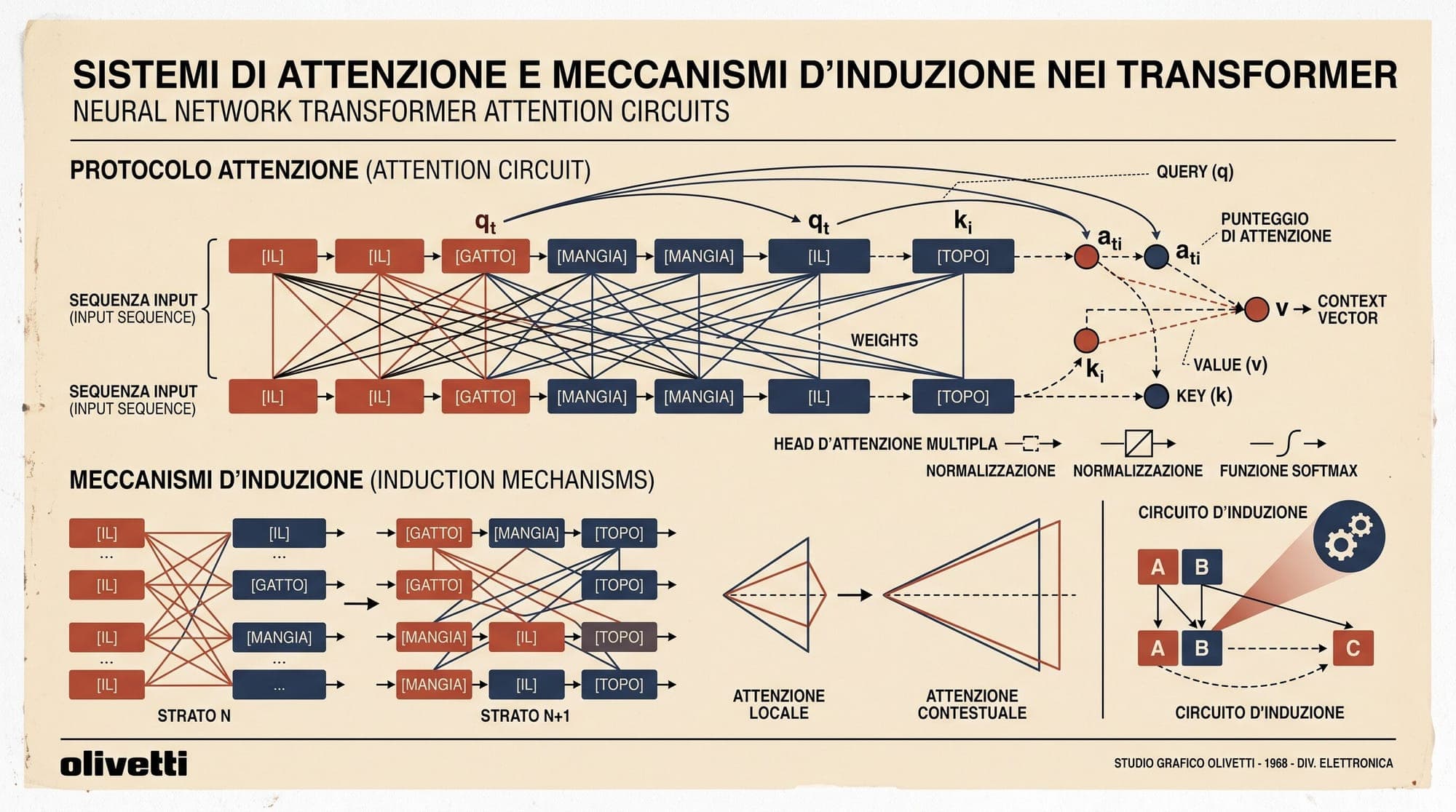
  2. In-Context Learning in Large Language Models: How Induction Heads and Attention Circuits Learn Without Weight Updates

    Autoregressive large language models demonstrate the ability to adapt to new tasks, follow few-shot demonstrations, and execute algorithmic patterns entirely within their context windows. Unlike traditional fine-tuning, in-context learning occurs at inference time with frozen model parameters, leaving weights completely unchanged ($\Delta \theta = 0$). For several years following the scaling demonstrations in GPT-3, the internal mechanism governing in-context learning remained an empirical blac

    AI
    6 min read
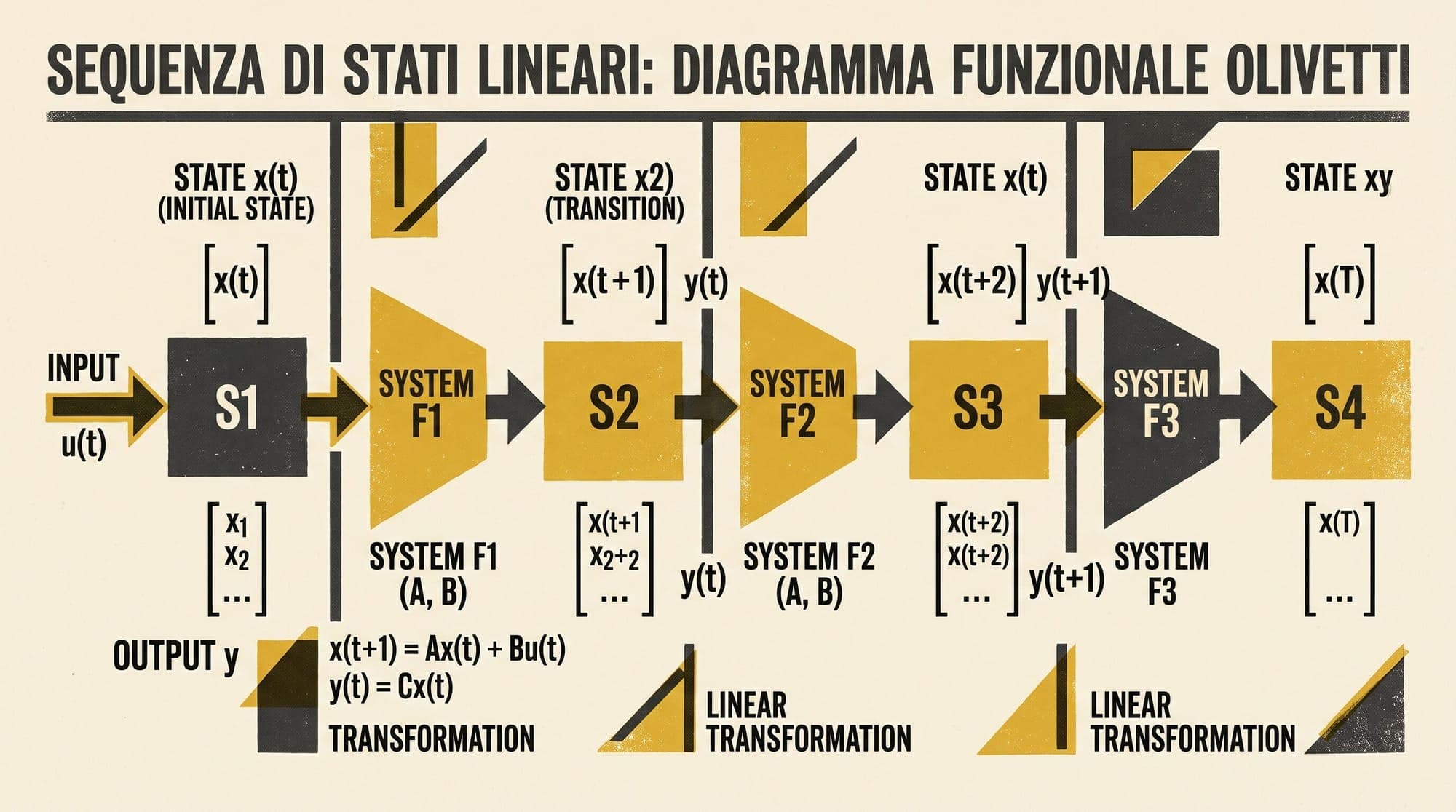
  3. State Space Models in Large Language Models: How Mamba, S4, and Selective Recurrence Challenge Transformer Attention

    Modern large language models rely almost universally on the Transformer architecture. However, the core mechanism powering Transformers, softmax multi-head self-attention, exhibits fundamental scaling limitations. Specifically, standard self-attention requires quadratic time and memory complexity relative to sequence length during prefilling, alongside a linear memory expansion for the key-value (KV) cache during autoregressive token generation. To circumvent these computational bottlenecks, re

    AI
    6 min read
  4. Rotary Position Embeddings: How Geometry Solved Long Context in Modern LLMs

    Rotary Position Embedding (RoPE) has become the standard positional encoding mechanism across modern large language models, including Meta's Llama series, Mistral, Qwen, and DeepSeek. Unlike earlier techniques that added positional vectors directly to token representations or modified attention matrices with relative distance penalties, RoPE encodes position through geometric rotations in the complex plane. This design enables models to compute relative token distances while processing individu

    AI
    6 min read
  5. Scammers are enrolling fake students at US community colleges and using AI to collect financial aid

    Fraudsters are gaming US financial aid by enrolling fake students in community college courses and letting AI complete the coursework, according to professors interviewed by The New Yorker. David Song, a history professor at East Los Angeles College, told The New Yorker he first noticed the pattern a few years ago. Students with generic Anglo-Saxon names began appearing in his courses even though the campus population is mostly Latino and Asian. Their explanations did not add up, including clai

    AI
    1 min read