
Natural language processing, or NLP, is the engineering discipline of making computers work with human text and speech: translating languages, answering questions, summarizing documents, detecting sentiment, parsing grammar. For seven decades it was a field of separate, hand-built tasks. In the last five years it became something else: the research area that produced large language models, and then was largely absorbed by them.
The clearest map of that arc comes from Christopher Manning of Stanford, who divides the field into four eras: early explorations from 1940 to 1969, hand-built symbolic systems from 1970 to 1992, statistical and machine-learning methods from 1993 to 2012, and the neural, self-supervised period from 2013 to the present. Most of what people now call "LLM work" is NLP work under a new name. Understanding where it came from explains why today's models look the way they do.
Sixty sentences and a lot of confidence
The field's founding public moment was a demo. On January 7, 1954, a team from Georgetown University and IBM fed more than 60 Russian sentences into an IBM 701 computer and printed English translations in a few seconds. The system knew roughly 250 dictionary entries and about six grammar rules, and most of the test sentences concerned organic chemistry, chosen because the rules could handle their sentence patterns. Politics, law, mathematics and metallurgy were listed in the press release. No one was pretending the machine understood Russian.
The demo worked as marketing. It drew public interest and government money into machine translation, and it seeded the era's confidence. Alan Turing had set the conceptual frame four years earlier in "Computing Machinery and Intelligence" (1950), proposing what became known as the imitation game: judge a machine by whether a human interlocutor can tell it apart from another human. Early researchers inherited that framing.
The defunding
In November 1966, a US government committee, ALPAC (the Automatic Language Processing Advisory Committee), published its verdict after a decade of spending: machine translation was slower, less accurate and more expensive than human translation, with no prospect of a near-term breakthrough. The report is best known for its line that the government had spent "some $20 million" on machine translation and related research in ten years; the historian John Hutchins later noted the figure for US-funded machine translation research proper was nearer $12 to $13 million. Either way, the return looked poor, and ALPAC's effect was to end substantial federal funding of machine translation research in the United States for roughly twenty years.
The same year, MIT's Joseph Weizenbaum published ELIZA, a program that simulated a Rogerian psychotherapist by rephrasing the user's own sentences as questions. It produced no linguistic knowledge and solved no task, yet people confided in it, which made it a lasting caution about mistaking pattern-matching for understanding. The 1970s went on as the era of hand-built systems: symbolic grammars, knowledge representations, hand-coded rules, growing in formalization but brittle in use.
Learning from data instead of linguists
The turn was statistical. Instead of hiring linguists to write rules, researchers fed probability models large text corpora and let the numbers come out of the data. The groundwork had been there since 1948, when Claude Shannon analyzed English text with word-level n-gram models and information-theoretic quantities like entropy, and it was sharpened at IBM, where Frederick Jelinek's group defined and named the modern probabilistic "language model" for next-token prediction, initially for spelling correction and speech recognition.
The landmark for translation was a 1990 paper by Peter Brown and colleagues at IBM, "A Statistical Approach to Machine Translation." The team trained on parallel English and French text from the proceedings of the Canadian Parliament and turned alignment-and-translation probabilities into working systems, later developed into the IBM alignment models. Hidden Markov models applied to part-of-speech tagging marked the practical end of the rule-based approach. By the mid-1990s the statistical method had outcompeted symbolic pipelines and, per the standard accounts, helped end the funding winter that followed ALPAC.
One property of this period matters for today: the field built the scoreboards. Tasks like tagging, parsing and translation acquired standardized benchmarks and shared datasets, the measurement culture that modern model releases still inherit.
Words become vectors, then models swallow tasks
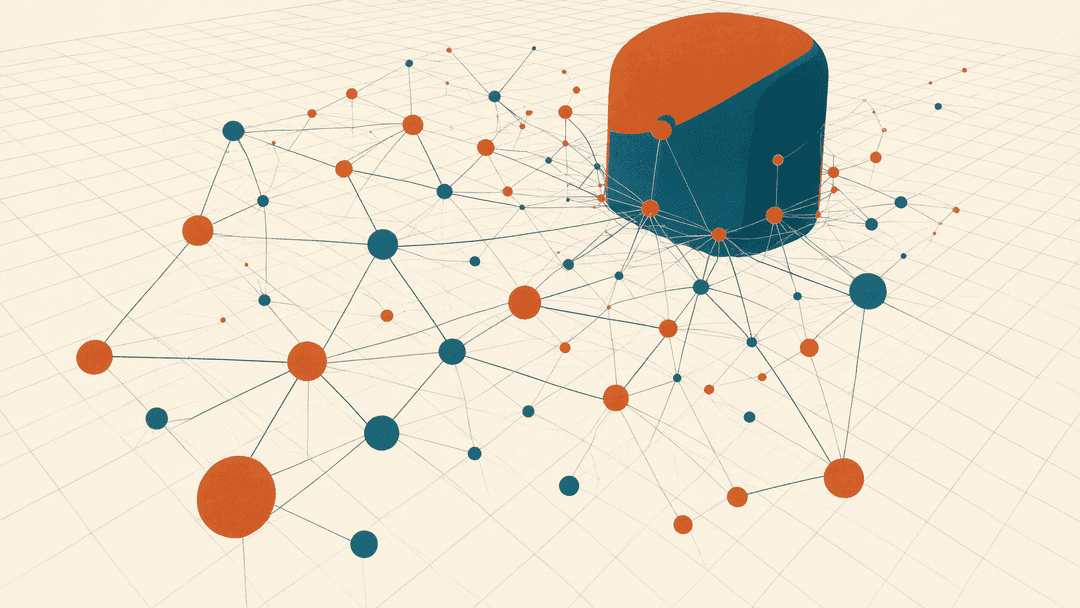
In 2013 Tomas Mikolov's team at Google published word2vec, which made it cheap to represent every word as a dense vector trained from raw text, with linguistic regularities falling out of the geometry: analogies like "man is to king as woman is to queen" became arithmetic between vectors. Within a few years, task-specific statistical pipelines gave way to neural sequence models. The 2017 paper "Attention Is All You Need" introduced the transformer architecture. In October 2018 Google open-sourced BERT, which, alongside a lesser-known OpenAI model called GPT, began shattering performance records across language tasks and set off what researchers dubbed "BERTology," the scramble to understand and beat these pretrained models on benchmarks.
The reorientation from tasks to prompting came in May 2020 with GPT-3, whose paper title stated the program: "Language Models are Few-Shot Learners." Instead of training a model for each task, you asked one big model, in plain English, to do the task, and it often could. When OpenAI launched ChatGPT on November 30, 2022, the effect on the academic field was immediate. "In a day, a lot of the problems that a large percentage of researchers were working on just disappeared," recalled Iz Beltagy of the Allen Institute. R. Thomas McCoy noted that ChatGPT did not just scoop individual projects but "entire types of research." Sam Bowman summarized the mood: it felt like the field completely reoriented.
What the field left behind
The old NLP tasks were not deleted; they were demoted to side effects. Translation, summarization, question answering and the rest are now emergent behaviors of a single general model rather than separate engineered systems. But researchers who work on the field's open problems push back on the "everything is solved" reading. Sebastian Ruder has argued that even the flagship LLM benchmarks, from HELM to MMLU, still consist largely of standard NLP tasks, and that a productive research agenda in the LLM era runs through evaluation, robustness and analysis rather than raw scale. Hallucination, instruction following and safety are NLP problems wearing the new name.
Two habits of the old field explain the present. First, the statistical turn settled the argument that hand-coded linguistic knowledge loses to data and compute at scale, a conclusion the scaling era merely re-ran with bigger models. Second, the benchmark culture the NLP community built in the 1990s and 2000s became the measuring stick every frontier lab now publishes against. The discipline was absorbed. Its methods, datasets and scoreboards were not.
Sources
- Christopher D. Manning, "History of Natural Language Processing," CS224N/Ling284 Lecture 1, Stanford (https://web.stanford.edu/class/cs224n/slides_w26/cs224n-2026-lecture01-history.pdf)
- Alan Turing, "Computing Machinery and Intelligence," Mind, 1950 (https://doi.org/10.1093/mind/LIX.236.433)
- W. John Hutchins, "The Georgetown-IBM experiment demonstrated in January 1954" (https://aclanthology.org/www.mt-archive.info/00/AMTA-2004-Hutchins.pdf)
- IBM press release on the Georgetown demonstration, January 8, 1954 (https://mt-archive.net/IBM-1954.pdf)
- W. John Hutchins, "ALPAC: the (in)famous report," MT News International, 1996 (https://aclanthology.org/www.mt-archive.info/90/MTNI-1996-Hutchins.pdf)
- Joseph Weizenbaum, "ELIZA: A Computer Program for the Study of Natural Language Communication Between Man and Machine," Communications of the ACM, 1966 (https://dl.acm.org/doi/10.1145/365153.365168)
- Peter F. Brown et al., "A Statistical Approach to Machine Translation," Computational Linguistics, 1990 (https://aclanthology.org/J90-1001/)
- Tomas Mikolov et al., "Efficient Estimation of Word Representations in Vector Space," 2013 (https://arxiv.org/abs/1301.3781)
- Ashish Vaswani et al., "Attention Is All You Need," 2017 (https://arxiv.org/abs/1706.03762)
- Jacob Devlin et al., "BERT: Pre-training of Deep Bidirectional Transformers for Language Understanding," 2018 (https://arxiv.org/abs/1810.04805)
- Tom B. Brown et al., "Language Models are Few-Shot Learners," 2020 (https://arxiv.org/abs/2005.14165)
- Quanta Magazine, "When ChatGPT Broke an Entire Field: An Oral History," April 30, 2025 (https://www.quantamagazine.org/when-chatgpt-broke-an-entire-field-an-oral-history-20250430)
- Sebastian Ruder, "NLP Research in the Era of LLMs" (https://www.ruder.io/nlp-research-era-of-llms)
- Wikipedia, "Natural language processing" (https://en.wikipedia.org/wiki/Natural_language_processing)
