
A pretrained language model has read most of the public internet and can do almost nothing you ask of it. That is not a contradiction. Pre-training teaches a model to continue text, and a continuation is not the same thing as an answer. Instruction tuning is the training step that closes the gap: a model that predicts words becomes a model that responds to requests.
This post explains what instruction tuning is, how it was invented, and where it sits inside the way modern assistants are trained. It is a sibling to our explainers on fine-tuning and RLHF; this one is about the data format and the first supervised pass.
The completion problem
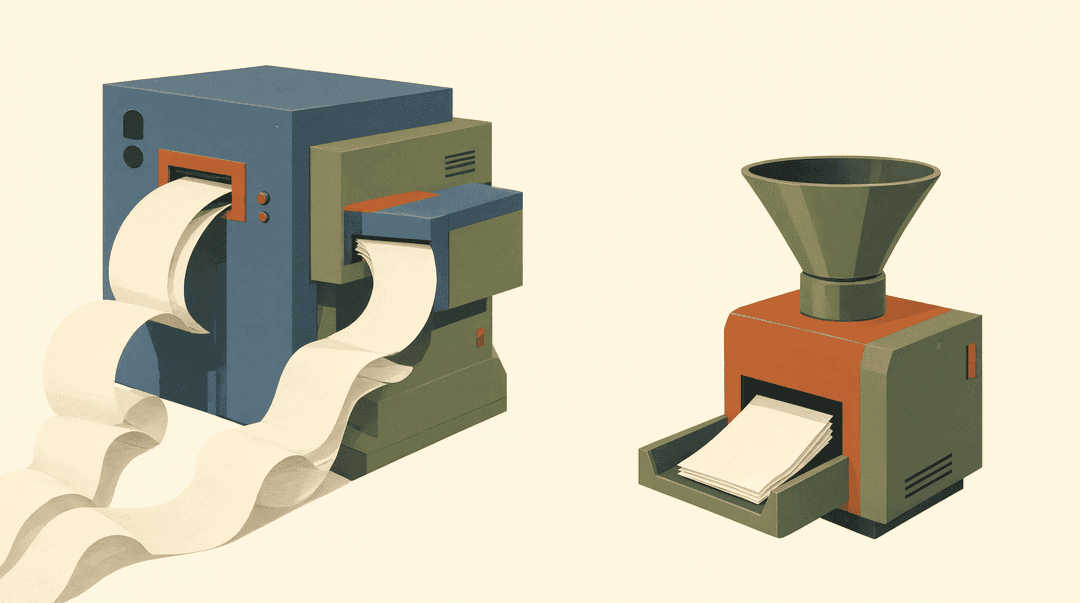
During pre-training, a model learns next-token prediction on a large text corpus. The objective makes no reference to questions, requests, or assistants. If you feed a raw base model the prompt "Write a short poem about the sea," it has learned only one thing to do with that string: continue it. Base models are notorious for generating more instructions, essay fragments, or unrelated text rather than obeying the request.
OpenAI stated the problem plainly in the 2022 paper that introduced InstructGPT: "Making language models bigger does not inherently make them better at following a user's intent." Scale buys capability, not cooperation. The authors noted that large language models can produce outputs that are untruthful, toxic, or simply not helpful, meaning they are not aligned with their users.
The idea: teach the mapping from task description to behavior
Instruction tuning (also called instruction following or, in modern pipelines, supervised fine-tuning) means fine-tuning the pretrained model on a large collection of pairs, where each pair is a task described in natural language plus a good response to it. Summarize this article: [article] ... [summary]. Translate this sentence: [sentence] ... [translation]. Answer this question: [question] ... [answer].
The key difference from classical fine-tuning is breadth. In classical fine-tuning you specialize a model on one labeled dataset, say sentiment classification, and you get a better classifier. In instruction tuning you mix thousands of different tasks, each verbalized as an instruction, and the model learns something more general: the mapping from a task description to the behavior the description calls for. A model tuned this way can handle task types that never appeared in the tuning data, because it has learned what a task description is for.
2021: FLAN and T0 prove the concept
The method was formalized in two 2021 papers. Google's FLAN paper took a 137-billion-parameter language model and instruction-tuned it on 62 NLP datasets reformatted into natural language instruction templates. The tuned model beat zero-shot GPT-3 (175B) on 20 of 25 datasets it evaluated, and ablations found that the number of fine-tuning datasets, model scale, and the presence of natural language instructions were the keys to its success.
The same year, a large collaborative group around BigScience released T0, which fine-tuned a T5-based encoder-decoder model on a mixture of publicly available datasets converted into prompted, human-readable form with diverse wording. T0 achieved strong zero-shot performance on held-out tasks, often outperforming models up to 16 times its size. Two teams, two architectures, same conclusion: explicitly training on task descriptions generalizes to unseen tasks.
2022: InstructGPT makes it standard
InstructGPT combined instruction tuning with human feedback and set the template for every assistant that followed. OpenAI collected demonstrations of desired behavior written by contractors, plus prompts submitted to its API, and fine-tuned GPT-3 on those demonstrations with supervised learning (the instruction-tuning pass). It then collected human rankings of model outputs and ran reinforcement learning from human feedback on top.
The headline result: on OpenAI's real user-prompt distribution, human labelers preferred outputs from the 1.3-billion-parameter InstructGPT over outputs from the 175-billion-parameter GPT-3, despite the smaller model having more than 100 times fewer parameters. The 175B InstructGPT's outputs were preferred over the 175B GPT-3's 85 percent of the time, with truthfulness improvements and small reductions in toxic output while keeping academic benchmark performance close to the base model. OpenAI deployed the InstructGPT models as the default language models on its API, and the two-stage recipe, supervised demonstrations then preference-based reinforcement learning, became the standard shape of assistant training.
2022-2023: scale up, then democratize
Google extended the recipe in "Scaling Instruction-Finetuned Language Models," applying instruction tuning across model sizes and architectures. Flan-PaLM reached 75.2 percent on five-shot MMLU, and the team found instruction tuning can make a smaller model beat a much larger untuned one, for example Flan-PaLM 62B outperforming PaLM 540B on the TyDiQA benchmark. The team released Flan-T5 publicly, giving researchers open instruction-tuned models.
Stanford's Alpaca project then showed the recipe had escaped the labs. In March 2023, researchers fine-tuned LLaMA 7B on 52,000 instruction-response pairs, which they had generated by prompting OpenAI's text-davinci-003 using an improved Self-Instruct pipeline that started from just 175 human-written seed examples. Data generation cost under $500, and the fine-tuning took about three hours on eight 80GB A100 GPUs for under $100. In a preliminary human evaluation, Alpaca performed similarly to text-davinci-003 on the Self-Instruct evaluation suite. The model was research-only because it inherited LLaMA's non-commercial license and OpenAI's terms, but the message landed: instruction following could be distilled cheaply into small open models.
2023: LIMA argues the change is mostly skin deep
Meta researchers pushed back on how much data the step needs. LIMA was a 65B LLaMA model fine-tuned with standard supervised loss on exactly 1,000 curated question-response pairs (750 drawn from high-quality community forums like Stack Exchange and wikiHow, 250 hand-written), with no reinforcement learning and no preference modeling. The model beat OpenAI's RLHF-trained DaVinci003 and a 65B Alpaca reproduction trained on 52,000 examples, and was often rated better than or equal to GPT-4 in human comparisons.
The authors proposed the "superficial alignment hypothesis": nearly all of a model's capabilities come from pre-training, and fine-tuning mostly teaches the model the format and style its users expect. Their own analysis had limits, including less robustness than product-grade models and a failure mode where adversarial prompts could derail output, but the data-point stood: a few thousand excellent demonstrations can rival hundreds of thousands of mediocre ones. Quality and diversity of instructions, not raw volume, drive the outcome.
What instruction tuning actually changes
Mechanistically, the step shifts what the model does with a request, not primarily what it knows. It teaches the turn-taking pattern of exchanges (the chat templates that wrap messages are their production form), the shape of a helpful answer, and the habit of treating the prompt as a directive rather than as text to extend. The FLAN ablations support the strong reading: models fine-tuned on dataset names only, without natural language instructions, performed substantially worse zero-shot, because the model never learned to read a task description as a task.
This is also why instruction tuning is not a substitute for capability. A weak base model tuned on polite formats stays weak. And why it is not a complete alignment story: supervised demos teach format and style, but they cannot teach which of many plausible answers humans actually prefer. That job went to the preference-optimization stage that InstructGPT introduced.
Where it sits in late-2026 training pipelines
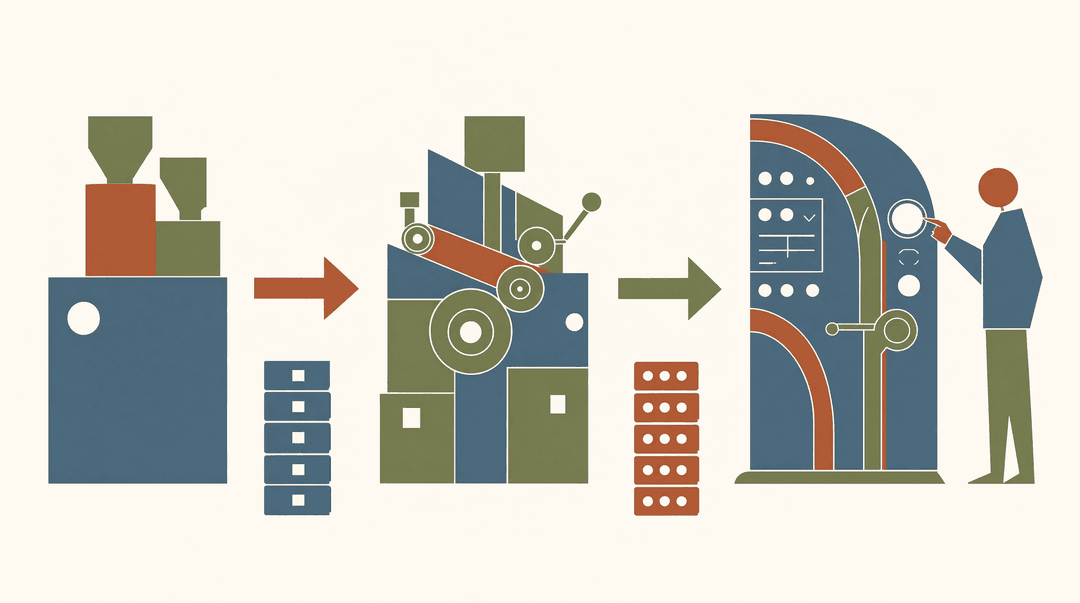
Today instruction tuning is the first stage of what labs call post-training. A modern open recipe looks like Tülu 3 from the Allen Institute for AI (November 2024): supervised fine-tuning on curated prompt mixtures, then Direct Preference Optimization on preference data, then reinforcement learning with verifiable rewards for math and instruction-following, all with public data and code. Tülu 3 models, built on Llama 3.1 bases, reported results surpassing the instruct versions of Llama 3.1, Qwen 2.5, and Mistral, and even closed models like GPT-4o-mini and Claude 3.5-Haiku on their evaluation suite.
Whether a model follows instructions at all is now measured directly. Google's IFEval benchmark, built from roughly 500 prompts embedding 25 types of verifiable instructions like word-count limits and keyword requirements, scores compliance with code rather than judge models, which makes it reproducible. It is a standard column in open-model release tables, and it traces a straight line back to the 2021 insight that models can learn what an instruction means.
Base model downloads, instruct model traffic, the two checkpoints of every open release: the distinction exists because of this training step. The model learned to read the internet; instruction tuning is what taught it to read you.
Sources
- Training language models to follow instructions with human feedback (Ouyang et al., 2022)
- Aligning language models to follow instructions (OpenAI, 2022)
- Finetuned Language Models Are Zero-Shot Learners (Wei et al., 2021, FLAN)
- Multitask Prompted Training Enables Zero-Shot Task Generalization (Muennighoff et al., 2021, T0)
- Scaling Instruction-Finetuned Language Models (Longpre et al., 2022, Flan-PaLM)
- Stanford Alpaca (Stanford CRFM, March 2023)
- Stanford Alpaca (Wikipedia)
- LIMA: Less Is More for Alignment (Zhou et al., 2023)
- Tulu 3: Pushing Frontiers in Open Language Model Post-Training (Lambert et al., 2024)
- Tulu 3: The next era in open post-training (Ai2 blog)
- Instruction-Following Evaluation for Large Language Models (Zhou et al., 2023, IFEval)
