

Labs announce models. They do not announce price tags for building them. Every public figure for what frontier training costs is an estimate from outside researchers, a rare self-disclosure, or a number given under oath. The estimates converge enough to be useful, and the disclosures are more interesting than they first look. This is what the ledger actually shows as of late 2026.
The arithmetic ladder
Training compute is measured in floating-point operations (FLOP), and it has become the cleanest public proxy for cost. Epoch AI, which tracks model releases in a public database, estimates GPT-3 (2020) at about 3.1 x 10^23 FLOP and GPT-4 (2023) at roughly 2 x 10^25. The current known ceiling is Astra: 9.4 x 10^26 FLOP, on Epoch's model page. That is around 45 times GPT-4's run.
The dollar figures come in two flavors, because there are two defensible ways to bill a run. Epoch's 2024 cost study, published with Stanford's AI Index team, computed the amortized hardware and energy cost of final runs for 45 frontier models: the chip-hours, depreciated, plus electricity, plus a 23 percent overhead for networking. On that basis the most expensive run of its era, GPT-4, cost about $40 million. The alternative method prices the same chip-hours at historical cloud rental rates. That method yields figures roughly twice as high (GPT-4 at about $78 million) and a similar growth slope, 2.6x per year against 2.4x.
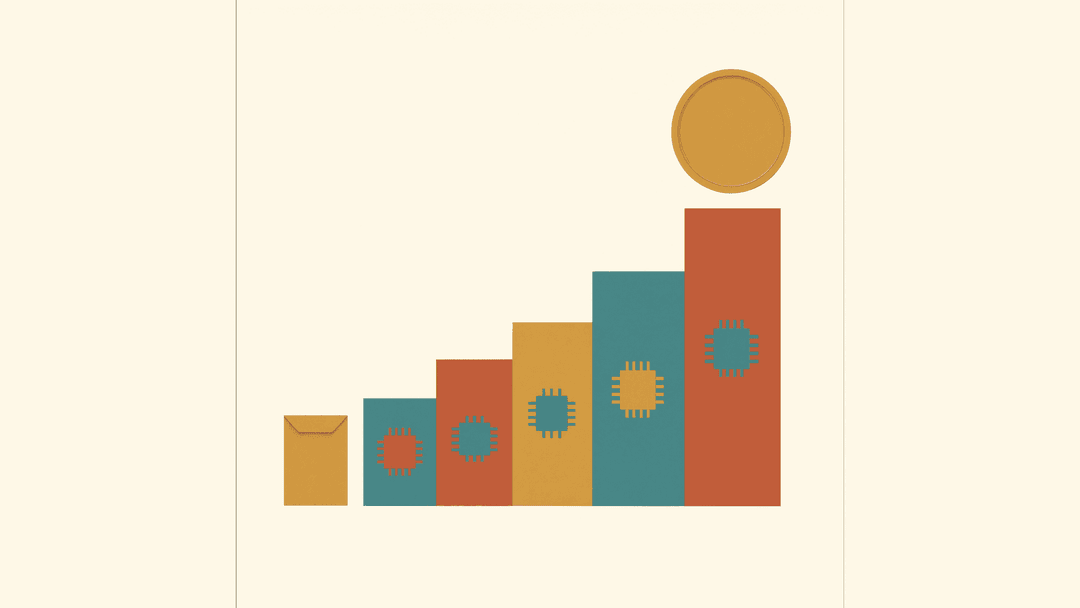
Either way the trend is exponential. Amortized hardware and energy costs for final runs have grown 2.4x per year since 2016. On Epoch's live trend page, the rental-cost series shows frontier training costs rising about 3.5x per year since 2020, a doubling roughly every seven months, from around $2 million for GPT-3 to nearly $390 million for the largest runs of 2024. Epoch's projection, made in 2024, was that the largest runs would cross $1 billion by 2027. Anthropic CEO Dario Amodei said something close to the same thing that year, predicting developers would spend "close to a billion dollars" on a single model by 2027.
The run is the small line on the invoice
The most misleading number in this story is the training run cost, because it is not what the lab actually spent.
Epoch's development-cost breakdown for models like GPT-4 and Gemini Ultra splits total spend into hardware (47 to 67 percent), R&D staff salaries including equity (29 to 49 percent), and energy (2 to 6 percent). The final run sits inside the hardware slice, and only a minority of that slice is the run itself. In a 2026 analysis, Epoch researchers JS Denain and Cheryl Wu found that final training runs accounted for just 9.6 percent of OpenAI's roughly $5 billion in 2024 R&D compute spending. The pattern held across borders and business models: 22.6 percent for MiniMax (of $141 million in disclosed spending) and 12.3 percent for Z.ai (of $216 million), both disclosed in IPO filings. Everything else went to scaling experiments, synthetic data generation, abandoned model variants and research that never shipped.
So the honest framing of Astra's price is nested. A final run at the 10^26 to 10^27 FLOP level, on rented hardware, is a nine-figure event. The lab's compute bill for the year is an order of magnitude larger. Greg Brockman, testifying in OpenAI's court case against Elon Musk in May 2026, put OpenAI's 2026 computing spend at $50 billion, up from about $30 million in 2017. OpenAI's projected R&D compute spend alone had gone from roughly $5 billion in 2024 to about $9 billion in 2025 in Epoch's estimates. Anthropic, by Epoch's reading of reporting, agreed to rent effectively all of xAI's Colossus 1 datacenter and part of Colossus 2 for up to $15 billion per year.
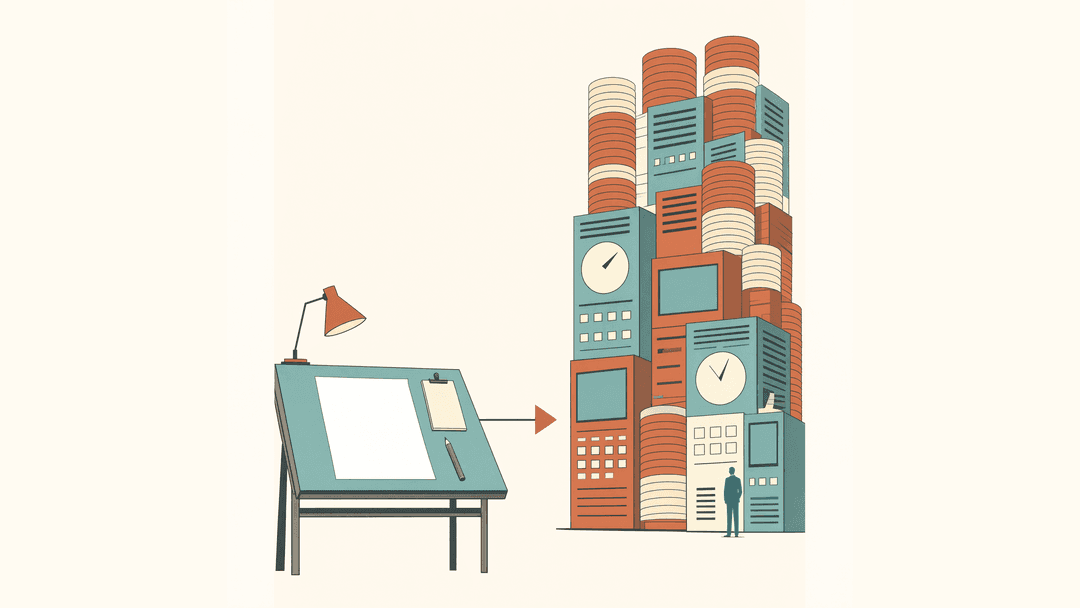
The public number attached to a model release describes maybe a tenth of a tenth of what was spent to arrive at that release.
The bottleneck is the building, not the budget
A second constraint turned out to matter as much as the dollars: a 100,000-GPU run needs 100,000 current-generation accelerators in one place, powered and cooled, for months. As of late 2026 there are only a handful of such sites, and their operators are the labs themselves or their anchor tenants. Oracle's Stargate campus in Abilene, Texas, where Astra was pretrained, is planned for more than 450,000 GB200 GPUs at 1.2 gigawatts. xAI's Colossus 2 in Memphis reportedly holds around 550,000 Blackwell-class GPUs and trains Grok models while renting capacity to Anthropic. Anthropic's Project Rainier holds some 500,000 Amazon Trainium2 chips. Google's TPU pods, where Gemini is trained, are larger still but undisclosed by generation.
Regulators have adopted the same unit of account. The EU AI Act presumes a general-purpose model carries systemic risk once cumulative training compute passes 10^25 FLOP, which obliges the provider to notify the European Commission. GPT-4 was, on Epoch's estimate, the first model to cross that line. Runs beyond 10^26 remain rare: Epoch places only Grok 3, GPT-4.5, Grok 4 and Astra above it, and treats undisclosed candidates like Gemini 3 and Claude as likely members of the club. The compute ladder is now, in effect, a licensing threshold.
Epoch's 2024 conclusion has aged into a description of the market: at this cost curve, frontier training is "too expensive for all but the most well-funded organizations," and capital itself becomes a scaling constraint alongside power.
The other curve: the $5.6 million run
The cheap counterexample is real but narrow. DeepSeek's technical report for V3 disclosed 2.788 million H800 GPU-hours for the final training run, about $5.6 million at the rental prices DeepSeek itself applied, with the caveat that earlier failed runs were excluded. Chinese rivals publish similar final-run numbers. These runs are real, and they are not the whole bill, because the Epoch finding (final runs under 30 percent of R&D compute, even at MiniMax and Z.ai) applies to the cheap-lab cohort as well.
Meanwhile the price of capability keeps collapsing on a faster clock than the price of runs. Epoch's measurement of cost-per-benchmark-result since 2023 finds AI getting about 47 percent cheaper per quarter for a fixed level of performance, roughly 13x per year, a pace faster than solar, batteries or DNA sequencing ever held. A March 2026 study by Gundlach and coauthors, using actual costs rather than prices, reaches a similar verdict: 5 to 10x per year.
Both curves are simultaneously true. The largest run of 2026 costs about ten times what GPT-4's run cost in 2023, and the capability GPT-4 bought for $78 million in rental terms can today be approximated for a few million or less. Labs spend the difference on buying the next plateau.
Reading the ledger honestly
None of these numbers is an invoice. OpenAI's chip count for Astra is a floor it chose to publicize; Epoch grades its own estimates by confidence, with "Likely" meaning a 90 percent interval a factor of ten wide in either direction. Astra's 9.4 x 10^26 FLOP, built from 100,000 GB200s for about 90 days at a quarter of their peak, could sit anywhere in roughly half to double that figure, Epoch says. Brockman's $50 billion was testimony, not an audited filing.
The floor is still the point. On the most conservative public accounting available, the final training run of a frontier model now costs hundreds of millions of dollars, the lab behind it spends several times that on compute every year, and the trend doubles every seven months. The invoice nobody publishes is the largest in the software industry.
Sources
- Fortune: OpenAI launches GPT-6 Astra, its most powerful model yet (September 3, 2026)
- Epoch AI: How much does it cost to train frontier AI models? (June 2024) and the paper The rising costs of training frontier AI models (arXiv:2405.21015)
- Epoch AI: GPT-6 Astra model page and Trends page
- Epoch AI: Why GPT-5 used less training compute than GPT-4.5 (but GPT-6 probably won't)
- Epoch AI: Final training runs account for a minority of R&D compute spending; Most of OpenAI's 2024 compute went to experiments
- Bloomberg: OpenAI to Spend $50 Billion on Computing in 2026, Brockman Says (May 2026)
- Epoch AI Gradient Updates: Frontier labs don't use most AI compute (yet)
- DeepSeek-V3 Technical Report (arXiv:2412.19437)
- Epoch AI: The plunging price of thought
- EU AI Act, Article 51 (regulation text via AI Act Explorer)
